
Virginia crash paperwork | Winchester, Harrisonburg and the Shenandoah Valley
Police Report or Accident Report? Sorting Out Virginia Crash Paperwork
Several records may be created after one crash. Knowing what each one is can make the next steps easier to manage.
Published November 12, 2026
After a crash, the paperwork can pile up fast, and the terms can blur together. The short answer is this: a police report is one official record written by the responding officer, while an accident report is a loose term for several different documents written by different people.
Knowing which document you’re looking at matters. Each one has a different author, a different timing and a different purpose. This page explains the difference between a police report and an accident report, and what each one may include.
What a police report is
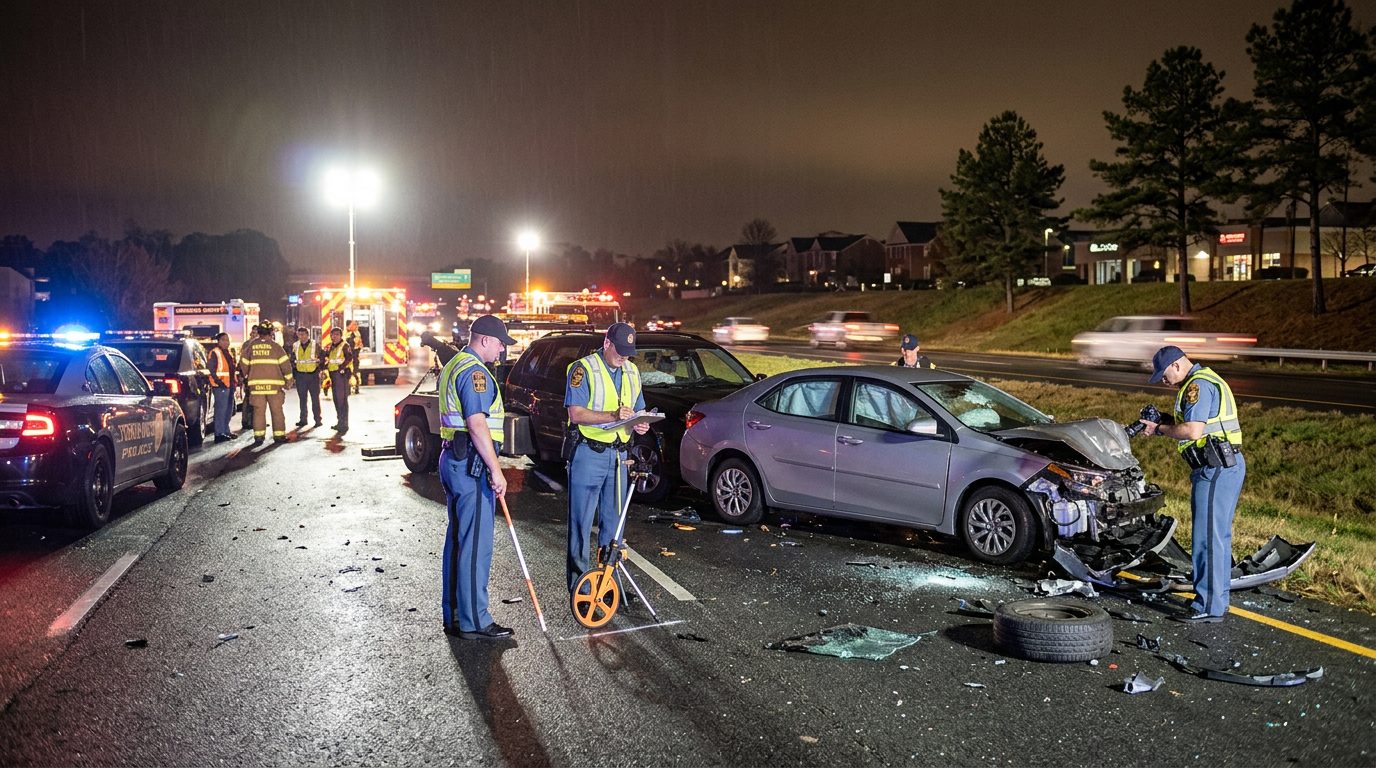
A police report is the written record an officer prepares after responding to a crash. It is one official document about one crash.
The officer documents what he or she observes at the scene and learns during the investigation. A typical report lists the date, time and location of the crash. It names the vehicles and drivers involved, lists passengers and witnesses, and includes the officer’s description of the scene.
The report is one record of the crash. It is not a full account from any single person involved. A driver’s own version of events may differ from the officer’s notes, and both may end up in the file. Keep that in mind when you read it.
Commercial vehicle crashes often involve more records than a car crash does. For wider background, see commercial vehicle accidents in Virginia.
If a crash left you hurt, you do not have to sort through the paperwork alone. The firm is willing to talk through what happened and what may be available to you. Talk it through with Correll Law Firm — we can walk you through how a situation like yours is usually handled and what your options are.

What people mean by an accident report
An accident report is not one fixed form. The phrase is a general term that can point to several different documents.
Common examples include a driver’s written account of what happened, a company’s internal incident report, and the claim forms an insurance company asks you to complete. Each one has a different writer, a different time and a different purpose.
A driver may write a statement the same day. A company may complete its internal report days later, following its own procedures. An insurance claim form asks for coverage details and contact information. The same crash can produce several documents that describe it in different ways.
Mixing them up can make a summary sound more official than it is. Ask which document is meant before you rely on it.
Who writes each document and why the difference matters
The author is the first difference. A police report comes from the responding officer. An accident report written by a driver reflects that driver’s own view of events.
Timing differs too. An officer usually completes the police report after investigating at or near the scene.
The scope is different as well. A police report describes the scene as the officer observed it. A company incident report may cover the employer’s own procedures, equipment checks and follow-up steps. Neither one tells the whole story alone.
Before you draw a conclusion from any document, check who wrote it, when, and why. That simple habit keeps you from treating one person’s account as the final word. It matters most when several versions of one crash sit in the same file and do not match.
Virginia’s duty to stop and report a crash
Virginia requires a driver involved in a crash with injury or death to stop and report it to police immediately (Va. Code §§ 46.2-371, 46.2-894).
It is a separate step from the officer’s written report.
Section 46.2-894 also covers a driver who cannot report right away because of injuries. That driver must make the report as soon as reasonably possible.
Do not mix this up with the lawsuit deadline. Virginia generally allows two years from the date of injury to file a personal injury lawsuit (Va. Code § 8.01-243(A)); the clock runs from the date of injury, not the date of discovery, with narrow exceptions. Some claims carry notice requirements that run out sooner.
The two-year period is the deadline to file a lawsuit, not to report a crash (Va. Code § 8.01-243).
How a commercial truck crash adds company records
In a crash with a commercial vehicle, the police report is often only one of several records that may exist.
A trucking company may keep its own records of the trip and the vehicle. Federal rules require motor carriers to have each driver record duty status for each 24-hour period. Carriers must keep those records for at least 6 months from the date of receipt (49 C.F.R. § 395.8).
Supporting documents are covered too. These include bills of lading that show origin and destination, dispatch records, expense receipts and payroll records (49 C.F.R. § 395.11).
These records can show what a company kept and when. A single record does not settle on its own what caused a crash.
For a closer look at those records, see trucking company logs after a crash. For how a truck crash in Richmond and Henrico County can differ, see garbage and dump truck accidents in Richmond and Henrico County.
When there is no police report
A crash can happen with no police report. This may occur when no officer responds to the scene.
Without one, other records may still matter. Useful items often include photographs of the scene and vehicles, names and contact details of witnesses, the other driver’s information, medical records and repair estimates. Write down when and where you gathered each item.
Each record has a different job. A photo shows a scene at one moment. A medical record shows treatment. How any of these records is used depends on the facts of each crash.
Not sure what your next step is?
Talk it through with Correll Law Firm — we can walk you through how a situation like yours is usually handled and what your options are.
Key differences at a glance
A police report is one official record of the officer’s investigation, while an accident report is a general term for several documents written by different people.
| Police report | Accident report (general term) | |
|---|---|---|
| Who writes it | The responding officer | A driver, a company, or an insurer, depending on the document |
| What it covers | The crash and scene as the officer observed them | The writer’s own account, company procedures, or claim details |
| When it is prepared | Usually after the officer’s investigation at or near the scene | Often later, such as days or weeks after the crash |
| Whose view it reflects | The officer’s | The writer’s |
Check which document you’re reading before you rely on it. For wider reading on commercial vehicle accidents in Virginia, see commercial vehicle accidents in Virginia.
Common questions
Is an incident report the same as a police report?
No. An incident report is usually an internal record kept by a company or organization. A police report comes from the responding officer.
Can I get a copy of a police crash report?
Yes. The Virginia DMV explains how to request one.