
Truck Accidents | Virginia
Suing a Trucking Company After a Crash in Virginia
A crash with a commercial truck often involves more than one company and a fast-moving insurance process. Here is how the pieces usually fit together.
Published November 15, 2026
A crash with a commercial truck can leave a person hurt and a family facing hard questions. If you are thinking about suing a trucking company in Virginia, the usual answer is a personal injury lawyer who handles truck and commercial vehicle claims. The sections below explain what that lawyer may look at, from who can be named to the deadlines that apply.
A Personal Injury Lawyer Handles Trucking Company Lawsuits
A personal injury lawyer is the type of lawyer who handles these lawsuits in Virginia. These cases are civil claims that ask a court to award money damages for an injury or a death. They are not criminal cases.
The firm handles car accidents, truck accidents, commercial vehicle accidents, catastrophic injuries, traumatic brain injury, spinal cord injury and wrongful death. It is based in Winchester and has an office in Harrisonburg. It serves people across the Shenandoah Valley, Richmond and Henrico County.
The type of crash, the injuries and where the crash happened all shape which lawyer may be a good fit. A crash on a Shenandoah Valley highway and one in Henrico County may involve different facts. For a wider look at these crashes, read the commercial vehicle accidents guide.
Not sure what your next step is?
Talk it through with Correll Law Firm — we can walk you through how a situation like yours is usually handled and what your options are.
Who Can Be Named in a Trucking Crash Lawsuit?
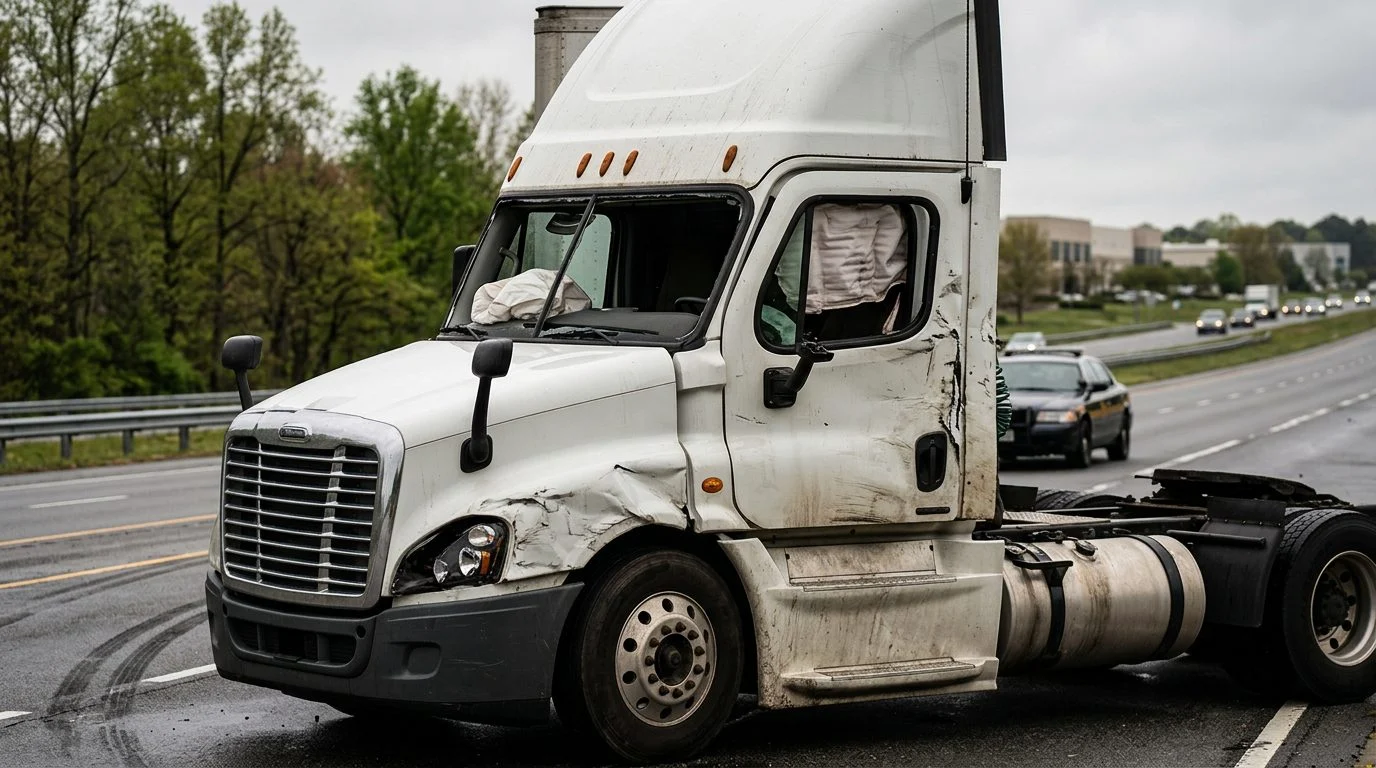
More than one party can be named in a trucking crash lawsuit, depending on the facts. The driver is one possible defendant. Others may include the company that operates the truck, the company that employs or dispatches the driver, and the owner of the truck or trailer.
Virginia case law addresses cases with more than one negligent party.
Federal law can also affect who may be sued. Finding every possible defendant early helps a lawyer decide where a claim should be directed.
Why Trucking Cases Differ From Car Crash Cases
Trucking cases usually involve federal safety rules and business records that most car crash cases do not. Those rules shape what a lawyer may need to review.
Federal rules govern how motor carriers maintain their trucks. Carriers must systematically inspect, repair and maintain every motor vehicle they control (49 C.F.R. § 396.3). Inspection and repair records must be kept for 1 year, and for 6 months after the vehicle leaves the carrier’s control, except for private motor carriers of passengers (nonbusiness).
A lawyer may ask whether these rules were followed. Driver logs, maintenance files and dispatch information may help answer that question. Rollover and tractor-trailer crashes can raise different questions, such as how the load was secured and how the truck was being operated.
What Changes With Catastrophic Injuries and Wrongful Death?
Catastrophic injury and wrongful death claims follow their own rules. Traumatic brain injury and spinal cord injury can require long treatment and ongoing care, so the records in these claims can grow large over time.
A Virginia wrongful death action is filed by the decedent’s personal representative within two years of the death (Va. Code §§ 8.01-50(C), 8.01-244(B)), on behalf of the family members the statute protects. Virginia wrongful death damages cover the family’s sorrow, mental anguish and loss of the decedent’s companionship, guidance and care; lost income and services; medical expenses from the injury; funeral expenses; and, for willful or wanton conduct, punitive damages (Va. Code § 8.01-52).
Damages are distributed to the beneficiaries the statute names, such as a surviving spouse and children, and in some cases parents (Va. Code § 8.01-53). Punitive damages are a separate question. Virginia allows punitive damages for actual malice, or for willful or wanton conduct or recklessness showing a conscious disregard for the safety of others, capped at $350,000 (Va. Code § 8.01-38.1).
How Long Do You Have to File and Report a Crash?
Virginia generally allows two years from the date of injury to file a personal injury lawsuit (Va. Code § 8.01-243(A)); the clock runs from the date of injury, not the date of discovery, with narrow exceptions. Some claims carry notice requirements that run out sooner, so the timing should be reviewed promptly.
Virginia requires a driver involved in a crash with injury or death to stop and report it to police immediately (Va. Code §§ 46.2-371, 46.2-894).
Unless otherwise provided by statute, the two-year period, which runs from when the cause of action accrues, is the general deadline to file a personal injury lawsuit, not the deadline to report a crash (Va. Code § 8.01-243).
What Happens When Fault Is Disputed?
Virginia follows contributory negligence: if you are found even partly at fault, you may be barred from recovering, with limited exceptions. Talk to a lawyer about your facts.
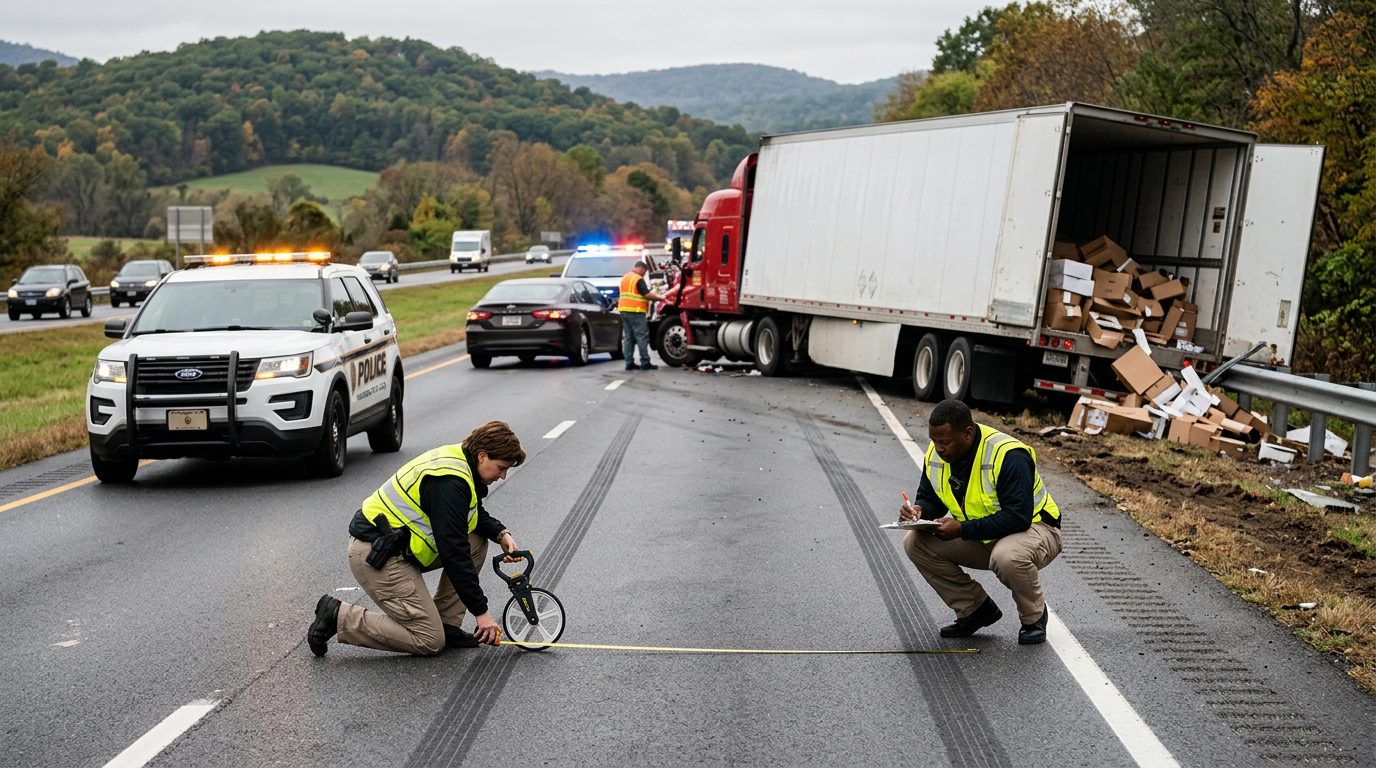
Trucking companies and insurers may dispute how the crash happened. Police reports, witness information and vehicle data can help show what occurred.
Details such as timing, visibility and what each driver could see can matter a great deal.
Not sure what your next step is?
Talk it through with Correll Law Firm — we can walk you through how a situation like yours is usually handled and what your options are.

Which Records Help a Lawyer Understand a Truck Claim?
The most useful early records are usually the police report, scene photos, witness names, and medical and work records. Write down the report number and keep photos of the scene and both vehicles.
Medical records and bills show the injuries and treatment. Notes about missed work show the income effects of the crash.
After a crash involving loss of human life, federal rules require the employer to test each surviving driver who was performing safety-sensitive functions for alcohol and controlled substances, as soon as practicable (49 C.F.R. § 382.303). That testing record can matter to the claim.
Keep every letter from an insurance company, and note the dates of any calls. Think carefully before giving a recorded statement. You may wish to speak with a lawyer about it first. Gathering these items early gives a lawyer a clearer picture of the claim.
Quick Answers
What kind of lawyer handles a lawsuit against a trucking company?
In Virginia, a personal injury lawyer who handles truck accident and commercial vehicle claims is the usual fit.
Can you sue the driver and the trucking company together?
Yes, more than one party may be named, depending on the facts.