

Company Vehicle Crashes | Virginia
Hit by a Company Vehicle in Virginia? Here's What to Do Next
Practical steps for the scene, your medical care and your records, from the Shenandoah Valley to Richmond and Henrico County.
Published November 15, 2026
A crash with a company car or work truck can leave you hurt, shaken and unsure what comes next. Here is the short answer to what to do when a company vehicle hits you in Virginia: check for injuries, report the crash to police, record details about both vehicles, and keep written notes of every contact afterward.
The steps below follow that order. They explain what Virginia law requires, what to gather, and why the question of who may be responsible depends on the facts.
Why a Company Vehicle Crash Raises Different Questions
A company vehicle crash can involve three separate parties: the driver, the company that owns or runs the vehicle, and the insurer that covers it. Those may be the same business, or they may not. A delivery driver may work for one company while the van is leased from another.
Markings, paperwork and the driver’s job can all matter later. A logo on the door, a unit number or a federal identification number may show who operated the vehicle. Whether the driver was working at the time can matter too. Information gathered early is often the easiest to collect, so it is worth doing while the details are fresh.
For an overview of these claims, see the firm’s guide to commercial vehicle accidents in Virginia.
If a company vehicle hit you, you may be dealing with injuries, vehicle damage and calls from insurers all at once, and you do not have to face those questions alone. Talk it through with Correll Law Firm — we can walk you through how a situation like yours is usually handled and what your options are.
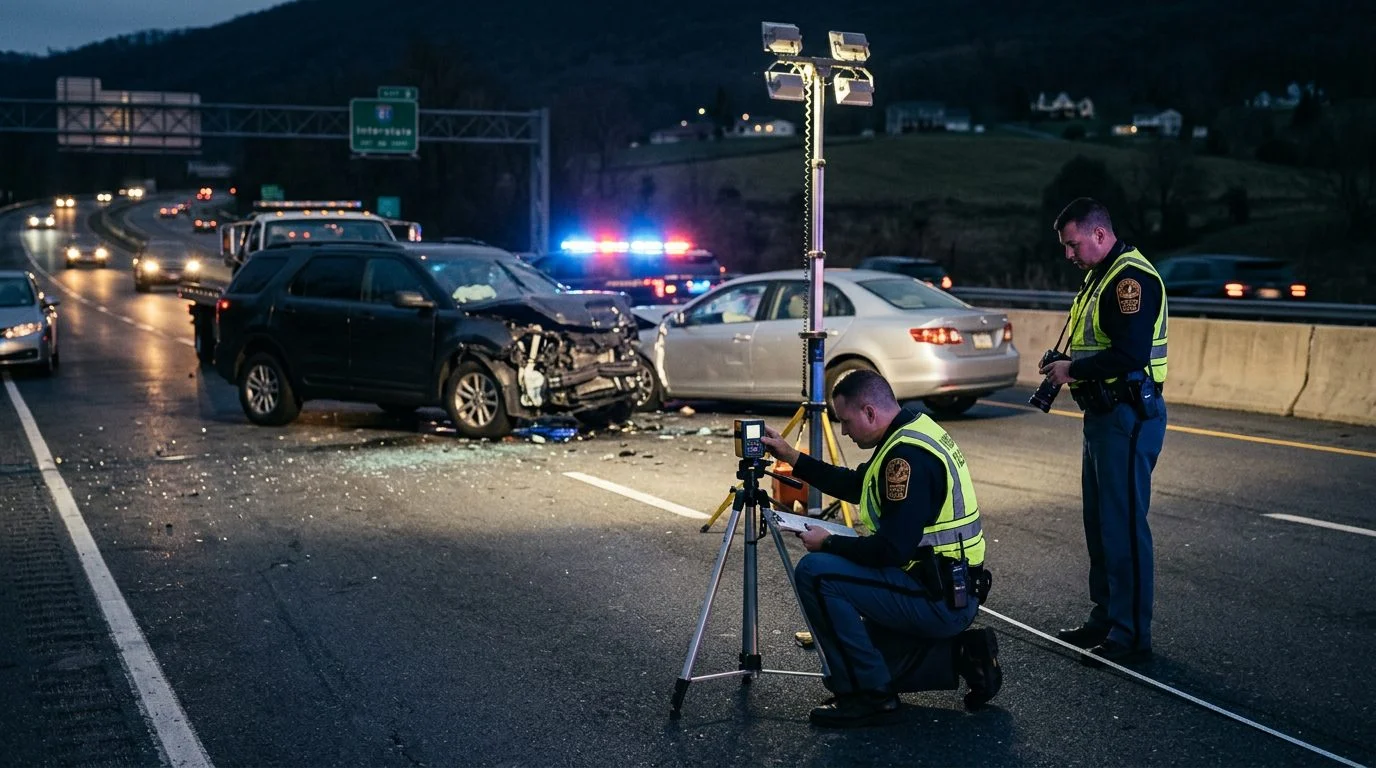
Step 1: Check for Injuries and Get Medical Care
Check yourself, your passengers and the other driver for injuries before anything else. If anyone is hurt, call 911.
Some injuries do not show symptoms right away. Soreness, dizziness or headaches can appear hours or days later. A medical check is worth getting even if you feel fine, because a provider can look for problems you may not notice yet.
Tell the provider the injuries came from a vehicle crash, so the record says so. Keep every visit note, diagnosis, test result and treatment plan in one place. These records describe your injuries, and they form the medical side of any later claim.
Step 2: Report the Crash as Virginia Requires
Virginia requires a driver involved in a crash with injury or death to stop and report it to police immediately (Va. Code §§ 46.2-371, 46.2-894).
Under Va. Code § 8.01-243, the two-year period discussed later is the general deadline to file a personal injury lawsuit after the crash, unless this section or another statute provides otherwise; some claims, such as those for injury to property, have longer periods. It is not the deadline to report a crash. Report right away.
If the other driver leaves the scene, the firm’s page on police investigations of hit-and-run crashes explains what to expect. Ask for the police report number and write down the officer’s name.
Step 3: Gather Information at the Scene
Collect the other driver’s full name, address, driver’s license number and vehicle registration number. Also record the insurance company and policy number shown on the insurance card.
Write down the company name, phone number and any unit or fleet number painted on the vehicle. Photograph those markings. For a commercial vehicle, look for a USDOT number. Federal rules require a self-propelled commercial motor vehicle subject to 49 CFR Part 390 subchapter B marking rules to show the carrier’s identification number preceded by the letters “USDOT” (49 CFR 390.21T). The Virginia DMV’s USDOT number page explains which carriers need that number.
Take photos of both vehicles, the roadway, traffic signals, skid marks, debris and any visible injuries. Get the names and phone numbers of witnesses. Stick to facts, and avoid giving an opinion on who caused the crash.
Who May Be Responsible When a Company Vehicle Is Involved
The company, the driver or both may be responsible, and the answer depends on the facts. Relevant facts include whether the driver was working, who owned the vehicle and whether the driver had permission to use it.
Virginia follows contributory negligence: if you are found even partly at fault, you may be barred from recovering, with limited exceptions. Talk to a lawyer about your facts.
A vehicle owner may also raise a defense. In an action for the negligent operation of a motor vehicle, it is a valid defense for the owner to prove that the vehicle was driven or used without the owner’s knowledge or consent, express or implied, and the owner bears the burden of proof (Va. Code § 8.01-65).
For the general rules on car accidents in the state, see Virginia car accident laws. For a related work-setting example, see the firm’s page on a work van accident in Harrisonburg.
Dealing With Insurers and Company Representatives
Write down the name of each adjuster or company representative who contacts you. Note the date of each call and what was said. Clear notes help if details differ later.
A recorded statement given to an insurer is not the same as a casual talk. You may wish to think through your answers before giving one.
Read any release or settlement paperwork carefully before you sign it. A signed release can affect later claims. Ask questions about any term you do not understand.
Damage to your own vehicle is a separate item from your injuries. Virginia allows recovery of the reasonable charge for a comparable substitute vehicle while your vehicle is out of use. That period may not exceed a reasonable time for repairs, or a reasonable time to buy a new vehicle if yours is a total loss. The duty to mitigate damages still applies (Va. Code § 8.01-66). In plain terms, the rental period must stay reasonable.
Keep repair estimates, rental receipts and a list of out-of-pocket expenses.
Not sure what your next step is?
Talk it through with Correll Law Firm — we can walk you through how a situation like yours is usually handled and what your options are.
Filing Deadlines and How Long a Claim Can Take
Virginia generally allows two years from the date of injury to file a personal injury lawsuit (Va. Code § 8.01-243(A)); the clock runs from the date of injury, not the date of discovery, with narrow exceptions.
The deadline to file a lawsuit does not set the pace of every step. Insurance talks, medical treatment and records gathering all take time. How long a claim takes depends on the facts, the injuries, the parties involved and whether the matter resolves before a lawsuit is filed.
Does the two-year rule cover every claim?
No. Some claims carry notice requirements that run out sooner. A written statement of a negligence claim against a county, city or town, including the time and place of the injury, generally must be filed within six months after the claim accrues, unless the attorney, chief executive or mayor of that locality, or any insurer or entity providing coverage or indemnification of the claim, had actual knowledge of the claim, including its nature and the time and place of the injury, within that period; if the claimant was under a disability when the cause of action accrued, the tolling provisions of § 8.01-229 apply (Va. Code § 15.2-209).
How long will a claim take?
That depends on the facts. No one can give a fixed timeline from the start of a crash, so the firm does not offer one here.
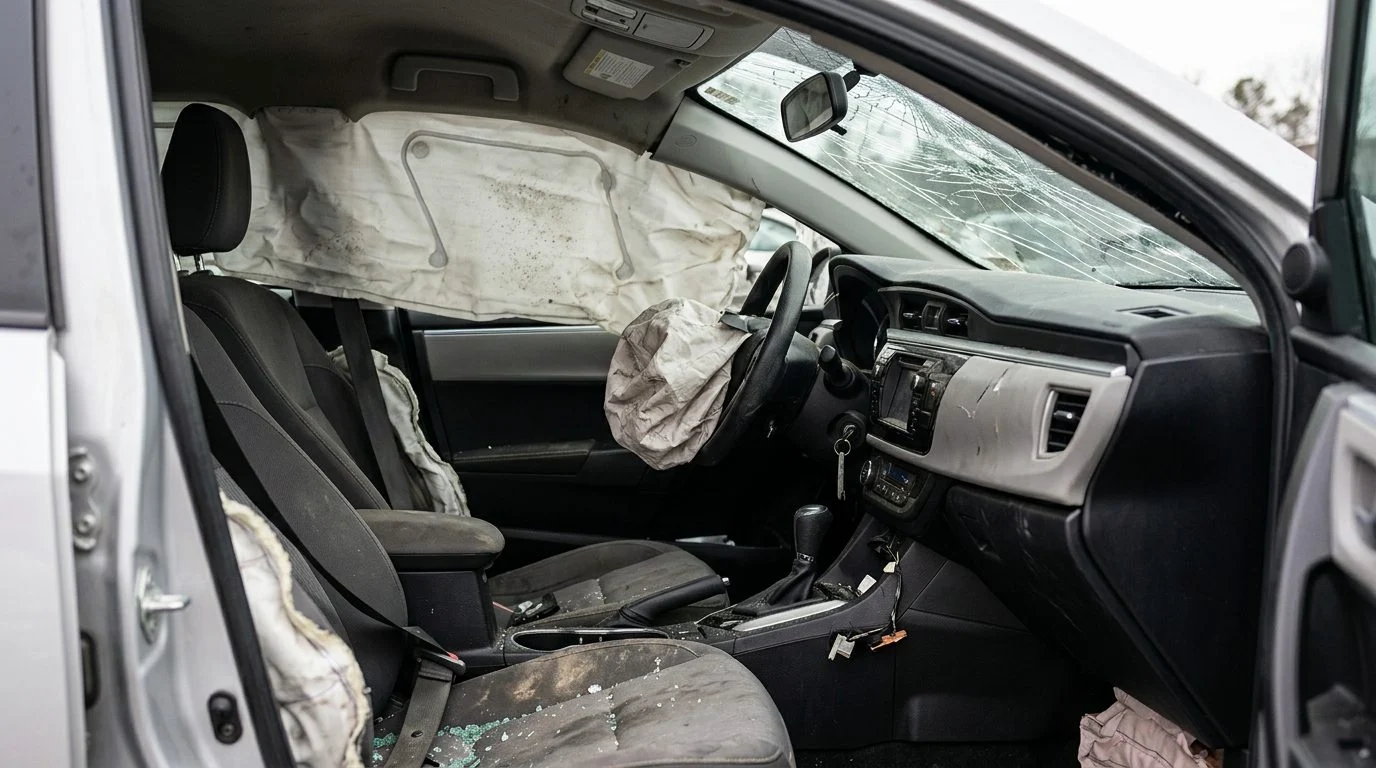
Keeping Records That Support a Claim
Keep the police report, photos, medical bills and treatment notes, proof of missed work and receipts for repairs or rentals. Keep these in one folder, paper or digital.
Start a simple journal. Write down symptoms, activities you cannot do, appointments and every conversation with an insurer. Write each entry soon after it happens, while the details are fresh.
Organized records make it easier to explain what happened and how the crash has affected you. That holds whether you handle the matter alone or with a lawyer.
The steps above cover the first days after a crash with a company vehicle. The records kept during that time are where any later review of the facts will start.