
Car Accidents | Virginia
What to Say When Filing a Car Insurance Claim in Virginia
Clear, accurate answers keep your claim on track. Here is how to handle the adjuster's calls, forms and questions with care.
Published November 11, 2026
Dealing with an insurance company after a crash can feel rushed, especially when the first call comes before you feel ready. What should you say when filing an insurance claim? Stick to facts you have confirmed, describe what happened in order, and leave out guesses about fault, speed and your injuries.
This guide covers car and commercial vehicle crashes in Virginia, from the facts you gather at the start to the deadlines to track.
Gather the facts before you make the first call
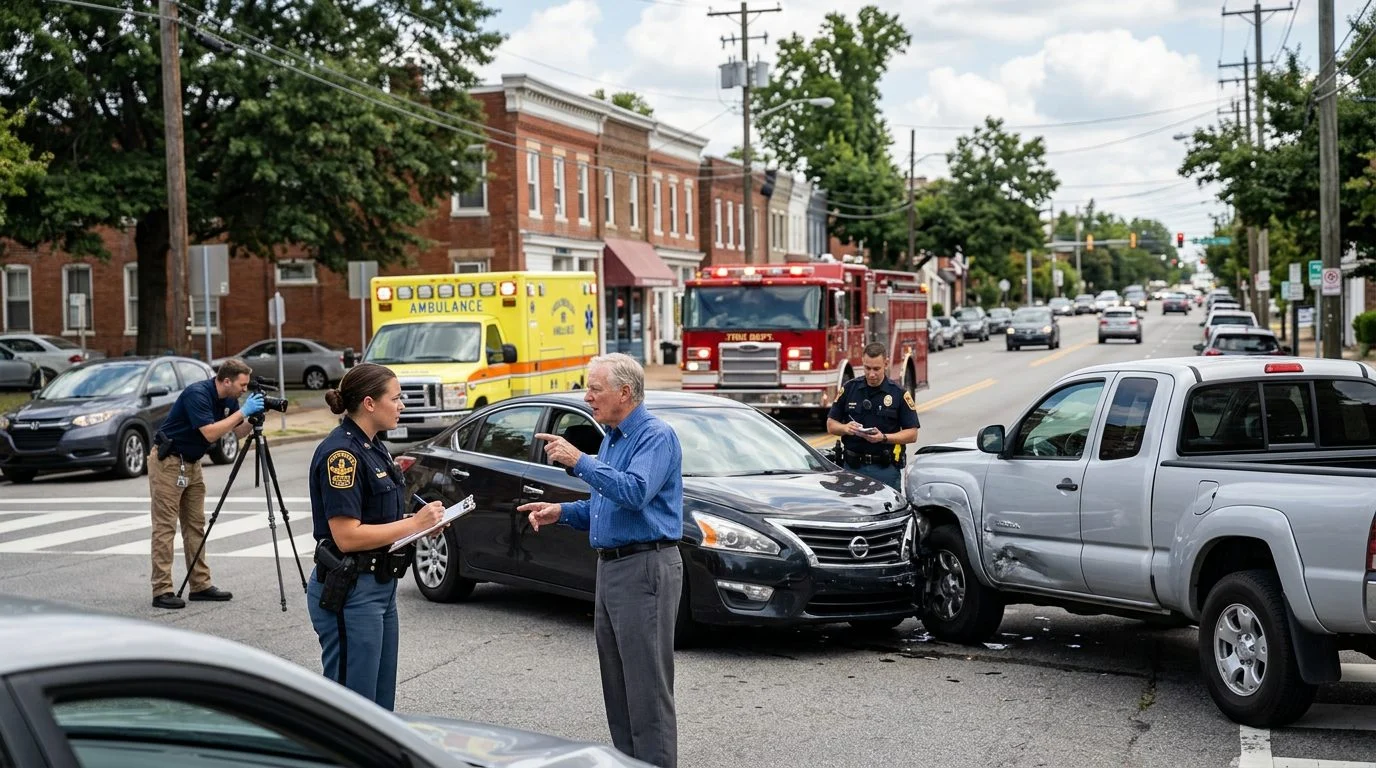
Gather the basic facts first, because insurers will ask for them again and again. Write down the date, the time, the exact location, and the weather and road conditions at the scene. List every driver, passenger and witness with their contact details, plus each vehicle’s make, model and license plate number. Record each insurer’s name, policy number and claim number exactly as the company gives them. If an officer responded, write down the police report number. Virginia requires a driver involved in a crash with injury or death to stop and report it to police immediately (Va. Code §§ 46.2-371, 46.2-894). Take photos of the vehicles, the road and any signs, if you can do so safely. Keep all of these notes in one place, so you can find them quickly. Writing details down while memory is fresh keeps your account accurate. Memories blur quickly, and a note made the same day holds up better than one pieced together weeks later.
Not sure what your next step is?
Talk it through with Correll Law Firm — we can walk you through how a situation like yours is usually handled and what your options are.

How to write a short, factual description of the accident
Write the description as a plain sequence of what you saw and heard, with no opinions about who caused the crash. Start with a short opening that gives the date, the place and the vehicles involved. Then describe the sequence in order: where each vehicle was, which direction it was traveling, and what each one did. Keep what you saw separate from what you assume. “The gray truck’s brake lights came on” is something you saw. “The truck was going too fast” is a guess unless you know the number. Avoid stating speed, distance or signal timing unless you are sure of it. Note the damage you observed on each vehicle. Mistakes often come from filling gaps with guesses, and later those guesses can look like contradictions. If new facts come to light, add a dated written update rather than changing the first version quietly. That keeps the record honest and easy to follow.
Reporting to your own insurer versus the other driver’s insurer
Your own insurer and the other driver’s insurer have different roles, so their questions are not the same. Your own insurer works under your policy. The Virginia State Corporation Commission explains that some optional auto coverage may pay for your own injuries or vehicle damage regardless of fault (Virginia auto insurance guide). The other driver’s insurer works for its own policyholder, and its questions often focus on how the crash happened. Keep your answers to confirmed facts. Give both insurers the same core information: names, policy details, vehicle damage and the police report number. Ask for the claim number at the first call, and use it in every later letter or call.
If a commercial truck or bus is involved, ask who the carrier is and which insurance applies. The Virginia Department of Motor Vehicles describes motor-carrier insurance filings, including bodily-injury, property-damage and cargo documents (Virginia DMV motor carrier insurance filing). For more on these crashes, read commercial vehicle accidents.
Finally, keep one written log of each call, with the date, the person’s name and what was said.
Questions to ask the insurance company before you agree to anything
Ask what your policy covers before you agree to any step, and ask for the answers in writing. Start by asking whether the policy covers this type of accident and which coverages apply to the vehicle involved. Ask what damages the policy will cover, such as vehicle repair, rental and medical bills, and request the policy language in writing. Ask what financial responsibilities you may carry, such as a deductible or policy limits. Limits matter because injuries can exceed them. For policies effective on or after January 1, 2025, Virginia sets liability limits of $50,000 for one person in one accident, $100,000 for two or more persons, and $25,000 for property damage (Va. Code § 46.2-472). Ask whether your own policy includes uninsured and underinsured motorist coverage. Virginia law requires auto policies to include uninsured and underinsured motorist coverage at limits no lower than the minimums in § 46.2-472. Uninsured motorist limits must equal the policy’s liability limits unless any one named insured rejects the additional coverage above those minimums by notifying the insurer, and that rejection binds everyone insured under the policy (Va. Code § 38.2-2206). Finally, ask for the adjuster’s name and the timeline the insurer expects for its next step.
What not to say to an insurance adjuster
Avoid admitting fault, guessing at details, or calling your injuries minor, because your early words can be read back to you later. Do not admit fault or say the crash was your mistake. A polite apology can sound like an admission, so if you say anything, say you are sorry it happened and stop there. Do not guess about speed, distance or what the other driver was doing. Do not describe your injuries as minor, and do not say you feel fine. Your condition can change over the following days, and a quick “I’m okay” can be quoted back later. Do not speculate about the other driver’s health, state of mind or reasons. Giving only the facts you have confirmed is usually the safest approach. If the adjuster presses for an answer you cannot confirm, say you will follow up in writing once you have checked the details.
Talking about your injuries and medical treatment
Tell the insurer who treated you and when, and let your medical records describe the injuries in detail. Medical records, not a phone conversation, are the most reliable source for injury details. Share the names of the providers who treated you, the dates of each visit, and any referrals. You can describe current symptoms honestly without calling the injury settled. Saying “I’m still being evaluated” is accurate if that is true. Keep copies of medical bills, prescriptions and visit summaries, and write down new symptoms as they appear. Your sense of how you feel can change over days and weeks, and a dated note helps you describe that change later. Limit the personal information you share to what the claim requires. A full medical history or details of unrelated prior claims usually go beyond what the insurer needs for this crash. If a question feels unclear, ask the insurer why it is asking before you answer.
Not sure what your next step is?
Talk it through with Correll Law Firm — we can walk you through how a situation like yours is usually handled and what your options are.
Recorded statements, early offers and what to consider before agreeing
You may wish to ask for time before giving a recorded statement, and an early offer does not need an answer on the spot. An insurer may ask for a recorded statement. You may wish to ask for a copy of the recording, and to review the facts you have written down before you speak. An early settlement offer is made before the full extent of injuries and treatment may be known. Before you respond, ask what the offer covers, what it releases, and whether future medical bills are included. The release terms matter. Read the terms with that in mind, and review any release in writing before you sign it. Taking time to review an offer is a reasonable step.
How to write a letter to an insurance company for a claim
A claim letter should be short, dated and limited to facts you have confirmed, with no argument about fault. Start with the basics, in this order: the date of the letter, the insurer’s name and mailing address, and a reference line with the claim number, policy number, your full name, and the date and place of the crash. Then state the confirmed facts in short numbered paragraphs. Each paragraph should cover one fact, such as the time of the crash, the damage you observed or the police report number. Leave out opinions and arguments. Close by asking the insurer to confirm in writing that it received your letter, and to list the next steps and timeline it expects. Keep a copy of every letter you send, along with proof of delivery. A tracked mailing or a dated email works well for that. Those records show what you reported and when.
Deadlines to track and when a claim may need faster action
Track the two-year lawsuit deadline and any shorter notice rule in your policy, starting with the day of the crash. Virginia generally allows two years from the date of injury to file a personal injury lawsuit (Va. Code § 8.01-243(A)); the clock runs from the date of injury, not the date of discovery, with narrow exceptions. Some claims carry notice requirements that run out sooner, so check your policy’s notice language early. Insurer timelines and policy language may set other dates to keep in mind. The two-year period is the deadline to file a lawsuit, not the deadline to report a crash (Va. Code § 8.01-243). Reporting happens at the scene, right away.
Can I tell the adjuster I don’t know the answer?
Yes. Saying you don’t know yet is accurate when a fact is unconfirmed, and you can follow up in writing later.
Is a claim with an insurer the same as a lawsuit?
No. Filing a claim with an insurer is a separate step from filing a lawsuit.
What if the insurer sends a form I don’t understand?
Ask what the form does, and ask for time to review it before you sign.