
Truck Accidents in Virginia
Hurt in a Truck Crash? Knowing When to Talk With a Lawyer
A plain-language guide for drivers and families across the Shenandoah Valley, Richmond and Henrico County.
Published November 21, 2026
Hurt in a crash with a commercial truck? You may be asking when to consult a lawyer, and whether waiting could affect your options.
You may wish to speak with a lawyer early if your injuries are serious, fault is unclear, an insurer pushes for fast answers, or someone you love has died. For a crash in Virginia, these questions can arrive quickly, so each situation is explained below.
Why a Truck Crash Raises Different Questions Than a Car Crash
A truck crash often involves more parties, more records and more time than a car crash.
Trucks are usually run by commercial carriers, and more than one party may be involved. The driver, the trucking company, the truck’s owner and a company that loaded the cargo can each play a role. Each may have its own insurer and its own account of what happened.
Federal rules also apply to many commercial motor carriers, and the Federal Motor Carrier Safety Administration (FMCSA) oversees them. If the motor carrier is itself the driver, the driver is likewise bound.
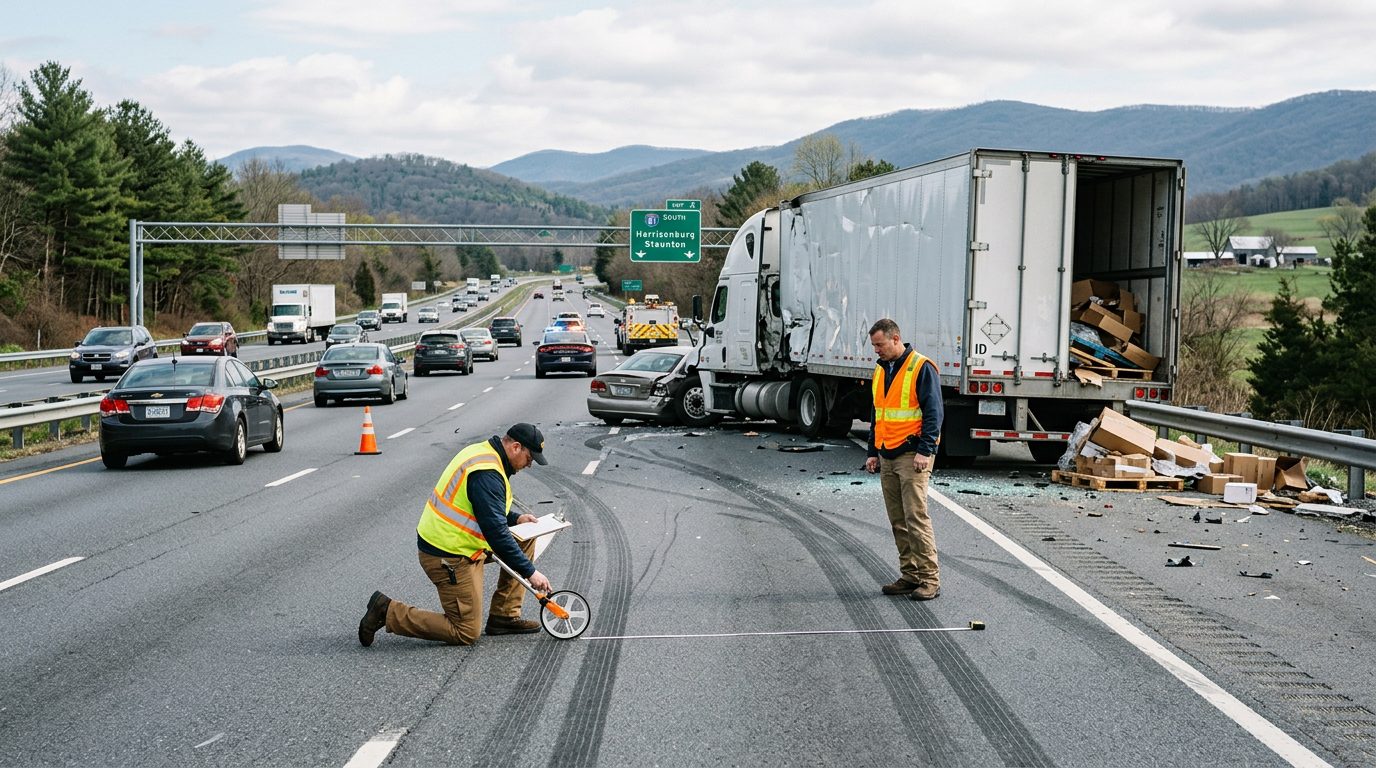
Because of this, the questions after a truck crash often take longer to answer. Company files, driver schedules and maintenance records may need to be requested and reviewed. Starting early can help you keep track of what exists and what is still missing. The firm’s Winchester and Harrisonburg locations serve people across the Shenandoah Valley, Richmond and Henrico County.
If a truck crash has left you with questions about injuries, fault or deadlines, you do not have to sort them out alone, and the firm is ready to talk them through with you. Talk it through with Correll Law Firm — we can walk you through how a situation like yours is usually handled and what your options are.

Signs It May Be Time to Speak With a Lawyer Soon
Speaking with a lawyer early can help when others start asking for decisions before you understand your situation. Knowing when to consult a lawyer often comes down to a few warning signs:
- An insurer asks for a recorded statement before your medical picture is clear.
- Someone offers a quick settlement while you are still in treatment.
- You are unsure what a form, authorization or release would allow.
- Your injuries are still being treated, and you do not yet know what comes next.
A lawyer may help you understand what is being asked before you respond. You may wish to speak with a lawyer if any of these apply to you.
Many people wait because they hope to feel better first. Waiting can be reasonable, but it can also leave questions unanswered while records are still being gathered. Keeping copies of every letter, form and bill makes those conversations easier.
Serious Injuries That Need a Full Medical Picture
Catastrophic injuries, traumatic brain injury and spinal cord injury often need a long period of medical care before the full picture is clear.
Some symptoms appear days or weeks after a crash, and they may change over time. A person may also struggle with work, sleep or family routines long after the first hospital visit.
Records often come from several places: emergency care, other doctors, therapists and follow-up visits. Future care needs and lost work take time to document, and they are easy to miss without a written plan.
Keep a simple journal of symptoms, appointments, missed work and daily tasks you can no longer do. A journal is not a medical record, but it can help you describe what you have been living with. Starting an early conversation with a lawyer can help you decide which records to gather first.
Fault That Is Disputed or Shared Among Several Parties
When fault is disputed, the answer often turns on details that are easy to lose, so it helps to raise questions early.
Accounts of a truck crash often differ. Drivers, witnesses and companies may describe the same moment in different ways. Federal driver-hours rules limit how long a property-carrying driver may drive. A driver generally may not keep driving once more than eight hours of driving time pass without a 30-minute break. These rules appear in 49 C.F.R. § 395.3, and they include exceptions.
Virginia follows contributory negligence: if you are found even partly at fault, you may be barred from recovering, with limited exceptions. Talk to a lawyer about your facts.
Photos, notes and early statements can later shape how fault is described.
Dealing With Insurance Companies and Early Offers
An insurer’s first offer may arrive before the full extent of an injury is known.
Adjusters often ask for steps that sound routine. You may be asked for a recorded statement, a medical authorization that lets them see your records, or a signed release. Each one deserves a careful look before you agree.
A signed release may limit later claims about the crash, so read what it says first. If an offer comes quickly, ask what it covers and whether future treatment is included. Keep notes of every call, including the person’s name, the date and what was said.
A lawyer may help you review these requests and understand the answers being asked of you. You may wish to speak with a lawyer before you agree to a recorded statement or sign a release.
Deadlines and Reporting Steps to Keep in Mind
Two timing rules matter most after a truck crash: the duty to report the crash and the deadline to file a lawsuit.
Virginia requires a driver involved in a crash with injury or death to stop and report it to police immediately (Va. Code §§ 46.2-371, 46.2-894). The two-year period is the deadline to file a lawsuit, not to report a crash (Va. Code § 8.01-243).
Virginia generally allows two years from the date of injury to file a personal injury lawsuit (Va. Code § 8.01-243(A)); the clock runs from the date of injury, not the date of discovery, with narrow exceptions. Some claims carry notice requirements that run out sooner, so the two-year date may not be the first one to watch.
Write down the crash date now. Keep police reports, bills and letters in one place so timing questions can be reviewed early.
Not sure what your next step is?
Talk it through with Correll Law Firm — we can walk you through how a situation like yours is usually handled and what your options are.
When a Truck Crash Results in a Death
A truck crash that causes a death raises a different set of legal steps, and families often have questions before they feel ready to ask them.
A Virginia wrongful death action is filed by the decedent’s personal representative within two years of the death (Va. Code §§ 8.01-50(C), 8.01-244(B)), on behalf of the family members the statute protects. Family members do not file; they share in the recovery.
Virginia wrongful death damages cover the family’s sorrow, mental anguish and loss of the decedent’s companionship, guidance and care; lost income and services; medical expenses from the injury; funeral expenses; and, for willful or wanton conduct, punitive damages (Va. Code § 8.01-52).
Under Va. Code § 8.01-55, the personal representative may compromise a wrongful death claim with the approval of the court where the action was brought, or with the consent of a circuit court if no action has been filed.
A family may wish to raise questions about the personal representative’s role and the time limits with a lawyer early.

When Punitive Damages May Be Part of the Discussion
Punitive damages may come up in some truck crash cases. Virginia allows punitive damages for actual malice, or for willful or wanton conduct or recklessness showing a conscious disregard for the safety of others, and the total punitive award may not exceed $350,000 under Va. Code § 8.01-38.1.
Reading this standard closely matters. Speed, fatigue and poor maintenance are factors that investigators may examine after a crash. The standard looks at the conduct itself, not only the injury that followed. Every crash has its own facts, and those details shape what any claim may look like.
Common questions
Do I have to hire a lawyer after a truck crash?
The choice is yours. You may wish to speak with a lawyer to understand your options.
Can I still talk with a lawyer if I may share some of the fault?
Yes. A lawyer can review how Virginia’s partial-fault rule may apply to your facts.
Do punitive damages come up in every truck crash case?
Whether punitive damages are part of a claim depends on the facts of the crash and the conduct of the person responsible.