
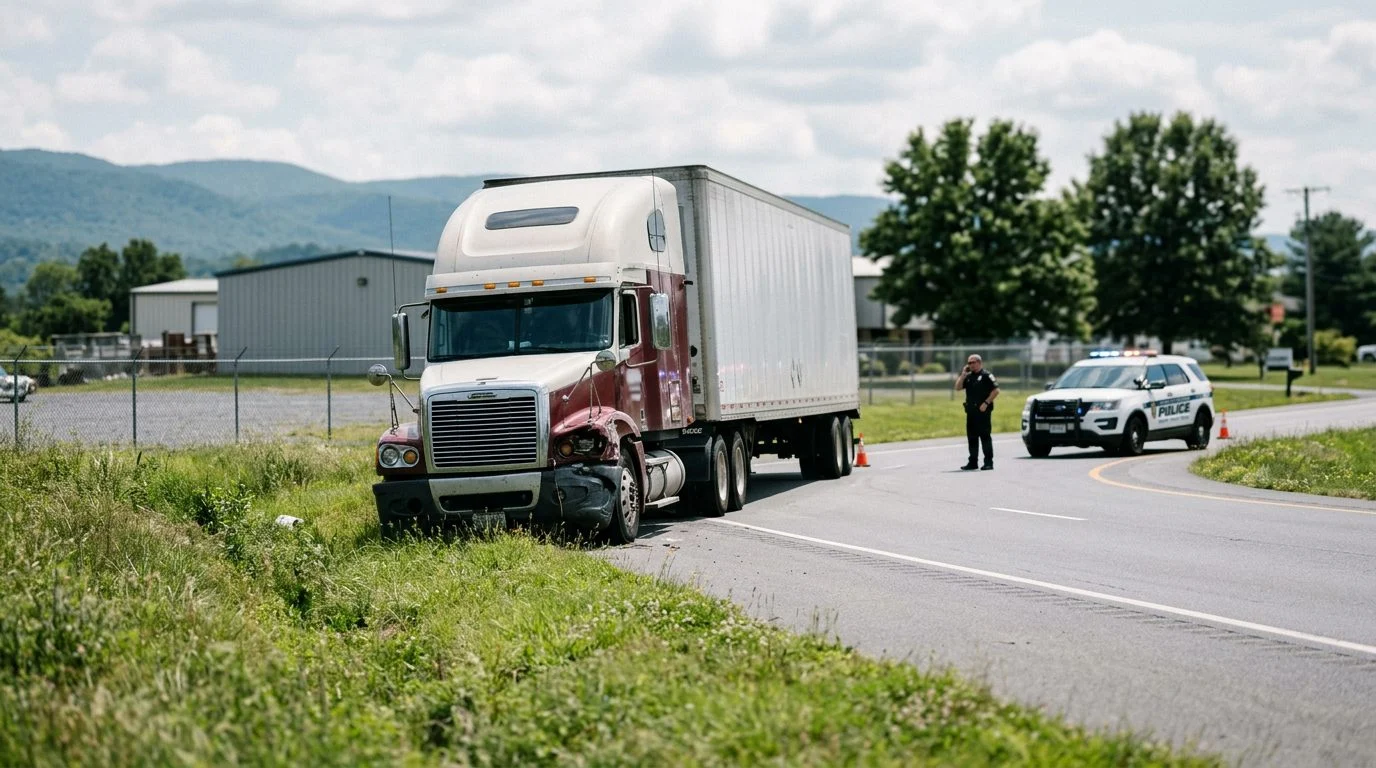
Truck Accidents | Harrisonburg, Virginia
Hurt in a tractor-trailer crash? Talk through your options with the firm
Large trucks, multiple insurers and complex records can make a crash harder to understand. Here is how the firm approaches these cases, and what to think about early.
Where the firm works
2
Offices: Winchester and Harrisonburg
Virginia
Serving the Shenandoah Valley, Richmond and Henrico County
Published November 21, 2026
If a tractor-trailer crash left you or someone you love badly hurt, you likely have many questions. A tractor-trailer crash case is a claim for compensation after a crash with a large commercial truck. It asks who caused the crash and what losses the injured person or family has suffered. Virginia law sets deadlines and rules for these claims, and the sections below explain the ones that matter most.
What a Tractor-Trailer Crash Case Involves
A tractor-trailer crash case involves a crash between a large commercial truck and another vehicle, a pedestrian, or a cyclist, along with the injuries or death that follow.
Tractor-trailers are much heavier than passenger vehicles. The Insurance Institute for Highway Safety tracks large-truck crash data, and loaded tractor-trailers need a longer distance to stop. That size difference matters when a crash happens.
These cases also tend to involve more than one person or company. A driver, a trucking company, or another business may each play a role.
The firm handles truck accidents, commercial vehicle accidents, and car accidents. It also handles catastrophic injuries, traumatic brain injury, spinal cord injury, and wrongful death. The firm is based in Winchester and keeps an office in Harrisonburg.
If a tractor-trailer crash has left you or someone you love seriously hurt, you may have a claim, and you do not have to face it alone. Talk it through with Correll Law Firm — we can walk you through how a situation like yours is usually handled and what your options are.

Serious Injuries Common in Large-Truck Crashes
Large-truck crashes can cause catastrophic injuries, which are injuries that cause lasting loss of function or need long-term care.
A traumatic brain injury, or TBI, may not show its full effects right after a crash. Headaches, trouble concentrating, memory problems, and mood changes can appear hours, days, or weeks later. Follow-up medical care matters, even when a person feels well enough to walk away from the scene.
A spinal cord injury can affect movement, feeling, and bodily functions. The effects depend on where along the spine the injury occurs. Early medical evaluation helps doctors find the injury and begin treatment, and it creates the records that document what happened.
Many people with these injuries need ongoing appointments, therapy, or equipment. The firm handles catastrophic injury claims that arise from car crashes and commercial vehicle crashes. Recovery often takes a long time, so detailed records matter from the start.
What to Do After a Tractor-Trailer Crash
The first steps are getting medical attention and reporting the crash to police.
Virginia requires a driver involved in a crash with injury or death to stop and report it to police immediately (Va. Code §§ 46.2-371, 46.2-894). The two-year period is the deadline to file a lawsuit, not to report a crash.
Medical care soon after a crash helps, even when pain seems minor at first. Some injuries, including brain trauma, are not always obvious right away.
Keep useful records:
- Photos of the scene, the vehicles, and any visible injuries
- Names and addresses of witnesses
- Medical bills, treatment notes, and records of time missed from work
- A written journal of how the injury affects work, daily routines, and family life
Police crash reports can be requested through the Virginia DMV.
How Long Do You Have to File a Lawsuit in Virginia?
Virginia generally allows two years from the date of injury to file a personal injury lawsuit (Va. Code § 8.01-243(A)); the clock runs from the date of injury, not the date of discovery, with narrow exceptions.
Some claims carry notice requirements that run out sooner. Deadlines are easy to lose sight of during medical recovery and insurance talks. Reviewing timing early helps avoid missed deadlines.
A deadline to file a lawsuit is different from a deadline for other steps, so the two should not be confused. Rural roads and highways in the Shenandoah Valley follow the same Virginia deadline rules as any other road in the state. The location of a crash does not change the filing period.
Fatal Tractor-Trailer Crashes and Wrongful Death
When a wrongful act, neglect, or default causes a death, Virginia law provides a wrongful death action, brought by and in the name of the personal representative of the deceased person, except that an action for fetal death is brought by and in the name of the natural mother.
Losing someone in a crash is painful, and the legal steps can feel heavy at the same time.
A Virginia wrongful death action is filed by the decedent’s personal representative within two years of the death (Va. Code §§ 8.01-50(C), 8.01-244(B)), on behalf of the family members the statute protects.
Family members generally do not file the action; it is brought by and in the name of the personal representative of the deceased person, except that an action for fetal death is brought by and in the name of the natural mother, unless she dies or is or becomes a person under a disability as defined in § 8.01-2, in which case her estate administrator, guardian, or qualified personal representative may initiate or maintain it (Va. Code § 8.01-50). They share in the recovery. Virginia law sets out which relatives share, starting with the surviving spouse and children of the deceased (Va. Code § 8.01-53).
Virginia wrongful death damages cover the family’s sorrow, mental anguish and loss of the decedent’s companionship, guidance and care; lost income and services; medical expenses from the injury; funeral expenses; and, for willful or wanton conduct, punitive damages (Va. Code § 8.01-52).
How the Process Works, Step by Step
A case usually moves through five stages, from first review to negotiation or a lawsuit. The timing depends on the facts, so these steps show the general order.
- Initial review. The firm looks at how the crash happened, the injuries, and the people and vehicles involved.
- Evidence gathering. Crash reports, medical records, and vehicle and scene information are collected and kept safe.
- Medical documentation. Treatment records and the effects of the injury on daily life are tracked over time.
- Communication. The firm communicates with the other parties and insurers, and reviews the options with the client.
- Resolution. The case moves toward negotiation or a lawsuit within Virginia’s deadlines, if the facts support it.
Each stage builds on the last, so early records help later steps. The firm explains what comes next at each stage in plain language.
Not sure what your next step is?
Talk it through with Correll Law Firm — we can walk you through how a situation like yours is usually handled and what your options are.
How the Firm Serves the Shenandoah Valley
The firm focuses on crashes involving commercial vehicles, catastrophic injuries, and wrongful death, and it handles car accident claims as well.
The firm handles tractor-trailer crash claims from its Harrisonburg and Winchester offices. It has support staff who help with records and daily office work.
Every case starts with the facts of the crash and the injuries involved, not a standard template. A crash on a rural road and one in a town bring different questions about evidence and witnesses.
Many injured people find the paperwork and insurance letters hard to follow while they recover. The firm’s role is to explain those steps in words that are easy to understand.
Frequently Asked Questions
Here are short answers to common questions about these claims.
Can I still file a claim if the crash happened on a rural road?
Timing, not location, is the key question.
Is there a limit on punitive damages in Virginia?
Virginia allows punitive damages for actual malice, or for willful or wanton conduct or recklessness showing a conscious disregard for the safety of others, capped at $350,000 (Va. Code § 8.01-38.1).
What if I am found partly at fault for the crash?
Virginia follows contributory negligence: if you are found even partly at fault, you may be barred from recovering, with limited exceptions. Talk to a lawyer about your facts.
Does the firm handle crashes outside Harrisonburg?
Yes. The firm serves people across the Shenandoah Valley, Warren County, and Richmond and Henrico County.