
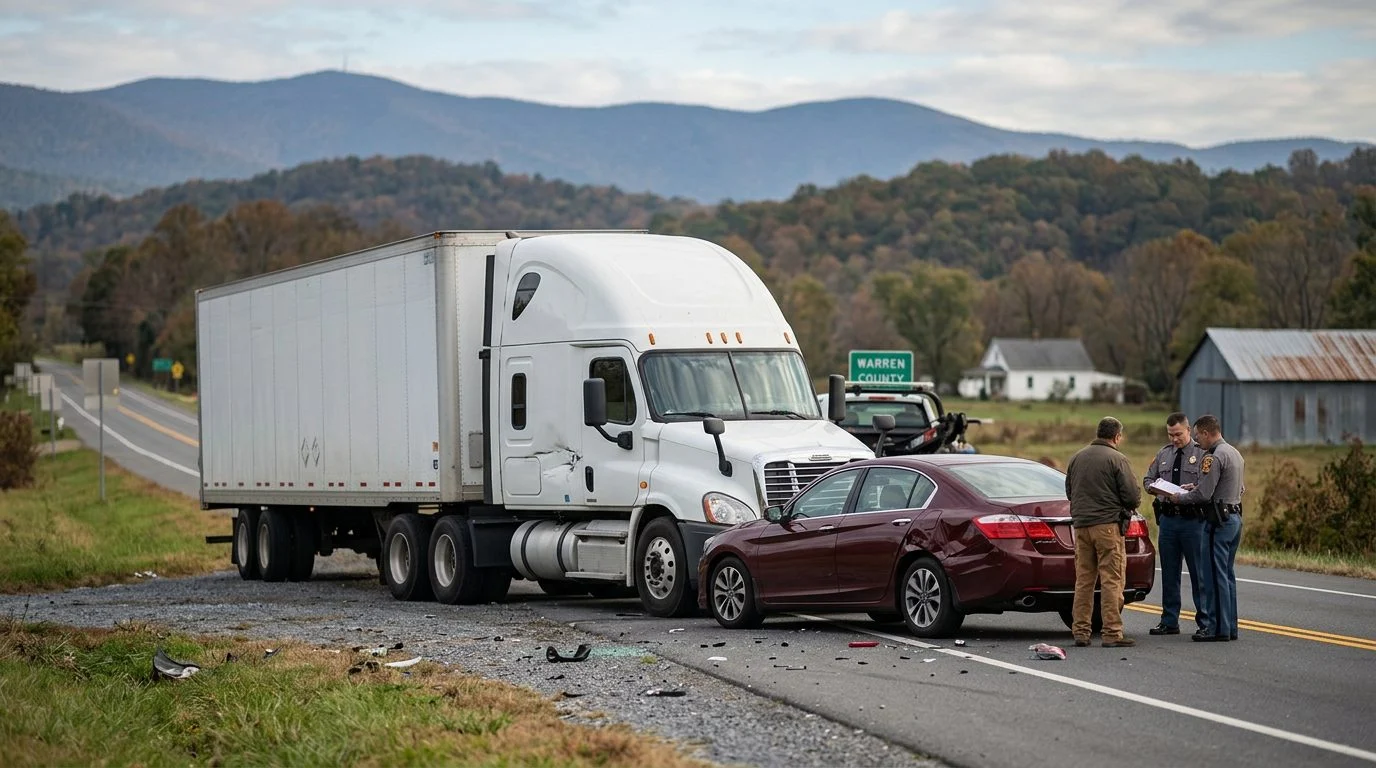
Truck Accidents | Winchester, Harrisonburg and the Shenandoah Valley
Tractor-Trailer Crash Help for Shenandoah Valley Families
The firm focuses on serious crashes involving big rigs and commercial trucks, serving people in Warren County, Richmond and Henrico County as well as the wider Shenandoah Valley.
Published November 21, 2026
Tractor-Trailer Crash Lawyer for People in Warren County and the Shenandoah Valley
If a tractor-trailer crash left you or a family member hurt, you may be wondering what comes next. Truck crash claims often involve more than one responsible party, and the rules differ from an ordinary car crash.
This guide explains who these claims are for, the evidence that often matters, Virginia’s filing deadlines, and what the process usually looks like. It is written for people in Warren County, the wider Shenandoah Valley and nearby communities.
If a tractor-trailer crash left you or someone you love hurt, you may have a claim, and the firm is glad to talk through the facts with you. Talk it through with Correll Law Firm — we can walk you through how a situation like yours is usually handled and what your options are.
What a Tractor-Trailer Crash Case Involves and Who It Is For
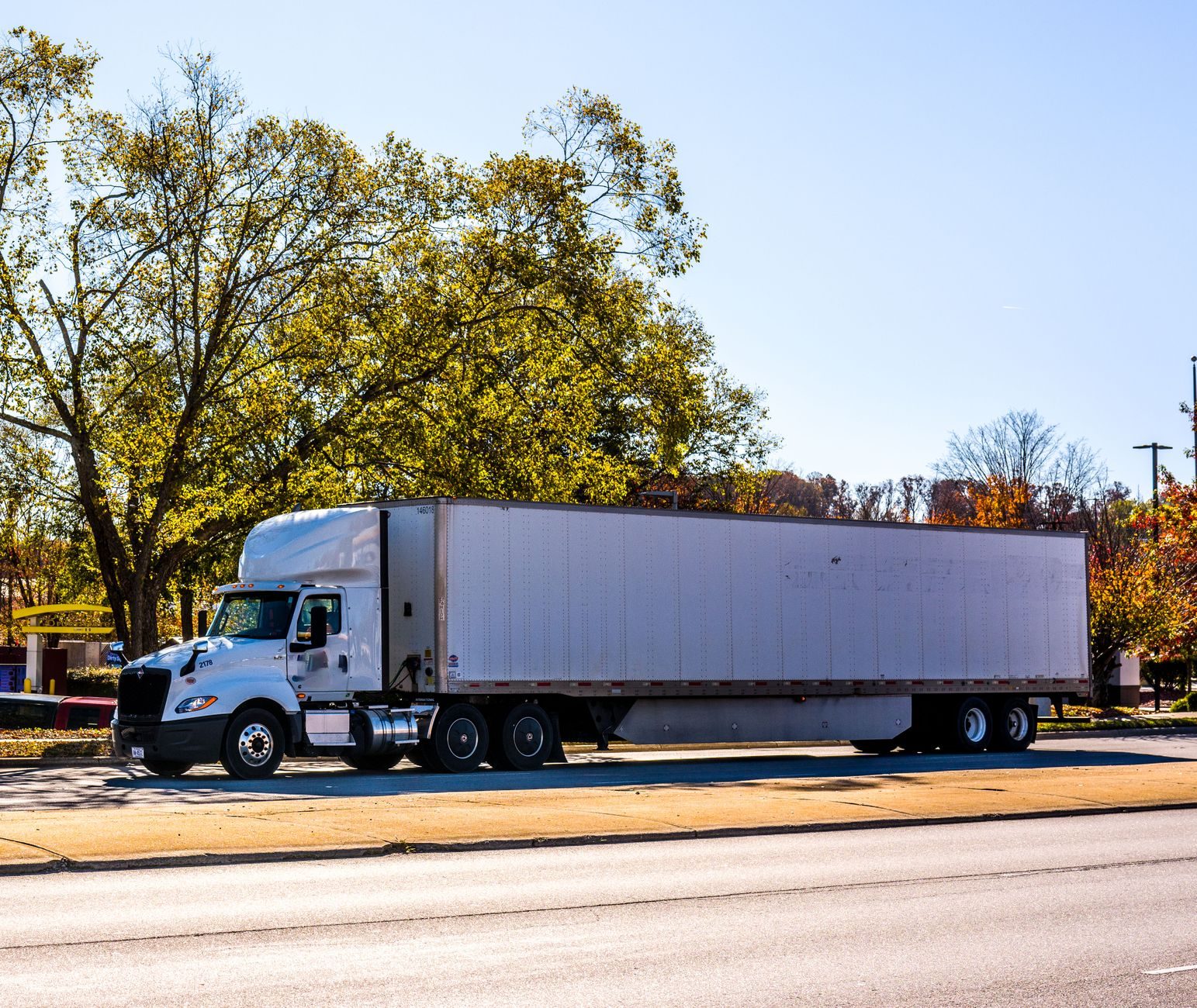
A tractor-trailer crash case is a claim for injuries or death caused by a large commercial truck, such as an 18-wheeler.
Tractor-trailers weigh far more than passenger cars and need more room to stop. The trucking company often holds records that a driver never sees, such as logs, dispatch messages and maintenance files. A claim may involve the driver, the company that employs or leases the driver, a maintenance contractor, or a cargo loader, depending on the facts.
This guide is for:
- Drivers and passengers hurt in a car or other vehicle struck by a truck.
- Pedestrians and cyclists hit by a commercial vehicle.
- Families of people killed in a truck crash.
Federal trucking rules often apply to the carrier, which is one reason truck cases involve more records. For a wider overview, read the commercial vehicle accidents guide.
Injuries and Claims the Firm Handles in Truck Crashes
The firm handles car accidents, truck accidents, commercial vehicle accidents, catastrophic injuries, traumatic brain injury, spinal cord injury and wrongful death matters.
Traumatic brain injuries and spinal cord injuries from truck crashes can have lasting effects. Symptoms and recovery vary from person to person, so the medical record and the treating providers’ findings are what show the injury. Early treatment notes matter for that reason.
Wrongful death claims follow their own rules. A Virginia wrongful death action is filed by the decedent’s personal representative within two years of the death (Va. Code §§ 8.01-50(C), 8.01-244(B)), on behalf of the family members the statute protects. Family members do not file the case. They share in the recovery.
Virginia wrongful death damages cover the family’s sorrow, mental anguish and loss of the decedent’s companionship, guidance and care; lost income and services; medical expenses from the injury; funeral expenses; and, for willful or wanton conduct, punitive damages (Va. Code § 8.01-52).
Evidence That Often Matters After an 18-Wheeler Crash
Trucking company records, the police crash report and the truck itself often matter most in these claims.
Federal rules require carriers to keep records of duty status and retain them for at least six months from the date of receipt (49 C.F.R. § 395.8).
Hours-of-service limits matter too. Except as otherwise provided in § 395.1, a driver of a property-carrying commercial motor vehicle may not drive after 14 consecutive hours after coming on duty following 10 consecutive hours off duty, and may drive a total of 11 hours in that period (49 C.F.R. § 395.3). Carriers must also inspect, repair and maintain their vehicles and keep records of that work (49 C.F.R. § 396.3).
The police report is another key document. The Virginia DMV crash report records page explains how these reports are obtained. Photos of the scene and vehicles, and names of witnesses, round out the picture.
Because retention periods are limited, timing matters. Early requests help keep records from being lost.
Deadlines and Crash Reporting in Virginia
Virginia requires a driver in a crash with injury or death to report it to police immediately, and personal injury lawsuits generally have a two-year filing period.
Virginia requires a driver involved in a crash with injury or death to stop and report it to police immediately (Va. Code §§ 46.2-371, 46.2-894). Personal injury lawsuits must generally be brought within two years after the cause of action accrues, unless otherwise provided in this section or by other statute, which is the deadline to file a lawsuit, not to report a crash (Va. Code § 8.01-243).
Virginia generally allows two years from the date of injury to file a personal injury lawsuit (Va. Code § 8.01-243(A)); the clock runs from the date of injury, not the date of discovery, with narrow exceptions.
Some claims carry notice requirements that run out sooner than the filing period. The facts decide which rules apply to a given crash.
What to Expect: The Process Step by Step
A tractor-trailer claim usually moves through records, investigation, medical review, negotiation and, if needed, a lawsuit.
- Initial review. You share the crash details, your injuries and the parties involved, so the facts can be reviewed.
- Early records. The police report, medical records, photos and witness information are gathered. Written requests to the trucking company and insurers ask that records be preserved.
- Investigation. Trucking records, the vehicle and the scene are reviewed. Reconstruction professionals may be consulted to explain how a crash happened.
- Medical picture. Treatment and recovery are followed over time, since a serious injury may take months to understand.
- Negotiation. The claim is discussed with insurers and other parties. No outcome is promised.
- Lawsuit if needed. If a fair resolution is not reached, a case may be filed in court within Virginia’s deadlines.
Early weeks focus on records. Months may pass as treatment and recovery become clearer. Timelines vary with the facts, the injuries and court schedules.
Not sure what your next step is?
Talk it through with Correll Law Firm — we can walk you through how a situation like yours is usually handled and what your options are.
Why the Firm Works With Warren County and Shenandoah Valley Clients
The firm is based in Winchester, has an office in Harrisonburg, and represents people from Warren County and nearby communities.
Winchester sits on Interstate 81. Residents of Warren County and nearby areas who need a tractor-trailer crash lawyer can reach the firm’s Winchester office. The firm also has support staff in its offices.
The firm focuses on serious injury and commercial vehicle claims, the matters covered in this guide. Clients from across the Shenandoah Valley and Virginia may reach the firm through either office.

Common Questions About Tractor-Trailer Crash Claims
The answers below are short, and each one gives the key Virginia rule for the question.
Do I need a tractor-trailer crash lawyer after a truck crash?
You may wish to speak with a lawyer, since trucking records and deadlines can be complicated.
What if I may share some of the blame?
Virginia follows contributory negligence: if you are found even partly at fault, you may be barred from recovering, with limited exceptions. Talk to a lawyer about your facts.
Is a truck crash claim different from a car crash claim?
Often, yes. Commercial records, several possible responsible parties and federal trucking rules can make these claims more involved, depending on the facts.
Who shares in a wrongful death recovery in Virginia?
Recovery goes to beneficiary classes under Va. Code § 8.01-53, starting with a surviving spouse and children of the deceased. Parents who regularly received support or services from the decedent within 12 months before death may share with a surviving spouse, children or grandchildren; if a spouse and parents survive but no child or grandchild, the spouse and parents share; if no spouse, children or grandchildren survive, parents, brothers and sisters, and any other relative who is primarily dependent on the decedent and is also a member of the same household as the decedent may share; such dependent household relatives may also share with the other classes, but no parent whose parental rights and responsibilities have been terminated by a court of competent jurisdiction or pursuant to a permanent entrustment agreement with a child welfare agency is eligible.
What should I keep after a crash?
Keep the police report number, photos, medical records, and a written list of missed work and daily activities you can no longer do.