
Truck Accidents | Virginia
If You Saw a Truck Crash, Your Account Matters
Practical, calm steps for anyone who watched a tractor-trailer or commercial vehicle collision on Virginia roads, from the Shenandoah Valley to Richmond.
Published November 16, 2026
You were on the road, or standing near it, when a truck crashed. Now you’re wondering what you can do to help.
Witnesses who see a truck crash in Virginia can help most by staying safe, calling for help, and writing down what they saw while it is fresh.
What to do at the scene in the first minutes
Your first job is to stay safe, then help responders reach anyone who needs care.
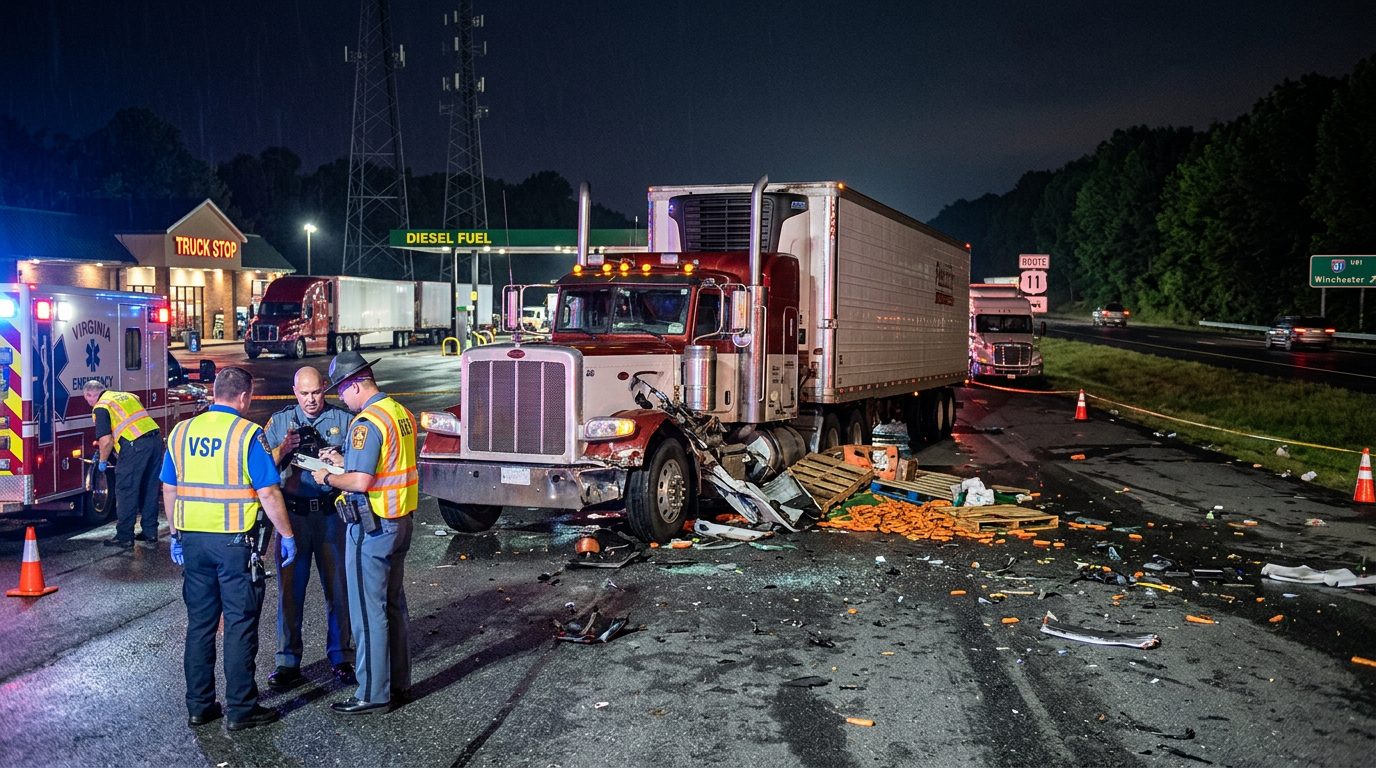
Pull over only where you can do so safely. Stay out of traffic lanes and away from debris. Trucks can leak fuel, shed parts, and block several lanes at once, so keep a wide distance. Keep children and pets away from the road.
Call 911 and give the dispatcher the location, the number of vehicles, and whether anyone looks hurt. Mention fire, fuel leaks, or anyone trapped. Those details help responders decide what to send. Stay on the line if the dispatcher asks you to.
Do not move injured people unless they face an immediate danger such as fire. Let trained responders decide how to move someone and take over their care.
Virginia law also asks the driver of a crash vehicle to render reasonable help to anyone hurt, including taking an injured person to a doctor when treatment looks necessary or is requested by the injured person (Va. Code § 46.2-894). That duty is written for drivers in the crash. Your part is to help responders find the people who need care.
If you saw a truck crash and have questions about what comes next, the firm is glad to talk with you, and you do not have to face it alone. Talk it through with Correll Law Firm — we can walk you through how a situation like yours is usually handled and what your options are.
Writing down what you saw while it is fresh
Write your notes as soon as you safely can, while the details are still clear.
Start with the basics: the date, the time, and the exact location. Name the road, the nearest cross street or mile marker, and the direction each vehicle was traveling. Note the weather and whether it was daylight, dusk, or dark. Traffic signals, signs, and lane markings matter too.
Next, write the sequence of events in your own words. Keep two lists in your notes. In one, put what you saw directly. In the other, put what you heard from others or assumed. Clear labels keep an honest account from turning into a guess.
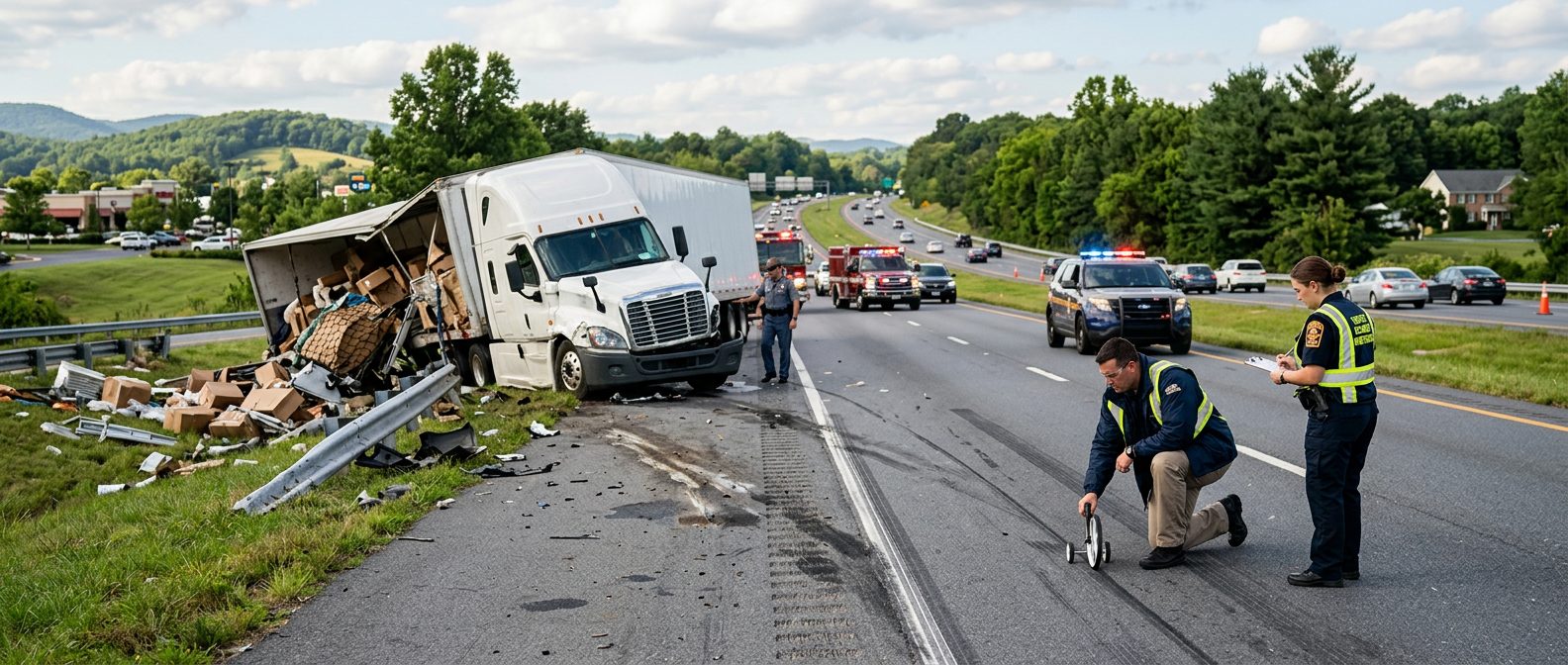
Describe where each vehicle was before and after impact. Mention where the truck came to rest, any skid marks, and any debris in the road. If you could not see part of the crash, say so.
Write at a table or in a notes app, never while driving. If you forget a detail, write “I don’t remember” instead of filling the gap. Witness memories fade, and people move or change jobs. A short note written close to the event is easier to check against other evidence than a recollection given months later. Date each note and keep the original.
Identifying the truck and its carrier
Write down the company name and the USDOT number on the truck if you can see them.
Federal rules require a commercial motor vehicle to display the carrier’s identification number, preceded by the letters “USDOT” (49 C.F.R. § 390.21T). That number helps identify the company that operates the truck.
Sometimes a different company’s name appears on the truck. If so, note that name and the operating carrier’s name, which may appear after the words “operated by.” The marking can also show other identifying details, so record anything printed on the cab or door.
A marking can be hard to read from a distance or from a moving car. If you cannot read a number, write down the digits you could see and say that the rest was unclear.
Also write down the unit number, the license plate and state, and the trailer number if visible. Describe the cab color, the trailer type (box, tanker, or flatbed), and any logo or cargo markings. Take a photo of these markings if it is safe to do so.
Do not approach the truck just to read its markings. Read them from where you are safely standing, or note what you can see and move on.
Photos, video, and other witnesses
Photos and the names of other witnesses can help investigators, if you can gather them safely.
Take photos or video only from a safe spot, and never block responders or traffic. Capture the vehicles, where they came to rest, the road surface, signs, and any visible damage. Wide shots show the layout, and close shots show details.
Other people who saw the crash may remember different things. Ask for their names and phone numbers, and note where each person was standing. Keep the request short and polite. Explain that you are collecting names so police can reach them.
Witnesses often share contact details at the scene and then lose them. Put names and numbers into your phone the same day.
Keep the original photos and notes unedited, with the date and time information intact. Make crops or filters on copies only. An edited original can invite questions about what was changed.
Speaking with police and insurance representatives
Tell police what you personally saw, and say plainly what you did not see.
Officers need facts. Describe what you saw and heard, and say so when you are unsure of a detail. “I think the light was red, but I looked away for a second” is more useful than a confident guess.
Avoid guessing about who was at fault. Investigators look at the evidence to answer that question. Your job is to describe the facts you observed.
Insurance representatives for the drivers may contact you. You may choose what to share and when. You may ask for questions in writing, and you may review your notes before answering. Keep a copy of anything you send or sign.
If you feel pressure to give a statement before you are ready, you may say you need time. If an officer asks for a written statement, write only what you can stand behind.
Reporting duties under Virginia law
Virginia requires a driver involved in a crash with injury or death to stop and report it to police immediately (Va. Code §§ 46.2-371, 46.2-894).
That duty belongs to the driver. Under Va. Code § 46.2-371, the driver, or someone acting for the driver, involved in any accident resulting in injury to or death of any person must immediately give notice of the accident to a law-enforcement officer. A willful failure to make that report is a Class 4 misdemeanor.
Va. Code § 46.2-894 adds more detail. The driver must stop as close to the scene as possible without obstructing traffic. The driver must also report a name, address, driver’s license number, and vehicle registration number forthwith to the State Police or local law-enforcement agency, or to the other parties the section names. The penalties in that section depend on whether someone was injured or killed, or how much property was damaged.
For a witness, the practical point is simple. Police may ask what you saw. Your notes can help them compare what drivers say with what happened.
Keep two ideas apart. The reporting rule is about reporting a crash right away.
Not sure what your next step is?
Talk it through with Correll Law Firm — we can walk you through how a situation like yours is usually handled and what your options are.
How a witness account fits with other evidence
A witness account is one piece of evidence, and it works best next to other records.
Investigators may compare a witness account with police reports, photos, vehicle damage, and records kept by the carrier. Each source can support or question the others. A witness’s early notes can help check later statements against what happened on the road.
For commercial trucks, one important record is the driver’s time behind the wheel. Records of driving and rest time may be compared with the time of the crash. A witness can’t speak to those records, but a witness’s timeline can help place the crash within them.
The hours-of-service records page explains how those records are reviewed. For a wider view of how these claims are investigated, see the commercial vehicle accidents guide for Virginia.
If the crash resulted in a death
A Virginia wrongful death action is filed by the decedent’s personal representative within two years of the death (Va. Code §§ 8.01-50(C), 8.01-244(B)), on behalf of the family members the statute protects.
The underlying claim rests on Va. Code § 8.01-50. That section says that when a wrongful act, neglect, or default causes a death, and the injured person could have sued over it if they had lived, the person or company responsible can be sued for damages even though the injured person has died.
A witness who saw the crash can still play an important role by writing a dated account in their own words and giving it to police early.
If family members ask what you saw, your dated notes give them an accurate starting point. Being a witness to a death is hard. You do not have to write everything at once. You can add short, dated notes over several days, and you can keep each one unchanged once written.
Frequently Asked Questions
Do I have to speak with the insurance company after seeing a truck crash?
You may choose what to share and when. You may ask for questions in writing and review your notes first.
How do I write an accident report as a witness?
Write a dated account of what you saw, in your own words, with the time, location, and vehicles involved. Ask the officer on scene what details they need, and keep a copy of your notes.
How long do I have to file a lawsuit in Virginia after a truck crash?
Virginia generally allows two years from the date of injury to file a personal injury lawsuit (Va. Code § 8.01-243(A)); the clock runs from the date of injury, not the date of discovery, with narrow exceptions. Some claims carry notice requirements that run out sooner.