
Truck Accidents | Virginia
After a Truck Crash, Drug Testing Can Shape the Evidence
A plain-language look at the federal testing rules that may apply when a commercial driver is involved in a serious collision.
Published November 15, 2026
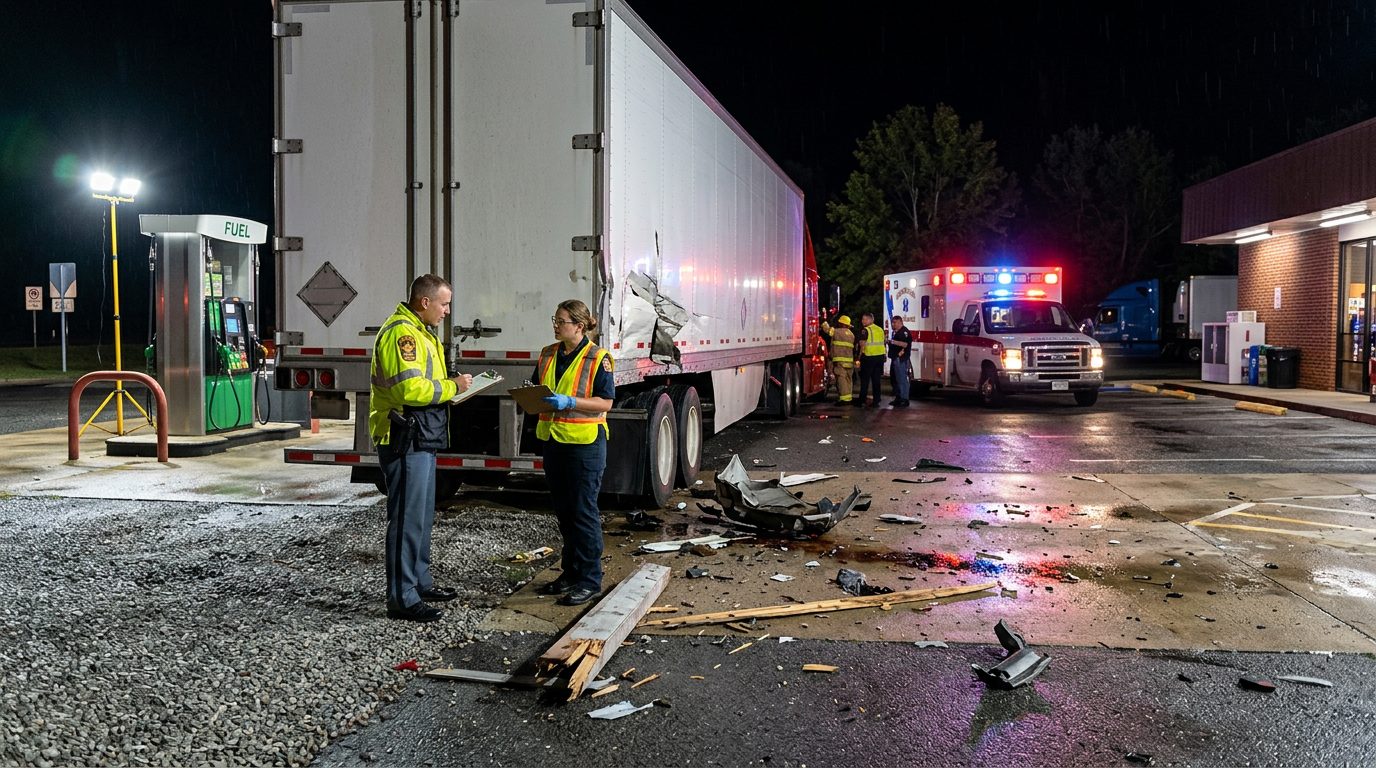
After a crash with a commercial truck, you may wonder whether the truck driver had to take a drug test after the accident. In many crashes, the answer is yes. Federal rules require post-accident testing in defined situations, and the trucking company, as the employer, must arrange it.
This guide explains those federal rules in plain terms. It covers who is covered, when testing is triggered, the timing limits, the employer’s records, and the Drug and Alcohol Clearinghouse. It also explains how these records can matter in a Virginia crash claim.
Which Truck Drivers Are Covered by the Federal Testing Rules
The federal testing rules cover people who drive commercial motor vehicles in commerce and who are subject to commercial driver’s license rules. Those rules apply to employers and their drivers in any State (49 CFR § 382.103).
The rule covers any person who operates a commercial motor vehicle, including full-time drivers, casual, intermittent or occasional drivers, leased drivers, and independent owner-operator contractors (49 CFR § 382.107). That matters in practice. A driver who leases a truck or owns one may still fall under the federal rules, not only a driver on a company payroll.
Some groups are carved out. These include certain active-duty military personnel, some farm vehicle operators, and some firefighters and emergency vehicle operators (49 CFR § 382.103).
The federal rules also set the testing steps. Under 49 CFR § 382.105, alcohol and drug testing must follow the procedures in 49 CFR part 40. That means the collection and handling steps are fixed by federal procedure, not by each trucking company’s own preferences. Virginia’s crash duties sit alongside those federal steps. They are a separate set of rules, covered in the next section.
For a broader look at truck and commercial vehicle claims, see the firm’s commercial vehicle accidents guide.
Not sure what your next step is?
Talk it through with Correll Law Firm — we can walk you through how a situation like yours is usually handled and what your options are.
When a Crash Triggers Post-Accident Testing
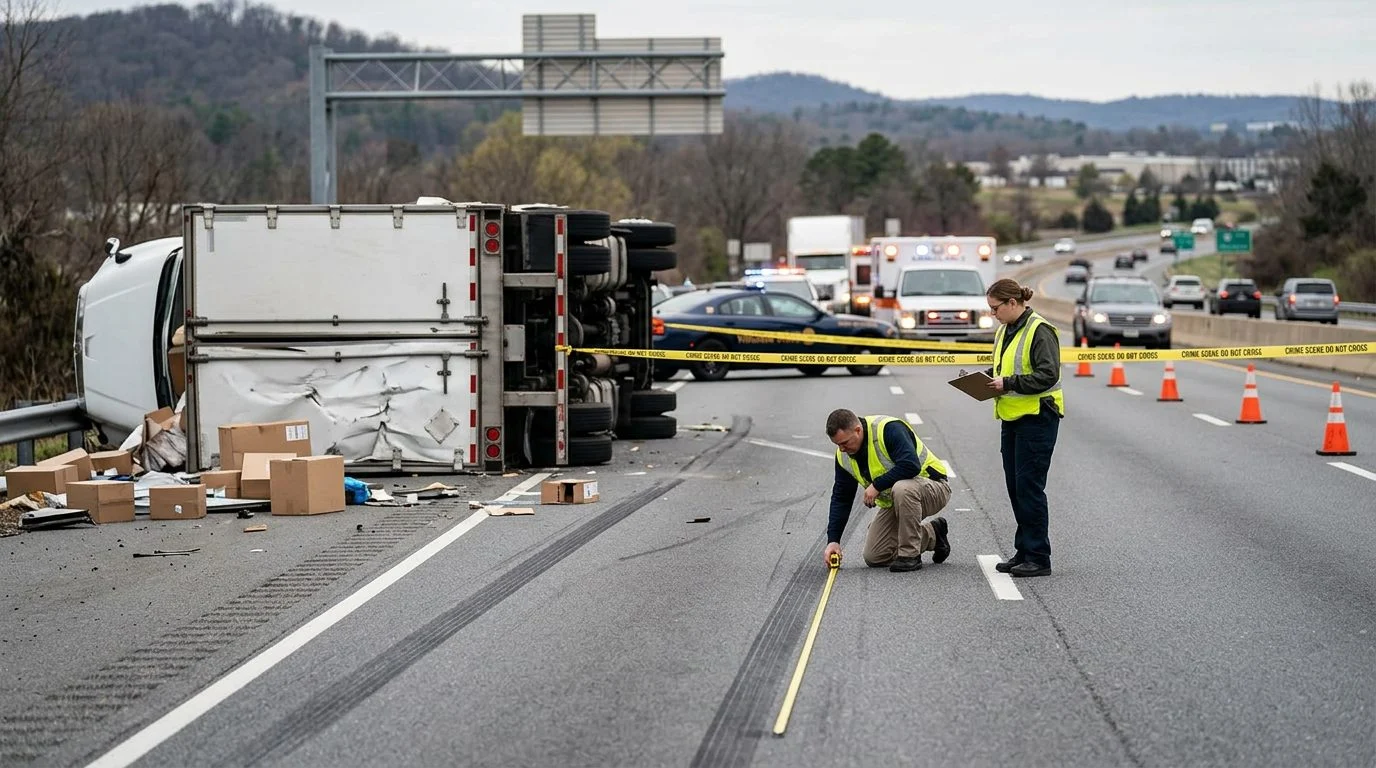
Under 49 CFR § 382.303, each employer must test each surviving driver for alcohol and for controlled substances after such a crash. For alcohol testing under federal rules, one trigger is a surviving driver who receives a moving traffic violation citation, issued under State or local law and arising from the crash, within 8 hours of the occurrence, where the crash involved injury to a person who, as a result of that injury, immediately receives medical treatment away from the crash scene, or where one or more motor vehicles incur disabling damage requiring a tow truck or other vehicle to move them from the scene (49 C.F.R. § 382.303(a)(2)). Testing is also required, without a citation, when a surviving driver was performing safety-sensitive functions and the accident involved the loss of human life.
The rule applies to a commercial motor vehicle operating on a public road in commerce. Surviving drivers are the drivers still alive after the crash.
The duty to conduct the post-accident test falls on the employer, while a driver subject to post-accident testing must remain readily available for such testing (49 CFR § 382.303). The rule says each employer shall test, so the trucking company must arrange the testing.
Some occurrences are excluded. The section does not apply to an occurrence involving only loading or unloading cargo. It also does not apply to certain passenger car operations, unless the vehicle carries passengers for hire or certain hazardous materials that require placards (49 CFR § 382.303).
Virginia adds its own duty. Virginia requires a driver involved in a crash with injury or death to stop and report it to police immediately (Va. Code §§ 46.2-371, 46.2-894).
The two-year period is the deadline to file a lawsuit, not to report a crash (Va. Code § 8.01-243).
Does DOT Test for Alcohol?
Yes. Federal rules require post-accident alcohol testing of surviving drivers in a fatal crash, or when the driver receives a citation within 8 hours in a crash with injury treated away from the scene or a tow-away.
The test must happen as soon as practicable. If an alcohol test is not given within two hours, the employer must prepare and keep a record stating why it was not promptly administered. If the test is not given within eight hours, the employer must stop trying to give an alcohol test and keep the same record (49 CFR § 382.303).
The two-hour and eight-hour marks tell the employer what to record and when to stop trying. Those records become part of the employer’s file, which is explained below.
Medical care comes first. Nothing in this section requires delaying necessary medical attention for injured people. A driver may also leave the scene for the time needed to get assistance or emergency care (49 CFR § 382.303).
Police tests can count. A breath or blood test given by federal, state or local law enforcement with independent authority can meet the requirement. The test must follow the applicable testing rules, and the employer must obtain the results (49 CFR § 382.303).
Drug Testing After a Crash: Timing and Who Runs the Test
Drug testing uses the same two kinds of triggers as alcohol testing, but the citation window is thirty-two hours instead of 8. FMCSA’s post-accident testing guidance sets a 32-hour deadline for the drug test.
The test checks for controlled substances. A controlled substances test uses urine or oral fluid specimens (49 CFR § 382.107).
Lab results go to a medical review officer. A confirmation test result is one a medical review officer (MRO) receives from a laboratory (49 CFR § 382.107).
A driver who is hurt may be taken to a hospital right away.
What happens if a driver refuses the test?
A driver may not refuse a required post-accident test. No employer may let a driver who refuses keep doing safety-sensitive work (49 CFR § 382.211).
Refusal is broader than a flat no. Failing to appear for a test within a reasonable time after being directed, or failing to give a required urine or oral fluid specimen, can count as a refusal (49 CFR § 382.107).
A driver must also remain readily available for the test. If not, the employer may treat the driver as having refused (49 CFR § 382.303).
What Employers Must Do After a Crash
The employer must arrange the post-accident tests. If an alcohol test is not administered within two hours of the accident, the employer must prepare and maintain on file a record stating the reasons the test was not promptly administered; if it is not administered within eight hours, the employer must stop attempting the alcohol test and keep the same record. If a controlled substances test is not administered within 32 hours, the employer must stop attempting that test and keep a record stating the reasons it was not promptly administered.
Federal records rules require an employer to keep documents generated in connection with decisions on post-accident tests (49 CFR § 382.401). The employer also keeps test results, documents about any refusal, and documents a driver presents to dispute a result.
Records must be kept in a secure location with controlled access. When an authorized FMCSA representative asks, the records must be available for inspection at the employer’s principal place of business within two business days (49 CFR § 382.401).
The employer must also give drivers necessary post-accident information, procedures and instructions before the driver operates a commercial motor vehicle (49 CFR § 382.303).
The employer’s testing file is separate from the driver’s medical file. Both can matter in a crash claim, but they answer different questions. A driver’s own information is handled separately, through the Clearinghouse discussed next.
How the Drug and Alcohol Clearinghouse Fits In
The Drug and Alcohol Clearinghouse is the FMCSA database that employers and service agents use to report and query information about drivers under federal testing rules (49 CFR § 382.107).
Employers must query it in two situations. They must run a pre-employment query before a driver performs safety-sensitive work. They must also query it at least once a year for employees subject to testing (49 CFR § 382.701).
The query looks for verified positive, adulterated or substituted drug test results. It also looks for alcohol confirmation tests at 0.04 or higher, refusals, and certain reported violations (49 CFR § 382.701).
An employer may not let a driver perform safety-sensitive work when a query shows one of these results. The exception applies when the driver has successfully completed the SAP evaluation, referral, and education/treatment process, achieves a negative return-to-duty test result, and completes the follow-up testing plan prescribed by the SAP. Alternatively, if the driver has not completed all follow-up tests prescribed by the SAP, the exception applies when the driver has completed the SAP process and achieves a negative return-to-duty test result, and the employer assumes the responsibility for managing the follow-up testing process associated with the testing violation (49 CFR § 382.701).
Can a driver check his or her own record?
Yes. A driver may review information in the Clearinghouse about himself or herself, unless another law or regulation restricts it. The driver must register with the Clearinghouse before accessing that information (49 CFR § 382.709).
Not sure what your next step is?
Talk it through with Correll Law Firm — we can walk you through how a situation like yours is usually handled and what your options are.
How Testing Records Can Matter in a Truck Crash Claim
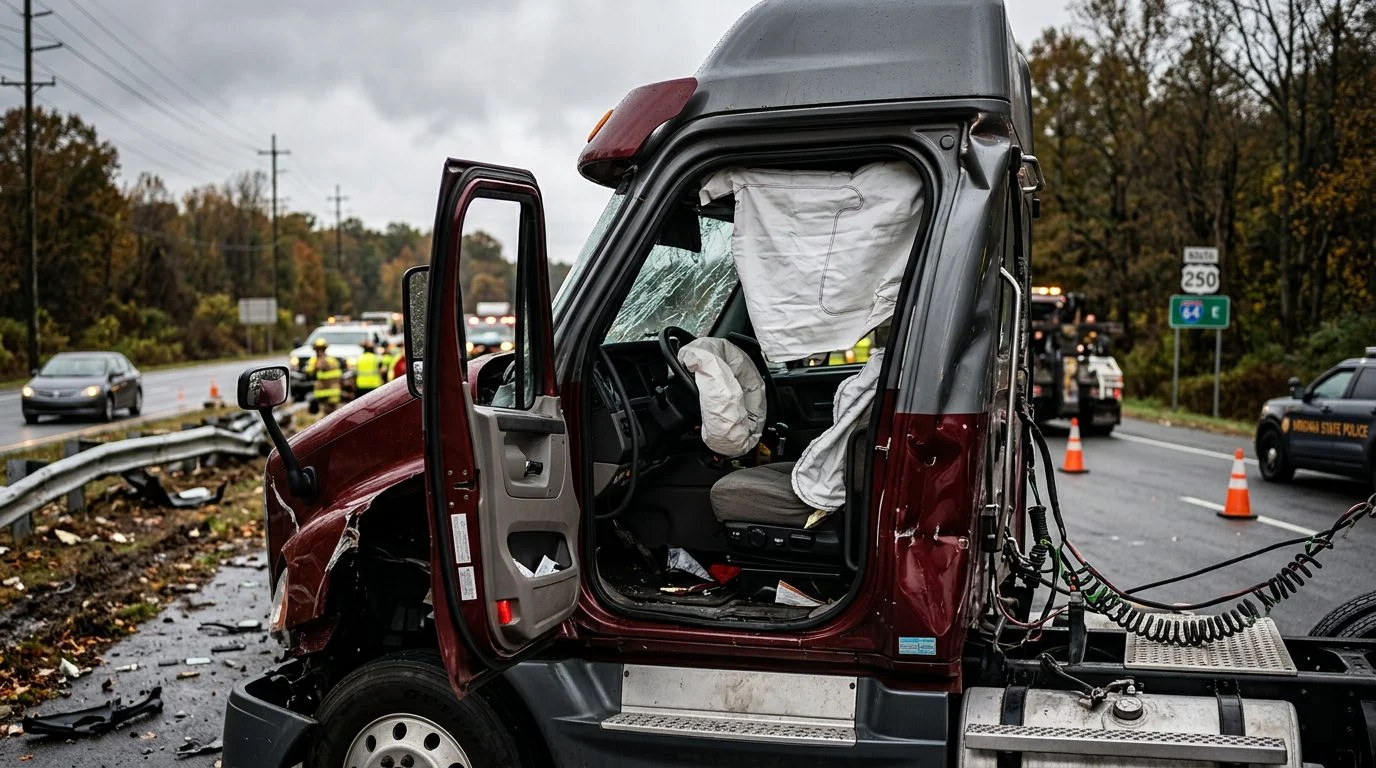
Post-accident test records can be relevant evidence in a truck crash claim. They can show whether a test was given, when it was given, and whether a refusal or a documented delay was recorded.
What those records show, and how much weight they carry, depends on the facts of each case and how the evidence is presented.
A late test or a missing record is a detail worth reviewing closely, along with the crash report.
Serious injuries bring their own evidence. Medical records about a brain or spinal cord injury are a separate category from the testing file, and both may be needed to understand what happened.
The firm focuses on car and truck crashes, commercial vehicle accidents, catastrophic injuries, traumatic brain injury, spinal cord injury and wrongful death. The firm’s offices are in Winchester and Harrisonburg, and it serves people across the Shenandoah Valley, Richmond and Henrico County.
Virginia generally allows two years from the date of injury to file a personal injury lawsuit (Va. Code § 8.01-243(A)); the clock runs from the date of injury, not the date of discovery, with narrow exceptions.