
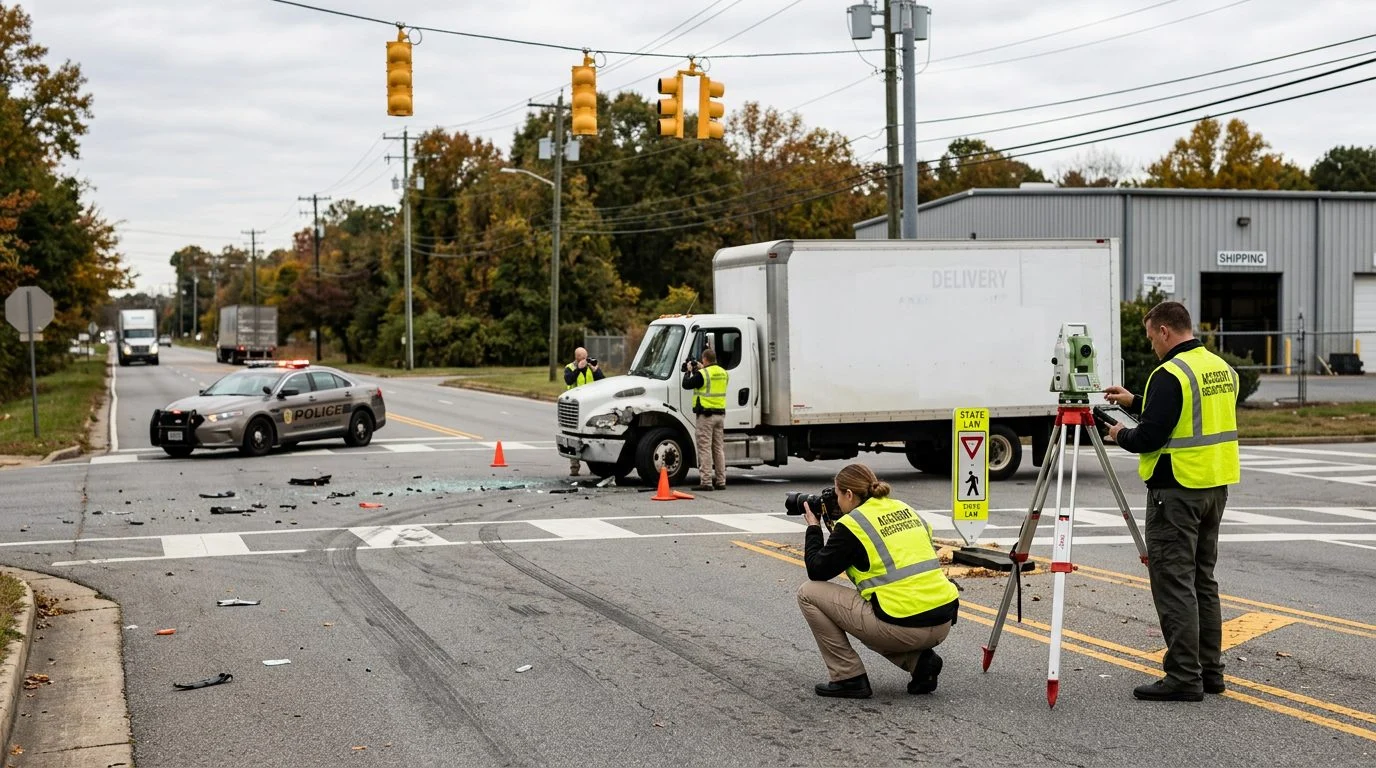
Truck Accidents | Winchester, Harrisonburg and the Shenandoah Valley
When a Truck Crash Takes a Loved One, Know What Your Family Can Seek
Plain-language answers for families in the Shenandoah Valley, Richmond and Henrico County who are coping with a fatal crash involving a large truck.
Published November 26, 2026
A crash with a large truck can leave a family grieving and facing hard questions at the same time. Here is the short answer to what the law lets a family seek. Virginia wrongful death damages cover the family’s sorrow, mental anguish and loss of the decedent’s companionship, guidance and care; lost income and services; medical expenses from the injury; funeral expenses; and, for willful or wanton conduct, punitive damages (Va. Code § 8.01-52).
The sections below explain each part in plain language. The focus is on a fatal crash involving a commercial truck or other commercial vehicle.
What a Virginia Wrongful Death Claim Is
A wrongful death claim is a lawsuit that may be brought when a person dies because of another party’s wrongful act, neglect, or default that would have entitled the injured party to maintain an action had death not ensued, and it shall be brought by and in the name of the personal representative of such deceased person. After a truck crash, that party might be the driver, the trucking company, or another party whose actions played a part in the crash.
Virginia also sets out who brings the claim and how long they have. A Virginia wrongful death action is filed by the decedent’s personal representative within two years of the death (Va. Code §§ 8.01-50(C), 8.01-244(B)), on behalf of the family members the statute protects.
Under Va. Code § 8.01-50, an action arises when a death is caused by a wrongful act, neglect, or default that would have entitled the injured party to maintain an action had death not ensued, and under § 8.01-244 the two-year period runs from the death, so early steps matter. Crash reports, photos, witness names and trucking company records are easier to gather while they are fresh.
Families who want a broader overview can read wrongful death claims in Virginia. The firm’s Winchester and Harrisonburg locations serve families across the Shenandoah Valley. It represents families across the Shenandoah Valley, Richmond and Henrico County.
Not sure what your next step is?
Talk it through with Correll Law Firm — we can walk you through how a situation like yours is usually handled and what your options are.

Who Files and Who Shares in the Recovery
The personal representative files the action, and the family members named by statute share in any recovery. Family members do not file the lawsuit themselves.
The statute then names who may share in the damages. Under Va. Code § 8.01-53, the list starts with the surviving spouse and the children of the deceased.
Which relatives qualify depends on the facts of each family. Families often ask early who will serve as personal representative. That question is worth settling early, because it shapes who acts for the family from the start.
The Family’s Sorrow, Mental Anguish and Loss of Companionship
Sorrow and mental anguish make up the first category of damages. The statute describes this category as sorrow, mental anguish and solace, which may include society, companionship, comfort, guidance, kindly offices and advice of the decedent (Va. Code § 8.01-52). Kindly offices means kind acts of help and support.
Imagine a father who drove to the same job each morning, coached his son’s team and helped with homework each night. After a sudden crash, his family may miss him at every meal and every milestone. This category is meant to address that kind of loss, which numbers cannot fully capture.
The statute lets the jury or the court award damages it finds fair and just under the law (Va. Code § 8.01-52). The family’s everyday life is central to how this category is presented. Details such as routines, roles and traditions help show what the family lost.
Lost Income and Lost Services
Wrongful death damages include the decedent’s reasonably expected loss of income. They also include the services the decedent provided to the family, such as protection, care and assistance (Va. Code § 8.01-52).
Consider a grandmother who cooked for the household, drove children to school and helped care for a spouse with a disability. Her family may need to replace that care after her death. Losses like these may be part of the claim, because the statute covers compensation for the reasonably expected loss of services the decedent provided.
The word “reasonably” matters. Income and services are tied to what the decedent would reasonably have provided. A claim looks at the decedent’s ordinary routine, work history and role in the home.
Income proof also has a rule worth knowing. Under Va. Code § 8.01-35, provable damages for lost income are not reduced because of reimbursement from another source. The fact of that reimbursement cannot be admitted into evidence. Pay stubs, tax returns and employer records help show what the decedent earned.
Medical Expenses and Funeral Expenses
Wrongful death damages also include medical expenses from the injury and reasonable funeral expenses. The statute covers expenses for care, treatment and hospitalization that were incident to the injury that caused the death (Va. Code § 8.01-52).
That can include ambulance transport, emergency care, surgery, intensive care and the hospital stay that ended in death. Funeral expenses cover reasonable funeral arrangements.
Many families are overwhelmed in the weeks after a death, and paperwork gets set aside. Keep hospital statements, ambulance records, funeral home agreements and receipts in one folder. Ask hospitals for itemized statements, since those show each service provided. Clear records make these losses easier to document later.
Punitive Damages for Willful or Wanton Conduct
Punitive damages are the one category that turns on the defendant’s conduct, not only on the family’s losses. Virginia allows punitive damages for actual malice, or for willful or wanton conduct or recklessness showing a conscious disregard for the safety of others, capped at $350,000 (Va. Code § 8.01-38.1).
The jury is not told about the cap. If an award goes over the limit, the judge reduces it to the maximum the statute allows.
In a wrongful death action, the family may seek punitive damages for willful or wanton conduct (Va. Code § 8.01-52).
Punitive damages are not automatic in every wrongful death claim. The cap in § 8.01-38.1 applies to punitive damages only, not to the other categories on this list.
Not sure what your next step is?
Talk it through with Correll Law Firm — we can walk you through how a situation like yours is usually handled and what your options are.
What Is Not on the Wrongful Death List
Readers often assume it is, so the list is worth reading closely.
Virginia’s list in Va. Code § 8.01-52 is built around the family’s losses and, for punitive damages, the defendant’s conduct. Families who review the list can keep that focus in mind. Gathering records and recalling what their loved one’s daily life looked like helps frame each category.
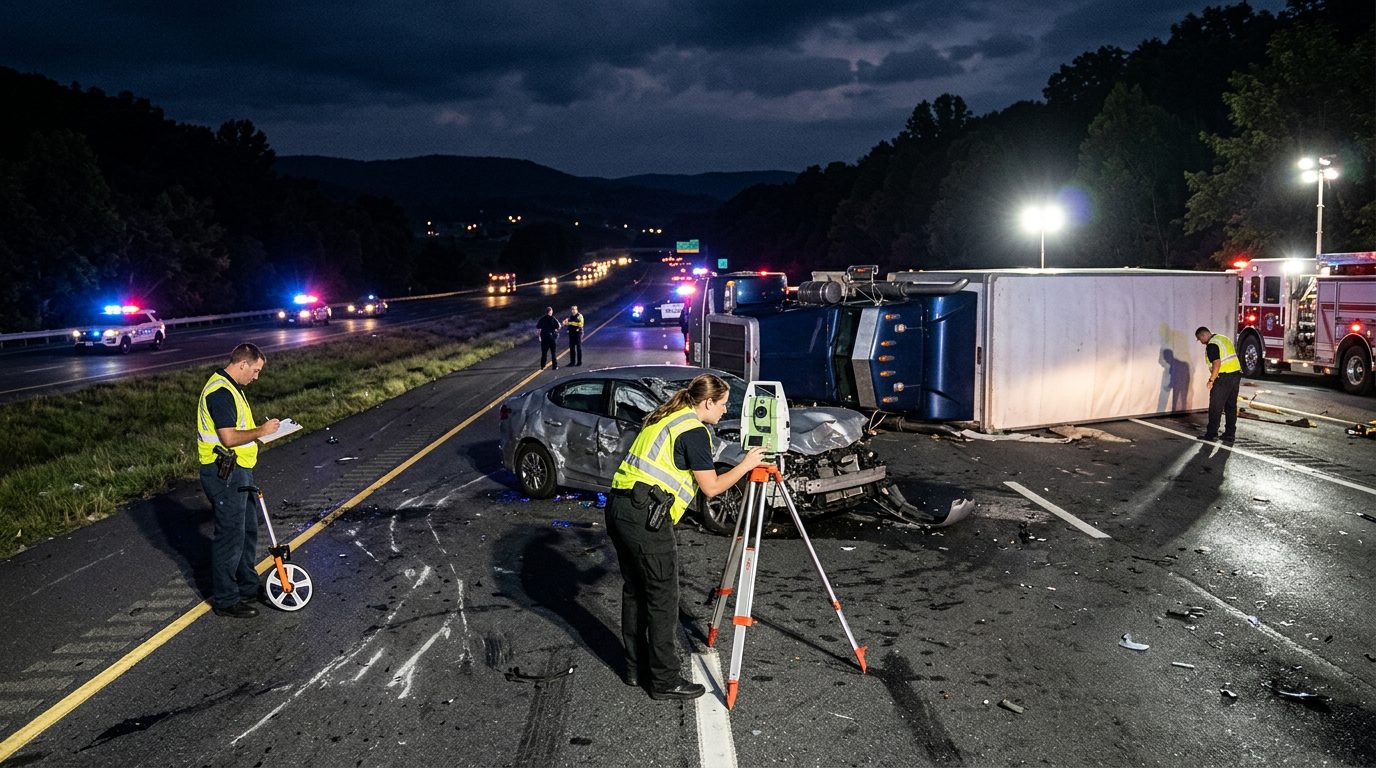
Reporting a Crash That Causes Injury or Death in Virginia
A driver in a crash with injury or death has a duty to report it right away. Virginia requires a driver involved in a crash with injury or death to stop and report it to police immediately (Va. Code §§ 46.2-371, 46.2-894).
Under Va. Code § 46.2-894, the driver also stops as close to the scene as possible without obstructing traffic. The driver gives reasonable assistance to anyone injured. A driver who is prevented by injuries must make the required report as soon as reasonably possible.
The two-year period described earlier is the deadline to file a wrongful death action, not the deadline to report a crash (Va. Code § 8.01-244). Under Va. Code § 46.2-371, the driver of any vehicle involved in an accident resulting in injury to or death of any person, or someone acting for the driver, shall immediately give notice of the accident to a law-enforcement officer, and a willful failure to make that report is a Class 4 misdemeanor.
Virginia DMV publishes annual traffic crash data reports. These reports include fatal and injury crashes, along with crashes involving commercial motor vehicles and large trucks. The Virginia DMV 2024 traffic crash report is one example.