
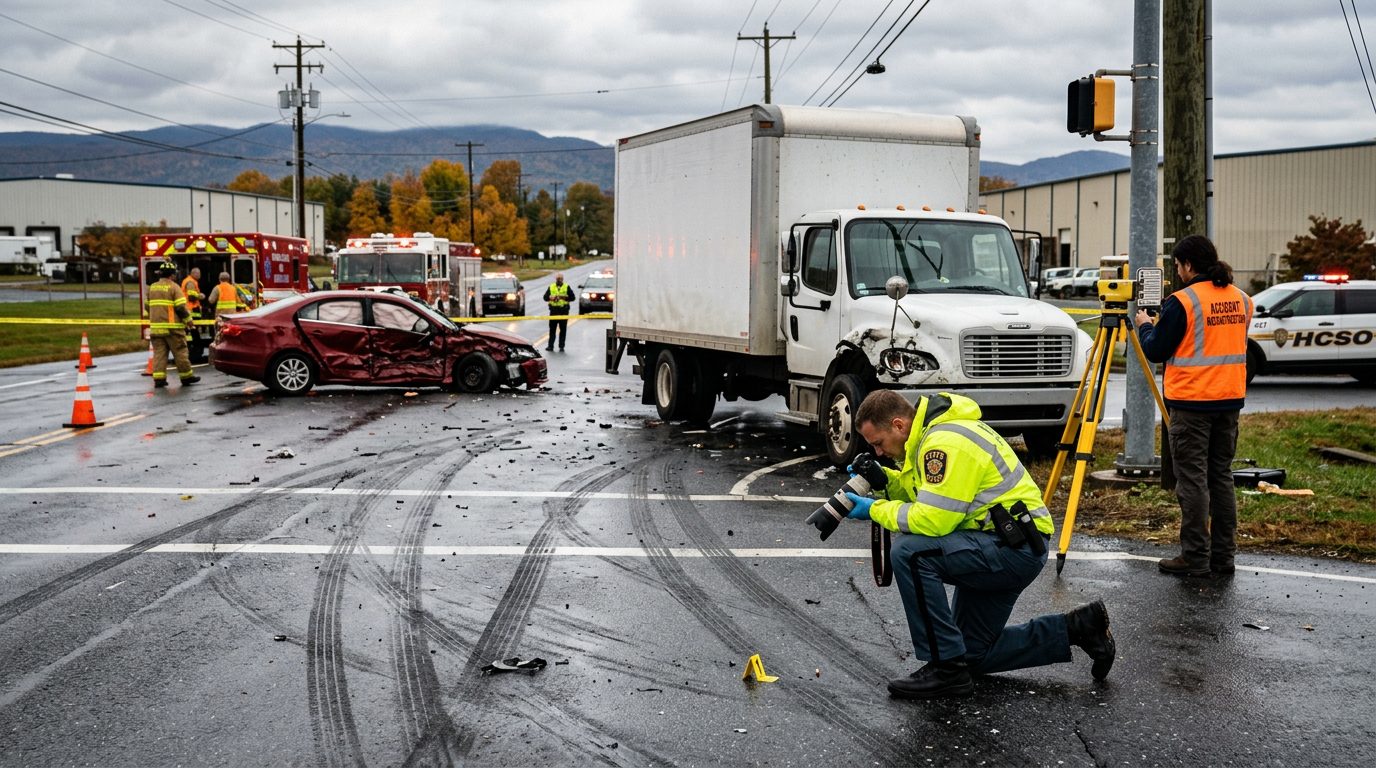
Hurt in an 18-Wheeler Crash? Start With Clear Answers
Crashes with tractor-trailers raise questions that a typical car crash does not. Here is how these claims work in Virginia and what to think about early.
If an 18-wheeler crash hurt you or someone in your family, you probably have questions about who may be responsible and how much time you have. An 18-wheeler claim is a personal injury claim, or a wrongful death claim when the crash causes a death. It usually involves more parties and federal trucking rules than a car accident claim, so the details matter early.
A Harrisonburg lawyer can explain how these differences may affect a specific case.
What a Tractor-Trailer Accident Claim Involves
A tractor-trailer claim is a personal injury case that comes from a crash with a large commercial truck. Tractor-trailer, semi-truck and 18-wheeler are common names for the same type of truck: a tractor that pulls one or more trailers. Commercial vehicle is a broader term for vehicles used in business, which can include some vans and buses.
These claims may involve:
- Injured drivers and passengers
- People in other vehicles
- Pedestrians and cyclists
- Families when a crash causes a death
Large trucks weigh far more than passenger cars. That size can turn a crash into a catastrophic injury, such as a traumatic brain injury or spinal cord injury. Because federal rules apply to trucking, a truck claim often raises more questions than a typical car claim.
Not sure what your next step is?
Talk it through with Correll Law Firm — we can walk you through how a situation like yours is usually handled and what your options are.
Common Causes of Semi-Truck Crashes
Semi-truck crashes often involve driver fatigue, distraction, cargo problems or a break in federal driving rules.
- Distracted driving. Phone records, dash camera footage and driver statements can show whether a driver was distracted.
- Driver fatigue. Federal rules limit driving time. A driver may not drive after 14 consecutive hours on duty following 10 consecutive hours off duty, and may drive 11 hours in that period (49 C.F.R. § 395.3). Driving is also barred after more than 8 hours of driving time without a 30-minute break, with some short-haul exceptions.
- Improper cargo loading. Cargo must be firmly immobilized or secured with structures of adequate strength, tiedowns or a combination of these (49 C.F.R. § 393.106). A shifting load can change how a truck handles.
- Jackknife accidents. In a jackknife, the trailer swings out of line with the cab. It can block several lanes and strike vehicles nearby.
- Mountain grades and weather. Interstate 81 runs through the Shenandoah Valley, where grades, weather and heavy traffic all affect a loaded truck.
Who May Be Responsible After a Truck Crash
More than one party may share responsibility after a truck crash. A claim may involve the driver, the motor carrier that operates the truck, a company that loaded the cargo, or a maintenance provider. Naming every responsible party matters, because each one may carry its own insurance.
Federal law directs the Secretary of Transportation to prescribe regulations requiring minimum levels of financial responsibility for motor carriers transporting property in the United States (49 U.S.C. § 31139). Commercial truck coverage can differ from a personal auto policy, so a truck claim may look very different on paper.
Evidence That Matters Early in a Truck Case
The most time-sensitive evidence in a truck case is often the trucking company’s own records.
- Electronic logging device records. Motor carriers must require drivers to record duty status for each 24-hour period, often through an electronic logging device, or ELD (49 C.F.R. § 395.8).
- Trip and log data. This data can be overwritten or discarded as retention periods pass, so early requests matter.
- Maintenance and driver files. Inspection, repair and driver qualification files can show whether the truck and driver were ready for the road.
- Scene evidence. Dash camera footage, photos, witness names and the police report capture the scene while memories fade.
- Medical records. Records that tie each symptom to the crash matter, especially for brain and spinal injuries.
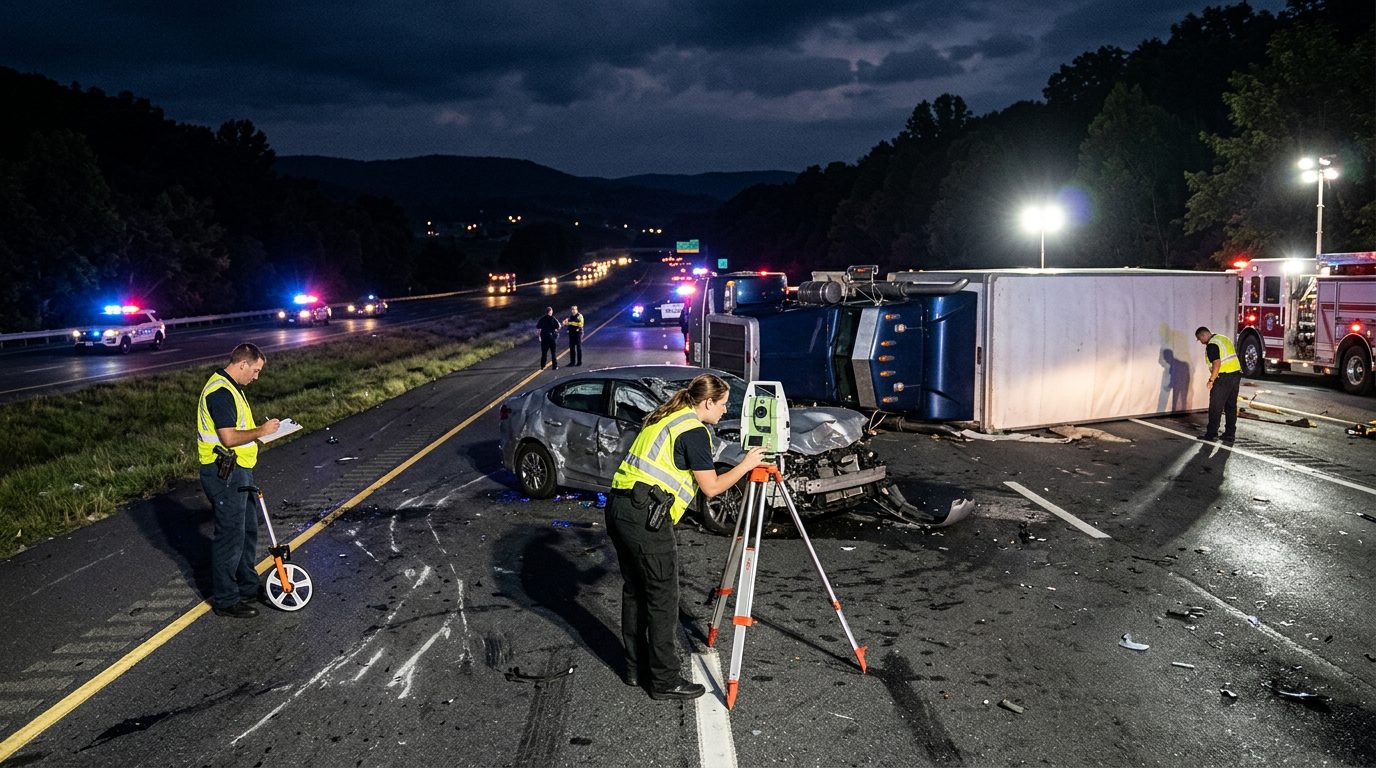
Your Legal Rights and Deadlines in Virginia
Virginia sets filing deadlines for injury and wrongful death claims, and missing one can bar a claim. Virginia generally allows two years from the date of injury to file a personal injury lawsuit (Va. Code § 8.01-243(A)); the clock runs from the date of injury, not the date of discovery, with narrow exceptions.
Some claims carry notice requirements that run out sooner.
A Virginia wrongful death action is filed by the decedent’s personal representative within two years of the death (Va. Code §§ 8.01-50(C), 8.01-244(B)), on behalf of the family members the statute protects.
Virginia wrongful death damages cover the family’s sorrow, mental anguish and loss of the decedent’s companionship, guidance and care; lost income and services; medical expenses from the injury; funeral expenses; and, for willful or wanton conduct, punitive damages (Va. Code § 8.01-52).
What the Firm’s Truck and Catastrophic Injury Work Covers
The firm handles car accidents, truck accidents, commercial vehicle accidents, catastrophic injuries, traumatic brain injury, spinal cord injury and wrongful death.
The firm handles car accident claims, truck and commercial vehicle accident claims, catastrophic injuries including brain and spinal cord injuries, and wrongful death cases.
The firm is based in Winchester and has an office in Harrisonburg. It represents people across the Shenandoah Valley, and in Richmond and Henrico County.
Where needed, a claim may involve outside medical and accident reconstruction professionals. For a broader overview, read the commercial vehicle accidents guide.
Not sure what your next step is?
Talk it through with Correll Law Firm — we can walk you through how a situation like yours is usually handled and what your options are.
How a Truck Claim Typically Unfolds
A truck claim usually moves through five steps, from early review to negotiation or a lawsuit.
- Review the crash facts, injuries and available records.
- Preserve early evidence, including requests for trucking company records.
- Document medical treatment, which can take time for brain and spinal injuries.
- Identify responsible parties and their insurance.
- Negotiate with insurers, or file a lawsuit when needed.
Timing varies with the facts, the injuries and the parties involved, and no outcome can be promised.
Frequently Asked Questions About Harrisonburg Truck Crash Claims
Do I have to report a truck crash to police?
Virginia requires a driver involved in a crash with injury or death to stop and report it to police immediately (Va. Code §§ 46.2-371, 46.2-894).
What if a delayed injury shows up weeks later?
Some injuries, including brain injuries, can show symptoms days or weeks after a crash. Tell a medical provider about any new symptoms as soon as they appear.
Can a family recover after a truck crash death?
Yes, Virginia allows a wrongful death claim when a crash causes a death. The decedent’s personal representative files it for the family.
What if I may be partly at fault?
Virginia follows contributory negligence: if you are found even partly at fault, you may be barred from recovering, with limited exceptions. Talk to a lawyer about your facts.
Can a trucking company be responsible for its driver?
It may be, depending on the facts. A claim can name the driver, the motor carrier and other parties who may share responsibility.