
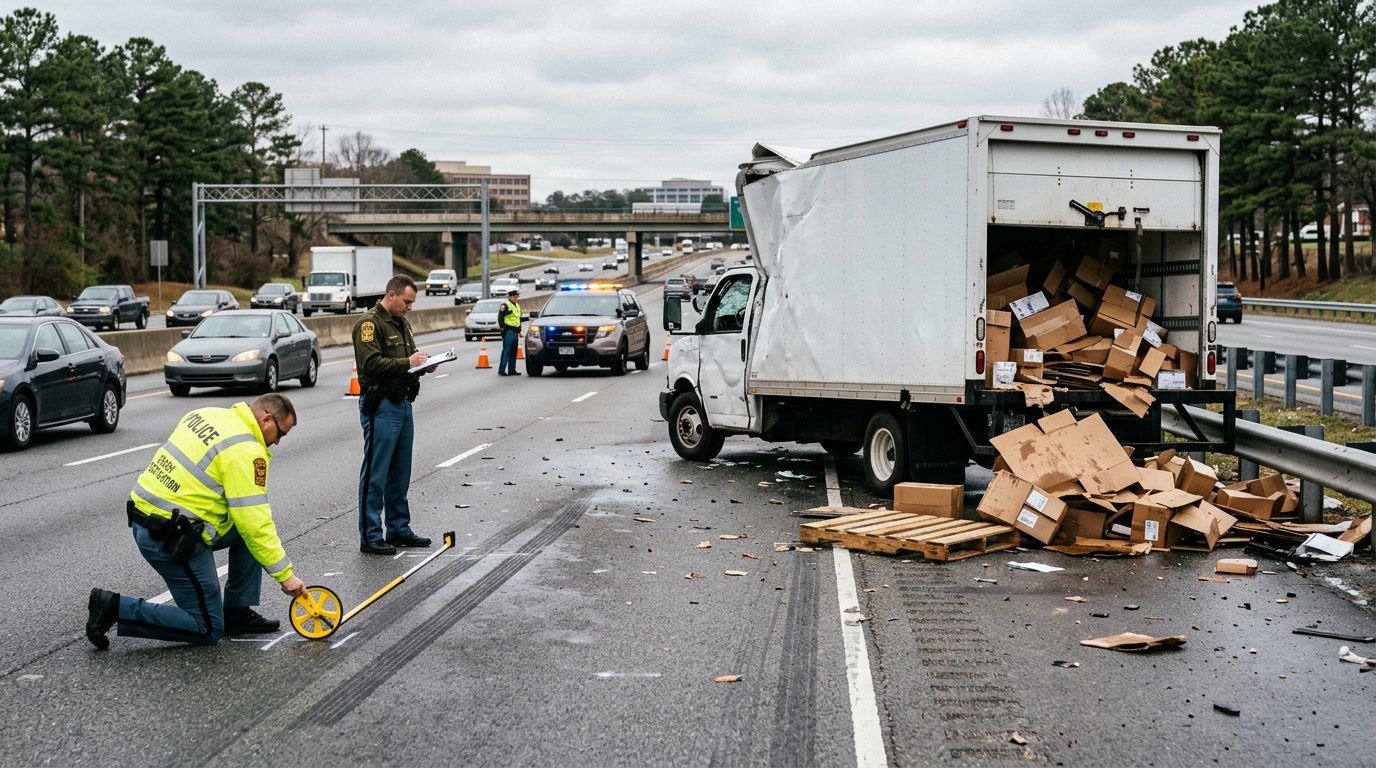
Box Truck Accidents | Richmond and Henrico County
Box Truck Crashes in Richmond: How Virginia Claims Work
A plain-language guide for people hurt in a box truck crash, and for families facing the unthinkable.
Published November 16, 2026
A box truck crash can leave you hurt, shaken and unsure who is at fault. A box truck accident claim often reaches more people and more records than a typical car accident claim. This page explains how these claims work under Virginia law, what evidence matters and which deadlines apply.
What a box truck accident claim covers
A box truck accident claim seeks compensation for injuries or a death caused by a box truck. A box truck is a commercial vehicle with an enclosed cargo area. Box trucks are common in deliveries, moving work and local freight, so these crashes are handled as commercial vehicle matters.
Claims of this kind may come from:
- A driver or passenger in a car or other passenger vehicle
- A pedestrian or cyclist struck by a box truck
- A family whose loved one died in the crash
The firm handles car accidents, truck and commercial vehicle accidents, catastrophic injuries, traumatic brain injury, spinal cord injury and wrongful death. The firm has offices in Winchester and Harrisonburg and represents people from Richmond and Henrico County.
If a box truck crash hurt you or someone you love, you may have a claim, and the firm is glad to talk through the facts with you. Talk it through with Correll Law Firm — we can walk you through how a situation like yours is usually handled and what your options are.
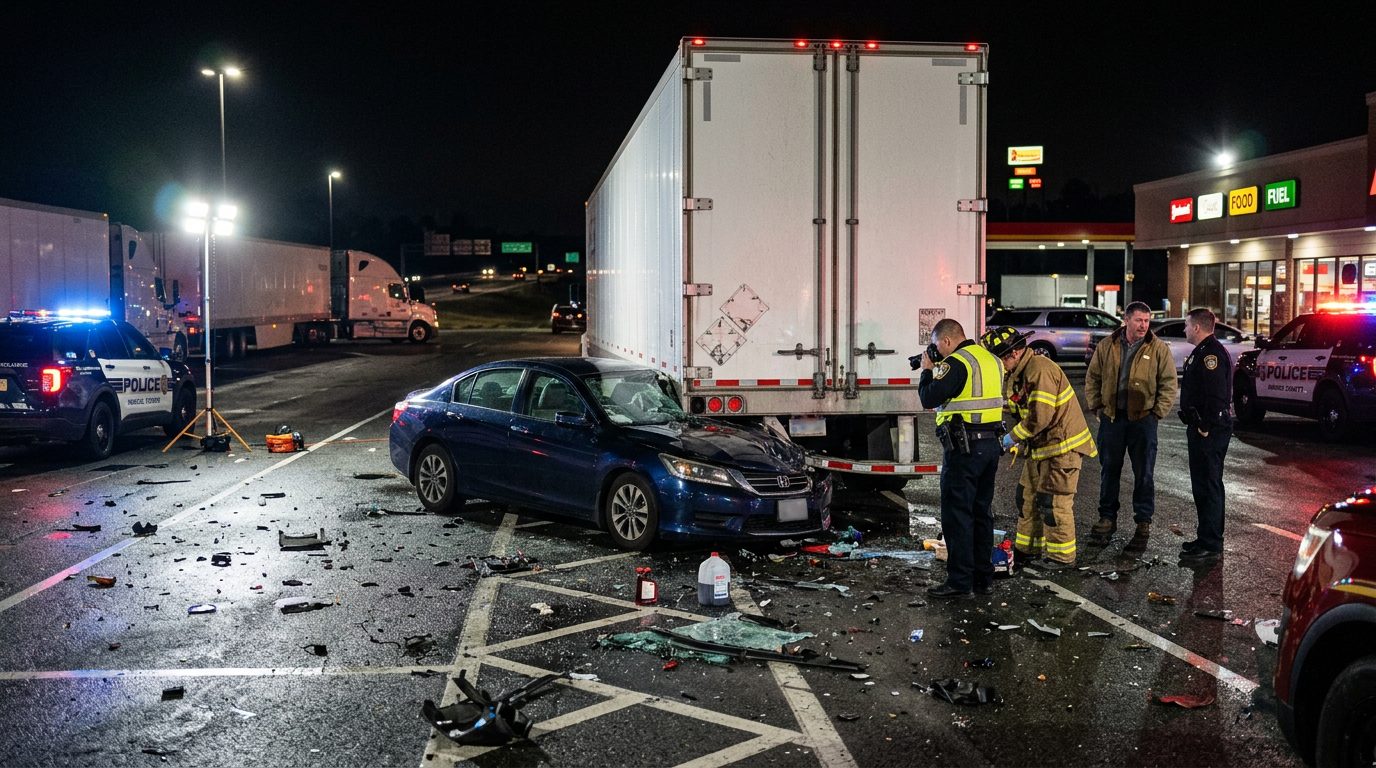
Why box truck crashes differ from car crashes
A box truck crash often differs from a car crash in who is involved and what records exist. Four differences stand out.
- Size and weight. A loaded box truck is much heavier than a passenger car. A collision can carry more force and cause more serious injuries.
- Company involvement. The driver often works for a business. The employer, the vehicle owner or a leasing company may be part of the claim, depending on the facts.
- Cargo. Federal rules require a commercial vehicle transporting cargo on public roads to be loaded and secured so cargo does not leak, spill, blow or fall off (49 C.F.R. § 393.100). Cargo must also be contained, immobilized or secured so it does not shift to such an extent that the vehicle’s stability or maneuverability is adversely affected.
- Records. Motor carriers must require drivers to record their duty status for each 24-hour period (49 C.F.R. § 395.8). These logs, along with other company records, can help show what happened.
Injuries common in serious box truck crashes
Serious box truck crashes often cause catastrophic injuries, traumatic brain injury and spinal cord injury. Catastrophic injuries are serious, long-lasting injuries that change how a person lives and works.
Some injuries do not show clear signs right away. A person may feel fine at the scene and notice problems days later. Medical records made close to the crash help connect the injury to the crash. Keeping a written log of symptoms and daily limits also helps.
Its rules are covered below.
Who may share responsibility
More than one party may share responsibility for a box truck crash, depending on the facts. Possible parties include:
- The driver
- The employer
- The vehicle owner or leasing company
- A maintenance provider whose work failed
- A business that loaded or secured the cargo
Each party may have different insurance coverage. An insurance adjuster works for the insurance company, not for you. Before giving a recorded statement, you may wish to talk with a box truck accident lawyer about the facts.
Evidence and the crash report
Reporting the crash and preserving evidence are the first two steps. Some records can be overwritten or discarded within days or weeks. Virginia requires a driver involved in a crash with injury or death to stop and report it to police immediately (Va. Code §§ 46.2-371, 46.2-894). The two-year period is the deadline to file a lawsuit, not to report a crash. The statute also requires the driver to render reasonable assistance to an injured person, including taking the person to a physician, surgeon or hospital if treatment is clearly needed or requested (Va. Code § 46.2-894).
Helpful records include:
- Photos of the scene, the vehicles and visible injuries
- Names and contact details of witnesses
- The police report number and the officer’s name
- The truck’s company name and any DOT number on the vehicle
- Medical records and a written list of symptoms
- Notes on missed work and daily tasks you cannot do
Dashcam video, electronic logs and repair records are often central. Federal rules also require drug and alcohol testing for commercial drivers, including after some crashes (FMCSA).
How a box truck claim moves forward
A box truck claim usually moves through several stages, in roughly this order:
- Intake and a review of the facts
- Medical treatment and documentation
- Investigation of the vehicles, company records and driver logs
- A written demand to the insurers
- Negotiation
- A lawsuit, if the claim does not resolve
Timing depends on how serious the injuries are, how much evidence exists, and whether the claim settles or goes to court. No timeline can be promised. When several parties and insurers are involved, each one may need its own review, which can extend the process.
Not sure what your next step is?
Talk it through with Correll Law Firm — we can walk you through how a situation like yours is usually handled and what your options are.
Virginia rules that shape these claims
Virginia’s rules on fault, deadlines and damages can decide how a box truck claim proceeds.
Fault. Virginia follows contributory negligence: if you are found even partly at fault, you may be barred from recovering, with limited exceptions. Talk to a lawyer about your facts.
Filing deadline. Virginia generally allows two years from the date of injury to file a personal injury lawsuit (Va. Code § 8.01-243(A)); the clock runs from the date of injury, not the date of discovery, with narrow exceptions.
Notice rules.
Wrongful death. A Virginia wrongful death action is filed by the decedent’s personal representative within two years of the death (Va. Code §§ 8.01-50(C), 8.01-244(B)), on behalf of the family members the statute protects. The distribution statute lists who may share in the recovery, including a surviving spouse, children and certain parents (Va. Code § 8.01-53).
Punitive damages. Virginia allows punitive damages for actual malice, or for willful or wanton conduct or recklessness showing a conscious disregard for the safety of others, capped at $350,000 (Va. Code § 8.01-38.1).
Frequently asked questions
What should I avoid saying to an insurance adjuster?
Avoid guessing about speed, fault or injuries. Be careful with social media posts about the crash, and say when you do not know something.
Is a box truck claim worth pursuing?
That depends on the injuries, the evidence and the parties involved. Those facts decide how a claim can move forward.
How is the value of a claim figured?
The factors include medical treatment, lost income, and how the injury changes daily life and work.
Which injuries are hardest to prove?
Injuries supported by imaging, objective testing and steady treatment records are usually easier to document than symptoms alone.