
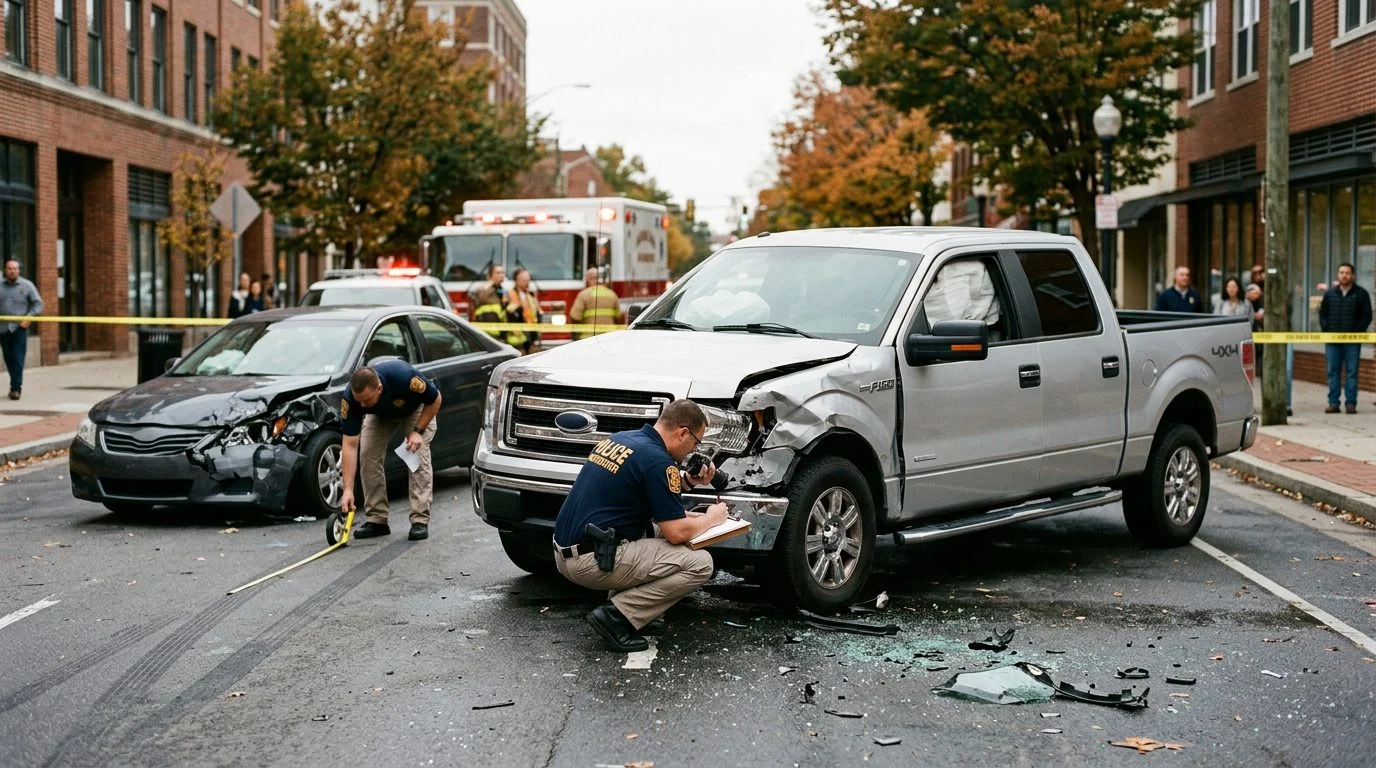
Truck and Car Crash Guide | Virginia
Bigger Vehicles, Bigger Questions: What Virginia Drivers Should Know About Truck and Car Crashes
Size, weight and design all shape what happens in a crash. Here is a plain-language look at why the answer depends on the vehicles involved and the facts of each collision.
Published November 4, 2026
The short answer: trucks are not safer for people in cars
Are trucks safer than cars in a crash? For the people inside the car, usually not. A large truck protects its own occupants better than a small car does. But the people in the car often carry more of the risk when the two vehicles meet. How the crash plays out depends on the facts of that crash.
Size is only one part of the picture. Mass, height, speed and braking all shape what happens when a car and a truck collide. Most people assume a bigger vehicle is a safer place to sit. That is only part of the story. The rest of this page explains the reasons behind that answer, one factor at a time. The firm focuses on car accidents and truck accidents, so this page explains the physics in plain terms.
If a crash with a car or truck has left you or a family member hurt, you do not have to face the next steps alone, and the firm is ready to talk. Talk it through with Correll Law Firm — we can walk you through how a situation like yours is usually handled and what your options are.

Why mass and speed change the outcome
A heavier object hitting a lighter one changes the lighter one’s speed much more. That is why a car’s occupants usually feel the bigger jolt when a tractor-trailer strikes them.
Speed makes this worse. Crash energy grows much faster than speed, so a collision at highway speed is far harder on everyone than one at parking-lot pace. Speed also shortens the time anyone has to react, whether they are driving the car or the truck.
Braking adds another layer. The federal braking rules say the distance a vehicle travels while its brakes apply “varies with vehicle type.” That distance is negligible for many passenger cars and greatest for combinations of commercial vehicles (49 C.F.R. § 393.52). For drivers nearby, that means leaving more room around a loaded truck.
Here is a hypothetical example. On an interstate, a sedan closes fast on a slowing tractor-trailer. The sedan is far lighter, so its speed changes more abruptly, and its occupants take the larger hit.
Height, underride and why passenger cars sit at risk
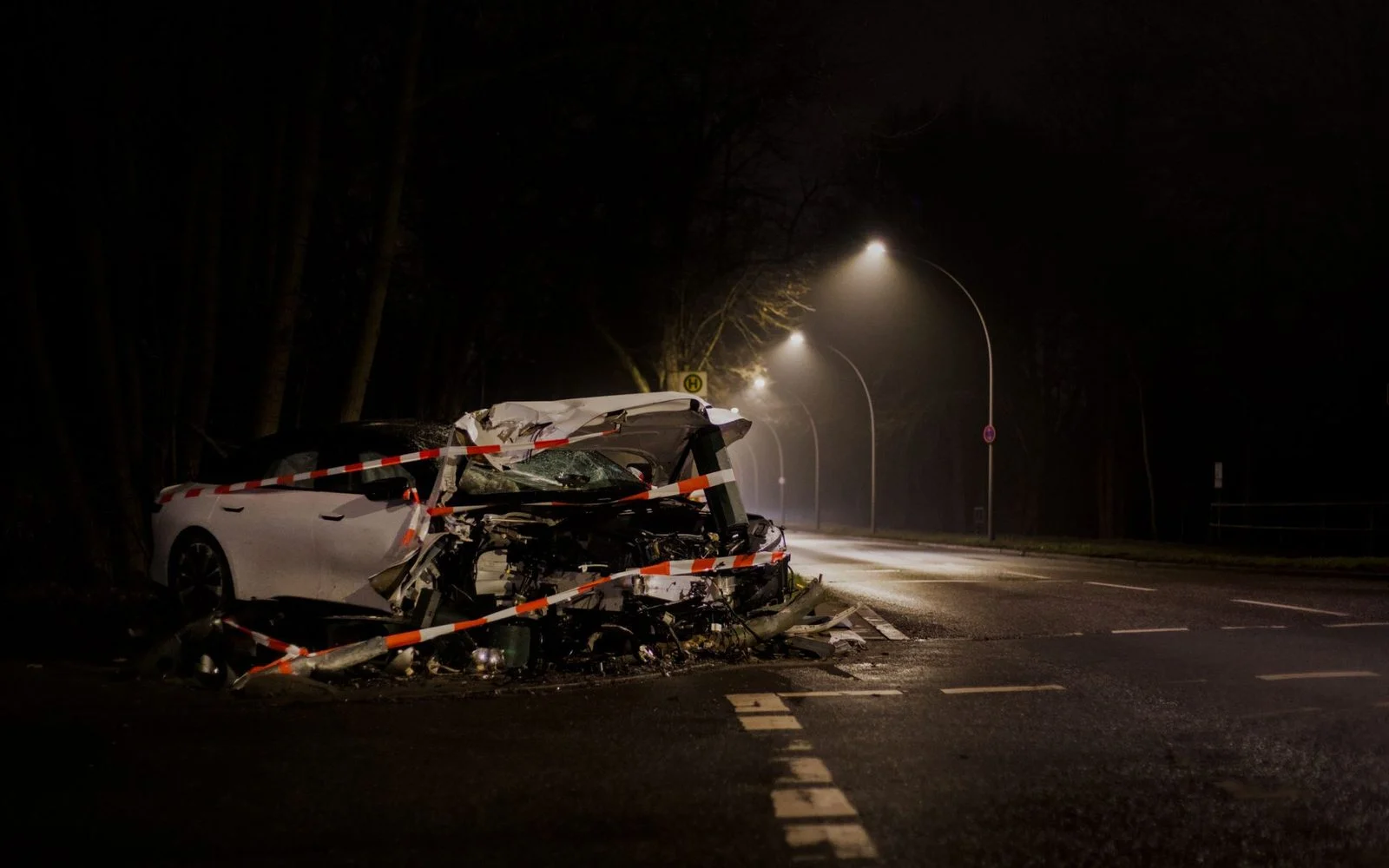
Underride is the core problem. An underride crash happens when a car slides under the back or side of a trailer. The car’s crash structures may not line up with the trailer, so the car takes the force.
Federal rules address the rear of trailers. Under 49 C.F.R. § 393.86, trailers rated at 10,000 pounds or more and built on or after January 26, 1998 must have a rear impact guard, except pole trailers, pulpwood trailers, low chassis vehicles, special purpose vehicles, wheels back vehicles, road construction controlled horizontal discharge trailers, and trailers towed in driveaway-towaway operations. The guard’s bottom edge may not sit more than 560 mm (22 inches) above the ground.
The federal standard states its purpose plainly. It aims to reduce deaths and serious injuries when light vehicles collide with the rear of trailers and semitrailers (49 C.F.R. § 571.223). The standard also sets strength and energy absorption requirements for these guards.
Height is the other half of the problem. Many trucks sit higher than a passenger car’s bumper. When a trailer’s bar lands above a car’s crash structures, the car’s windshield or roof area can take the blow instead of the parts built to absorb it.
Pickups and SUVs: how light trucks compare with cars
Pickups and SUVs are heavier than most cars and often sit higher. That extra weight and height can raise the risk to the car they strike. Pickups with lifted frames sit higher still, so the height gap can grow.
So, are trucks safer than SUVs? It varies with the specific models, their weight and how each one is built. A pickup’s own occupants may gain protection from its size in a crash with a car. The car’s occupants still face the mass and height gap described above.
Comparing two named vehicles takes their specifications and published crash data. Those are the facts that answer the question for one particular pair. A common mistake is to assume a bigger vehicle is safer in every crash. Each pairing works differently, and speed and road conditions still matter. Drivers who share the road with a large pickup or SUV can give it the same room they would give a heavy truck.
Who is hurt most in car and truck crashes
Occupants of passenger cars generally carry more of the physical risk in car-to-truck crashes. The mass and height gaps explain much of why.
The Federal Motor Carrier Safety Administration publishes fatal, injury and property-damage-only crash statistics for large trucks and buses (FMCSA large truck and bus crash facts). Those national figures are a useful starting point for understanding the pattern.
Pedestrians and cyclists face serious risk near large vehicles, because nothing shields a person walking or biking. Serious harm can fall on someone who did nothing wrong, which is why the cause of each crash matters.
Serious crashes can cause traumatic brain injury, which is damage to the brain from a blow or jolt. They can also cause spinal cord injury, which is damage to the bundle of nerves that carries signals between the brain and the body. The firm focuses on both kinds of injury.
What the numbers do not show
Vehicle size is one factor among many. Speed, weather, driver fatigue, following distance, load weight and maintenance all shape how a crash unfolds. A driver who stays alert and keeps a safe following distance gives themselves more time to react, whatever they are driving.
A large vehicle does not protect its driver from every crash. Rollovers and loss of control can injure truck occupants too.
Asking whether trucks are safer than cars in a crash leaves out the question of cause.
Virginia requires a driver involved in a crash with injury or death to stop and report it to police immediately (Va. Code §§ 46.2-371, 46.2-894). The reporting duty appears in Va. Code § 46.2-371.
The Virginia State Police Motor Carrier Safety Unit inspects commercial trucks and buses for safety compliance. Driver and vehicle examination reports can be requested for crash investigation.
Not sure what your next step is?
Talk it through with Correll Law Firm — we can walk you through how a situation like yours is usually handled and what your options are.
Truck crash topics for Virginia readers
The firm’s commercial vehicle accidents guide covers broader truck crash topics for Virginia readers.
Interstate 81 carries heavy truck traffic through the Shenandoah Valley, so drivers there often share lanes with large trucks. The Interstate 81 truck accident guide looks at that road in more detail.
Drivers in Richmond and Henrico County also share roads with heavy trucks, so the same size and height questions apply there. See the Richmond truck crash guide or the Henrico County truck crash guide.
The firm’s offices are in Winchester and Harrisonburg. It serves people from the Shenandoah Valley, Richmond and Henrico County.
Frequently asked questions
Are trucks safer than SUVs in a crash?
It varies with the specific models, their weight and how each is built. Size and height matter, but a fair comparison needs those facts for each vehicle.
What is an underride guard?
A rear impact guard is a bar on the back of a trailer. It limits how far a car’s front end can slide under the trailer, which is the purpose the federal standard describes.
Are trucks safer than cars in a crash for the people inside?
The truck’s own occupants have more protection from its size. The people in the car usually face the larger share of the risk because of mass and height.