
Commercial Vehicle Accidents | Interstate 81, Virginia
Hurt in a Commercial Vehicle Crash on I-81? Start With the Facts.
Interstate 81 carries heavy commercial traffic through the Shenandoah Valley. Here is how these crashes can differ from ordinary car accidents, and what to keep in mind if you or a family member was hurt.
Published November 4, 2026
Commercial vehicle accidents are crashes that involve trucks, buses and other vehicles used for business or freight. On Interstate 81 through the Shenandoah Valley, these crashes often involve tractor-trailers, box trucks or cement mixers. They can cause serious injuries and deaths. This guide explains how these crashes happen, what Virginia law says about reporting and deadlines, and what families should know after a fatal crash.
What a commercial vehicle accident on I-81 involves
A commercial vehicle accident on I-81 involves a large vehicle used for work. Common examples include tractor-trailers, box trucks, cement mixers and buses. Interstate 81 runs through Winchester, the Front Royal area and Harrisonburg, so drivers there share the road with heavy freight and local work trucks.
These crashes differ from car-only crashes in several ways. A loaded truck weighs far more than a passenger car, and it needs much more distance to stop. A crash may also involve more than one company. It leaves more records behind, such as driver logs, maintenance files and inspection reports.
This page is for people hurt in these crashes and for families of people who died in them.
Not sure what your next step is?
Talk it through with Correll Law Firm — we can walk you through how a situation like yours is usually handled and what your options are.

Common crash types on I-81
Several crash patterns repeat in truck crashes. Each has its own cause and its own risk to nearby drivers.
- Rear-end crashes. A truck follows too closely or brakes too late, and a slowed car ahead takes the hit. Heavy trucks need more room to stop than cars do.
- Jackknife crashes. The trailer swings out of line with the cab. This often happens after the brakes lock or the trailer loses traction.
- Rollovers. A high center of gravity, a shifting load, or speed on a curve or ramp can tip the truck over.
- Underride crashes. A smaller vehicle slides under the trailer. These crashes can be especially severe for the people in the smaller vehicle.
- Wide-turn crashes. A truck swings wide, cuts into another lane, or strikes a vehicle on its right side.
- Tire blowouts. Worn or poorly maintained tires can fail suddenly and cause loss of control.
Why these crashes happen
Most truck crashes trace back to the driver, the vehicle, the load, or the way the truck was driven. Federal rules address each of these areas.
Fatigue is one area the rules cover directly. Under the federal hours-of-service rules, a property-carrying driver may not drive after 14 consecutive hours following 10 consecutive hours off duty. Separately, a driver may not operate a commercial vehicle when the driver’s ability or alertness is so impaired, or so likely to become impaired, through fatigue, illness, or any other cause, as to make it unsafe, under 49 CFR 392.3, except in a case of grave emergency where compliance would increase the hazard to occupants or other highway users, in which case the driver may continue to the nearest place at which that hazard is removed.
Vehicle condition matters too. Drivers must write a driver vehicle inspection report at the end of each day’s work on each vehicle, unless no defect or deficiency is discovered by or reported to the driver; the rule does not apply to intermodal equipment tendered by an intermodal equipment provider, private passenger carriers (nonbusiness), driveaway-towaway operations, or carriers operating only one commercial motor vehicle. The carrier must repair listed defects that are likely to affect safety before the vehicle runs again. Cargo must also be firmly secured with structures of adequate strength, dunnage or dunnage bags, shoring bars, tiedowns or a combination of these.
Other possible causes include speed, weather, following distance, distraction, impairment and inadequate training. A case looks at each of these as a possible cause, not as a finding about any crash. What caused a particular crash depends on its facts.
Who may be responsible and how fault works in Virginia
More than one party can share responsibility in a commercial vehicle crash. The driver may be responsible. So may the motor carrier that employs the driver, a company that leased or maintained the truck, or a party that loaded the cargo. Which parties matter depends on who controlled the driving, the equipment and the load.
Records often show who did what. Driver logs, electronic logging data, maintenance files and inspection reports can all bear on who is responsible.
Fault rules matter as well. Virginia follows contributory negligence: if you are found even partly at fault, you may be barred from recovering, with limited exceptions. Talk to a lawyer about your facts.
What to do after a commercial vehicle crash
Get medical care as soon as you can, even if you feel fine at first. Tell your doctor about every symptom, including headaches or back pain that appear days later.
Virginia requires a driver involved in a crash with injury or death to stop and report it to police immediately (Va. Code §§ 46.2-371, 46.2-894). That duty is about reporting the crash, not about filing a lawsuit.
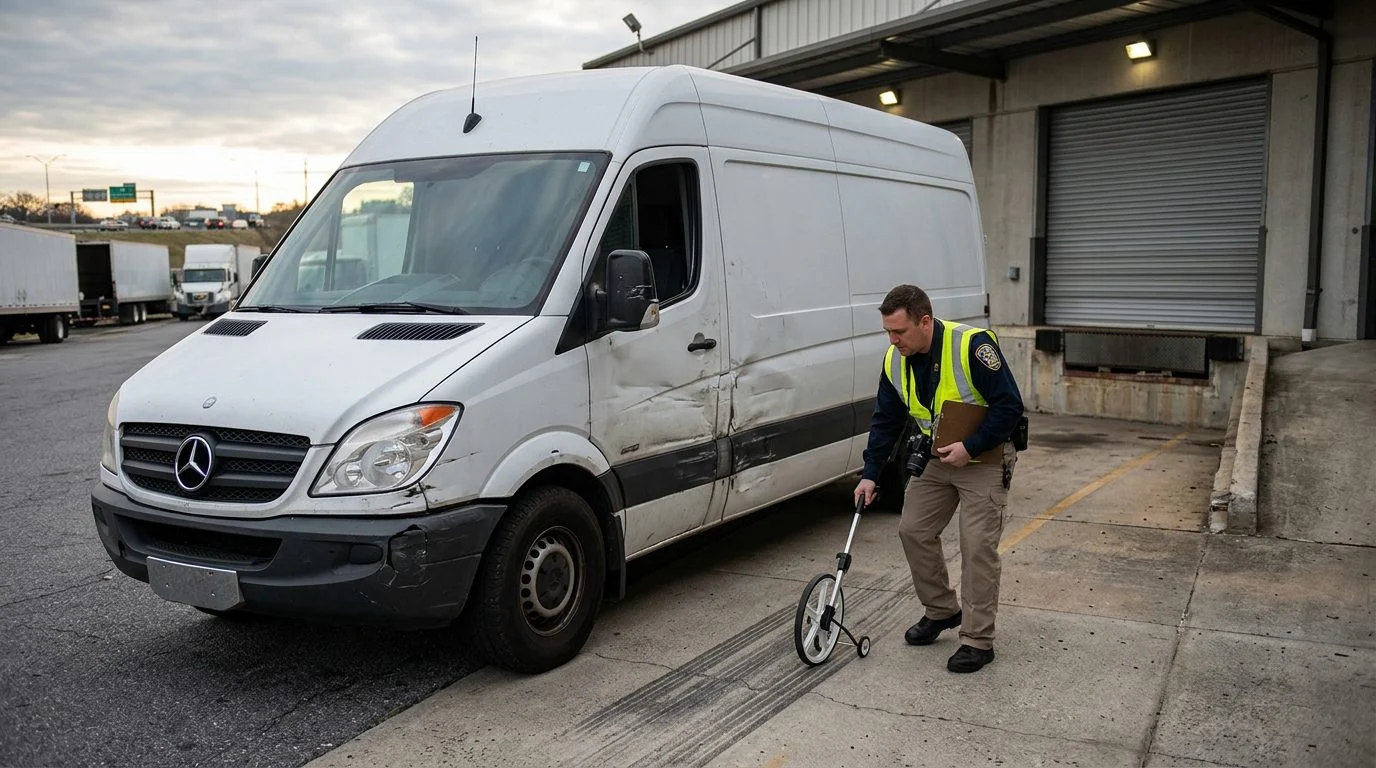
If you can, take photos of the vehicles, the road and any injuries. Write down witness names. Note the truck’s company name and DOT number if you can see them. Record the direction of travel, the mile marker and the nearest exit on I-81.
Records can be time-sensitive. Carriers keep driver vehicle inspection reports for three months under the federal inspection rule, except private passenger carriers (nonbusiness), driveaway-towaway operations, and carriers operating only one commercial motor vehicle. That short window is one reason early records requests matter.
Virginia generally allows two years from the date of injury to file a personal injury lawsuit (Va. Code § 8.01-243(A)); the clock runs from the date of injury, not the date of discovery, with narrow exceptions. Some claims carry notice requirements that run out sooner.
How a commercial vehicle case typically moves forward
A commercial vehicle case usually moves through review, investigation, documentation, claim talks and, when needed, a lawsuit.
- Initial review. The firm looks at the crash facts, the injuries and the records that already exist.
- Investigation. Requests go out for trucking, maintenance and driver records. Where the facts call for it, outside reconstruction professionals may study the crash.
- Documentation. Medical records and notes show how the injuries and treatment affected work and daily life.
- Claim presentation. The claim goes to the insurers, and the firm discusses it with them.
- Lawsuit, if needed. If talks do not resolve the claim, a lawsuit may be filed within Virginia’s filing deadlines. How long a case takes varies widely.
The firm has offices in Winchester and Harrisonburg. It serves people from the Front Royal area and handles matters for people in Richmond and Henrico County. The firm handles car accidents, truck accidents, commercial vehicle accidents, catastrophic injuries, traumatic brain injury, spinal cord injury and wrongful death.
Not sure what your next step is?
Talk it through with Correll Law Firm — we can walk you through how a situation like yours is usually handled and what your options are.
Catastrophic injuries and wrongful death in large-vehicle crashes
A Virginia wrongful death action is filed by the decedent’s personal representative within two years of the death (Va. Code §§ 8.01-50(C), 8.01-244(B)), on behalf of the family members the statute protects. Family members do not file the claim themselves. They share in the recovery.
Traumatic brain injury and spinal cord injury are serious harms that can follow high-impact crashes with large vehicles. Their effects can be long-lasting and differ from one person to the next. No one can predict how a particular person will recover.
Virginia wrongful death damages cover the family’s sorrow, mental anguish and loss of the decedent’s companionship, guidance and care; lost income and services; medical expenses from the injury; funeral expenses; and, for willful or wanton conduct, punitive damages (Va. Code § 8.01-52).

Frequently asked questions about commercial vehicle accidents on I-81
Here are short answers to common questions about commercial vehicle accidents on I-81.
Does a commercial vehicle crash always lead to a lawsuit?
No. Some claims settle without a lawsuit, and others need one to move forward.
What should I gather after a crash?
Keep any police report, your medical records, photos, and a written note of how the injury affects your work and daily life.
Does the firm handle truck crashes near Front Royal?
Yes, the firm serves people from the Front Royal area. The firm’s offices are in Winchester and Harrisonburg.