
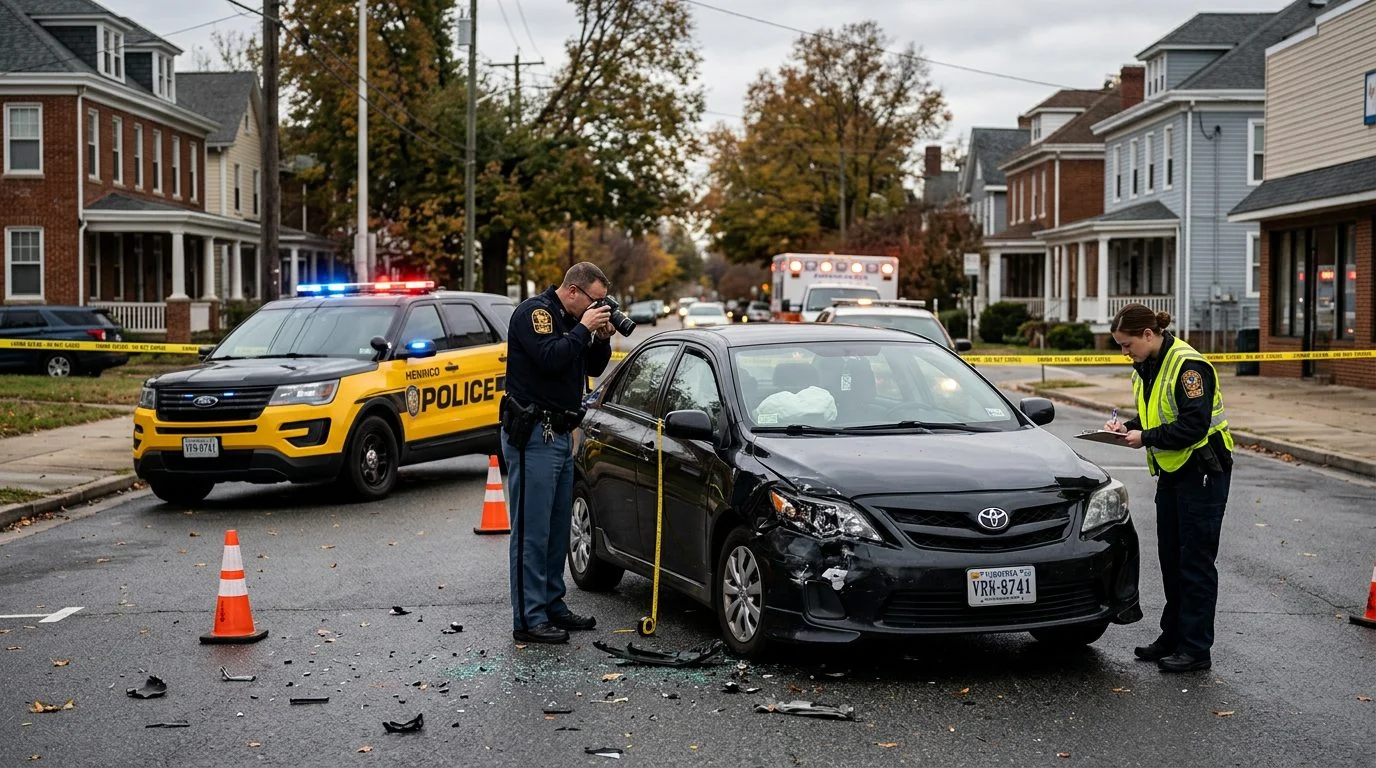
Car Accidents | Shenandoah Valley and Richmond
The Driver Who Hit You Drove Away. Here Is What to Do Next.
A crash with no clear stop can leave you shaken, hurt and unsure where to turn. The steps below can help you think clearly while you recover.
Published November 18, 2026
A hit-and-run leaves you hurt, shaken and facing questions with no easy answers. Knowing what not to do after a car accident in Virginia can protect your health and your options while the facts are still fresh.
The most common mistakes are skipping medical care, leaving the scene without a report and speaking too freely with insurers before you understand your injuries. This guide covers those mistakes, the duties Virginia law places on drivers and the deadlines that may apply. It is general education, and the facts of each crash decide what applies.
What a Hit-and-Run Crash Is and Who This Guide Covers
A hit-and-run is a crash in which the other driver leaves the scene without stopping to give information or help. The other vehicle may be a passenger car or a commercial truck.
This guide is written for people injured in that kind of crash, including drivers, passengers and pedestrians. It also speaks to family members when a crash causes a death.
Some rules in Virginia apply to every crash of this kind. Others depend on who was involved and what happened.
Not sure what your next step is?
Talk it through with Correll Law Firm — we can walk you through how a situation like yours is usually handled and what your options are.
Steps to Take at the Scene and Right After
Your first step is medical care, then a report to police and a record of what happened. Take these steps as soon as you safely can.
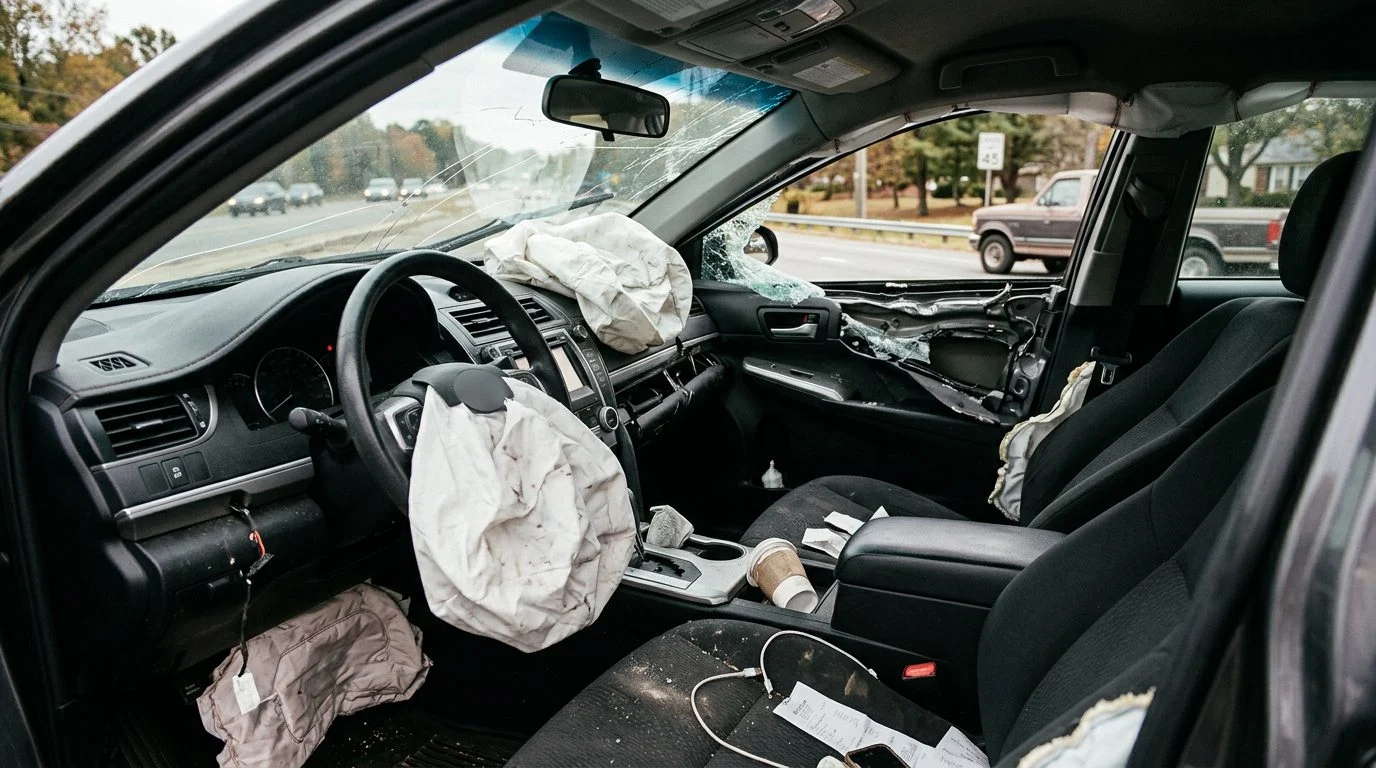
- Get medical care. Call 911 if you can. Some head and spine injuries do not show symptoms right away.
- Note the other vehicle. Write down its color, make, partial plate number, direction of travel and any damage you saw.
- Take photos. Capture the vehicles, the road, lighting, debris and visible injuries. Keep the files with their original dates.
- Get witness details. Write down names and contact details while witnesses are still nearby.
- Note the time and place. Record the exact time, the road name and the nearest landmark while your memory is fresh.
- Ask for the report number. Ask the investigating officer for the crash report number and keep it with your records.
Virginia requires a driver involved in a crash with injury or death to stop and report it to police immediately (Va. Code §§ 46.2-371, 46.2-894). The duty to stop and give aid appears in Va. Code § 46.2-894, which makes a violation a Class 5 felony when the crash causes injury or death. A willful failure to report is also a Class 4 misdemeanor under Va. Code § 46.2-371.
What Not to Do After a Car Accident in Virginia
Avoid chasing the other driver, brushing off injuries and giving quick statements about fault. Each of these can make a claim harder to support.
- Do not chase or confront the other driver. A plate number is not worth your safety.
- Do not treat a minor injury as nothing. Neck, back and head symptoms can appear hours or days later.
- Do not skip treatment. Gaps in care give the other side something to argue about.
- Do not guess about how the crash happened. Stick to what you saw and remember.
- Do not admit fault, even casually. Apologies and remarks at the scene can be repeated later.
- Do not post about the crash online. Photos, videos and comments can be read by the other side.
- Do not sign a release or give a recorded statement too soon. Wait until you understand your injuries and options.
- Do not throw away evidence. Keep damaged clothing, phones, vehicle parts and repair estimates.
Insurers often ask for early statements, and the pressure to settle quickly can feel strong. A signed release can end a claim before the full medical picture is known.
Fault, Insurance and What the Other Side May Argue
Fault and insurance often decide how a hit-and-run claim unfolds, and the other side may test whether you contributed to the crash.
Virginia follows contributory negligence: if you are found even partly at fault, you may be barred from recovering, with limited exceptions. Talk to a lawyer about your facts.
When the at-fault driver cannot be identified, your own uninsured motorist coverage may come into play. When the owner or operator of the other vehicle is unknown and there has been no contact between the vehicles, Va. Code § 38.2-2206 provides that, for an insured to recover under the uninsured motorist endorsement, the accident shall be reported promptly to either the insurer or a law-enforcement officer; if that is not reasonably practicable, the report shall be made as soon as reasonably practicable under the circumstances. If prompt reporting is not reasonably practicable, the report must be made as soon as reasonably practicable.
The same statute allows an injured person to sue an unknown driver as a “John Doe” defendant.
Keep a copy of your own policy information and every claim number you receive.
Deadlines and Filing Time Limits
Virginia generally allows two years from the date of injury to file a personal injury lawsuit (Va. Code § 8.01-243(A)); the clock runs from the date of injury, not the date of discovery, with narrow exceptions. The filing rule is in Va. Code § 8.01-243.
Uninsured motorist claims can involve the prompt-reporting rule described above, so acting early helps protect your options. Keep bills, medical records and insurer letters in one place.
It is not the deadline to report a crash to police, which the rules above cover.
When a Hit-and-Run Crash Causes a Death
When a hit-and-run causes a death, the decedent’s personal representative files the wrongful death claim for the family.
A Virginia wrongful death action is filed by the decedent’s personal representative within two years of the death (Va. Code §§ 8.01-50(C), 8.01-244(B)), on behalf of the family members the statute protects. The filing rule is in Va. Code § 8.01-244.
Family members do not file the claim. They share in the recovery, and Va. Code § 8.01-53 sets who qualifies, including a surviving spouse and children of the deceased.
Virginia wrongful death damages cover the family’s sorrow, mental anguish and loss of the decedent’s companionship, guidance and care; lost income and services; medical expenses from the injury; funeral expenses; and, for willful or wanton conduct, punitive damages (Va. Code § 8.01-52).
Virginia allows punitive damages for actual malice, or for willful or wanton conduct or recklessness showing a conscious disregard for the safety of others, capped at $350,000 (Va. Code § 8.01-38.1). The cap is set in Va. Code § 8.01-38.1.
Va. Code § 46.2-894 makes a violation resulting in injury to or the death of any person a Class 5 felony; punitive damages for such a felony are addressed separately in Va. Code § 8.01-44.5:1.
Not sure what your next step is?
Talk it through with Correll Law Firm — we can walk you through how a situation like yours is usually handled and what your options are.
How Correll Law Firm Handles Hit-and-Run Cases
Correll Law Firm represents people hurt in car, truck and commercial vehicle crashes from offices in Winchester and Harrisonburg.
The firm also serves people across the Shenandoah Valley, as well as people in Richmond and Henrico County.
The firm focuses on car accidents, truck accidents, commercial vehicle accidents, catastrophic injuries, traumatic brain injury, spinal cord injury and wrongful death.
In a hit-and-run matter, the work often includes getting the police crash report, preserving photos and vehicle evidence, gathering medical records and communicating with insurers. Before discussing the strengths or weaknesses of any claim, the firm reviews the facts available to it.
Traumatic brain and spinal cord injuries often need medical records gathered over a long period, so early documentation can matter.
Common Questions About Hit-and-Run Crashes in Virginia
Here are short answers to common questions about these crashes.
What should I tell my insurance company after a hit-and-run?
Stick to facts you know, and say you are still learning about your injuries. Do not guess about fault.
Can I still have a claim if I never saw the other vehicle?
The facts decide this. Witness accounts, camera footage and physical evidence can help show what happened.
Should I see a doctor if I feel fine?
You may wish to get checked, since some injuries show symptoms later.
Does a hit-and-run involving a commercial truck work differently?
Crashes with commercial trucks can involve more parties and more records, so early evidence matters.