
Car Accidents | Virginia
Hit and Run in Virginia? Know Your Next Steps
Plain-language guidance from Correll Law Firm for people hurt in a crash when the other driver left the scene, serving Winchester, Harrisonburg, Front Royal, the Shenandoah Valley, Richmond and Henrico County.
Published October 30, 2026
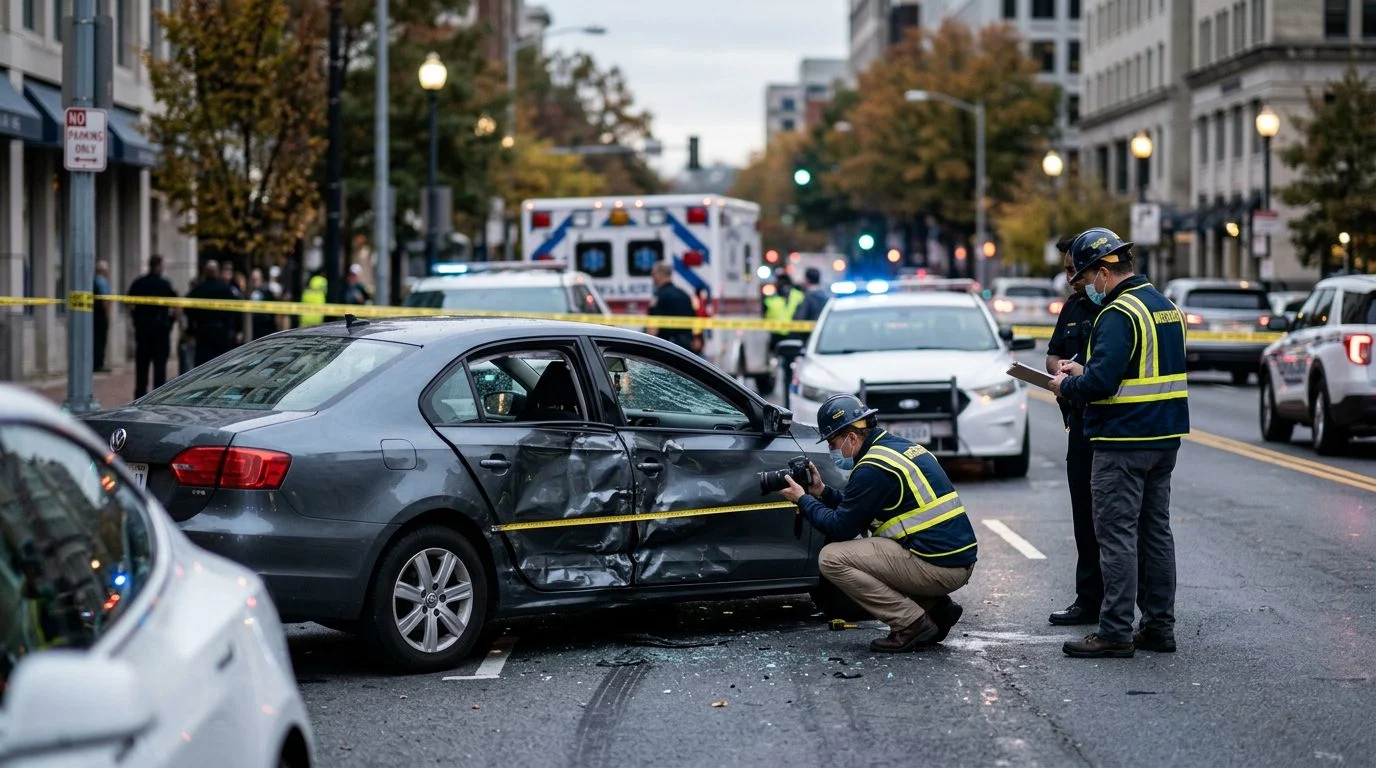
A hit and run car accident in Virginia can leave a person seriously hurt, with the other driver unknown. If that happens, report the crash to police as soon as you can and say the other driver did not stop. Then record what you can, get medical care, and keep track of the date. This guide walks through each step in plain words.
Report the Crash to Police as Soon as Possible
Report the crash to police right away, and tell them the other driver left. Virginia requires a driver involved in a crash with injury or death to stop and report it to police immediately (Va. Code §§ 46.2-371, 46.2-894). If injuries keep the driver from stopping, the driver must make the report as soon as reasonably possible (Va. Code § 46.2-894). Under Va. Code § 46.2-371, the driver must immediately give notice of the accident to a law-enforcement officer.
A police report creates an official record. It notes when and where the crash happened, who was hurt, and what the officer saw at the scene. That record can matter later, so it is worth getting right from the start.
Ask the responding officer for the report or incident number and the name of the agency. Write down the officer’s name and badge or unit number. If you can’t get a copy right away, keep the number so you can ask for it later.
Reporting the crash and filing a lawsuit are separate steps. Take the first one now, and keep the lawsuit deadline in mind as you go.
Talk it through with Correll Law Firm — we can walk you through how a situation like yours is usually handled and what your options are.

Record What You Can Gather at the Scene and Afterward
Write down everything you can about the other vehicle while your memory is fresh. Even small details can help police and investigators narrow down which vehicle was involved.
Note any partial plate letters or numbers, plus the color, make, model, body damage and direction of travel. Write the time, the road names or landmarks, and the order of events. Do this as soon as you can, because details fade quickly.
Take photos of your vehicle, your injuries, the roadway, skid marks, debris and any paint or parts left behind. Photos taken at the scene are often the clearest record of where things came to rest.
Ask witnesses for their names and how to reach them. Note what each person says they saw, in their own words. Witnesses who leave before police arrive are hard to find later.
Look for cameras nearby. Businesses, traffic cameras and home doorbell cameras may have recorded the crash. Many systems record over older footage, so ask about it soon.
Why a Brain Injury Needs Medical Evidence Tied to the Crash
A brain injury claim depends on medical records that connect symptoms to the crash. Symptoms may not appear right away. Headaches, dizziness, confusion or memory problems can start hours or days after a crash.
Get a medical evaluation promptly, even if you feel you can wait. Tell every provider how the crash happened, including that the other driver left the scene. That way, the notes reflect the full history from the start.
Emergency department notes, imaging results and follow-up visits document the injury and how it changes over time. When the driver is unknown, these records help show what injury the crash caused. They also give a clear timeline from the crash forward.
For a broader overview, read about traumatic brain injury and the symptoms and evidence that often come up in these cases.
Keeping a Record of Symptoms and Treatment
A simple daily log of symptoms and treatment can show how an injury affects your life. Start it soon after the crash and keep it up for as long as symptoms last.
Each day, note headaches, sleep changes, trouble concentrating, mood changes and physical limits. Write down how the injury affects work, school, driving, chores and family life. Include dates and specific examples, such as a shift you missed or a task you could not finish.
Keep all bills, prescriptions, referrals, therapy notes and appointment summaries in one folder, paper or digital. Organized records make it easier to see the full course of care.
Gaps in treatment can make it harder to connect later symptoms to the crash. Keep your appointments, and report new symptoms to your provider, even small ones. A log also helps you recall details accurately months later.
When the Driver Who Fled Drove a Truck or Commercial Vehicle
If a commercial vehicle left the scene, its markings may help identify the company. Federal rules require certain trucks to show identifying marks.
Under 49 C.F.R. § 390.21T, a self-propelled commercial motor vehicle must display the identification number, preceded by the letters “USDOT,” and the marking must appear on both sides of the vehicle. If the name of any person other than the operating carrier appears on the truck, the operating carrier’s name must be followed by its legal name or single trade name and USDOT number, and be preceded by the words “operated by” (49 C.F.R. § 390.21T).
Write down any lettering, numbers, company names, trailer numbers or unit numbers you saw. Even a partial number can help investigators trace the vehicle to its carrier. Use the same scene steps: report to police, photograph the vehicle if you can, and record what you saw.
Readers can learn more about truck accidents and commercial vehicle accidents in Virginia on those pages.
Time Limits for an Injury Claim or a Wrongful Death Claim in Virginia
Virginia generally allows two years from the date of injury to file a personal injury lawsuit (Va. Code § 8.01-243(A)); the clock runs from the date of injury, not the date of discovery, with narrow exceptions. Some claims carry notice requirements that run out sooner.
The rule that the clock starts at injury is set out in Va. Code § 8.01-230. Track the crash date from the start, since that date is the starting point for the clock.
If a crash causes a death, a separate deadline applies. A Virginia wrongful death action is filed by the decedent’s personal representative within two years of the death (Va. Code §§ 8.01-50(C), 8.01-244(B)), on behalf of the family members the statute protects.
The statute that sets out who receives the damages is Va. Code § 8.01-53.
Not sure what your next step is?
Talk it through with Correll Law Firm — we can walk you through how a situation like yours is usually handled and what your options are.

Where the Firm Serves Injured People and Families
Correll Law Firm’s offices are located in Winchester and Harrisonburg. The firm represents people hurt in car and commercial truck crashes, people with catastrophic injuries, people with brain and spinal cord injuries, and families in wrongful death cases.
The firm serves people from the Shenandoah Valley to Richmond and Henrico County. Readers in these areas can find local information on the Richmond, Henrico County and Winchester pages.