
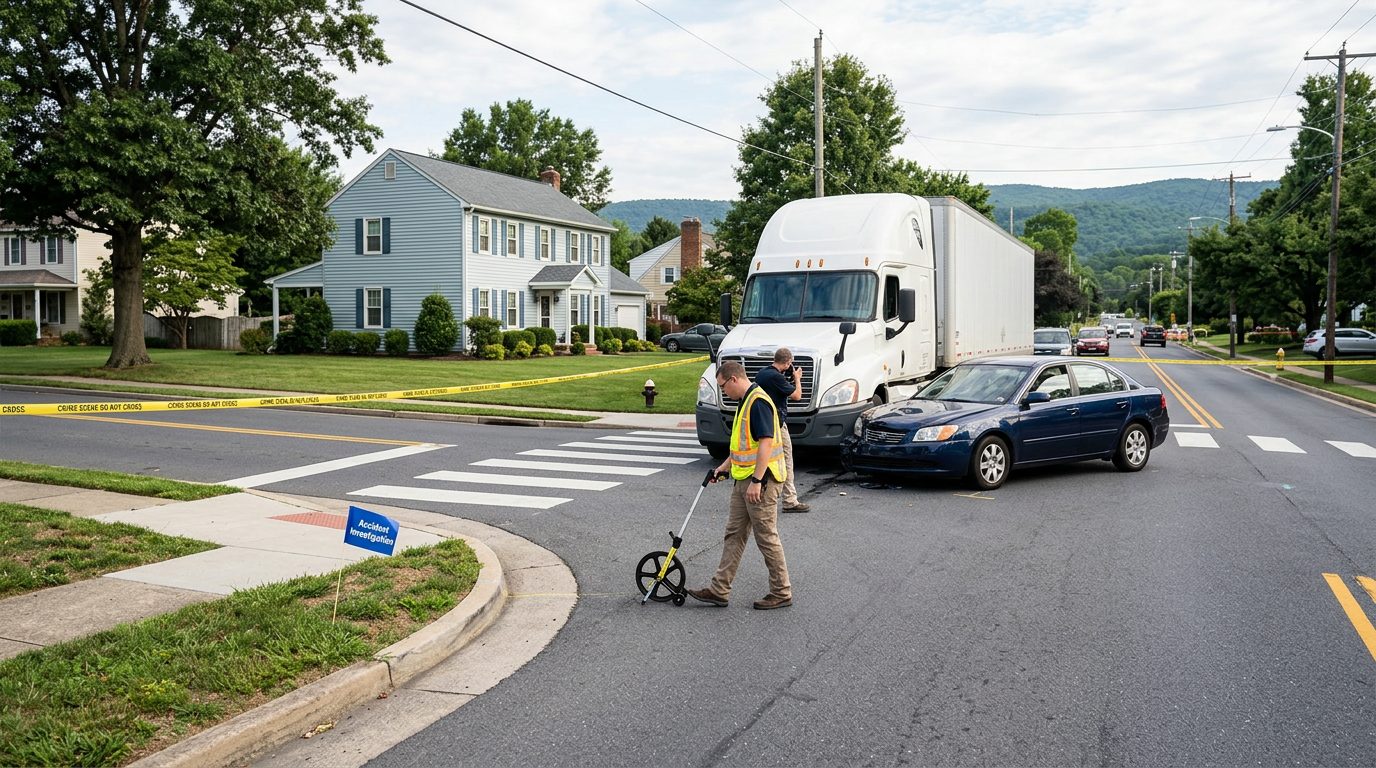
Truck Accidents and Traumatic Brain Injury | Winchester, VA
Hurt in an I-81 Truck Crash? The Firm Helps Families Pursue Brain Injury Claims
A brain injury can change daily life long after the emergency room visit. Here is how these claims are built and what the firm handles for injured people and their families.
Published November 20, 2026
Being hurt in a crash on Interstate 81 can change your health, your job and your family’s routine for a long time. If the crash caused a head injury, you may be asking what a claim could involve.
A brain injury claim after an I-81 truck crash asks the person or company responsible for the crash to answer for the harm the injury caused. Virginia sets filing deadlines and reporting duties, and the facts of each crash shape how a claim is built.
What a Brain Injury Claim After an I-81 Truck Crash Involves
A brain injury claim is a claim against the at-fault party for harm that a head injury caused in the crash.
Interstate 81 runs through Winchester and Harrisonburg and carries heavy tractor-trailer traffic. A crash there can involve a passenger car, a pickup, a commercial vehicle or several vehicles at once. Head injuries are not always obvious at the scene, and symptoms can start hours or days later. Early medical evaluation matters for your health and for the medical record that links the injury to the crash.
Each claim turns on its own facts, including who was driving, what the truck was carrying and what the medical records show.
This guide is for injured drivers and passengers, and for family members of people hurt or killed in tractor-trailer crashes. The firm focuses on car accidents, truck accidents, commercial vehicle accidents, catastrophic injuries, traumatic brain injury and wrongful death.
Not sure what your next step is?
Talk it through with Correll Law Firm — we can walk you through how a situation like yours is usually handled and what your options are.

Common Brain Injuries in Tractor-Trailer Crashes
Brain injuries from truck crashes range from mild concussions to severe injuries that need emergency care. The Administration for Community Living says automobile crashes can cause traumatic brain injury, which involves severe brain damage.
- Concussion. A concussion is a mild brain injury that can cause headaches, memory trouble, confusion, light sensitivity, and mood or sleep changes.
- Moderate to severe TBI. Bleeding or swelling inside the skull can occur and often needs emergency care.
- Diffuse axonal injury. Widespread damage to nerve fibers in the brain, which can follow sudden head movement.
- Penetrating brain injury. An object, such as debris or cargo, enters the skull.
Only a medical provider can say which injury a person has, and symptoms vary from person to person. Whatever the type, the medical timeline matters. Early testing, follow-up visits and treatment notes create the record that a claim relies on. Gaps in care can make it harder to tie symptoms to the crash.
What a Brain Injury Claim Can Cover
A brain injury claim may seek money for the injured person’s own losses. Virginia law also lists specific damages when someone has died.
For the injured person, losses often include medical care and rehabilitation, lost pay, and the effect of cognitive changes on work, driving and independence. Memory or focus problems can make a job harder to keep, even when a person looks fine. Written records from treating providers, along with notes of symptoms and missed work, help show those losses.
Wrongful death damages
Virginia wrongful death damages cover the family’s sorrow, mental anguish and loss of the decedent’s companionship, guidance and care; lost income and services; medical expenses from the injury; funeral expenses; and, for willful or wanton conduct, punitive damages (Va. Code § 8.01-52).
Virginia Reporting Duties and Filing Deadlines
Virginia generally requires a personal injury lawsuit to be brought within two years after the cause of action accrues, unless this section or another statute provides otherwise (Va. Code § 8.01-243).
Virginia requires a driver involved in a crash with injury or death to stop and report it to police immediately (Va. Code §§ 46.2-371, 46.2-894). The two-year period is the deadline to file a lawsuit, not to report a crash (Va. Code § 8.01-243).
Virginia generally allows two years from the date of injury to file a personal injury lawsuit (Va. Code § 8.01-243(A)); the clock runs from the date of injury, not the date of discovery, with narrow exceptions.
Reporting and filing are separate steps with separate dates. Keeping a written list of the crash date, the report number and each medical visit helps you track both. Early steps also help preserve crash and medical evidence, as the next section explains.
How a Brain Injury Claim Typically Unfolds
A brain injury claim usually moves through medical care, evidence gathering, talks with insurers and, if needed, a lawsuit.
- Medical care and records. Keep notes of symptoms, appointments, medicines and missed work.
- Crash facts. Note the location, the police report number, witness names and photos when available.
- Who may be responsible. In a truck crash, this can include the driver and the trucking company.
- Trucking records. Federal rules generally require drivers to record duty status, often on an electronic logging device (49 CFR 395.8). Under 49 CFR 382.303, which test an employer must give surviving drivers after a commercial motor vehicle occurrence on a public road depends on the type of accident and whether a citation was issued; alcohol testing is to occur as soon as practicable, and if it is not given within two hours, the employer must keep a record of the reasons; if it is not given within eight hours, the employer must stop trying and keep the same record.
- Negotiation or lawsuit. Insurers may negotiate. If a fair resolution is not reached, a lawsuit may be filed within Virginia’s deadlines.
Much of this evidence sits with the trucking company, so the sooner the facts are gathered, the better they are preserved. Timelines vary with medical recovery and the complexity of the evidence.
Why Injured Families Bring These Cases to the Firm
The firm’s offices are in Winchester and Harrisonburg, and it serves people from Warren County, across the Shenandoah Valley, and in Richmond and Henrico County.
Families facing a sudden loss can bring wrongful death matters to the firm, and injured people can bring their own claims. Medical records and crash evidence carry much of the weight in these claims, so the steps above matter from the start. This guide focuses on Virginia law and the federal trucking rules that apply to commercial drivers.
Not sure what your next step is?
Talk it through with Correll Law Firm — we can walk you through how a situation like yours is usually handled and what your options are.

Common Questions About I-81 Truck Crash Brain Injury Claims
Below are short answers to common questions about these claims.
Can symptoms that start days later still matter?
Delayed symptoms can still matter when medical records connect them to the crash.
What if I was partly at fault?
Virginia follows contributory negligence: if you are found even partly at fault, you may be barred from recovering, with limited exceptions. Talk to a lawyer about your facts.
Does a truck make the claim different?
A truck crash can involve more parties and more records, such as driver logs and inspection reports, than a crash between two cars.
What should I do right after a crash?
Get medical care right away and keep written notes of symptoms, bills and missed work.
Can a family file a wrongful death claim?
A Virginia wrongful death action is filed by the decedent’s personal representative within two years of the death (Va. Code §§ 8.01-50(C), 8.01-244(B)), on behalf of the family members the statute protects. Family members share in the recovery rather than filing.