
Car Accidents | Richmond and Henrico County
Pedestrian Brain Injury After a Car Accident: What Richmond Residents Should Know
Plain-language guidance on brain injuries from pedestrian crashes, the records that matter, and how Correll Law Firm handles these cases from Winchester and Harrisonburg.
Published November 4, 2026
A pedestrian brain injury car accident in Richmond can happen in seconds and change a family’s life. A person on foot has no metal shell around them, so the head may strike a windshield, a hood, or the pavement. This guide explains the injury, the steps that help document it, and the Virginia deadlines that apply. It is general information, not advice about any one crash.
What a Pedestrian Brain Injury Is and Who It Affects in Richmond and Henrico
A pedestrian brain injury is a traumatic brain injury that happens when a vehicle strikes a person on foot. A traumatic brain injury is damage to the brain caused by a blow or a sudden jolt to the head. Brain Injury Services notes that motor vehicle accidents can cause this injury and that a doctor must make the diagnosis.
Pedestrians face a particular risk. Nothing sits between the body and the impact. A fall after the strike can add a second blow to the head. Pedestrians are hit on busy roads such as Broad Street in Richmond, on neighborhood streets such as those in the Carver area, at crosswalks and mid-block crossings, and in parking lots.
This page is written for two readers. The first is the injured pedestrian. The second is a family member whose loved one died after a brain injury in a pedestrian crash. Correll Law Firm focuses on car and truck crashes, catastrophic injuries including traumatic brain injury, and wrongful death. It serves people in Richmond and Henrico County.
If a car struck you or someone you love and a head injury followed, you may have a claim, and the firm is glad to talk through your situation with you. Talk it through with Correll Law Firm — we can walk you through how a situation like yours is usually handled and what your options are.

Symptoms That May Appear Hours or Days Later
Head injury symptoms may appear right away, or they may show up hours or days after the crash. Reported symptoms can include a headache that won’t go away, confusion, memory trouble, dizziness, and sensitivity to light or noise. Sleep changes, irritability, and trouble concentrating can also appear.
Early tests do not always show the full picture. A normal result on day one does not end the question. Keep every follow-up visit, and tell each provider about every change.
Get emergency help right away if you notice:
- Loss of consciousness
- Repeated vomiting
- A seizure
- Unequal pupil size
- Weakness or numbness on one side
- Confusion that quickly gets worse
A written symptom log helps. Record each symptom, the date and time, what you were doing, and any medicine you took. The log shows what the person actually experienced, not just what they remembered on a busy day.
The First Steps After a Pedestrian Crash
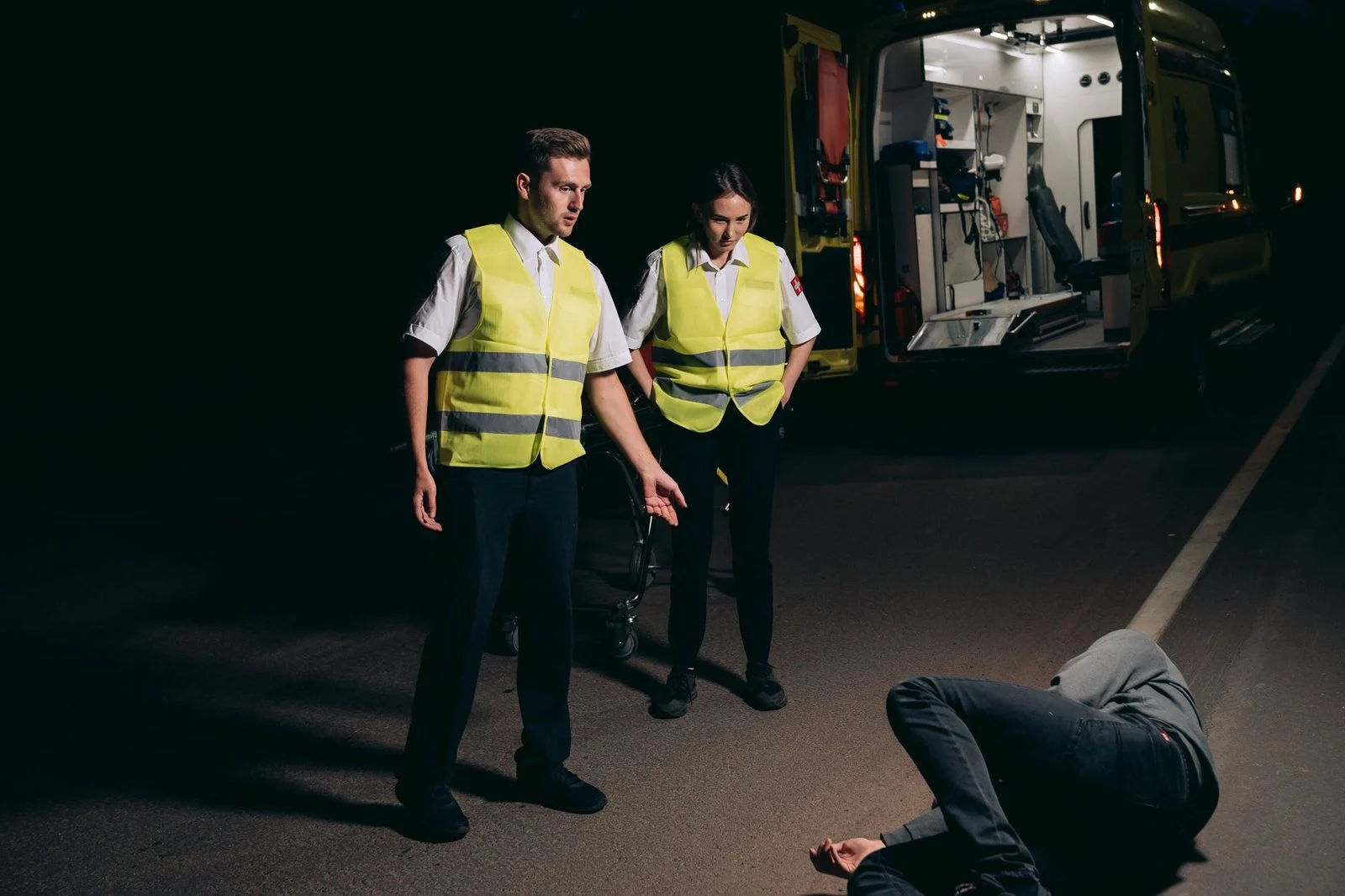
The first steps are medical care and an official report. Dial 911 right away if anyone is hurt. Follow the emergency team’s advice about going to the hospital.
Virginia requires a driver involved in a crash with injury or death to stop and report it to police immediately (Va. Code §§ 46.2-371, 46.2-894). The statutes are Va. Code § 46.2-371 and Va. Code § 46.2-894. The two-year period discussed below is the deadline to file a lawsuit, not the deadline to report a crash.
Keep these facts from the scene:
- Ask the officer for the crash report number and the agency’s name.
- Write down the other driver’s name, license plate, and insurer.
- Note where and how the strike happened, using plain facts.
- Avoid guessing about who was at fault, at the scene or later in writing.
Evidence to Preserve: Medical Records, Witnesses, and Scene Details
The most useful evidence is medical records, work records, witness names, and details from the scene. Gather these early, while memories are fresh and records are easy to find.
- Medical records: ambulance and emergency reports, imaging results, discharge papers, neurology or rehabilitation notes, and prescriptions.
- Work records: proof of missed days, reduced hours, or changed duties after the crash.
- Witnesses: names and phone numbers of people who saw the vehicle’s approach, signal, or speed.
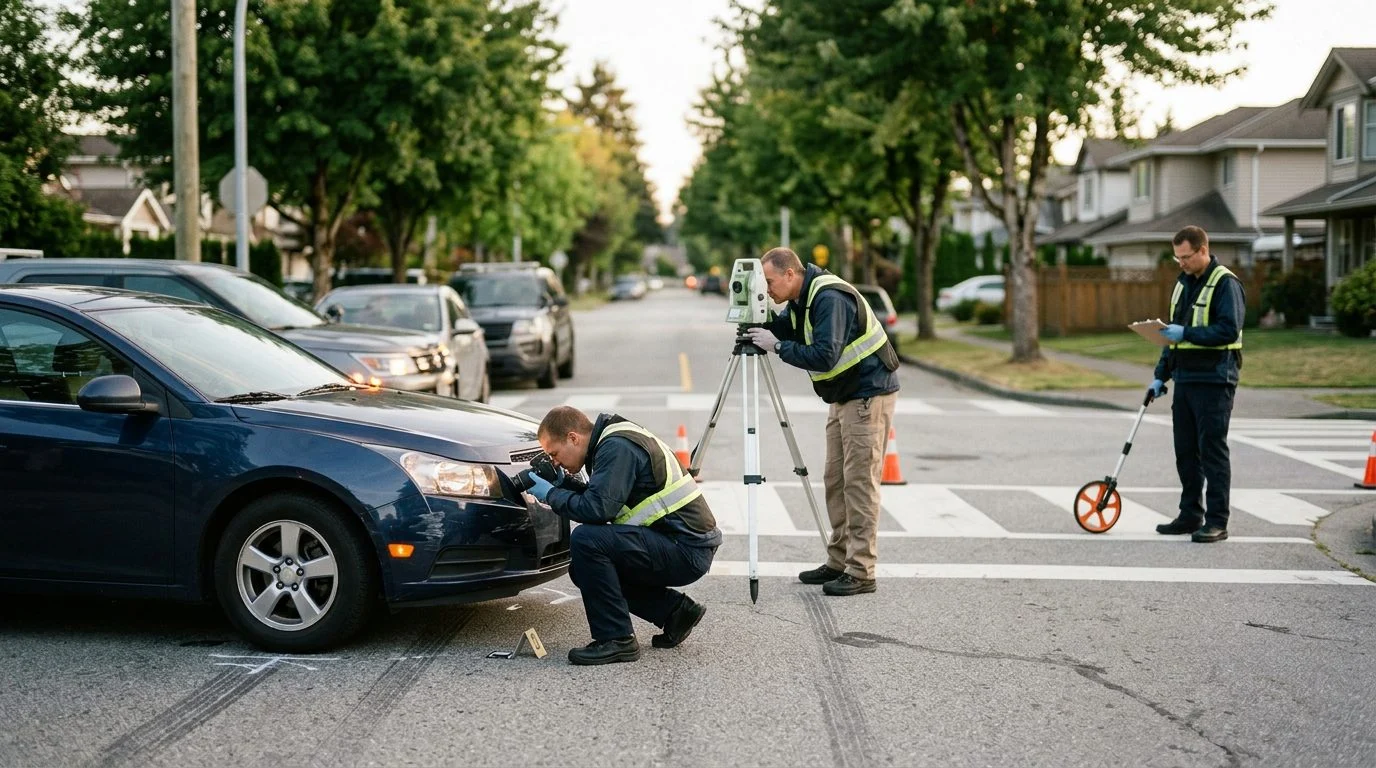
- Scene photos: crosswalk markings, lighting, weather, sidewalk condition, and vehicle damage.
- Video: business and traffic camera footage. Many systems record over old video on a set schedule, so ask for it early.
An insurance adjuster may ask for a recorded statement soon after a crash. A person may wish to speak with a lawyer before giving one.
How Fault Is Examined When a Pedestrian and a Driver Are Both Involved
Fault turns on what each person did and whether that conduct caused the injury. Virginia follows contributory negligence: if you are found even partly at fault, you may be barred from recovering, with limited exceptions. Talk to a lawyer about your facts.
Driver conduct that often gets examined includes speed for conditions, distraction, failure to yield at crosswalks, turning errors, and impairment. Pedestrian conduct gets examined too. That includes crossing away from a crosswalk, stepping into the roadway unexpectedly, lighting and clothing, and phone use.
The outcome depends on the facts of each crash, including physical evidence, witness accounts, and reconstruction records.
Filing Deadlines and When a Pedestrian Dies
Virginia generally requires a personal injury lawsuit to be filed within two years after the cause of action accrues. Virginia generally allows two years from the date of injury to file a personal injury lawsuit (Va. Code § 8.01-243(A)); the clock runs from the date of injury, not the date of discovery, with narrow exceptions. See Va. Code § 8.01-243.
Some claims carry shorter deadlines. Under Va. Code § 15.2-209, a negligence claim against a county, city, or town is forever barred unless a written statement of the claim, including the time and place of the injury, is filed within six months after the claim accrued; failure to provide that statement does not bar the claim if the attorney, chief executive, or mayor, or an insurer or entity covering the claim, had actual knowledge of it within those six months. If the claimant was under a disability when the claim accrued, the tolling provisions of § 8.01-229 apply. A crash involving a city or county road may raise this rule. Reviewing the claim early helps protect these dates.
When a pedestrian dies, different rules apply. A Virginia wrongful death action is filed by the decedent’s personal representative within two years of the death (Va. Code §§ 8.01-50(C), 8.01-244(B)), on behalf of the family members the statute protects. The statutes are Va. Code § 8.01-50 and Va. Code § 8.01-244. Under Va. Code § 8.01-50, the personal representative of a deceased person brings the wrongful death action, and family members do not file it themselves; for a fetal death, the natural mother brings the action in her own name, but if she dies or is under a disability as defined in § 8.01-2, the administrator of her estate, her guardian, or her personal representative qualified to bring such action may initiate or maintain it.
Virginia wrongful death damages cover the family’s sorrow, mental anguish and loss of the decedent’s companionship, guidance and care; lost income and services; medical expenses from the injury; funeral expenses; and, for willful or wanton conduct, punitive damages (Va. Code § 8.01-52). See Va. Code § 8.01-52.
Not sure what your next step is?
Talk it through with Correll Law Firm — we can walk you through how a situation like yours is usually handled and what your options are.
How the Firm Handles Pedestrian Brain Injury Car Accident Richmond Claims
Correll Law Firm handles car and truck crash claims, including catastrophic injuries and wrongful death. The firm has offices in Winchester and Harrisonburg. It serves people in Richmond, Henrico County, the Shenandoah Valley, and the Front Royal area.
A pedestrian brain injury car accident Richmond claim often starts with the same early steps as other crash claims. The firm may:
- Review medical and crash records.
- Request the police report.
- Identify the insurers involved.
- Build a timeline of symptoms, treatment, and missed work.
- Look into the scene and speak with witnesses.
- Gather records that show how the brain injury affects work and daily life.
If a claim cannot be resolved through negotiation, it may move toward a lawsuit. No result can be promised in any case.
Frequently Asked Questions
Can a pedestrian brain injury car accident Richmond case still lead to a claim if symptoms appear later?
Symptoms can appear days later. Steady medical follow-up and a written symptom log help document the injury.
Is a police report necessary?
A police report records the officer’s observations and the people involved. Requesting it early is a useful step.
Does being in a crosswalk decide who was at fault?
Crosswalk position is one fact among many. The driver’s conduct, the scene, and witness accounts are examined together.
Does the firm handle cases outside Richmond?
The firm’s offices are in Winchester and Harrisonburg. It serves people in Richmond and Henrico County, the Shenandoah Valley, and the Front Royal area.