
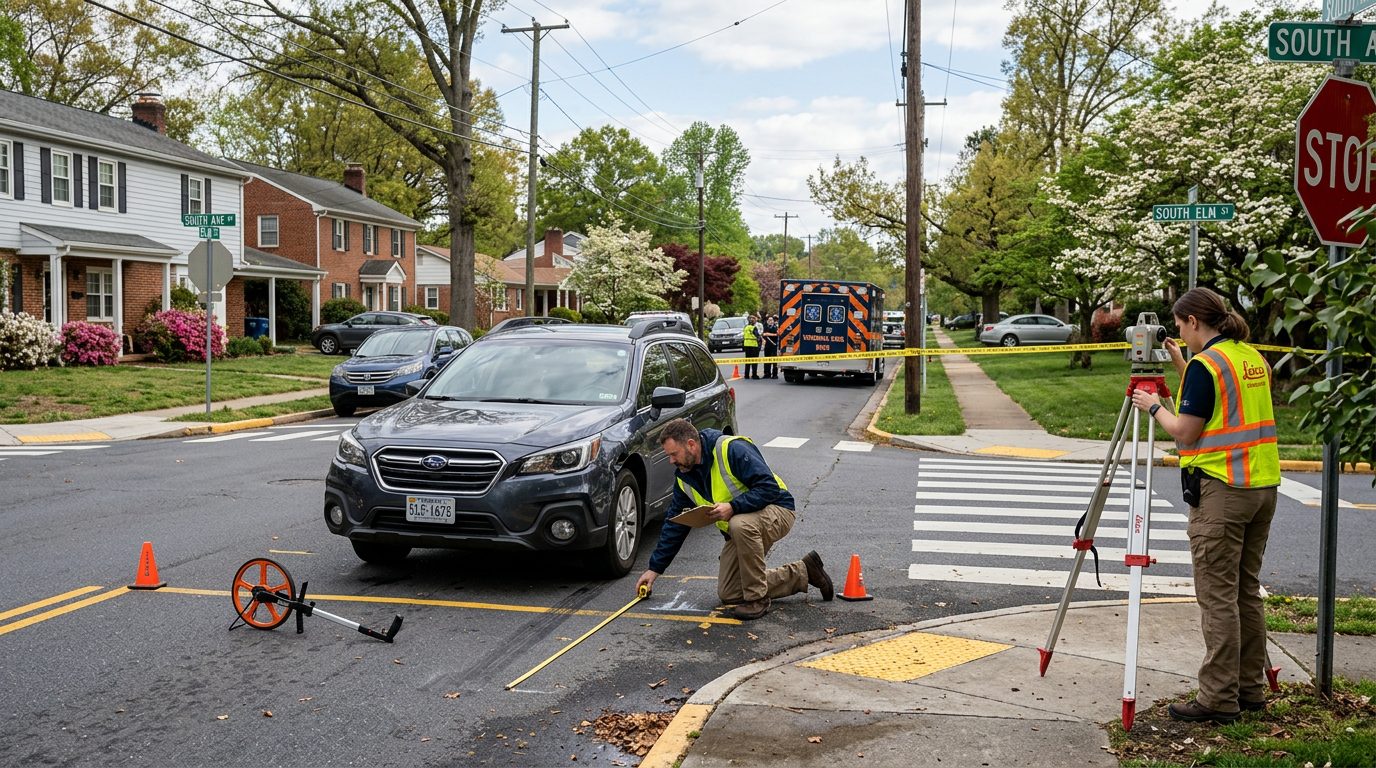
Virginia Brain Injury Crash Guidance
Thinking About a Recorded Statement After a Brain Injury Crash?
An insurance adjuster may ask for your account soon after a crash, when your memory and symptoms are still changing. Here is how to think through that request.
Published November 23, 2026
A crash that hurts your head can leave you confused, sore, and unsure what happened. Then an insurance adjuster asks for a recorded statement. A recorded statement is a spoken account of the crash, captured on audio or video and usually given to an insurance adjuster handling a claim. You may wish to think carefully before you agree, since a brain injury can affect memory and the recording stays in the claim file.
This guide answers common questions about a recorded statement after a brain injury crash in Virginia. It covers why insurers ask, how a head injury can affect your account, and which records help show what happened.
Who Asks for a Recorded Statement After a Crash?
An insurance adjuster usually makes the request, either for the at-fault driver’s insurer or for your own insurer. The request often comes by phone within days of a crash. Sometimes it arrives before anyone knows how serious a head injury will be, and that timing can feel rushed. The adjuster may ask simple questions to open the claim, or a longer set about how the crash happened, where you were headed, and how you feel. Ask at the start whether the conversation is being recorded. Some people feel pressure to answer right away. You may wish to say that you need time first.
If an adjuster has asked you for a recorded statement after a crash that hurt your head, you don't have to face it alone, and the firm is glad to talk it through with you. Talk it through with Correll Law Firm — we can walk you through how a situation like yours is usually handled and what your options are.

Why Insurers Ask for Recorded Statements Early
Insurers ask early to hear your account before the claim takes shape. The recording captures how the crash happened, what you were doing, and what you noticed about your injuries. The adjuster can replay it and compare it with the police report, photos, and other records in the claim file. An early account can shape how the insurer views the claim, so accuracy and completeness matter. The first answers often shape the follow-up questions that come next. Small differences between a statement and later medical records are often questioned. A statement may come before you have seen a doctor, or before your symptoms are clear. That is why it helps to know what you plan to say before you speak. A short pause to gather your thoughts is a reasonable step, and it does not mean you have anything to hide.
How a Brain Injury Can Affect Memory and Accuracy
A brain injury can make it harder to recall and describe a crash clearly. Vehicle crashes can cause serious brain injuries, with effects on daily life, work, and recovery, according to the Brain Injury Association of America. The same group notes that symptoms may be delayed or masked during an emergency-room exam. It also says people should report new or worsening problems to their health care providers (Brain Injury Association of America). A statement given while symptoms are still changing may not match later medical records. Medical records and your own notes often tell different parts of the story. Insurers often question differences like that.
Partial Fault, Word Choice, and What a Statement Can Affect
A recorded statement can affect questions of fault and how your injuries are viewed. Virginia follows contributory negligence: if you are found even partly at fault, you may be barred from recovering, with limited exceptions. Talk to a lawyer about your facts.
Casual words can be quoted back later. An apology, or a guess about speed or distance, may be used to question your account. Describe only what you actually saw, heard, and felt. If you are unsure of a detail, say so rather than estimate. Estimates made under stress can later look like facts. A statement may also touch on prior injuries, medical history, and treatment. Incomplete answers can create confusion in the claim, so think through those questions before you answer them. Friendly tone does not change how a recording is used later, so stay calm and stick to facts.
Records and Evidence That Help Document a Brain Injury Crash
Records made close to the crash help show what happened and how an injury developed. Virginia requires a driver involved in a crash with injury or death to stop and report it to police immediately (Va. Code §§ 46.2-371, 46.2-894). The driver is also required to give reasonable assistance to an injured person under Va. Code § 46.2-894.
The police report is often the first record to request. Photos of the vehicles and scene, taken soon after the crash, show damage and positions. Photos taken on a phone usually carry a time stamp, which helps place them on the day of the crash. Names and phone numbers of witnesses matter too, because memories fade over time. Dashcam footage, nearby business video, and phone photos can be lost, since many systems overwrite older recordings on a schedule. Ask people to save them early. Gather emergency-room, imaging, and follow-up care records as well, and keep a dated symptom journal. Together, these help show how the injury developed.
For a commercial truck crash, the carrier’s records may matter. Federal rules require motor carriers subject to them, other than private nonbusiness passenger carriers, to have drivers record their duty status for each 24-hour period (49 C.F.R. § 395.8). Carriers keep records for minimum periods, and after those periods the records may be destroyed at the company’s discretion, but this does not excuse compliance with any other governmental body’s lawful requirement of longer retention periods (49 C.F.R. § 379.3). Those records sit with the carrier, not with you, so early attention to them can matter.
Timing: Deadlines to Keep in Mind
Virginia generally allows two years from the date of injury to file a personal injury lawsuit (Va. Code § 8.01-243(A)); the clock runs from the date of injury, not the date of discovery, with narrow exceptions.
Some claims carry notice requirements that run out sooner. Timing questions are worth raising early, while the details are still fresh. Keep copies of any letters or notices you receive about the claim, with their dates. The two-year period is the deadline to file a lawsuit, not a deadline to report the crash to police (Va. Code § 8.01-243).
Not sure what your next step is?
Talk it through with Correll Law Firm — we can walk you through how a situation like yours is usually handled and what your options are.

Preparing an Accurate Written Account After a Crash
A written account is a dated, factual description of the crash, written in your own words. Include the date and time, road and weather conditions, the vehicles involved, and the first symptoms you noticed. Keep it to what you saw, heard, and felt. Keep separate what you learned later from others, such as what an officer or witness said. Note the date you wrote it. Later changes belong in dated updates, not edits to the original. As symptoms change or records arrive, a dated update shows how your understanding developed. A clear, dated account also gives you a reference point when you review a later statement or medical record.
Frequently Asked Questions
Do I have to give a recorded statement?
You may wish to think about the request before agreeing, especially if your symptoms are still changing.
Can I ask for time before answering?
Yes, you may ask the adjuster for time to review your notes and records.
Can video help after a crash?
Video can help show what happened, so it is worth asking people to save any footage early.