
Car Accidents | Virginia
Hit Your Head in a Crash? What Virginia Asks of You
A blow to the head can be easy to brush off at the scene. Here is what to keep in mind about reporting and getting checked.
Published November 20, 2026
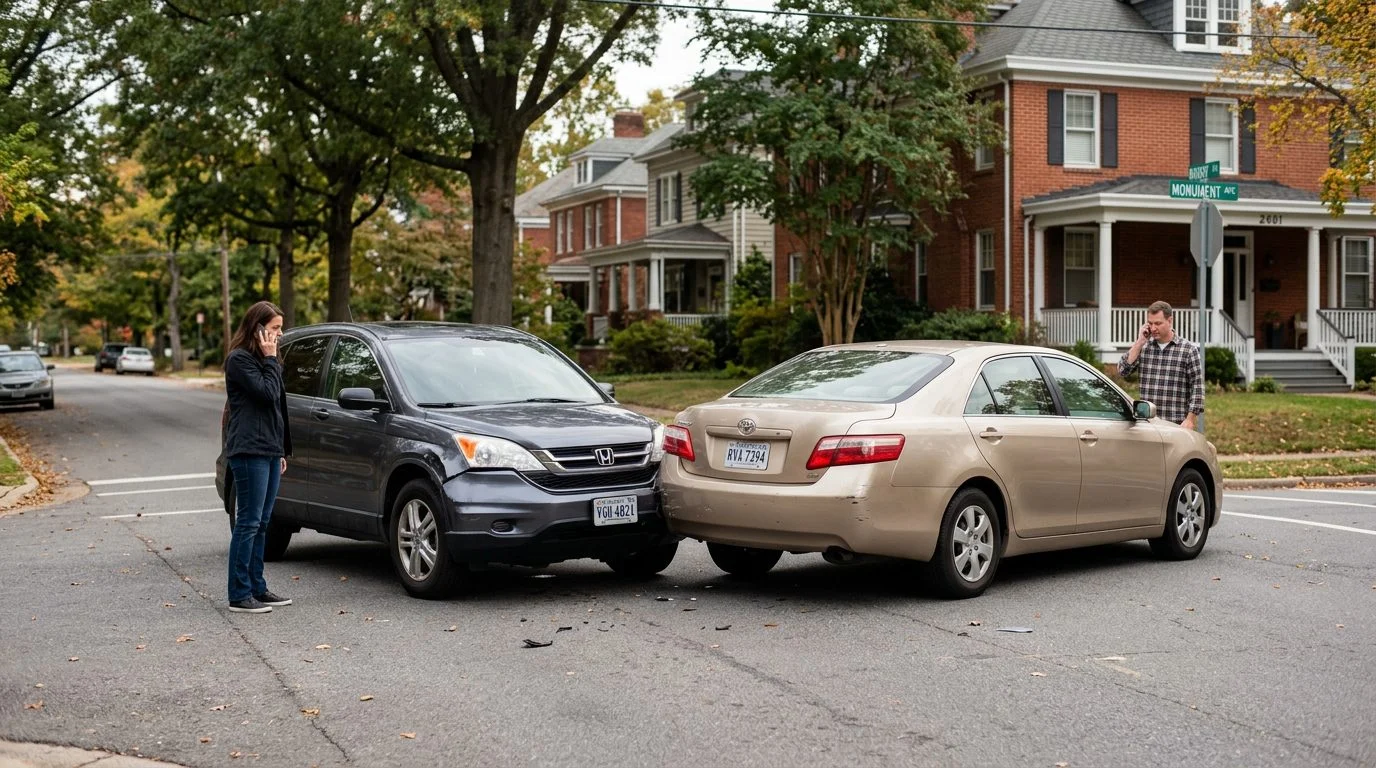
If you hit your head in a crash in Virginia, you may wonder whether you had to report it. Many drivers feel fine at the roadside, which makes the question easy to skip.
In short, yes, when the crash involved injury. A head strike can count as an injury even when nothing shows on the outside. Here is how the reporting duty works, how it differs from the deadline to sue, and where to get the crash report.
What Virginia Law Says About Reporting a Crash With Injury
Virginia requires a driver involved in a crash with injury or death to stop and report it to police immediately (Va. Code §§ 46.2-371, 46.2-894). Virginia law requires the driver of a vehicle involved in an accident in which a person is killed or injured, or in which an attended vehicle or other attended property is damaged, to immediately stop as close to the scene as possible without obstructing traffic, and to report their name, address, driver’s license number, and vehicle registration number to the State Police or local law-enforcement agency, as set out in Va. Code § 46.2-894.
The duty turns on whether the crash killed or injured someone or damaged an attended vehicle or other attended property. It does not turn on whether the driver felt pain at the scene.
The statute also requires the driver to render reasonable assistance to any person injured in the accident. That includes taking an injured person to a doctor or hospital when it is apparent that treatment is needed or the injured person asks for it.
Not sure what your next step is?
Talk it through with Correll Law Firm — we can walk you through how a situation like yours is usually handled and what your options are.
Does Hitting Your Head Count as an Injury?
Yes. A head strike can cause injury even with no bleeding, bruising or visible wound. A concussion is one kind of brain injury that can follow a blow to the head, and it does not always look serious.
Many people assume injury means a visible wound. That assumption can lead to skipping the report.
Signs such as headache, confusion, dizziness, trouble concentrating or memory problems can appear hours or days after a crash. Changes in mood, sleep or vision can matter too. A driver who feels fine at the scene may still develop them later.
Whether a particular crash involved injury depends on the facts.
A common mistake is deciding at the roadside that nothing is wrong. Later, symptoms may appear with no report on file. When in doubt, report the crash. A report made at the time records what happened while the details are fresh.
What Stopping and Reporting Means at the Scene
The statute says the driver must immediately stop as close to the scene of the accident as possible without obstructing traffic.
Reporting means giving your name, address, driver’s license number and vehicle registration number to State Police or a local law-enforcement agency, and to the injured person, the driver or occupant of the other vehicle, or the custodian of damaged property. That information also goes to the injured person, if that person can understand and keep it.
Many drivers pull over and wait for police to arrive. Staying put and cooperating can help make the report complete.
If injuries keep you from reporting at the scene, the statute still expects a report. The driver must make it as soon as reasonably possible and try to locate the people involved.
Leaving the scene is what the reporting statute addresses. Under § 46.2-894, a driver convicted of failing to stop and report is guilty of a Class 5 felony if the accident results in injury to or death of any person.
Reporting a Crash Is Not the Same as Filing a Lawsuit
Reporting is due right away. A lawsuit has its own deadline, and the two clocks are separate.
Virginia generally allows two years from the date of injury to file a personal injury lawsuit (Va. Code § 8.01-243(A)); the clock runs from the date of injury, not the date of discovery, with narrow exceptions. Under Va. Code § 8.01-243, unless otherwise provided in that section or by other statute, every action for personal injuries, whatever the theory of recovery, shall be brought within two years after the cause of action accrues.
That two-year rule covers personal injury claims whatever the legal theory, so a head injury claim follows the same clock.
A personal injury action filed after the two-year period in Va. Code § 8.01-243(A) would generally fall outside that period, unless that section or another statute provides otherwise. Some claims carry notice requirements that run out sooner, so timing can matter well before two years pass.
If a criminal case arises from the same crash, the time it is pending may not count toward the civil deadline. That rule has limits, set out in Va. Code § 8.01-229.
The two-year period is the deadline to file a lawsuit, not a deadline to report a crash (Va. Code § 8.01-243). Reporting happens at the scene or as soon as reasonably possible after it.
Getting a Head Injury Checked and Documented
Get a medical evaluation after any head strike in a crash, even if you feel fine. Symptoms can develop later, and an early medical record shows when a problem was first noted.
Tell the doctor how your head struck the windshield, airbag or road, if you remember. Describe what you recall before and after the impact too.
Keep a dated written log of symptoms, missed work and appointments. Write down what you remember about the crash while it is fresh.
Medical records and the crash report are both useful if a head injury is reviewed later. Keep copies of each in one place, along with the names of anyone who saw you at the scene.
Health comes first. Tracking symptoms helps you and your doctors see patterns, such as headaches that grow worse or sleep that keeps changing.
How to Get a Copy of the Police Crash Report
Its crash report request page explains who may obtain a police crash report.
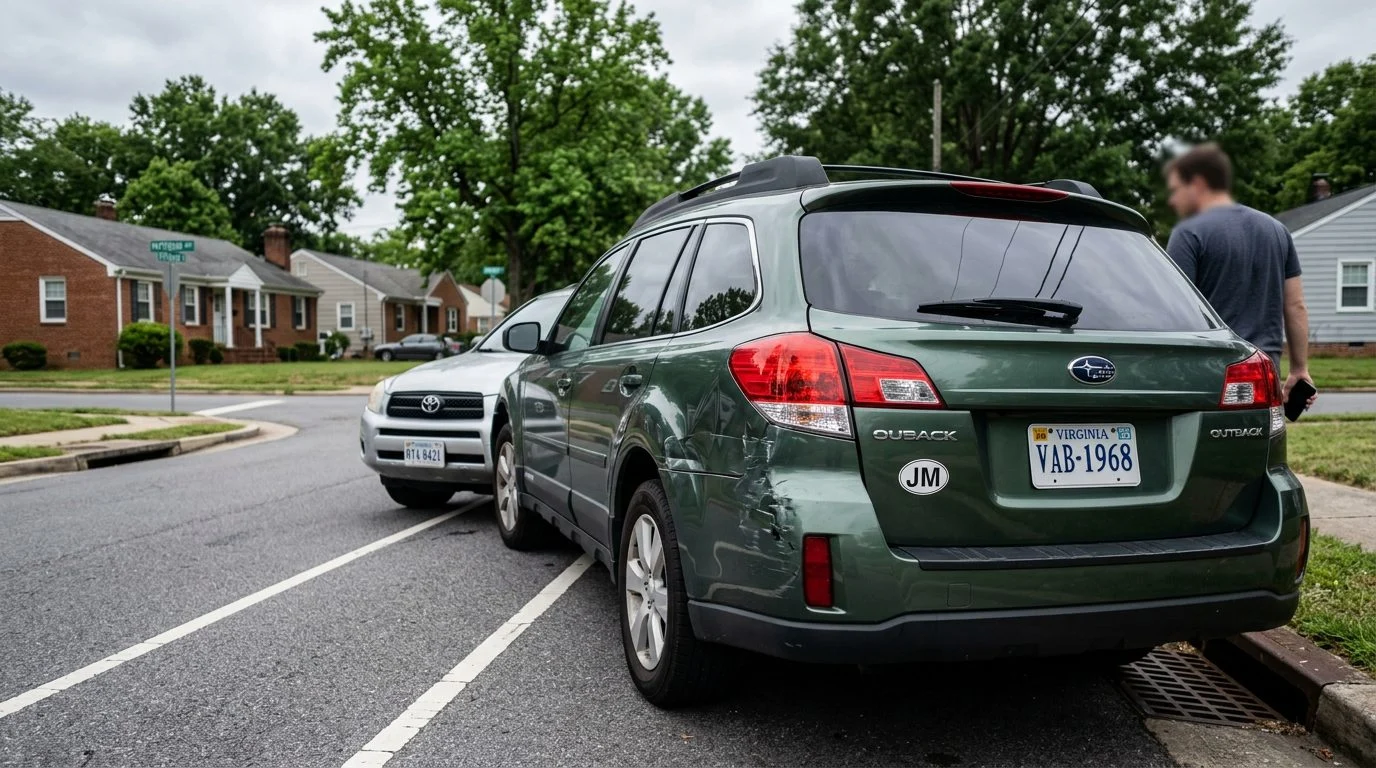
After a crash is reported, the investigating agency creates a report. It can record the scene, the people and vehicles involved, and any injuries noted at the time. Dates, times and locations help anchor the timeline of symptoms.
The report matters for a head strike because it shows what was noted about injuries when police arrived. That record can be useful later, when symptoms appear days after the crash.
The DMV’s crash and injury reporting page describes crash-report records and the forms used to report a crash.
The firm also has a guide on requesting a police crash report in brain injury cases.
Not sure what your next step is?
Talk it through with Correll Law Firm — we can walk you through how a situation like yours is usually handled and what your options are.
Crashes in Richmond, Henrico County, and the Shenandoah Valley
The reporting duty applies on Virginia roads, wherever in the state the crash happens.
The statute covers the driver of any vehicle, so a crash involving a commercial truck follows the same reporting duty.
The firm’s offices are in Winchester and Harrisonburg. It represents people hurt in car and commercial truck crashes from the Shenandoah Valley to Richmond and Henrico County. Readers in the Richmond area can review the firm’s Richmond page.
If the driver in your crash was impaired, the firm has a guide on drunk driver crash brain injuries. Its traumatic brain injury page covers brain injury more broadly.
If a crash led to a death, the firm’s wrongful death page covers that situation.
Frequently Asked Questions
Do I have to report a crash if no one else calls police?
Yes. The reporting duty rests on the driver of a vehicle involved in an accident resulting in injury to or death of any person, though someone acting for the driver may give notice under § 46.2-371.
Can you claim personal injury after three years in Virginia?
Usually not. The general two-year deadline discussed above has passed by then, with narrow exceptions.
Where can you get a copy of a police crash report?
The Virginia DMV’s request page explains who may obtain a police crash report.