
Rideshare Crashes | Virginia
Rideshare Crash Brain Injury: Key Facts for Virginia Families
Brain injuries after a rideshare crash are not always obvious at first. Here is what to know about the injury, the crash and the steps that help protect your health and your claim.
Published November 4, 2026
A brain injury after a crash with a rideshare or delivery driver is still a motor vehicle injury claim under Virginia law. The driver’s work status can add questions about who else may be responsible and how much time is available to file.
This guide covers the injury itself, the medical records that often matter, crash reporting, fault and time limits. The firm has offices in Winchester and Harrisonburg. It represents people hurt in car and truck crashes, catastrophic injuries and wrongful death cases from the Shenandoah Valley to Richmond and Henrico County. A rideshare crash brain injury lawyer can explain how these rules fit a specific crash.
A Rideshare or Delivery Crash Can Involve More Than One Driver
A crash with a rideshare or delivery driver can involve more parties than a typical two-car crash. The other driver is the first question. Next come the vehicles involved and any company tied to the trip or delivery. Who may be responsible depends on the facts of the crash.
Early facts still matter, because they help show how each party acted.
If a rideshare or delivery crash left you or someone you love with a brain injury, the firm is ready to talk through the facts and whether you may have a claim. Talk it through with Correll Law Firm — we can walk you through how a situation like yours is usually handled and what your options are.
How Brain Injuries From Crashes Are Commonly Described
A brain injury is damage to, or a change in, how the brain works, caused by a force from outside the head. Virginia’s brain injury resource states that motor vehicle accidents can cause this injury. It also states that a doctor must make the diagnosis. The Administration for Community Living notes that automobile crashes can cause traumatic brain injuries.
A concussion is a jolt to the brain that disrupts how it works. A contusion is a bruise on brain tissue, and it may show up on imaging. Common symptoms include headache, confusion, memory problems, sleep changes, mood changes and trouble concentrating.
Symptoms do not always appear right away. Some people notice them hours or days after a crash. A person who feels fine at the scene may still have been hurt. Tracking new symptoms as they appear can help a doctor and a claim tell the same story.
Medical Care and Records That Support a Brain Injury Claim
Prompt medical checks after any head impact protect health first. They also create a dated record of symptoms from the start. A rideshare crash brain injury claim often turns on how well the medical timeline matches what the injured person reports.
Records that often matter include emergency department notes, imaging results, neurology or rehabilitation notes, and doctor notes about work restrictions. Each record adds a piece of the timeline. Gaps in care can be questioned later, so follow the treatment plan and keep the appointment papers.
Keep a dated journal too. Write down headaches, confusion, sleep problems, missed work and daily tasks that have become harder, such as driving, reading or cooking. Specific notes written close to the event are more useful than memories pieced together months later.
Reporting the Crash and Preserving Evidence
Virginia requires a driver involved in a crash with injury or death to stop and report it to police immediately (Va. Code §§ 46.2-371, 46.2-894). Under Va. Code § 46.2-894, any person convicted of violating this section is guilty of a Class 5 felony if the crash results in injury or death or more than $1000 of property damage, and a Class 1 misdemeanor if the property damage is $1000 or less. The driver must also render reasonable assistance to anyone injured (Va. Code § 46.2-894).
The two-year period discussed below is generally the deadline to file a personal injury lawsuit, running from when the cause of action accrues, unless the statute or another law provides otherwise (Va. Code § 8.01-243). It is not a deadline to report a crash.
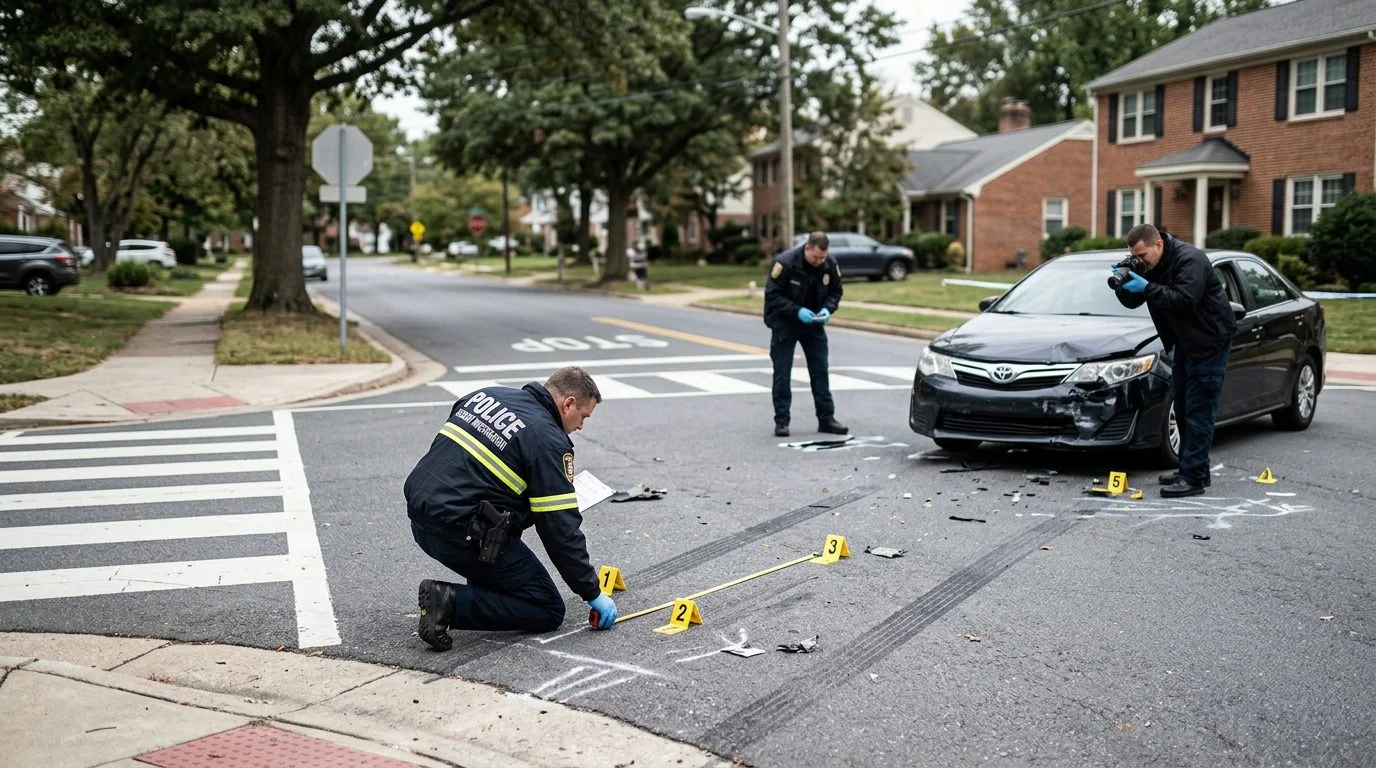
Useful evidence often includes the police report, photos of both vehicles and the road, names of witnesses, and vehicle repair records. Screenshots of trip or delivery details and any messages with the driver or company can also help. Save them before they are deleted.
Keep copies of letters from insurers and notes of conversations with them. Avoid guessing about fault in writing, even in a message to a friend.
Fault, Shared Blame and Why It Matters Early
Virginia follows contributory negligence: if you are found even partly at fault, you may be barred from recovering, with limited exceptions. Talk to a lawyer about your facts.
Fault is often examined through the police report, witness statements and physical evidence such as vehicle damage.
The facts that decide fault are often the ones lost first. Scene notes, photos and witness names are easiest to gather early.
Time Limits, Wrongful Death and Damages in Virginia
Virginia generally allows two years from the date of injury to file a personal injury lawsuit (Va. Code § 8.01-243(A)); the clock runs from the date of injury, not the date of discovery, with narrow exceptions.
Some claims carry shorter notice requirements. A written statement of a claim against a county, city or town for negligence generally must be filed within six months, with a limited exception (Va. Code § 15.2-209). Va. Code § 15.2-209 reads: “Failure to provide such statement shall not bar a claim against any county, city, or town, provided that the attorney, chief executive, or mayor of such locality, or any insurer or entity providing coverage or indemnification of the claim, had actual knowledge of the claim, which includes the nature of the claim and the time and place at which the injury is alleged to have occurred, within six months after such cause of action accrued.” Va. Code § 15.2-209 reads: “Every claim cognizable against any county, city, or town for negligence shall be forever barred unless the claimant or his agent, attorney, or representative has filed a written statement of the nature of the claim, which includes the time and place at which the injury is alleged to have occurred, within six months after such cause of action accrued.” This can matter when a government-owned vehicle is involved.
When a crash causes a death, the family’s rights run through a formal process. A Virginia wrongful death action is filed by the decedent’s personal representative within two years of the death (Va. Code §§ 8.01-50(C), 8.01-244(B)), on behalf of the family members the statute protects.
Virginia wrongful death damages cover the family’s sorrow, mental anguish and loss of the decedent’s companionship, guidance and care; lost income and services; medical expenses from the injury; funeral expenses; and, for willful or wanton conduct, punitive damages (Va. Code § 8.01-52). The award then goes to a defined group of beneficiaries, such as a surviving spouse and children, and in some cases parents (Va. Code § 8.01-53).
Not sure what your next step is?
Talk it through with Correll Law Firm — we can walk you through how a situation like yours is usually handled and what your options are.
Punitive Damages and Where the Firm Serves Virginia Residents
Punitive damages are not available just because a crash was serious. Virginia allows punitive damages for actual malice, or for willful or wanton conduct or recklessness showing a conscious disregard for the safety of others, capped at $350,000 (Va. Code § 8.01-38.1). The jury must find that the conduct met this standard.
The firm has offices in Winchester and Harrisonburg. It handles car and truck crash claims, catastrophic injuries and wrongful death cases for people from the Shenandoah Valley to Richmond and Henrico County.
In short, early medical care, careful notes and an early look at who may be responsible shape a brain injury claim. Virginia’s time limits and damages rules then set the framework.
Common Questions
Can I sue the driver of a rideshare car in Virginia?
Possibly.
Do brain injury symptoms always show up right away?
No. Some symptoms appear hours or days after a crash, so early medical checks still matter.
A person may wish to speak with a lawyer about the timing and facts of a claim.
Who receives wrongful death damages in Virginia?
The award goes to a defined group of beneficiaries under Va. Code § 8.01-53, such as a surviving spouse and children.