
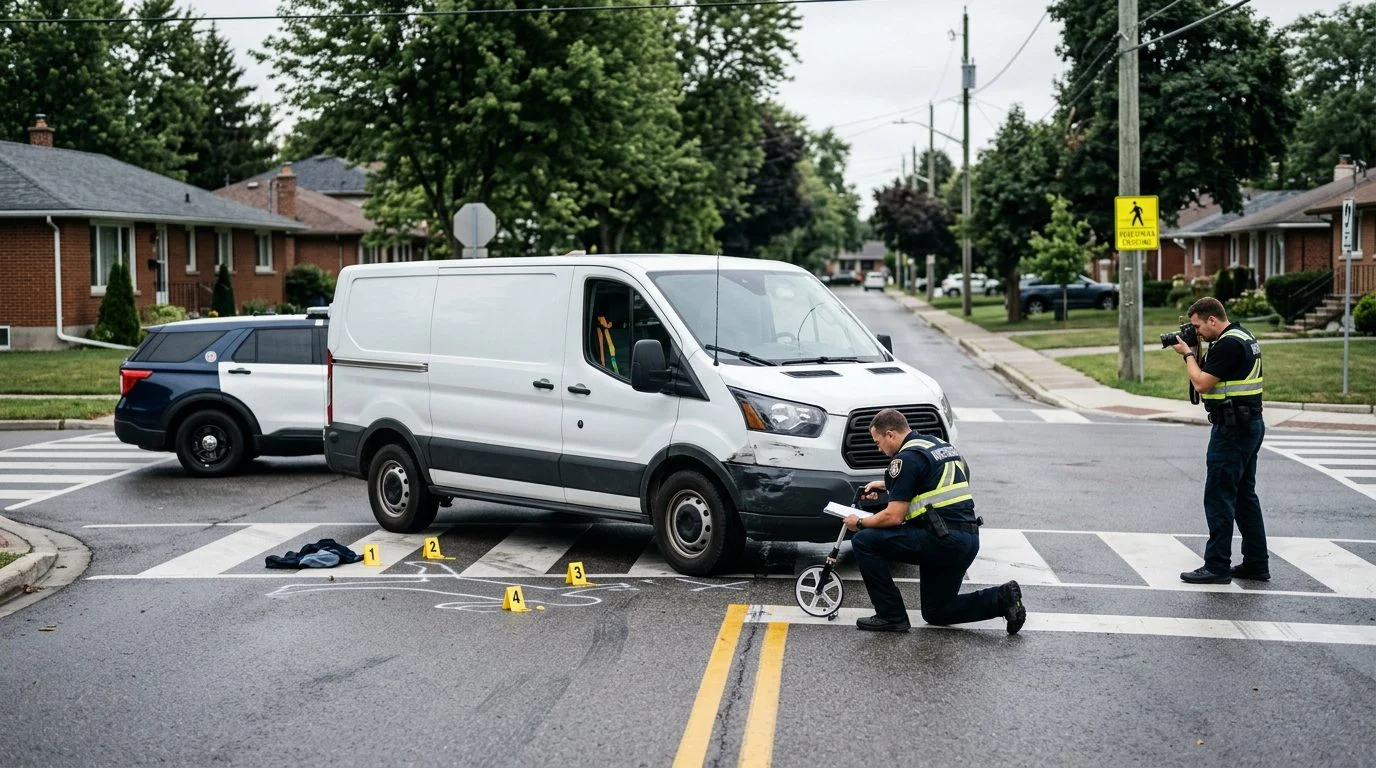
Commercial Vehicle Accidents | Shenandoah Valley and Richmond
Work Van Accidents and Traumatic Brain Injury
A crash involving a work van can change how a person thinks, feels and works, and the injury may not be obvious at the scene.
Published November 9, 2026
Work Van Crashes and Brain Injury: Information for Henrico County Residents
A crash in a work van can change everything in a few seconds. If you or someone you love hit your head and now struggles with memory, headaches or focus, you may be wondering what comes next.
A brain injury from a work van or commercial vehicle crash may support a personal injury claim against the people responsible. Virginia also sets time limits for filing, so timing matters. Correll Law Firm handles these cases for people in Henrico County, Richmond and across the Shenandoah Valley.
If a crash in a work van or commercial vehicle left you or a family member with a brain injury, you may have a claim, and you do not have to face it alone. Talk it through with Correll Law Firm — we can walk you through how a situation like yours is usually handled and what your options are.
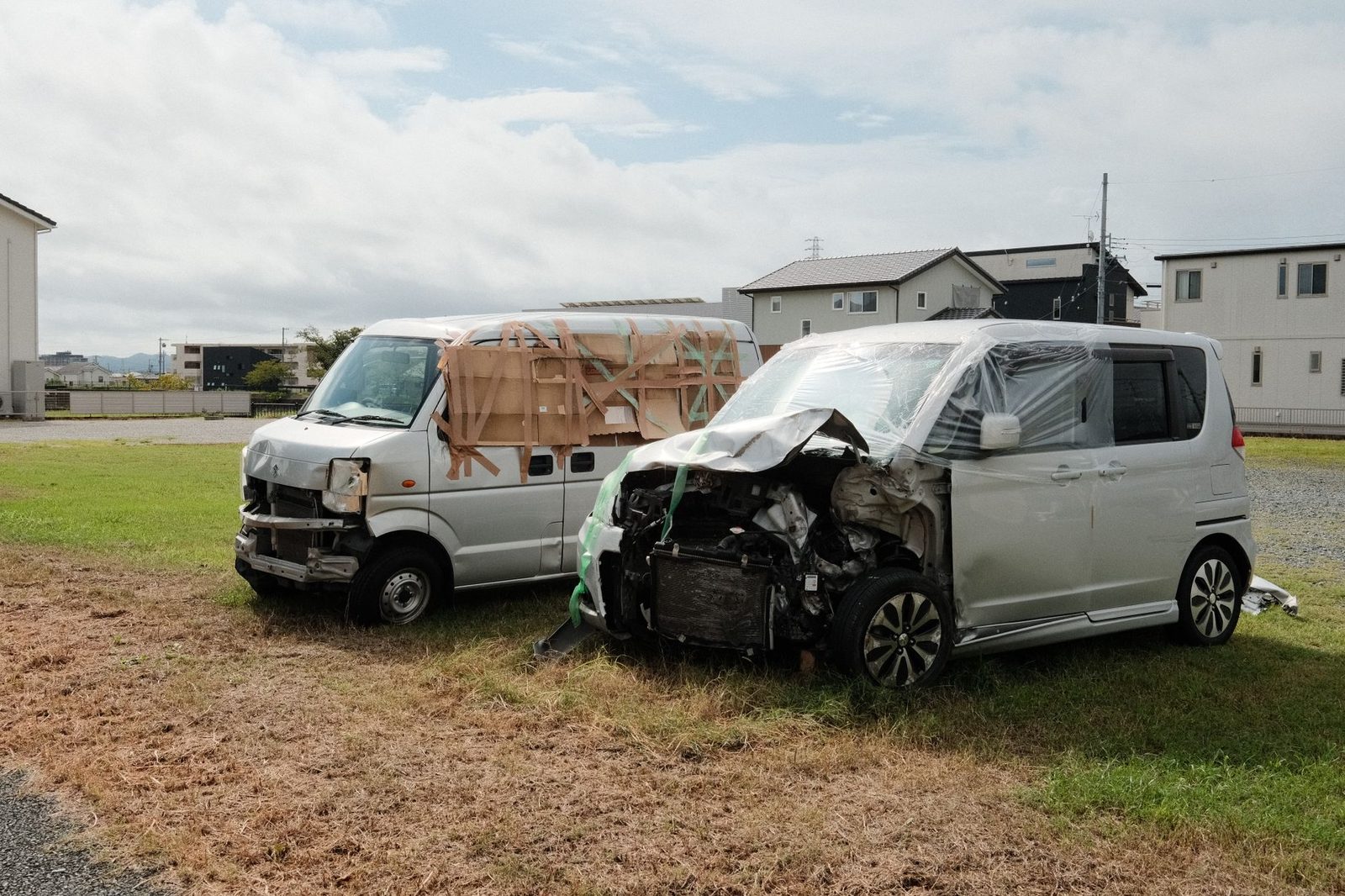
What a brain injury from a work van crash involves
A brain injury from a work van crash is an injury to the brain caused by a blow, a jolt or a force that penetrates the skull. It can range from a concussion to a severe injury that lasts for months or years.
Many people assume a brain injury must show a visible head wound. That is not true. Some brain injuries have no open wound, and some symptoms appear hours or days after the crash.
This guide is for several kinds of people:
- injured drivers of work vans, delivery vans and company vehicles
- passengers, including workers riding in a company vehicle
- pedestrians and cyclists struck by a commercial vehicle
- families of a person who died in the crash
How work van and commercial vehicle crashes differ from ordinary car crashes
A work van or commercial vehicle crash often leaves more records behind than an ordinary car crash. Many commercial vehicles follow federal safety rules overseen by the Federal Motor Carrier Safety Administration (FMCSA).
Those records can include driver logs, maintenance files, dispatch information and vehicle data. Federal rules require many commercial drivers to record their duty status for each 24-hour period (49 C.F.R. § 395.8). Companies may destroy some records once their minimum retention periods end (49 C.F.R. § 379.3). That is why saving records early matters.
More than one party may play a role. The driver, the vehicle owner and the employer each may be part of the investigation. Virginia law lets a vehicle owner defend a negligence claim by proving the vehicle was driven without the owner’s knowledge or consent, and the owner carries the burden of that proof (Va. Code § 8.01-65).
Passengers and drivers often face different questions. A passenger usually was not driving, so the questions turn to who was driving, who owned the vehicle and who employed the driver. Whether an employer answers for a driver’s conduct depends on the facts.
Symptoms, medical records and why early evaluation matters
Brain injury symptoms are easy to miss. Common ones include headaches, confusion, memory problems, dizziness, sleep changes, irritability, sensitivity to light or noise, and trouble concentrating.
Medical providers may use the Glasgow Coma Scale to assess a person’s level of consciousness after a head injury. Only a medical provider can diagnose a brain injury.
A prompt medical evaluation creates a dated record that links the crash to the injury. Follow-up visits add to that timeline. Gaps in treatment can make it harder to show how the injury developed.
Practical steps that help:
- keep notes from each appointment, including the provider’s name
- track symptoms in a daily journal, including headaches, sleep and mood
- save bills, prescription receipts and mileage to appointments
- write down missed work and any change in duties
Virginia deadlines and crash reporting
Virginia generally gives two years to file a personal injury lawsuit (Va. Code § 8.01-243). Virginia generally allows two years from the date of injury to file a personal injury lawsuit (Va. Code § 8.01-243(A)); the clock runs from the date of injury, not the date of discovery, with narrow exceptions.
Crash reporting is a separate duty. Virginia requires a driver involved in a crash with injury or death to stop and report it to police immediately (Va. Code §§ 46.2-371, 46.2-894). The driver-notice statute is at Va. Code § 46.2-371. Under Va. Code § 46.2-371, the driver must immediately give notice of the accident to a law-enforcement officer (Va. Code § 46.2-371).
Some claims carry notice requirements that run out sooner. If a public vehicle was involved, review the timing early.
Fault, partial fault and punitive damages
Fault decides who may be responsible for a crash. An insurer’s first position on fault is not the final answer.
Virginia law states the partial fault rule this way: Virginia follows contributory negligence: if you are found even partly at fault, you may be barred from recovering, with limited exceptions (Williams v. Harrison, 255 Va. 272 (1998)). Talk to a lawyer about your facts.
Causation matters too.
An insurer may ask for a recorded statement soon after a head injury. Take time before answering. A head injury can affect memory, so a short, careful answer is often wiser than a fast one.
Punitive damages are a separate question. Virginia allows punitive damages for actual malice, or for willful or wanton conduct or recklessness showing a conscious disregard for the safety of others. Under Va. Code § 8.01-38.1, the total punitive damages awarded against all defendants may not exceed $350,000. Punitive damages are not automatic.
Not sure what your next step is?
Talk it through with Correll Law Firm — we can walk you through how a situation like yours is usually handled and what your options are.
How a claim typically proceeds
A brain injury claim usually moves from a case evaluation to investigation, medical follow-up, and then either settlement talks or a lawsuit. Each stage depends on the injury and the facts.
The typical steps are:
- Case evaluation: The injured person or family shares the crash facts, medical history and insurance information.
- Investigation: The firm gathers police reports, medical and employment records, vehicle and driver information, and witness statements.
- Medical documentation: Treatment records are organized so the injury’s effect on daily life and work is clear.
- Resolution: A claim may resolve without a lawsuit, or a lawsuit may be filed within Virginia’s deadlines.
Timelines vary with the injury’s severity, the number of parties and how long treatment continues. A severe brain injury often needs time for the medical picture to become clear. The firm keeps the client informed at each stage.
Who the firm serves in Henrico County and Richmond
Correll Law Firm represents people seriously hurt in car and commercial truck crashes, people with catastrophic brain and spinal cord injuries, and families in wrongful death cases. The firm’s offices are in Winchester and Harrisonburg. It serves people from Richmond, Henrico County and the wider Shenandoah Valley.
When a crash causes a death, Virginia law sets out who may recover. Virginia wrongful death damages cover the family’s sorrow, mental anguish and loss of the decedent’s companionship, guidance and care; lost income and services; medical expenses from the injury; funeral expenses; and, for willful or wanton conduct, punitive damages (Va. Code § 8.01-52).
Long-term help is also available. Virginia’s Department for Aging and Rehabilitative Services describes community-based, long-term brain injury services, including resource coordination, structured daytime programs and case management (DARS brain injury services).
Frequently asked questions
Here are short answers to common questions about brain injury claims from work van and commercial vehicle crashes.
Does a concussion count as a brain injury?
Yes. A concussion is a form of traumatic brain injury, and a medical provider makes the diagnosis.
What if my symptoms did not start until days after the crash?
Symptoms can appear hours or days later. Early medical records help connect those symptoms to the crash.
What happens if the person injured in the crash died?
A Virginia wrongful death action is filed by the decedent’s personal representative within two years of the death (Va. Code §§ 8.01-50(C), 8.01-244(B)), on behalf of the family members the statute protects. Family members share in the recovery; they do not file.
Can I still have a claim if I was partly at fault?
The fault section above states Virginia’s partial fault rule and explains how it applies.
Is a passenger’s claim handled differently?
Passengers and drivers may face different questions about who was driving and who owned the vehicle. The facts of each crash decide which parties are involved.