
Traumatic Brain Injury | Virginia
Clear Steps After a Traumatic Brain Injury in Virginia
Medical care, the crash record, evidence and timing all shape a brain injury claim. Here is how the process typically unfolds, step by step.
Published October 28, 2026
A traumatic brain injury claim in Virginia usually moves through a few clear steps: medical care, the crash record, evidence, responsibility, and a lawsuit filed on time. Each step affects the next. This guide walks through them in order.
Why Medical Documentation Comes First in a Brain Injury Claim
Medical records are the foundation of a traumatic brain injury claim, so early care matters for your health and for proof.
Brain injury symptoms don’t always show up right away. Headaches, confusion, memory problems, dizziness and mood changes can appear hours or days after a crash. A peer-reviewed concussion study of college students describes cognitive, physical, emotional and sleep symptoms that can affect school and work during recovery.
Tell every provider about every symptom, even small ones, so the chart is complete. The records that usually matter most include emergency department notes, imaging results, diagnoses, specialist and therapy notes, and prescriptions. Together they show what was found, when, and how treatment changed over time.
Keep a symptom journal too. Write down headaches, sleep problems, trouble concentrating, mood changes and tasks you can no longer do, with dates. Save medical bills and work absence notes. A journal doesn’t replace medical records, but it shows how the injury changes daily life.
Not sure what your next step is?
Talk it through with Correll Law Firm — we can walk you through how a situation like yours is usually handled and what your options are.
Reporting the Crash and Preserving the Official Record
Virginia requires a driver involved in a crash with injury or death to stop and report it to police immediately (Va. Code §§ 46.2-371, 46.2-894). The same law requires the driver to immediately give notice of the accident to a law-enforcement officer (Va. Code § 46.2-371), and requires reasonable help for an injured person, including a ride to a doctor or hospital when treatment is apparently necessary or requested by the injured person (Va. Code § 46.2-894).
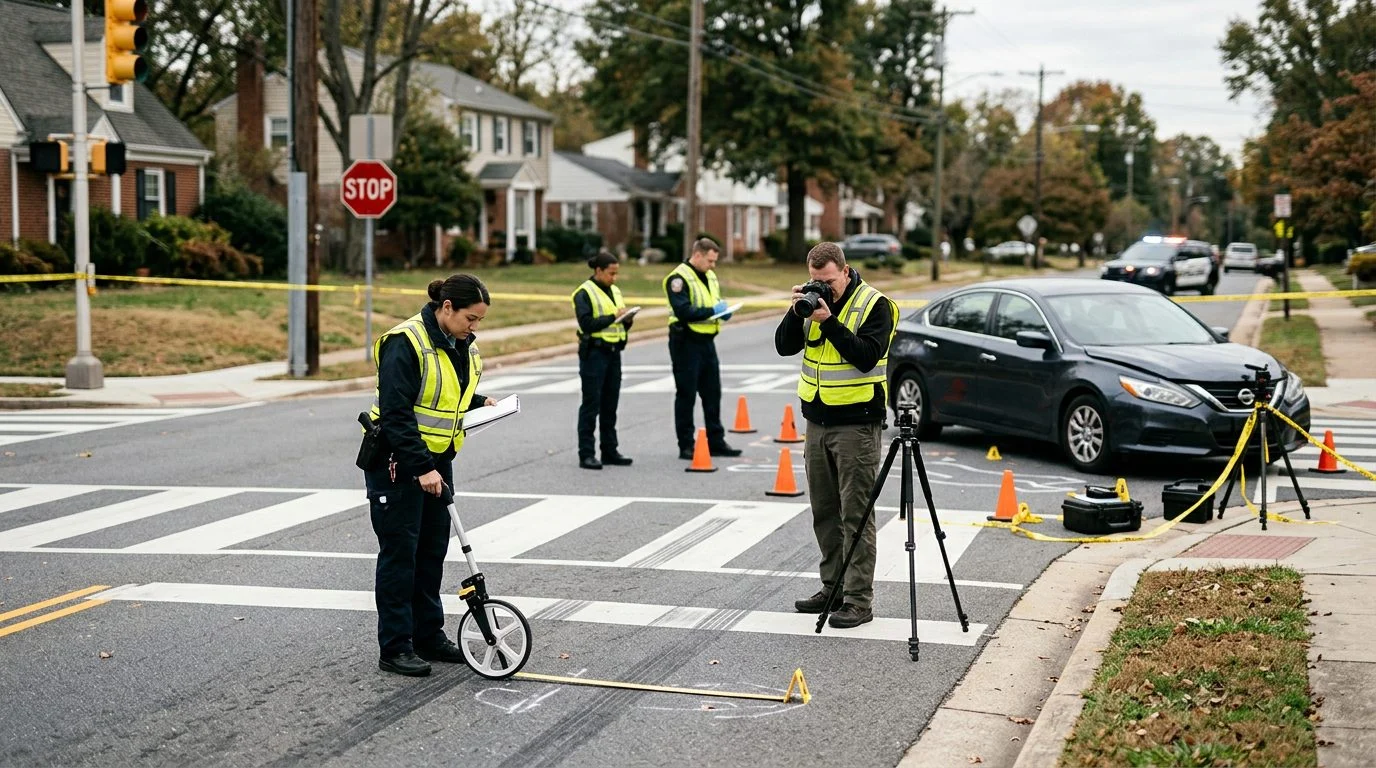
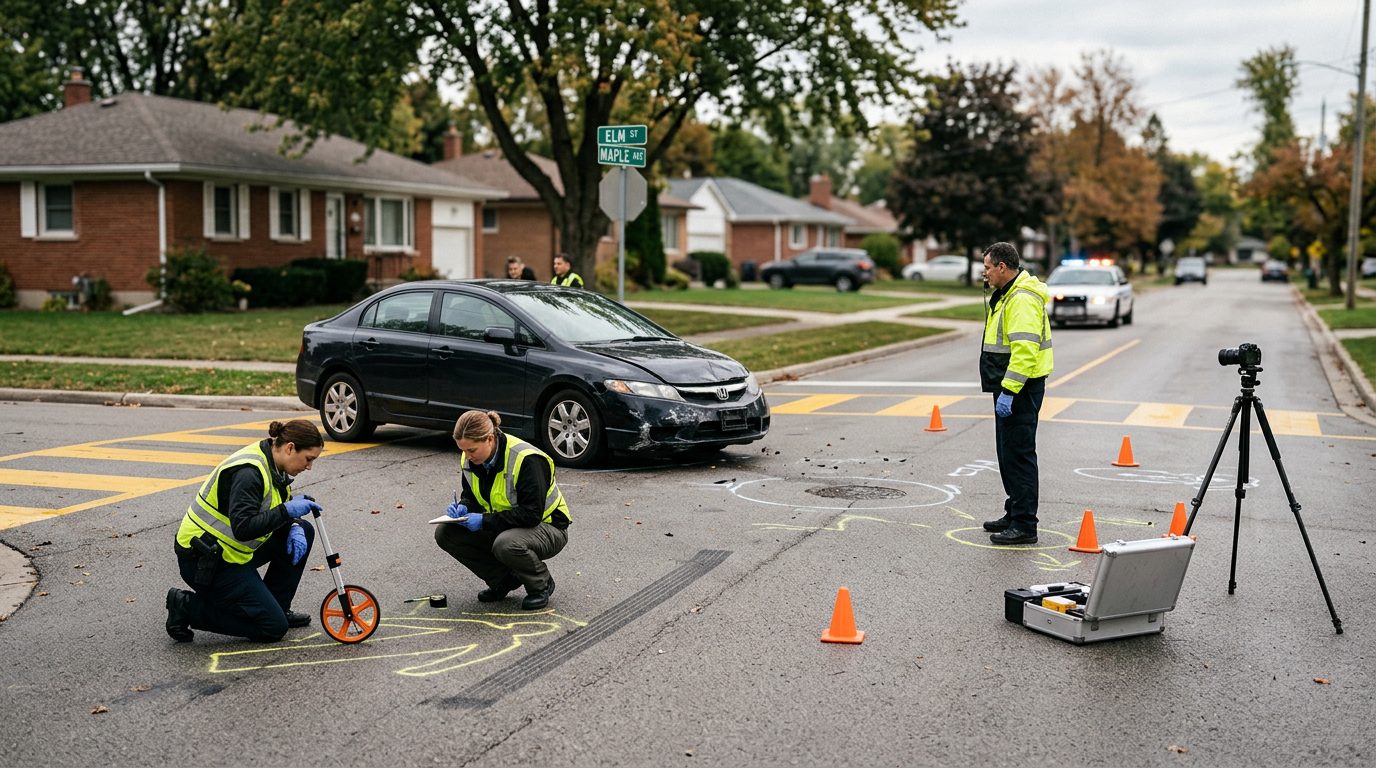
Police reports often record the scene, the people involved, witnesses and first observations. Ask for a copy and check it for errors, such as wrong street names, vehicle details or witness information. Write down the officer’s name and the report number when you receive them. If you can’t get the report right away, ask the agency how to request it later.
Keep in mind that the report is a crash record, not a lawsuit. The two-year period discussed below is the deadline to bring a personal injury or fraud action, unless otherwise provided in that section or by other statute, and it is not the deadline to report a crash (Va. Code § 8.01-243).
Gathering Evidence That Shows How the Injury Happened
Evidence that ties the crash to the brain injury is central to most traumatic brain injury claims. Useful evidence often includes:
- Photos of the scene, both vehicles and visible damage
- Witness names and addresses
- Traffic camera or business surveillance footage, when it exists
- Phone or navigation data, where it can be lawfully obtained
Footage and electronic data can be deleted or overwritten, so early requests matter.
In a commercial truck crash, other records can matter. These include driver logs, inspection and maintenance records, cargo and dispatch information, and the driver’s employment history. Trucking companies often hold these records, which is one reason to act early.
Doctors may later review imaging and treatment records to link the crash to the brain injury.
Identifying Who May Be Responsible and Which Insurance May Apply
Responsibility can rest with the driver who caused the crash, and sometimes with others.
Possible parties include the at-fault driver, the vehicle owner, a trucking company or other carrier, the employer of a truck driver, and, in some cases, a maintenance company or cargo loader. Who is responsible turns on what each party did before the crash.
Auto liability insurance limits and other coverage can shape how a claim moves forward. Each policy has limits, meaning the most it will pay under that policy. Reviewing those limits early shows whether more coverage may be needed. The injured person may also have their own policy coverage to review.
If the driver who caused the crash is unknown and that vehicle never touched yours, Virginia requires the crash to be reported promptly to your insurer or to a law-enforcement officer in the county or city where it happened for you to recover under your uninsured motorist coverage (Va. Code § 38.2-2206). If prompt reporting isn’t practical, the report should be made as soon as reasonably practicable.
How Fault Is Assessed Under Virginia Law
Fault is often the central question, and Virginia’s shared-fault rule can bar recovery entirely.
Virginia follows contributory negligence: if you are found even partly at fault, you may be barred from recovering, with limited exceptions. Talk to a lawyer about your facts.
A defense of contributory negligence (shared fault) can completely bar recovery, as a Virginia appellate court explained in Williams v. Harrison, 255 Va. 272 (1998).
Fault isn’t decided by one fact. It weighs the whole scene, including each driver’s choices in the moments before impact.
Insurers often examine speed, following distance, signals and attention. These details come from the scene, the vehicles and early witness accounts.
Deadlines, Notice Requirements and Exceptions
Virginia generally allows two years from the date of injury to file a personal injury lawsuit (Va. Code § 8.01-243(A)); the clock runs from the date of injury, not the date of discovery, with narrow exceptions. The statute is Va. Code § 8.01-243.
Some claims have shorter notice steps. Claims against the Commonwealth or a transportation district have an earlier first step: a written statement of the nature of the claim, including the time and place of the injury and the agency alleged to be liable, must be filed within one year after the cause of action accrues (Va. Code § 8.01-195.6).
These notice steps are separate from the lawsuit deadline and can run out sooner. Keep a dated list of every notice you send, including how and when it was delivered.
A brain injury may be diagnosed well after the crash. Under the accrual statute, the clock generally starts on the date of injury, not the date of diagnosis (Va. Code § 8.01-230).
Not sure what your next step is?
Talk it through with Correll Law Firm — we can walk you through how a situation like yours is usually handled and what your options are.

From Filing the Claim to Resolution, and When a Death Is Involved
A claim usually moves from notice to insurers, to a demand supported by records, to negotiation, and to a lawsuit if needed. The timing of each stage depends on the facts and on how the medical course unfolds.
If a crash causes death, the wrongful death rules apply. A Virginia wrongful death action is filed by the decedent’s personal representative within two years of the death (Va. Code §§ 8.01-50(C), 8.01-244(B)), on behalf of the family members the statute protects.
The damages statute sets out what a wrongful death claim can cover. Virginia wrongful death damages cover the family’s sorrow, mental anguish and loss of the decedent’s companionship, guidance and care; lost income and services; medical expenses from the injury; funeral expenses; and, for willful or wanton conduct, punitive damages (Va. Code § 8.01-52).
Virginia allows punitive damages for actual malice, or for willful or wanton conduct or recklessness showing a conscious disregard for the safety of others, capped at $350,000 (Va. Code § 8.01-38.1). Under Va. Code § 8.01-38.1, the trier of fact determines the total amount of any punitive damages awarded.
To prepare now, focus on the steps above: get medical care, keep records and a journal, save the crash report, preserve evidence, and track the two-year filing deadline. Medical care, records and deadlines run on separate tracks, so each one needs its own attention.
Who receives wrongful death damages in Virginia?
Damages are distributed to a defined group of beneficiaries, starting with the surviving spouse and children of the deceased (Va. Code § 8.01-53). Va. Code § 8.01-53 governs how wrongful death damages are distributed among the decedent’s family. Under subsection A, the first group of beneficiaries is the surviving spouse, the children of the deceased, and the children of any deceased child of the deceased. Under Va. Code § 8.01-53(A), parents share alongside a surviving spouse, children of the deceased, or children of a deceased child only if, within 12 months prior to the decedent’s death, they regularly received support or regularly received services from the decedent for necessaries, including living expenses, food, shelter, health care expenses, or in-home assistance or care. Parents also may share without that condition when there is no surviving spouse, child, or child of a deceased child, in which case the award goes to the parents, brothers and sisters of the deceased; and when the decedent left a surviving spouse and parent or parents but no child or grandchild, the award is distributed to the surviving spouse and such parent or parents. The statute sets out separate conditions for other beneficiaries in clauses (ii) through (v), and it states that a parent whose parental rights were terminated is not eligible (Va. Code § 8.01-53).
Can a trucking company be responsible for its driver’s crash?
It can, when the facts support it, such as when the driver was working for the company during the crash.
Related practice areas
- 5 Signs of a Spinal Injury After a Virginia Crash
- Brain Injury Case Risks: Settling vs. Suing in Virginia
- Hit-and-Run Crashes in Virginia: Civil Claims for Injured People and Families
- Traumatic Brain Injury Case vs. Other Personal Injury Claims