
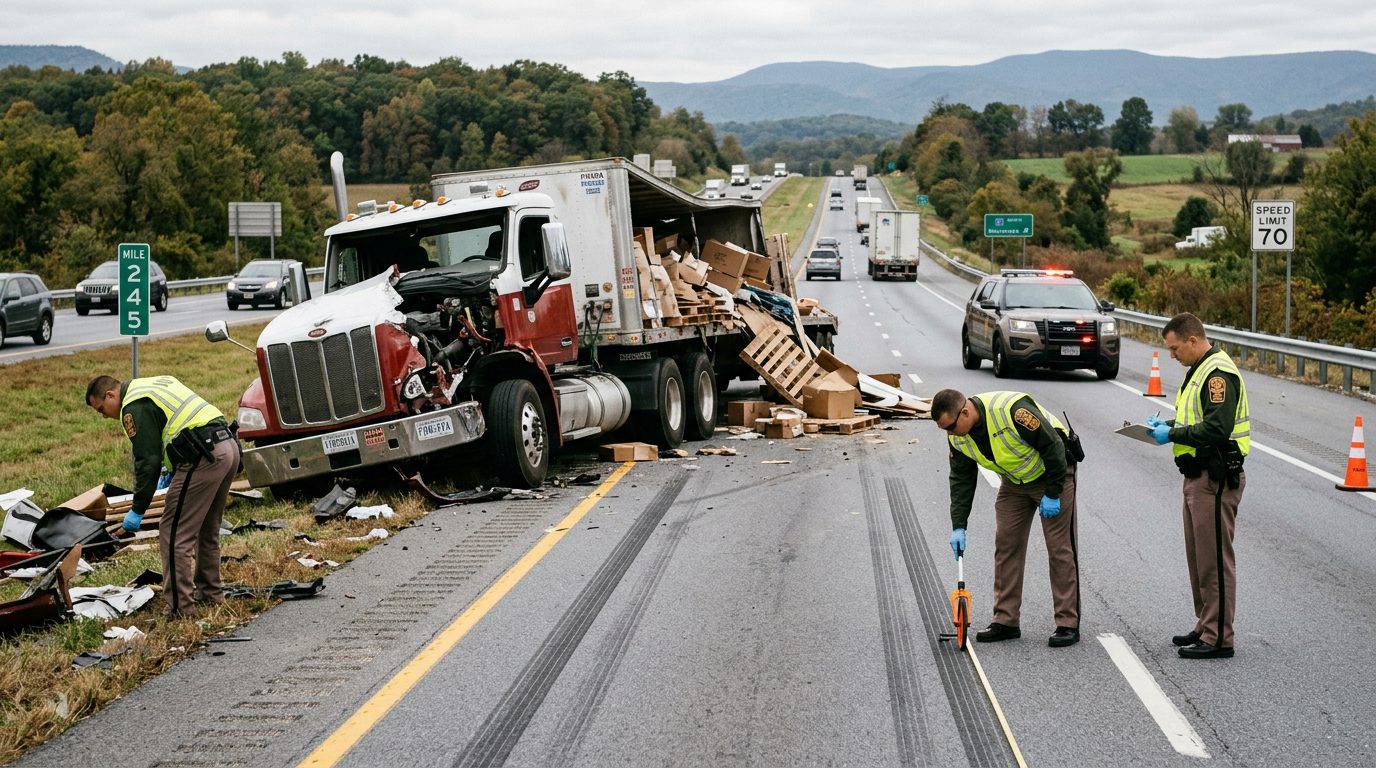
Truck Accidents | Virginia
Amputation and Crush Injuries From a Truck Crash
A sudden loss of a limb or crushed bones can change every part of daily life. The firm represents injured people and families across the Shenandoah Valley, Richmond and Henrico County.
Published November 18, 2026
A crash with a tractor-trailer can cause an amputation or a crush injury, and recovery often takes a long time. If that happened to you or someone you love, you may be asking whether a claim is possible.
A person hurt this way may be able to bring a claim in Virginia against the parties responsible for the crash. The claim can cover medical care, prosthetic devices, lost income and more. Virginia’s rules and deadlines matter early, so they are covered below.
What Amputation and Crush Injuries Mean After a Truck Crash
An amputation is the loss of a limb or part of one. It can happen in the crash itself or during surgery to save a life. A crush injury happens when force squeezes muscle, nerves, bone and blood vessels. The skin can look mostly intact while deep tissue is badly damaged.
Tractor-trailers are heavy. Their impacts, rollovers and underride crashes, where a smaller vehicle slides under a trailer, can pin or crush people inside. These crashes can cause injuries that are hard to see at the scene.
Surgical fractures, degloving injuries (where skin and tissue are torn away from the body underneath) and nerve damage often occur alongside amputation or crush injuries. They usually come from the same crash, so they are handled in the same claim.
Medical records matter most here. They show what was lost, what surgery was done, and what future care the injury may need.
This page covers people who are still living. Wrongful death claims are addressed in the questions at the end.

Who This Service Is For
This service is for people hurt in a crash involving a tractor-trailer or other commercial vehicle. It fits several kinds of readers:
- Someone who lost a limb or part of one.
- Someone with a crush injury or a fracture that needed surgery.
- A family member helping a loved one with medical decisions, paperwork and recovery.
- Drivers and passengers on I-81 and in nearby communities such as Winchester, Harrisonburg and across Warren County and the northern Shenandoah Valley.
The firm serves people from the Shenandoah Valley to Richmond and Henrico County. If you are still in treatment, you may wish to speak with a lawyer about your facts before making decisions about a claim.
What a Serious Injury Claim Can Cover
A serious injury claim can seek compensation for the harm the injury causes now and in the future. Common parts of a claim include:
- Medical care already received, such as emergency care, surgery, hospital stays and rehabilitation.
- Future medical care the injury is expected to need, shown through medical evidence.
- Prosthetic devices, replacement devices, adaptive equipment, and home or vehicle changes.
- Lost income and a reduced ability to work in the injured person’s prior job.
- Pain, suffering and loss of enjoyment of life experienced by the injured person.
Lost income follows a specific rule. Under Va. Code § 8.01-35, provable damages for lost income are not reduced because of reimbursement from another source. Each item needs records that show what was lost and why.
Who May Be Responsible in a Truck Crash Claim
More than one party may share responsibility in a truck crash, and the answer depends on the facts. Possible parties include the driver, the motor carrier that employs the driver, a vehicle owner, a company that maintained the truck, or a company that loaded the cargo.
Brokers that arrange trucking can also be involved.
Records matter early. Federal rules require motor carriers to keep records of duty status for at least six months under 49 CFR 395.8. Inspection reports must be kept for three months under 49 CFR 396.11. Because those periods run out, early written requests to preserve records can matter.
Virginia Rules and Deadlines to Know
Virginia has short deadlines, and a few rules shape how a claim starts. Checking the dates early helps protect every option.
Crash reporting. Virginia requires a driver involved in a crash with injury or death to stop and report it to police immediately (Va. Code §§ 46.2-371, 46.2-894). See Va. Code § 46.2-894. The two-year period below is the deadline to file a lawsuit, not to report a crash.
Filing deadline. Virginia generally allows two years from the date of injury to file a personal injury lawsuit (Va. Code § 8.01-243(A)); the clock runs from the date of injury, not the date of discovery, with narrow exceptions. Under Va. Code § 8.01-243, unless otherwise provided in that section or by other statute, every action for personal injuries must be brought within two years after the cause of action accrues. Some claims carry notice requirements that run out sooner.
Partial fault. Virginia follows contributory negligence: if you are found even partly at fault, you may be barred from recovering, with limited exceptions. Talk to a lawyer about your facts.
How the Firm Handles a Serious Truck Injury Claim
The firm starts with the crash facts and the injured person’s medical needs. It then builds the claim from there. The usual steps are:
- First review. The firm gathers crash details, medical records and the injured person’s account, and notes what is still unknown.
- Evidence preservation. The firm may send written requests asking carriers to keep logs, electronic data, maintenance files, dashcam footage and damaged vehicle parts.
- Medical documentation. The firm works with treating providers so records show the amputation, crush or surgical injuries and any need for future care.
- Future needs. The firm plans for prosthetics, therapy and any work limits, based on medical evidence.
- Negotiation or filing. Some claims resolve without a lawsuit. Others must be filed within Virginia’s deadlines, so timing is watched from the start.
Timelines vary with each injury and recovery. No one can predict the outcome of a claim.
Why Work With the Firm on These Claims
The firm is a personal injury firm with offices in Winchester and Harrisonburg. It handles car accidents, truck and commercial vehicle accidents, catastrophic injuries, traumatic brain injury, spinal cord injury and wrongful death.
The firm focuses on truck accident claims, including crashes that cause amputation or crush injuries. Some injuries overlap. A spinal cord injury or traumatic brain injury can occur alongside an amputation, and those practice areas are handled by the firm as well.
The firm serves people across the Shenandoah Valley and in Richmond and Henrico County. Its work covers injured people and families who have lost a loved one in a crash.
Common Questions About Amputation and Crush Injury Claims
Can a family pursue a claim if a loved one died in a truck crash?
A Virginia wrongful death action is filed by the decedent’s personal representative within two years of the death (Va. Code §§ 8.01-50(C), 8.01-244(B)), on behalf of the family members the statute protects. See Va. Code § 8.01-50.
Will I need prosthetics for the rest of my life?
Future needs are shown through medical evidence from treating providers. Until that evidence exists, no one can say how long a device will be needed.
You may wish to speak with one about your facts.
Does a truck driver have to be tested after a crash?
Federal rules require certain surviving drivers to be tested for alcohol and drugs after qualifying truck crashes, with time limits for each test. See 49 CFR 382.303.