
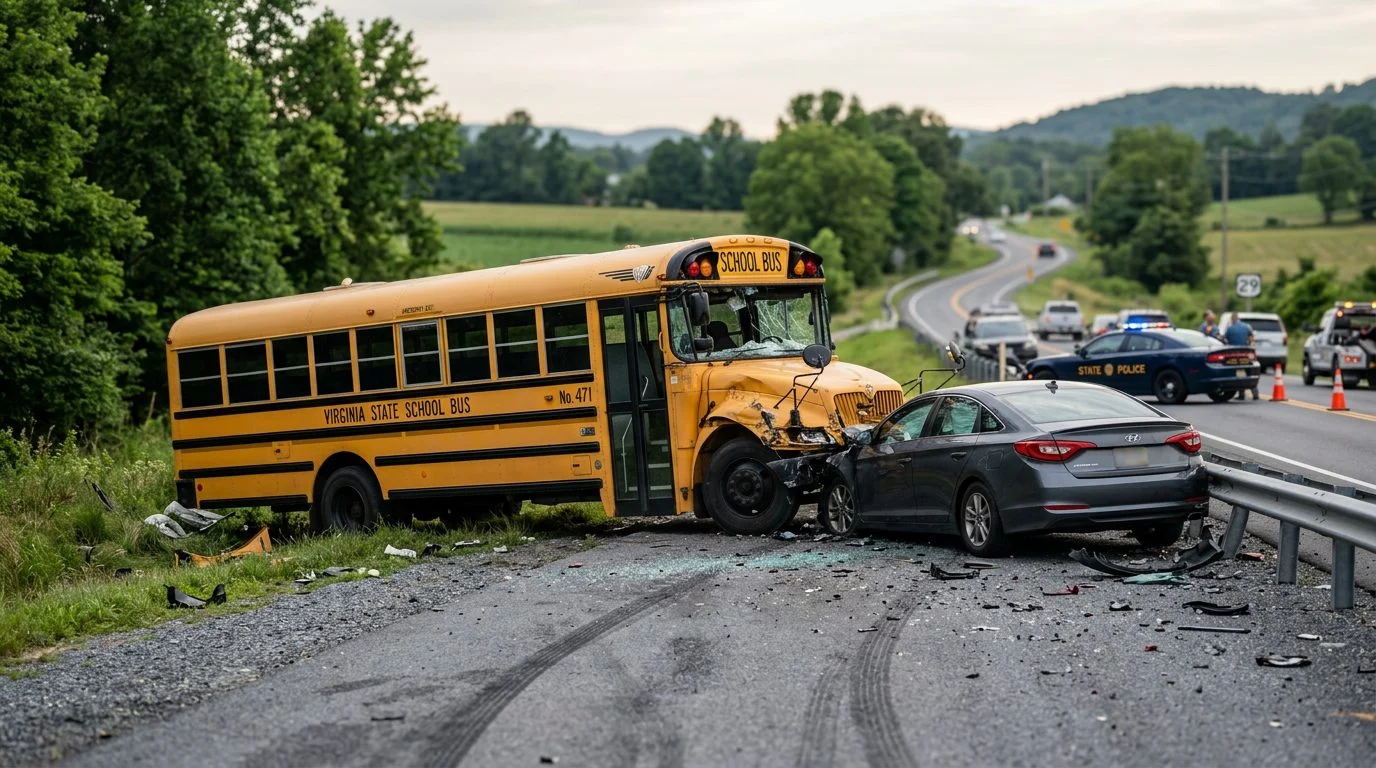
Bus Crash Claims in Virginia
Hurt in a Bus Crash? Learn Who May Be Responsible
Correll Law Firm helps people from the Shenandoah Valley to Richmond and Henrico County understand their options.
Published October 28, 2026
If you’re looking for a bus crash lawyer in Virginia, you likely want to know who may be responsible and what deadlines apply. Virginia law may allow an injured person to bring a claim after a bus or passenger vehicle crash. This page explains the rules in plain language, with official sources linked so you can check them yourself. Early steps matter in any crash case, so it helps to act promptly.
What a bus or passenger vehicle crash case covers
A bus or passenger vehicle crash case is an injury claim that arises when a bus or similar vehicle crashes and someone is hurt or killed. These claims can involve several kinds of vehicles:
- Motorcoach and charter or tour buses
- Private shuttles, such as hotel, airport or employer shuttles
- Public transit buses
- School buses
- Other passenger vehicles
Claims may come from bus passengers, occupants of cars or trucks struck by a bus, pedestrians and cyclists hit by one, and family members of someone who died. For the broader commercial vehicle picture, see truck accident claims.
If a bus or passenger vehicle crash hurt you or someone you love, you may have a claim, and the firm can talk through your facts with you. Talk it through with Correll Law Firm — we can walk you through how a situation like yours is usually handled and what your options are.

Common causes of bus crashes and who may be responsible
Bus crashes often trace back to fatigue, distraction, speed or poor vehicle maintenance, and more than one party may share responsibility. Federal rules limit how long a passenger-carrying driver may work. Under 49 C.F.R. § 395.5, a driver may not drive more than 10 hours after 8 consecutive hours off duty, or after 15 hours on duty following 8 consecutive hours off duty.
A separate rule, 49 C.F.R. § 392.3, bars a driver from operating when fatigue or illness makes it unsafe.
Maintenance matters too. 49 C.F.R. § 396.3 requires carriers to inspect, repair and maintain vehicles under their control. It also sets a 90-day inspection rule for bus emergency doors.
Possible responsible parties include the driver, the company that operates the bus, the vehicle owner if different, and maintenance contractors. Outside accident reconstruction professionals often help test how a crash happened.
Injuries and losses these cases can involve
Bus crashes can cause serious injuries, including traumatic brain and spinal cord injuries, and the losses can last long after the crash. Families often face:
- Medical bills for emergency care, surgery, hospital stays and rehabilitation
- Future care needs that a doctor has documented
- Lost income and a reduced ability to earn
- The injured person’s own pain, suffering and reduced quality of life
Virginia allows punitive damages for actual malice, or for willful or wanton conduct or recklessness showing a conscious disregard for the safety of others, capped at $350,000 (Va. Code § 8.01-38.1).
Crash reporting, time limits and fault rules in Virginia
Virginia sets a reporting duty, a filing deadline and a fault rule that apply to most bus crash claims. The first is a duty that starts right after the crash.
Virginia requires a driver involved in a crash with injury or death to stop and report it to police immediately (Va. Code §§ 46.2-371, 46.2-894). That duty is separate from the deadline to file a lawsuit.
Virginia generally allows two years from the date of injury to file a personal injury lawsuit (Va. Code § 8.01-243(A)); the clock runs from the date of injury, not the date of discovery, with narrow exceptions. Some claims carry notice requirements that run out sooner, so early review matters.
Virginia follows contributory negligence: if you are found even partly at fault, you may be barred from recovering, with limited exceptions. Talk to a lawyer about your facts.
Crash reports, photos, witness names and medical records are often the easiest evidence to lose. Keeping them together from the start helps.
When a bus crash causes a death
A bus crash that causes a death can lead to a Virginia wrongful death claim, which is pursued through a personal representative. A Virginia wrongful death action is filed by the decedent’s personal representative within two years of the death (Va. Code §§ 8.01-50(C), 8.01-244(B)), on behalf of the family members the statute protects.
They share in any recovery.
Virginia wrongful death damages cover the family’s sorrow, mental anguish and loss of the decedent’s companionship, guidance and care; lost income and services; medical expenses from the injury; funeral expenses; and, for willful or wanton conduct, punitive damages (Va. Code § 8.01-52).
For the family-focused steps after a fatal commercial vehicle crash, see fatal truck crash recovery.
How a bus crash claim moves forward
A bus crash claim usually moves through review, records, investigation, a demand to insurers and, if needed, a lawsuit. The steps tend to follow this order:
- An initial review of the crash report, medical records and the injured person’s or family’s account.
- Requests for driver logs, maintenance and inspection records, and driver qualification files.
- An investigation with outside professionals when cause is disputed, followed by a demand to the responsible parties and their insurers.
- If the claim cannot be resolved, a lawsuit filed before the deadline.
Federal rules also address insurance.
Insurers may contact the injured person early. Keeping communications and records organized helps the review. Timelines vary widely from one claim to another.
Not sure what your next step is?
Talk it through with Correll Law Firm — we can walk you through how a situation like yours is usually handled and what your options are.
How the firm approaches bus and passenger vehicle crash cases
The firm handles bus crash claims as part of its car accident, truck accident and commercial vehicle work. It also handles catastrophic injuries, traumatic brain injury, spinal cord injury and wrongful death.
The firm has locations in Winchester and Harrisonburg. It serves people across the Shenandoah Valley, Richmond and Henrico County.
Support staff, including assistants and office staff, help organize records and paperwork. The firm can explain each step of a claim as it moves forward.
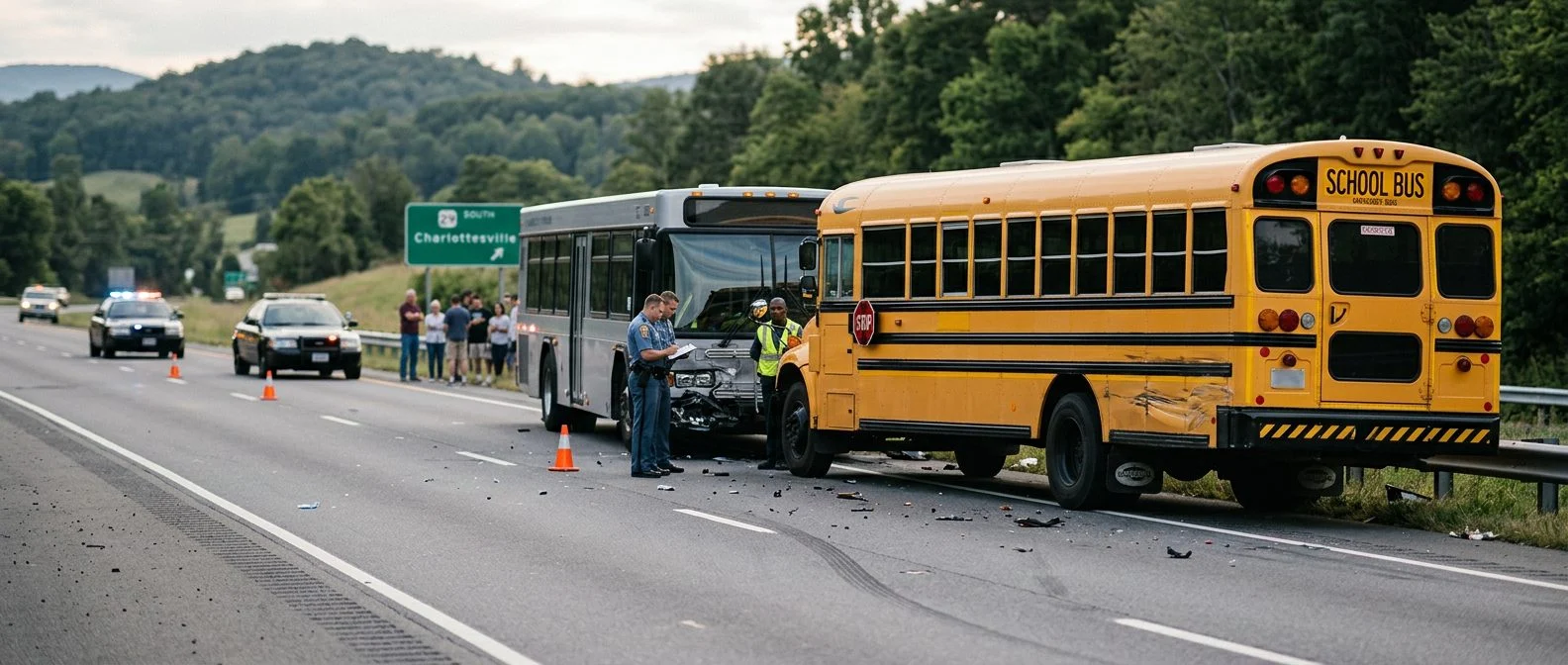
Common questions after a bus crash in Virginia
Common questions center on evidence, whether to speak with a lawyer, and who can be sued.
What should I keep after a bus crash?
Keep medical records, photos of the scene and vehicles, and names of witnesses and fellow passengers. Save any ticket or travel record for the trip too.
Do I need a lawyer?
You may wish to speak with a lawyer about your facts. That choice is yours to make.
Can I sue the bus company if the driver worked for someone else?
The answer depends on the facts, including who owned, operated and maintained the bus.
Are bus crashes different from car crashes?
Often, yes. Federal rules on driving hours, maintenance and driver files may apply alongside Virginia law.