

Traumatic Brain Injury | Virginia
Can You Fully Recover From a Brain Injury? A Plain-Language Virginia Guide
Honest answers about brain injury recovery, what the state's guidance does and does not say, and when it may be worth discussing your situation with a lawyer.
Published October 15, 2026
Can you fully recover from a brain injury? The honest answer is that no one can know in advance. Outcomes can differ widely from one person to the next. This page explains what Virginia medical sources describe about traumatic brain injury, what recovery can mean, and which questions a family can bring to the care team. It also covers when a brain injury from a crash may be worth discussing with a lawyer.
Can a brain injury fully heal? A direct answer
No one can predict in advance whether a specific person will fully recover. That answer may not be the one a family hopes to hear, but it is the accurate one.
Virginia’s Department of Education describes traumatic brain injury as an injury that may result in cognitive, behavioral, psychosocial, sensory, motor, physical and speech impairments (Virginia Department of Education). That guidance is written to help decide school services for children. It describes possible effects, not a prognosis. It also does not say whether any effect will fade.
Still, the list shows how many areas a brain injury can touch. Virginia’s Office of Emergency Medical Services also explains that a concussion is a trauma-induced change in mental status. It may happen with or without loss of consciousness (Virginia Department of Health). So a person who stayed awake after a crash may still have a brain injury.
If you are watching a loved one struggle with memory or mood after a crash, you do not have to sort out the legal side alone. We are glad to talk through your facts. Talk it through with Correll Law Firm — we can walk you through how a situation like yours is usually handled and what your options are.
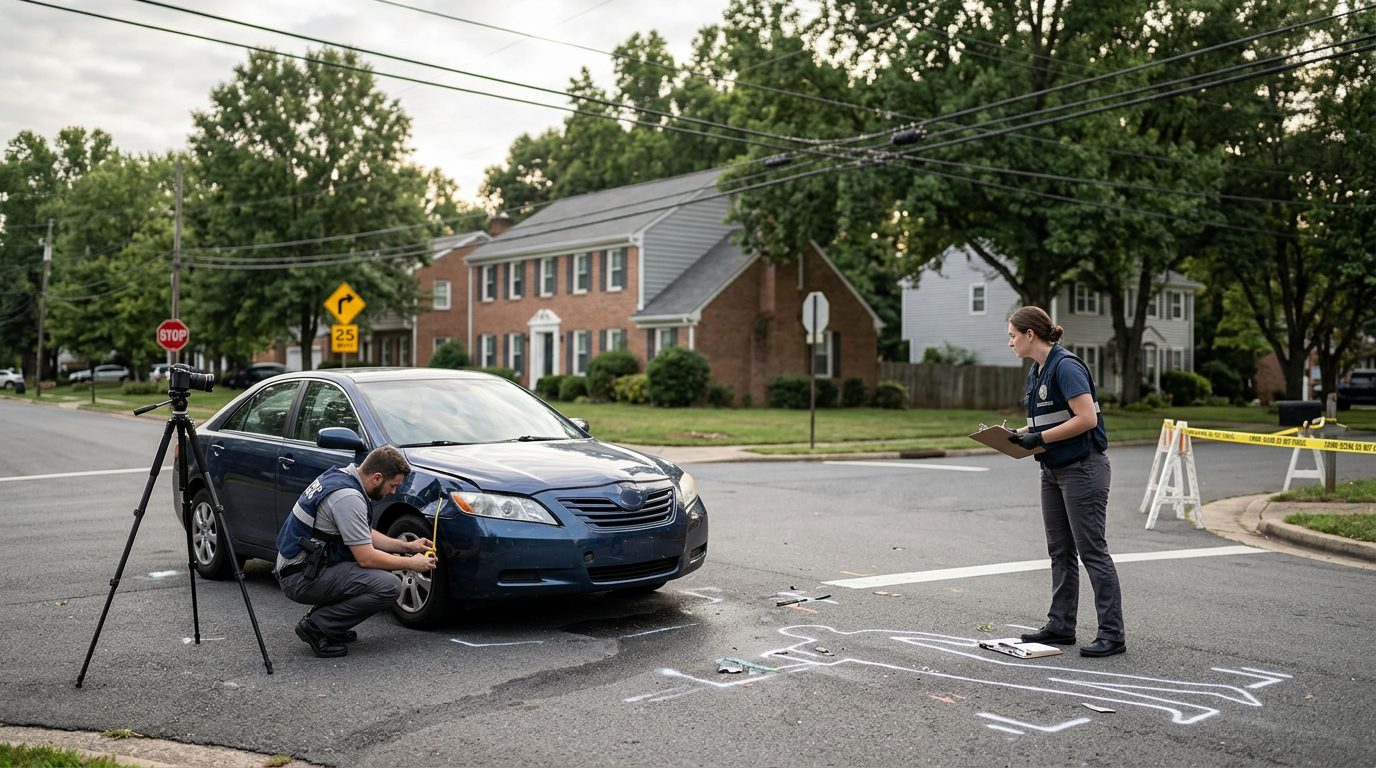
What ‘recovery’ can mean after a traumatic brain injury
Recovery can mean progress in thinking, physical movement, mood or behavior. Each area can change on its own path. The state’s list of possible impairments covers thinking, behavior, mood, the senses, movement, physical ability and speech.
A person can improve in one area while another stays hard. For example, someone may walk well again but still struggle to find words. Family members may notice changes the injured person does not see in themselves, such as shorter patience or trouble keeping track of tasks.
Because of this, recovery is not one finish line. It is a set of separate questions for the care team. This page does not offer a timeline for any individual, and no general timeline fits every patient.
Factors that may affect how a brain injury heals
Several factors may shape how a brain injury heals. Medical teams weigh them person by person, and no article can weigh them for one family.
Virginia’s emergency medical guidance notes that a collision can injure the brain through coup or contrecoup impact (Virginia Department of Health). That fact shows how the crash itself matters to the injury. It does not predict how the injury will change over time.
Concussion and traumatic brain injury are related but separate topics. The state’s concussion description and its traumatic brain injury overview are different documents. A family should ask the care team which one fits their loved one’s diagnosis.
Useful questions for the care team include: Which factors matter most in this case? What changes should we watch for? What does follow-up look like? Each person’s injury is different. A treating physician is the right source for any individual prognosis.
Long-term effects and when symptoms may continue
Long-term effects are possible, but no source can say which ones a specific person will have. Any list of possibilities should be read as a set of questions, not a forecast.
Possible long-term areas of change follow the same categories the state lists: thinking, behavior and mood, the senses, movement and speech. These are possibilities that vary by person. They are not predictions for any one reader.
Whether a change continues is a medical question. Follow-up care is how the care team tracks changes over time. Those questions belong with the clinician, not with a guess at home.
Noting changes and sharing them with the clinician can help the team see the full picture. Write down what you notice, even when it seems small.
Rehabilitation, follow-up care and daily adjustments
Ask the care team whether rehabilitation is part of the plan. Rehabilitation plans vary from person to person, and a treating medical provider can explain what care may fit a particular injury.
Goals differ from person to person. The care team sets them with the patient and family, and they can change as needs change. Some families use calendars, reminders or written daily routines. Whether any approach fits depends on the person’s needs.
Keep up with the follow-up visits the care team recommends. Those visits are the medical side of the question, and the clinician makes those calls. Do not stop or change a treatment plan without talking to the care team first.
Keeping medical records and tracking changes over time
A simple symptom and appointment log helps families describe changes to a clinician. Write down the date, any symptoms, medicines, appointments and daily difficulties.
It also helps to note what the person could do easily before the injury and what has become harder. Writing entries on the same day, when possible, keeps details accurate.
This log is a health-management tool. It is not a legal step. Keeping one will not, by itself, change how any claim turns out.
Bring the log to follow-up visits. Include the questions you want to ask, including questions about prognosis. Ask the clinician to explain anything that is unclear.
Not sure what your next step is?
Talk it through with Correll Law Firm — we can walk you through how a situation like yours is usually handled and what your options are.

When a brain injury from a crash may be worth discussing with a lawyer
A brain injury after a car or truck crash may be worth discussing with a lawyer. That is especially true when questions come up about the crash itself, medical care or time away from work.
Virginia requires a driver involved in a crash with injury or death to stop and report it to police immediately (Va. Code §§ 46.2-371, 46.2-894).
If you are watching a spouse’s memory or personality shift after a crash, you may wish to discuss those facts with a lawyer.
Frequently asked questions
Can you fully recover from a brain injury?
No one can predict that for a specific person. The state’s guidance describes possible effects, not a prognosis.
Does a brain injury always lead to a claim?
No. Whether a claim exists depends on the facts of the crash and the injury, and a lawyer can review them.