
Car Accidents | Winchester, Harrisonburg and the Shenandoah Valley
Partly at Fault in a Virginia Car Accident? Understand the Rule Before You Decide
Correll Law Firm explains how Virginia's contributory negligence rule can affect a car accident claim, and what to keep in mind if the other side points to your own part in the crash.
Published November 4, 2026
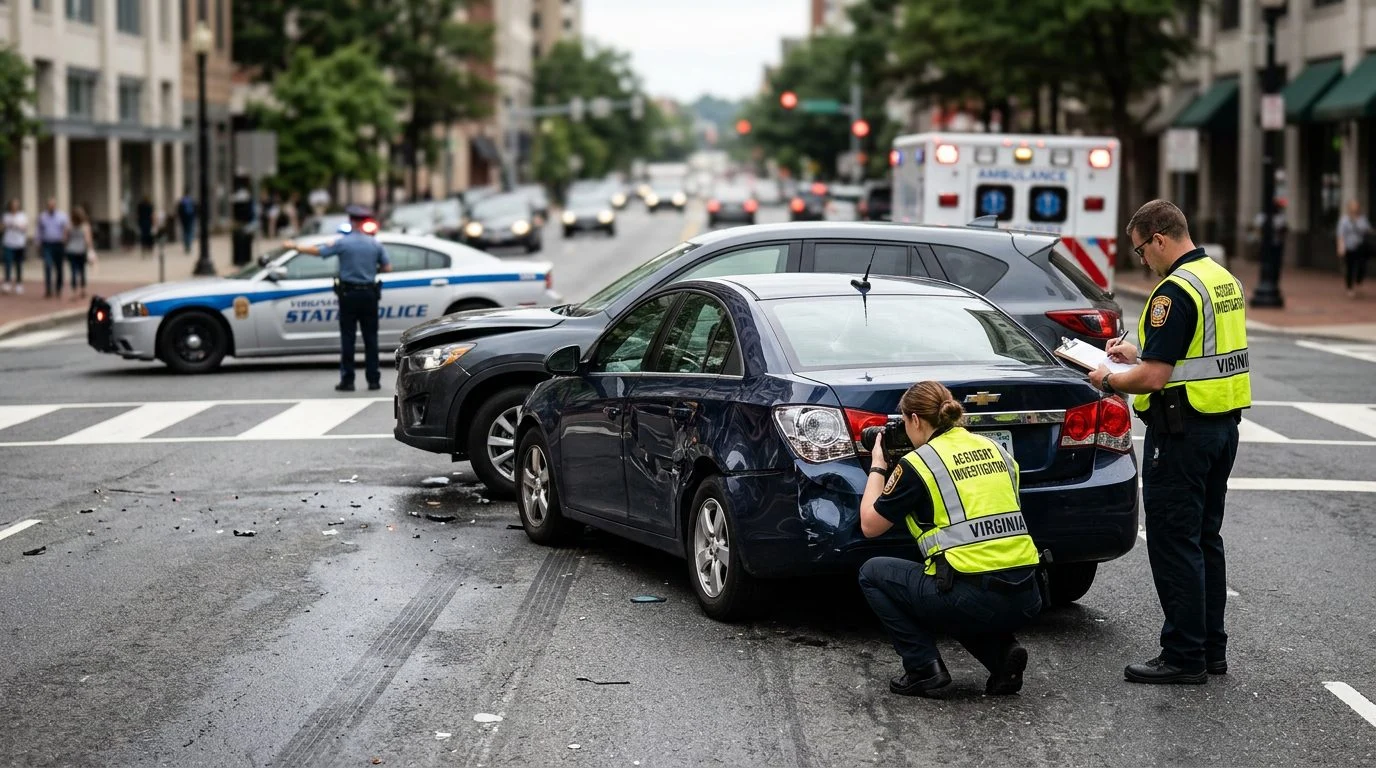
An insurer can deny a car accident claim in Virginia when it disputes who caused the crash or how badly you were hurt. If the letter says you were partly at fault, Virginia’s contributory negligence rule may be the issue (Williams v. Harrison, 255 Va. 272 (1998)). A denial is the insurer’s position, not a final ruling by a court. This page explains why denials happen, how Virginia’s fault rule comes into play, and which steps help protect your claim. For the wider picture, read the firm’s guide to car, truck and wrongful death claims.
Why an Insurance Company Might Deny a Car Accident Claim
An insurer may deny a claim for a few common reasons. It may dispute fault, question how the injury happened, disagree about the severity of the injury or treatment, or dispute the amount claimed.
Each reason asks a different question. Fault asks who acted carelessly. Cause asks whether the crash actually produced the injury. Treatment asks whether the care was needed. The amount asks what the claim is worth, and an adjuster may see that differently than you do.
A denial letter usually names a reason. Read it closely and note every reason listed. Keep the letter with the rest of the claim file, along with the date it arrived and the claim number.
The letter shows the insurer’s view. It does not settle the legal question. A court decides that if the case reaches one. The Virginia Bureau of Insurance states that it does not represent a claimant in litigation or determine the monetary value of a car accident claim.
If an insurer has denied your claim, you don't have to sort out fault and deadlines alone, and the firm can talk through your facts with you. Talk it through with Correll Law Firm — we can walk you through how a situation like yours is usually handled and what your options are.

How Virginia’s Contributory Negligence Rule Can Affect a Denial
Talk to a lawyer about your facts. That argument can support a denial.
Virginia follows contributory negligence: if you are found even partly at fault, you may be barred from recovering, with limited exceptions. Talk to a lawyer about your facts.
It applies when the injured person is also said to have contributed to the crash. A denial may claim you were speeding, distracted or failed to yield. If an insurer accepts even partial blame, it can use that to refuse the claim.
Insurers often raise fault early, while the facts are still being gathered. That is why a denial may rest on an incomplete picture. The sooner the crash facts are written down and collected, the easier they are to check.
Limited Exceptions and Why the Facts Decide the Outcome
Whether one of the limited exceptions applies depends on the facts of the crash. Courts have described a few rules that can matter here.
The crash scene, the timing of each vehicle, traffic controls, photos, witness accounts and what each driver could see all shape how these rules apply. A written account made soon after the crash keeps those details accurate. Write down what you remember while it is fresh, and keep your own copy.
What to Do Right After a Denial Letter Arrives
The first steps are to keep records, log every contact and review what the insurer has said. These steps help whether or not the denial stands.
Virginia requires a driver involved in a crash with injury or death to stop and report it to police immediately (Va. Code §§ 46.2-371, 46.2-894). The two-year period below is the deadline to file a lawsuit, not to report a crash (Va. Code § 8.01-243).
Gather the police report, photographs, witness names, medical records and bills, and records of time missed from work. Keep them together in one place.
Keep a dated log of every call and letter with the adjuster. Write down the adjuster’s name, the claim number and any request the insurer made.
Statements to an insurer can be used in the claim. Review what you plan to say before answering questions. A common mistake is guessing at speed, distance or timing on a recorded call. Say what you know, and say when you are unsure. You may wish to speak with a lawyer before giving a detailed recorded statement.
Virginia’s Two-Year Filing Period and Why Timing Matters
Virginia generally allows two years from the date of injury to file a personal injury lawsuit (Va. Code § 8.01-243(A)); the clock runs from the date of injury, not the date of discovery, with narrow exceptions.
Under Va. Code § 8.01-230, the limitation period begins when the injury is sustained.
Some claims carry notice requirements, such as the 45-day notice before making a demand under Va. Code § 8.01-66.1. Track the date of the crash and any notice steps from the start.
Actions under Va. Code § 8.01-50 for death by wrongful act must be brought within the time limits specified in § 8.01-244.
When a Crash Involves a Commercial Truck or Commercial Vehicle
A crash with a commercial truck or other commercial vehicle often involves more parties and more records. Those records can change how a denial is reviewed.
The injured person may not know at first who all the responsible parties are. The driver, the company that operates the vehicle and others may each be involved. Records about the vehicle and its operator are worth preserving early.
Federal rules require each driver a motor carrier uses to record duty status for each 24-hour period, except for a private motor carrier of passengers (nonbusiness). They also say no driver or carrier may make a false report in connection with a duty status (49 C.F.R. § 395.8).
Those duty-status records, dispatch records and trip details can show when a driver was on duty. Ask for them in writing early, and keep a copy of each request.
Not sure what your next step is?
Talk it through with Correll Law Firm — we can walk you through how a situation like yours is usually handled and what your options are.
If the Crash Caused a Death: Wrongful Death Claims After a Denial
A Virginia wrongful death action is filed by the decedent’s personal representative within two years of the death (Va. Code §§ 8.01-50(C), 8.01-244(B)), on behalf of the family members the statute protects.
They share in any recovery. Under Va. Code § 8.01-53, distribution follows a priority order that starts with the surviving spouse and children of the deceased.
Virginia wrongful death damages cover the family’s sorrow, mental anguish and loss of the decedent’s companionship, guidance and care; lost income and services; medical expenses from the injury; funeral expenses; and, for willful or wanton conduct, punitive damages (Va. Code § 8.01-52).
Because the deadlines for an injury claim and a death claim run from different dates, track both the injury date and the date of death.

How a Denial Affects Injured People in Richmond, Henrico County and the Shenandoah Valley
Crashes in Richmond, Henrico County, Winchester, Harrisonburg and across the Shenandoah Valley fall under the same Virginia rules discussed on this page.
Readers in Richmond and Henrico County can read the pages written for those areas. The firm has offices in Winchester and Harrisonburg.
Whatever county the crash happened in, organized records and tracked dates make a denial easier to review.
What does car accident claim contributory negligence Virginia mean for a denied claim?
It means an insurer may argue that your own partial fault prevents recovery. Limited exceptions exist, and the facts of the crash decide how the rule applies.
Can Virginia law penalize an insurer that refuses a motor vehicle claim?
Virginia law lets a court find that an insurer did not act in good faith when it refused certain motor vehicle claims, such as its own insured’s property damage, medical expense or loss of income benefit claims, some third-party claims of $3,500 or less, and uninsured or underinsured motorist claims. The remedy is set out in Va. Code § 8.01-66.1.