
Wrongful Death | Winchester, Virginia
How Long a Wrongful Death Settlement Takes in Virginia
Every family's claim moves at its own pace. Here is what shapes the timeline, from the Shenandoah Valley to Richmond and Henrico County.
Published October 27, 2026
How long does it take to get a settlement for wrongful death? There is no single answer. Timing depends on the facts of the crash, who may be responsible, what records exist, and how the other side responds. This guide explains those factors in plain terms. Losing someone is hard, and waiting for answers can feel slow and confusing.
What a Wrongful Death Settlement Means
A settlement is an agreement that resolves a claim without a trial. Both sides agree on terms, and the claim ends there. Not every claim settles. Some move into a lawsuit, and some of those go to trial. Because each death involves different facts, a settlement’s size can’t be predicted from general information.
A wrongful death claim comes from the same wrongful conduct that would have let the injured person sue. Va. Code § 8.01-50 sets out that rule. Settling such a claim has its own steps. Under Va. Code § 8.01-50, every such action is brought by and in the name of the personal representative of the deceased person, and the personal representative may compromise the claim before or after a lawsuit is filed (Va. Code § 8.01-55). If a lawsuit is already pending, the court where it was brought must approve the compromise. If no lawsuit has been filed, a circuit court must consent (Va. Code § 8.01-55).
Those approval steps add time. They are one reason the process rarely moves in a straight line. Knowing the steps ahead of time can make the wait easier to bear. A broader overview appears on the firm’s wrongful death claims page.
If someone you love died in a crash, you don't have to work out the questions about timing alone, and the firm is willing to talk with your family. Talk it through with Correll Law Firm — we can walk you through how a situation like yours is usually handled and what your options are.

Why There Is No Single Answer on Timing
No single timeline fits every family, because every crash and every death is different. Several factors shape the pace.
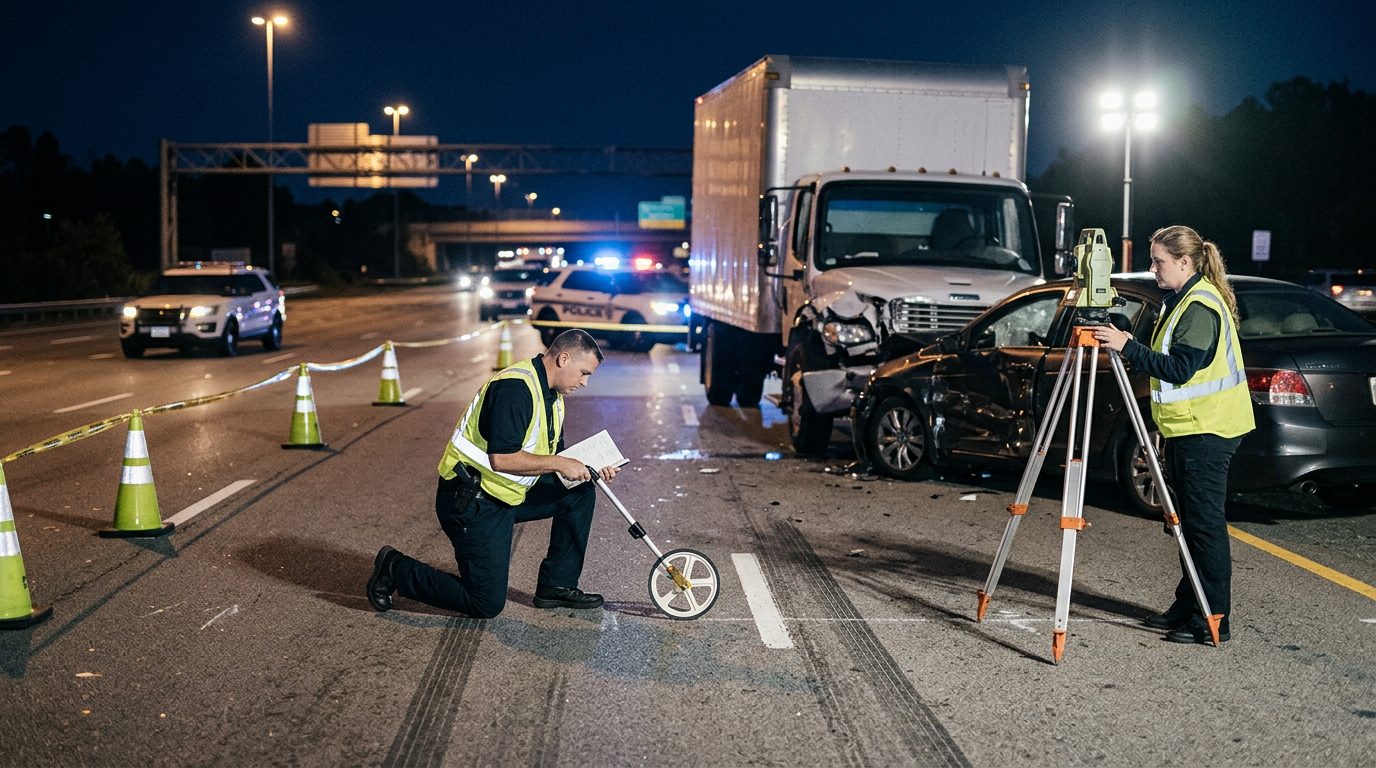
The first is the crash itself. A claim where fault is clear can move differently from one where fault is disputed. The injuries and the cause of death matter too, since the medical picture must be understood before the loss can be measured. The records that exist, and how fast they can be obtained, matter as well.
A crash involving a commercial truck often has more moving parts. There may be a driver, a trucking company, a vehicle owner, and several insurers. Each may hold records to review. The number of parties, and whether they agree on the basic facts, can affect how quickly the matter moves.
No one can predict the exact length of a specific matter from a web page. A lawyer can review the facts with the family and explain which factors apply.
Steps That Often Come Before a Settlement
Investigation usually comes first, and it takes time. Families and lawyers gather the facts before anyone can judge what a fair resolution looks like.
Early steps often include collecting the crash report, medical and death records, photographs of the scene and vehicles, and names of witnesses. Vehicle condition can matter too. Federal safety investigators have found that tire blowouts can cause crashes, and that deteriorated tires and inadequate maintenance can be contributing factors (NTSB safety recommendation letter). Federal registration matters in commercial cases too. The Virginia DMV USDOT number page explains which carriers need one.
The pace of this stage depends on how fast outside parties release records. Hospitals, police agencies, and insurers each work on their own schedules. Documenting the family’s losses also takes careful work.
A lawyer may review these facts to identify who may be responsible. That review is a step to examine, not a conclusion.
Who Files a Wrongful Death Claim and What It Covers
A Virginia wrongful death action is filed by the decedent’s personal representative within two years of the death (Va. Code §§ 8.01-50(C), 8.01-244(B)), on behalf of the family members the statute protects.
Who shares in a recovery follows a set order. Under Va. Code § 8.01-53, the first group to share is the surviving spouse, the decedent’s children and the children of any deceased child, along with a parent who, in the 12 months before the death, regularly received support or services from the decedent for necessaries, such as living expenses, food, shelter, health care expenses, or in-home assistance or care. Any other relative who was primarily dependent on the decedent for support or services and lived in the same household also shares.
Virginia wrongful death damages cover the family’s sorrow, mental anguish and loss of the decedent’s companionship, guidance and care; lost income and services; medical expenses from the injury; funeral expenses; and, for willful or wanton conduct, punitive damages (Va. Code § 8.01-52). The jury or the court must state certain of these damages separately in its verdict or judgment.
How Discovery and Defense Responses Can Affect Timing
After a lawsuit is filed, both sides usually exchange information in a stage called discovery. That stage can take time. Each side may send written questions, request documents, and ask witnesses to answer questions under oath. Answers take time to prepare, and follow-up questions can add more.
The other side may dispute facts, ask for more information, or challenge parts of the claim. Responses vary from case to case and cannot be predicted in advance. A dispute over one fact can slow the rest of the matter.
Money can also be affected by claims against the recovery. Under Va. Code § 8.01-66.10, liens may be asserted against the recovery or against the decedent’s estate, but not both. A lien asserted against the recovery can affect the amount that reaches the family, so it is worth discussing early. A lawyer can also review where a specific matter stands at any point.
When a Wrongful Death Case May Go to Trial
A case may go to trial when the two sides cannot agree on a settlement. Trial is one possible path, not an expectation. Some matters resolve before trial. Others may move toward a trial date.
Whether to keep negotiating or prepare for trial is a decision the family makes with its lawyer, based on the facts. No outcome, recovery, or result can be predicted or promised from general information.
Under Va. Code § 8.01-53, the group is fixed when the verdict is entered, or when judgment is rendered if the court sets the split. If the jury cannot agree on how to divide the award, the court sets the distribution and enters judgment (Va. Code § 8.01-54).
Not sure what your next step is?
Talk it through with Correll Law Firm — we can walk you through how a situation like yours is usually handled and what your options are.

Questions to Bring to a Lawyer About Timing
Families often find it helpful to write down specific questions before talking with a lawyer. Useful questions include:
- What facts about the crash are still unknown?
- Which records are needed, and who holds them?
- Who may be responsible for the death, and on what basis?
- Does a filing deadline apply to this matter?
- Would a settlement need court approval, and how might that affect timing?
- Are any liens or claims against the estate in play?
- What would the next steps look like for this family’s situation?
A family may wish to talk with a lawyer about these questions before making decisions. A lawyer can explain how each answer applies to a specific matter.
How long does it take to get a settlement for wrongful death?
There is no single answer. Timing turns on the crash, the records, and how the parties respond.
Can a trucking company be responsible for its driver’s negligence in Virginia?
Each crash has its own facts, and those facts matter.
Does a crash report decide who is at fault?
No single document decides fault. A crash report is one record among others that may be reviewed.
Related practice areas
- Wrongful Death Claims from Car and Truck Accidents in Virginia
- Wrongful Death in Richmond
- Wrongful Death in Henrico County
- Catastrophic Injuries Law Firm in Winchester, VA
- Commercial Vehicle Accidents Lawyer in Harrisonburg, VA
- Truck Accidents Law Firm Serving the Shenandoah Valley, Virginia