
Spinal Cord Injury | Car Accidents | Virginia
Spinal Cord Injury After a Car Accident: Key Facts for Virginia Families
Plain answers about spinal cord injuries from car crashes, for people in the Shenandoah Valley, Richmond and Henrico County. Correll Law Firm focuses on people seriously hurt in crashes and their families.
Published October 27, 2026
A spinal cord injury is damage to the bundle of nerve tissue that carries messages between the brain and the rest of the body. It can change how a person moves, feels and controls parts of the body below the injury.
The NINDS spinal cord injury overview explains that the spinal cord has three layers of protective tissue. Cerebrospinal fluid (CSF) surrounds it and acts as a cushion against shock or injury.
Crash forces can injure the spine, the cord or the nerves that leave it. Each year in the United States, about 54 people per million suffer a traumatic spinal cord injury, according to the National Spinal Cord Injury Statistical Center.
This page is for injured adults and for family members helping someone with a suspected spinal cord injury. That includes a spouse, an adult child or a parent.
The firm handles car and commercial truck crash cases, including cases involving spinal cord injuries. The firm has an office in Winchester and an office in Harrisonburg, and it serves people across the Shenandoah Valley, Richmond and Henrico County.
Spine Injuries That Can Occur Alongside a Spinal Cord Injury
Some people with a spinal cord injury also have damage to the bones, discs or ligaments of the spine. The mix differs from person to person.
Back or neck pain after a crash can have many causes. Some causes are minor. Others need prompt medical care. A doctor should check pain that follows a crash, because the cause cannot be known from the pain alone.
Get emergency medical care right away if you notice any of these after a crash:
- Numbness, tingling or weakness in the arms or legs
- Trouble breathing
- Loss of bladder or bowel control
- Neck or back pain that is severe or getting worse
A doctor can decide which tests fit the symptoms.
Not sure what your next step is?
Talk it through with Correll Law Firm — we can walk you through how a situation like yours is usually handled and what your options are.
Complete and Incomplete Injuries and Where in the Spine They Occur
A complete spinal cord injury cuts off function below the injury. An incomplete injury leaves some function in place, so some movement or feeling may remain.
The NINDS spinal cord injury overview describes the spine in four regions. Doctors describe where an injury sits by its spinal segment:
- Cervical (C1 to C7): the neck, with nerves that reach the shoulders, arms, hands and diaphragm.
- Thoracic (T1 to T12): the upper and middle back, with nerves that reach the chest and some back muscles.
- Lumbar (L1 to L5): the lower back, with nerves that reach the lower abdomen and parts of the legs.
- Sacral (S1 to S5): the lowest part of the spine, with nerves that reach the thighs, lower legs and feet.
C2 sits high in the neck, within the C1 to C4 range. Nerves in that range control the diaphragm, the main muscle used for breathing. An injury between C1 and C4 can stop breathing.
No single outcome fits every person. A diagnosis alone does not show how a person will recover or what daily care they will need. Questions about treatment and recovery belong with the treating physicians.
Evidence Often Reviewed After a Crash
After a crash, a lawyer may review several kinds of records:
- The police crash report
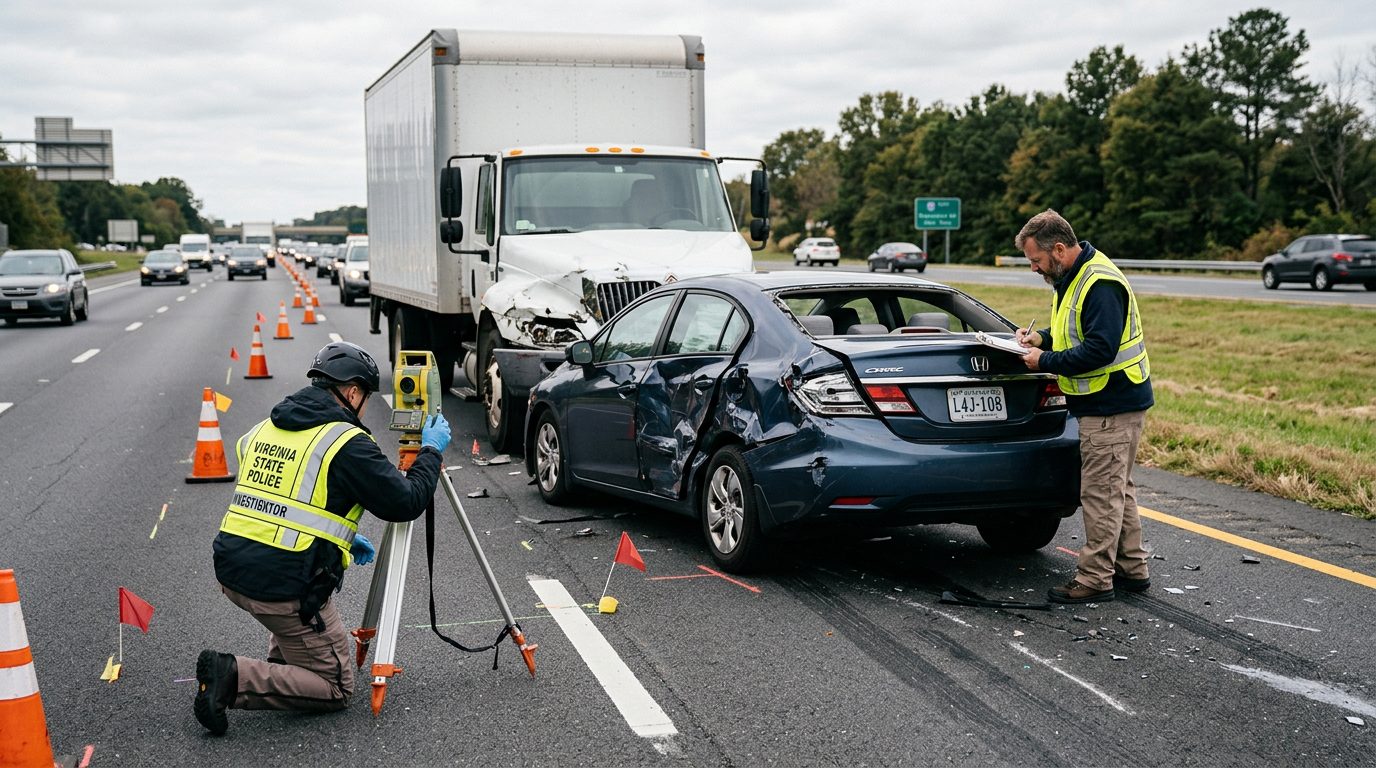
- Photographs of the scene and the vehicles
- Medical records and imaging results
- Work records that show missed time
Virginia requires a driver involved in a crash with injury or death to stop and report it to police immediately (Va. Code §§ 46.2-371, 46.2-894). The statute is Va. Code § 46.2-894. The reporting duty is separate from the deadline to file a lawsuit.
Commercial truck crashes can involve more paperwork. Federal rules require a motor carrier to keep driver vehicle inspection reports for three months, but these rules do not apply to a private motor carrier of passengers (nonbusiness), a driveaway-towaway operation, or any motor carrier operating only one commercial motor vehicle (49 CFR 396.11). Carriers must also keep records of duty status for at least six months (49 CFR 395.8). After certain truck crashes, the employer must test surviving drivers for alcohol and drugs as soon as practicable (49 CFR 382.303). Because these periods are limited, knowing early what records exist can matter.
Time Limits and Who May Bring a Claim
Virginia sets a deadline for filing a personal injury lawsuit. The general rule is below.
Virginia generally allows two years from the date of injury to file a personal injury lawsuit (Va. Code § 8.01-243(A)); the clock runs from the date of injury, not the date of discovery, with narrow exceptions. The statute is Va. Code § 8.01-243.
If someone died after a crash, different rules apply. A Virginia wrongful death action is filed by the decedent’s personal representative within two years of the death (Va. Code §§ 8.01-50(C), 8.01-244(B)), on behalf of the family members the statute protects. See Va. Code § 8.01-244 and Va. Code § 8.01-50. The action is brought by and in the name of the personal representative of the deceased person (Va. Code § 8.01-50(C)).
Many readers ask how their own role in a crash could affect a claim. Virginia follows contributory negligence: if you are found even partly at fault, you may be barred from recovering, with limited exceptions. Talk to a lawyer about your facts.
Possible Damages and What a Claim Review Covers
A claim review looks at the losses the facts support, such as medical bills, lost income and the effect of the injury on daily life. Records help a lawyer review each of these losses.
For a death, Virginia law lists the damages a wrongful death action may include. Virginia wrongful death damages cover the family’s sorrow, mental anguish and loss of the decedent’s companionship, guidance and care; lost income and services; medical expenses from the injury; funeral expenses; and, for willful or wanton conduct, punitive damages (Va. Code § 8.01-52). The statute is Va. Code § 8.01-52.
These categories are general. Whether any of them applies depends on the facts. A claim may or may not succeed, and no one can predict the result from a diagnosis or a crash report alone.
Frequently Asked Questions About Spinal Cord Injuries From Car Accidents
Does a spinal cord injury always cause paralysis?
No. An incomplete injury leaves some function in place, so some movement or feeling may remain.
Why does my back hurt after a car accident?
Back pain after a crash can have several causes. A doctor should check it to find the cause.
Who files a wrongful death claim in Virginia?
The decedent’s personal representative files it. Family members share in any recovery.
Does the firm handle truck crashes and wrongful death cases?
Yes. The firm handles commercial truck crash cases and wrongful death cases, along with car accident and catastrophic injury matters.
Not sure what your next step is?
Talk it through with Correll Law Firm — we can walk you through how a situation like yours is usually handled and what your options are.

Deciding Whether to Talk With a Lawyer About Your Situation
You may wish to talk with a lawyer when a crash may have caused a serious injury, when a death occurred, or when a commercial truck was involved. Many people gather information for days or weeks before they decide what to do next.
A truck case can involve more than one party.
While you wait, keep a written record of your symptoms, your appointments and what you were told. Keep the crash report, photos and any letters you receive. Those notes can help you and a lawyer review your situation later.