
Truck Accidents | Virginia
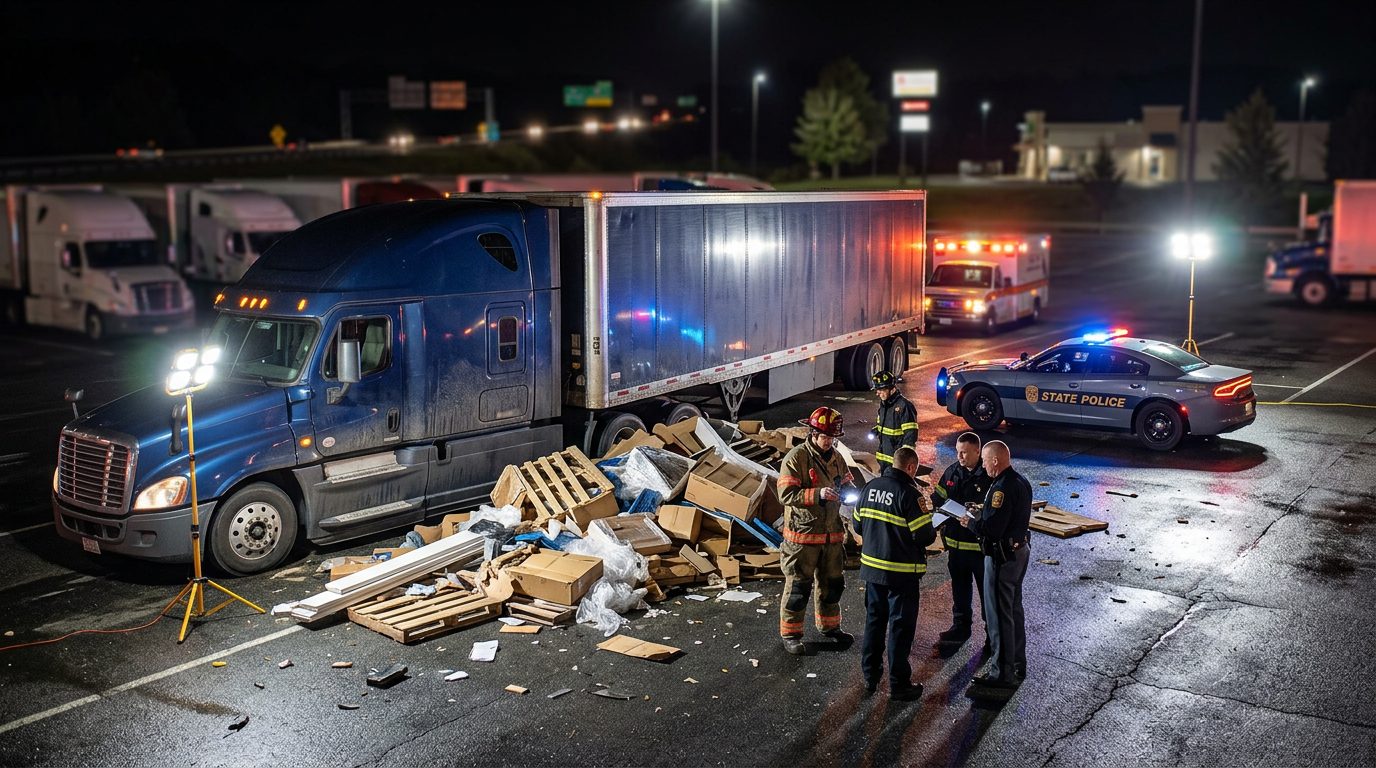
When a Shifted Load Turns a Routine Drive Into a Crash
Correll Law Firm represents people seriously hurt in car and commercial truck crashes, from the Shenandoah Valley to Richmond and Henrico County.
Published November 11, 2026
If a truck load shifted and caused a crash in Virginia, you likely have questions about how that happened. A loose load can cause a crash directly, when cargo falls into traffic. It can also cause one indirectly, when shifting weight changes how the truck brakes and steers. This page explains both paths, the injuries that can follow, and the records that help show what happened.
What Happens When a Truck Load Shifts or Falls
A load shifts when cargo moves on or inside a truck while it is moving. Cargo can also fall off the truck and land on the road.
Loads can move during hard braking, sharp turns, or sudden lane changes. On busy highways such as I-81 and I-95, a truck may be traveling at highway speed when that happens.
Federal rules require cargo to be secured so it does not leak, spill, blow or fall from the truck, and so it does not shift enough to affect stability or handling (federal cargo securement rule).
Other drivers rarely get any warning. A pallet or box that drops from a trailer can land in a lane in seconds. The drivers behind it may have only a moment to brake or swerve. That short window is why these crashes tend to be sudden and serious.
Not sure what your next step is?
Talk it through with Correll Law Firm — we can walk you through how a situation like yours is usually handled and what your options are.

How a Shifted or Fallen Load Can Be Part of a Crash
A shifted or fallen load can help cause a crash in two main ways. Cargo can fall into traffic and strike a vehicle or force a driver to swerve. Or shifting weight can change how the truck handles, which can make it harder to stop or steer.
Debris on the road often leads to secondary crashes. A driver may hit debris, brake hard to avoid it, and get struck from behind. A swerve can also lead to a rollover or a run-off-the-road crash.
Whether a load played a role depends on the facts of each crash and the evidence gathered. A crash can have more than one proximate cause.
Injuries Seen in Crashes Involving Cargo and Debris
Crashes involving cargo and debris often cause fractures, internal injuries, and soft-tissue damage. A heavy object or a sudden stop carries a lot of force, and the body absorbs that force in many ways.
Some crashes cause catastrophic injuries. Traumatic brain injury and spinal cord injury are two examples. Traumatic brain injury can follow a serious crash, and general information about the condition is available from the Administration for Community Living (ACL traumatic brain injury information).
Symptoms can appear days later. A person may feel fine at the scene, then develop headaches, confusion, numbness, or back pain. Early medical care helps connect those symptoms to the crash.
The firm handles catastrophic injuries, traumatic brain injury, and spinal cord injury cases arising from serious crashes. For an overview of the firm’s commercial vehicle work, see the commercial vehicle accidents overview.
Why Photographs, the Crash Report, and Load Records Matter
Photos, the crash report, and load records can often help show what the load was and how it was secured.
Take photos of the scene before anything is moved, when you can. Capture the debris, the trailer, the cargo, and any straps, chains, or tie-downs. Wide shots and close-ups both help. A note of the time and place adds context.
The police crash report records what the responding officer saw at the scene. Ask for the report number and keep it with your other records.
Load paperwork shows what was being carried. Bills of lading, load manifests, and driver logs describe the cargo and the trip.
Records do not last forever. Under the federal rule for companies subject to 49 C.F.R. part 379, records may be destroyed at the company’s discretion after set minimum retention periods end, and other government bodies may require longer retention periods (federal records retention rule). That is why these records may need to be preserved quickly.
Reporting the Crash and Who May Be Responsible
Virginia requires a driver involved in a crash with injury or death to stop and report it to police immediately (Va. Code §§ 46.2-371, 46.2-894). Under § 46.2-894, the driver of a vehicle involved in an accident in which a person is killed or injured must immediately stop as close to the scene as possible without obstructing traffic, and report their name, address, driver’s license number and vehicle registration number to the State Police or local law-enforcement agency, to the person struck and injured (if that person appears capable of understanding the information), and to the driver or other occupant of the vehicle collided with or the custodian of other damaged property, and render reasonable assistance to any injured person. A violation is a Class 5 felony when the accident results in injury to or the death of any person. That help may include taking the injured person to a physician, surgeon or hospital when medical treatment is apparent or requested by the injured person.
The two-year period is the deadline to file a lawsuit, not the deadline to report a crash (Va. Code § 8.01-243).
Virginia follows contributory negligence: if you are found even partly at fault, you may be barred from recovering, with limited exceptions. Talk to a lawyer about your facts.
Responsibility may reach the driver, the company that loaded or secured the cargo, or others, depending on the facts.

Timing for a Lawsuit and Steps to Keep the Facts
Virginia generally allows two years from the date of injury to file a personal injury lawsuit (Va. Code § 8.01-243(A)); the clock runs from the date of injury, not the date of discovery, with narrow exceptions.
Some claims carry notice requirements that run out sooner, so the timing question deserves early attention.
These steps help preserve the facts:
- Keep all medical records, bills, and receipts for related costs.
- Save photos and videos with their original dates.
- Write down what you saw, heard, and felt while memories are fresh.
- Keep the crash report number and the names of any witnesses.
For a fatal crash, different rules apply. A Virginia wrongful death action is filed by the decedent’s personal representative within two years of the death (Va. Code §§ 8.01-50(C), 8.01-244(B)), on behalf of the family members the statute protects.