
Virginia Commercial Vehicle Crashes
Commercial Van Crash Injuries in Virginia: Who May Be Responsible
A company van crash can involve more parties, records and questions than a typical car accident. Here is how the firm looks at who may share responsibility for your injuries.
Published November 2, 2026
A commercial van crash injury in Virginia can involve more than the driver. The van’s owner and the driver’s employer may both be relevant to a claim. This guide explains how to identify them, what the crash report shows, and which deadlines and early steps matter. It is written for people hurt by a delivery, work, or company van, and for family members who want to understand what comes next.
When a Crash Involves a Company Van in Virginia
A van can be a commercial vehicle when a business owns it or uses it for work. A van that looks like a personal vehicle can still belong to a company.
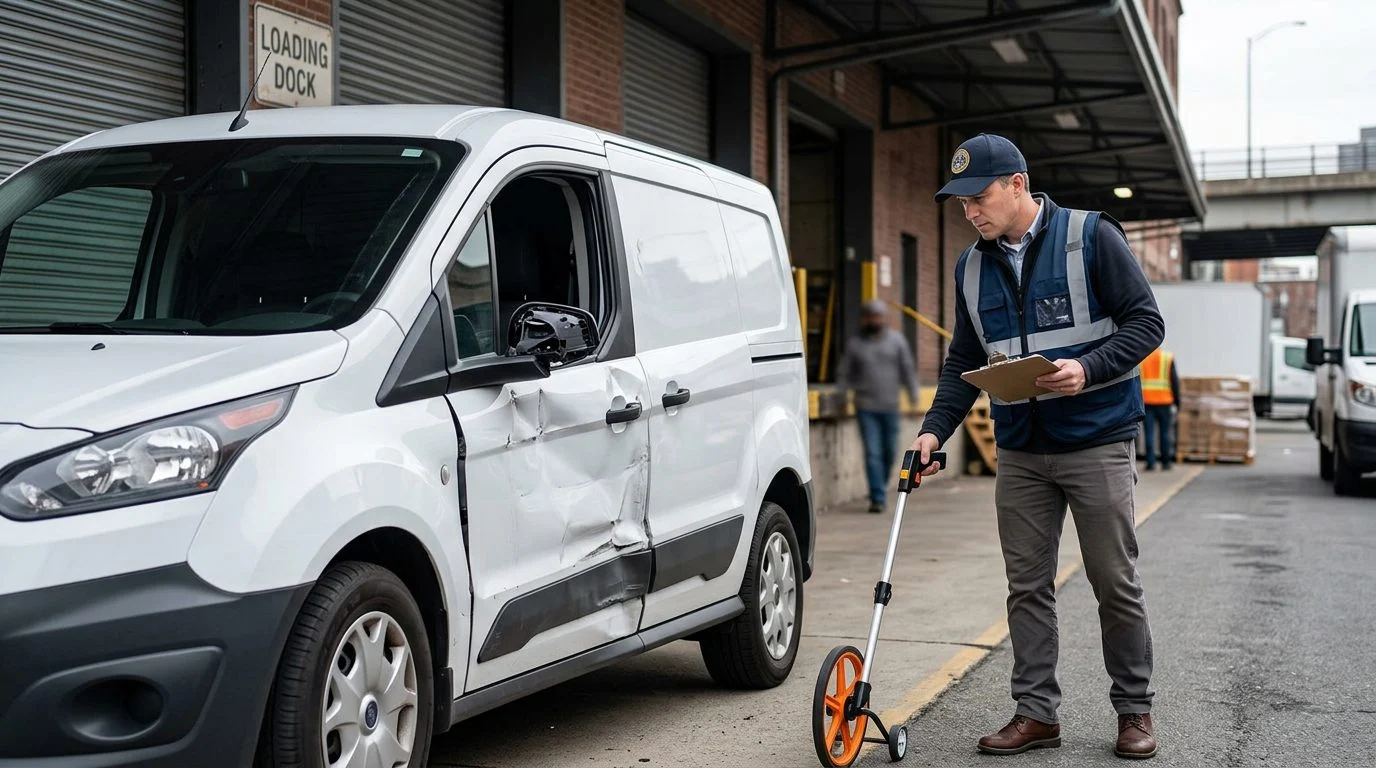
Delivery vans, service vans, and work vans are common on Virginia roads. Many carry a company name, a logo, or a web address. Others have fleet numbers, ladder racks, or tool storage. These are clues that a business may own or use the van.
Look at the doors, bumper, and rear for numbers or lettering. Take a photo of anything you see. Some vans look plain. A white van with no lettering may still be leased or owned by a business. A contractor may drive it for work. That is why the registration and the crash report often matter more than appearance. The firm’s guide to commercial vehicle accidents in Virginia covers the broader categories. Start there for the full set of topics.
If a company van was involved in your crash, the firm may be able to talk with you about who may be responsible and what your options may be. Talk it through with Correll Law Firm — we can walk you through how a situation like yours is usually handled and what your options are.
Why the Van Owner and the Driver’s Employer May Matter
The van’s owner and the driver’s employer can each bear on who may be responsible and which insurance may apply. The answer depends on the facts of the crash.
Virginia requires a motor vehicle owner’s policy to insure anyone using the van with the owner’s permission (Va. Code § 46.2-472). The driver may therefore be covered under the owner’s policy, even if the driver doesn’t own the van.
Four questions shape the picture. Was the driver working when the crash happened? Was the driver making a delivery or following a route? Was the driver an employee or a contractor? Who assigned the van to the driver? Each answer can change which parties and insurers may be involved. The answer often comes from records, not from what the van looks like.
A claim can name more than one party.
Reading the Crash Report to Identify the Owner and Insurer
A police crash report is often the fastest place to find the van’s registered owner and insurance details.
Reports usually list each vehicle, its owner, and insurance information when the officer collects it. Check the driver’s name and address, the vehicle owner’s name, the plate and registration number, the insurance company and policy number, and the investigating officer’s details. Note the report number, the date, and the agency so you can request a copy later.
Compare the owner on the report with any business name on the van. They may not match. A van may be leased from one company while another business employs the driver. Write down every name you see.
Virginia requires a driver involved in a crash with injury or death to stop and report it to police immediately (Va. Code §§ 46.2-371, 46.2-894). The statutes are Va. Code § 46.2-371 and Va. Code § 46.2-894.
Reporting a crash to police and filing a lawsuit are separate steps, and each one has its own timing. Ask for a copy of the report, and check it for errors.
Other Evidence That Can Show Who Owned and Was Using the Van
Photos, witness details, and business records can show who owned the van and what the driver was doing.
Photograph the van’s exterior, its markings, its plate, and any damage. Take photos of the scene, the traffic signs, and where each vehicle stopped. Note the date, time, and exact location.
Get the names and contact details of any witnesses as soon as you can. Witnesses may recall lettering, the direction of travel, or what the driver said at the scene. Keep the driver’s name and any badge or ID details you saw.
Delivery paperwork, dispatch messages, receipts, route notes, and work schedules may show whether the driver was working. Save them early, and keep paper and digital copies in one folder. Records can be lost, and messages can be deleted.
Some vans have GPS or fleet tracking. Federal rules describe electronic logging devices that automatically record date, time, location, and vehicle miles (49 C.F.R. § 395.26). For more, read the firm’s guide to electronic records after a commercial vehicle crash.
Common Injuries After a Commercial Van Crash
Van crashes can cause serious injuries, including traumatic brain injury and spinal cord injury.
The Administration for Community Living notes that automobile crashes can cause traumatic brain injuries, which involve severe brain damage. Injuries to the head or spine can change how a person works, drives, and cares for family.
Other serious injuries include spinal cord injuries, broken bones, internal injuries, and other catastrophic harm. Some symptoms may not appear right away, especially after a head injury. Prompt medical evaluation and follow-up care help create an accurate record of what happened.
Keep copies of medical records, work absence notes, and a daily journal. Write down what you can no longer do, such as lifting, driving, or sleeping through the night. Those notes help show how the injury affects daily life.
Insurance Contact After a Company Van Crash
An insurer for the van’s owner or the driver may reach out early, often asking for a recorded statement.
These messages may come from a company’s insurer or from the driver’s own insurer. They may ask for a recorded statement or a signed medical authorization. Some requests come quickly, before you have had time to read the crash report.
Write down the adjuster’s name, company, and claim number. Keep copies of every letter and email. Read any release before signing it, and ask what it covers. It’s fine to say you don’t know yet.
You may wish to speak with a lawyer before giving a recorded statement, especially when the other party is a business. For more on this, read the firm’s guide to dealing with a company insurer after a crash.
Not sure what your next step is?
Talk it through with Correll Law Firm — we can walk you through how a situation like yours is usually handled and what your options are.
Deadlines and Fault Rules to Know in Virginia
Virginia generally allows two years from the date of injury to file a personal injury lawsuit (Va. Code § 8.01-243(A)); the clock runs from the date of injury, not the date of discovery, with narrow exceptions. The statute is Va. Code § 8.01-243. Track dates from the day of the crash.
Some claims carry shorter notice rules. A claim against a county, city, or town for negligence generally requires a written statement, including the time and place of injury, filed within six months after the cause of action accrues, though failure to file it does not bar the claim if the attorney, chief executive, or mayor, or any insurer or entity providing coverage or indemnification of the claim, had actual knowledge of the claim within that six months; if the claimant was under a disability when the cause of action accrued, the tolling provisions of § 8.01-229 apply (Va. Code § 15.2-209). If the van belongs to a local government, that rule may apply.
Virginia follows contributory negligence: if you are found even partly at fault, you may be barred from recovering, with limited exceptions. Talk to a lawyer about your facts. Start gathering records now, rather than later.
When a Claim May Reach Beyond the Driver
A claim may reach beyond the driver when a business owned the van or employed the driver.
A claim against a company can raise different questions than a claim against one driver. The firm’s overview of suing a company after a commercial vehicle crash explains that topic in more detail. Each claim has its own facts, so a written summary of the crash helps.
People in Richmond, Henrico County, Winchester, Front Royal, Harrisonburg, and across the Shenandoah Valley may face these same questions after a van crash.
Here are the first steps: get the crash report, identify the owner and insurer, save photos and witness details, keep electronic and dispatch records, track medical care, and note the deadlines.
Frequently Asked Questions
Is a company van crash different from a car accident?
The basic steps are similar. The owner, the employer, and the records can add more parties and paperwork.
Does the crash report decide who is responsible?
No. The report records what the officer found and collected. It is one piece of the evidence.
Related practice areas
- Commercial Truck Crash Wrongful Death in Henrico County