
Commercial vehicle crashes | Winchester and Harrisonburg
Preserve the Evidence After a Commercial Vehicle Crash
Electronic records, camera footage and maintenance files can change or disappear quickly. Here is what to watch for and why early attention to them matters in Virginia.
Published November 16, 2026
A crash with a work van or commercial truck can leave you hurt, worried, and unsure what the other side will keep. Much of the proof sits in places you cannot see, and some of it can change or disappear quickly.
The short answer is a handful of categories. This page covers each one: what it is, who usually holds it, and why timing matters in Virginia.
What evidence should be preserved after a work van or commercial truck accident, such as telematics, dashcam footage, driver logs, maintenance records, and the vehicle itself?
Keep the vehicle’s electronic data, any video, the driver and trip records, the maintenance history, and the vehicle and its parts. Each category can show a different part of what happened.
Who holds each item matters. A company or its insurer often controls telematics, dashcam video, driver logs and maintenance files. The injured person or family usually holds photos, witness names, medical records and the police crash report. Do not assume one copy covers another.
The right list depends on the facts of the crash, the type of vehicle, and who owned, leased and operated it. A small delivery van, a box truck and a tractor-trailer carry different equipment. One crash can also involve the driver’s employer, a vehicle owner, a leasing company and a repair shop.
Not sure what your next step is?
Talk it through with Correll Law Firm — we can walk you through how a situation like yours is usually handled and what your options are.
Why does evidence from a commercial vehicle crash need attention early?
Early attention matters because records and parts can be changed, overwritten or discarded. Waiting can make proof harder to recover, whatever the filing date.
Companies keep records under their own practices. Video systems can record over older footage. GPS history can roll off a server. These are routine practices, so the window can be short.
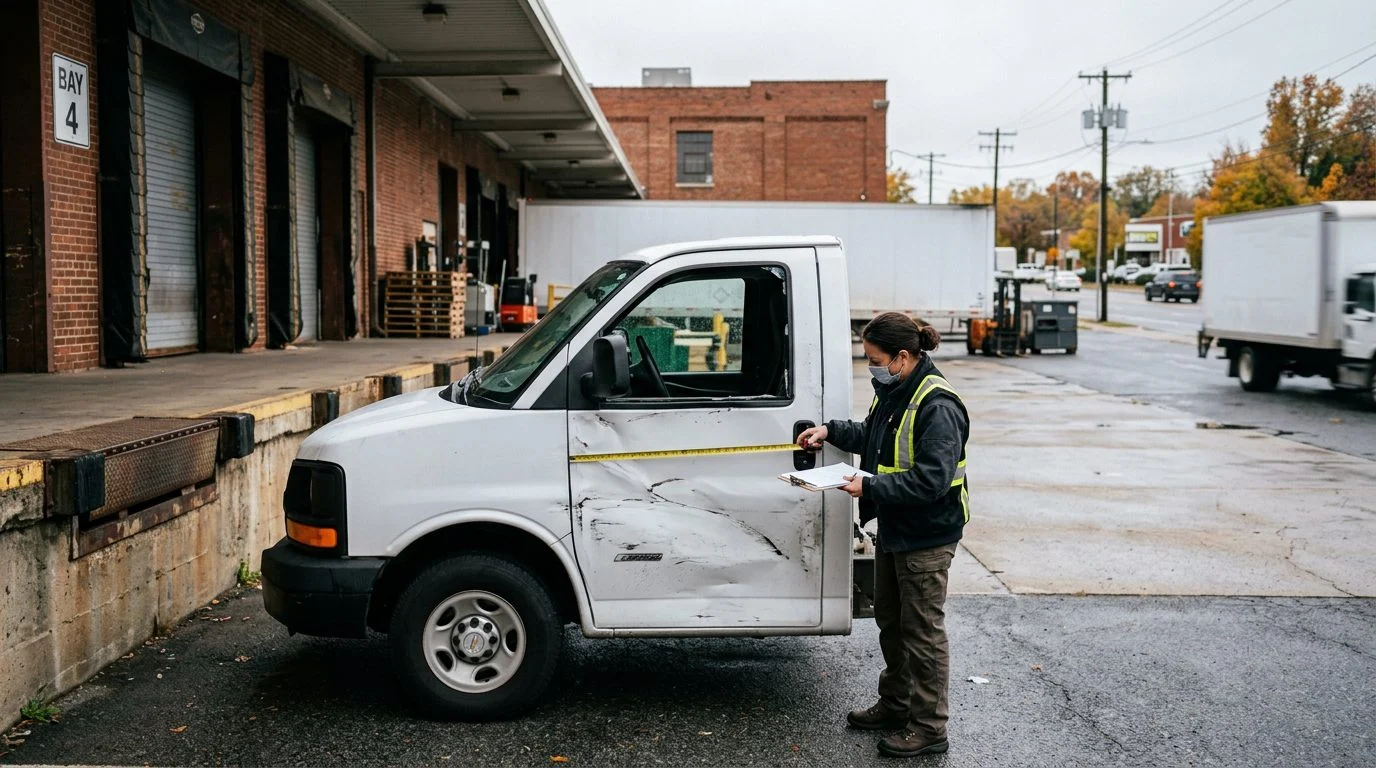
Physical evidence moves quickly too. Trucks are often towed, repaired, returned to service or sold. A part removed during a repair may be thrown away. Once that happens, the condition of the brakes or tires may be hard or impossible to show.
Filing deadlines also matter. Virginia generally allows two years from the date of injury to file a personal injury lawsuit (Va. Code § 8.01-243(A)); the clock runs from the date of injury, not the date of discovery, with narrow exceptions.
How do telematics and electronic data from the vehicle fit into the evidence?
Telematics and vehicle event data can show speed, braking and timing in the minutes before a crash. They are often among the first records to request.
Telematics is data a fleet system records while the vehicle runs. It may include location, speed, hard braking, engine activity and time stamps. Read together, those entries can show how the vehicle moved before impact.
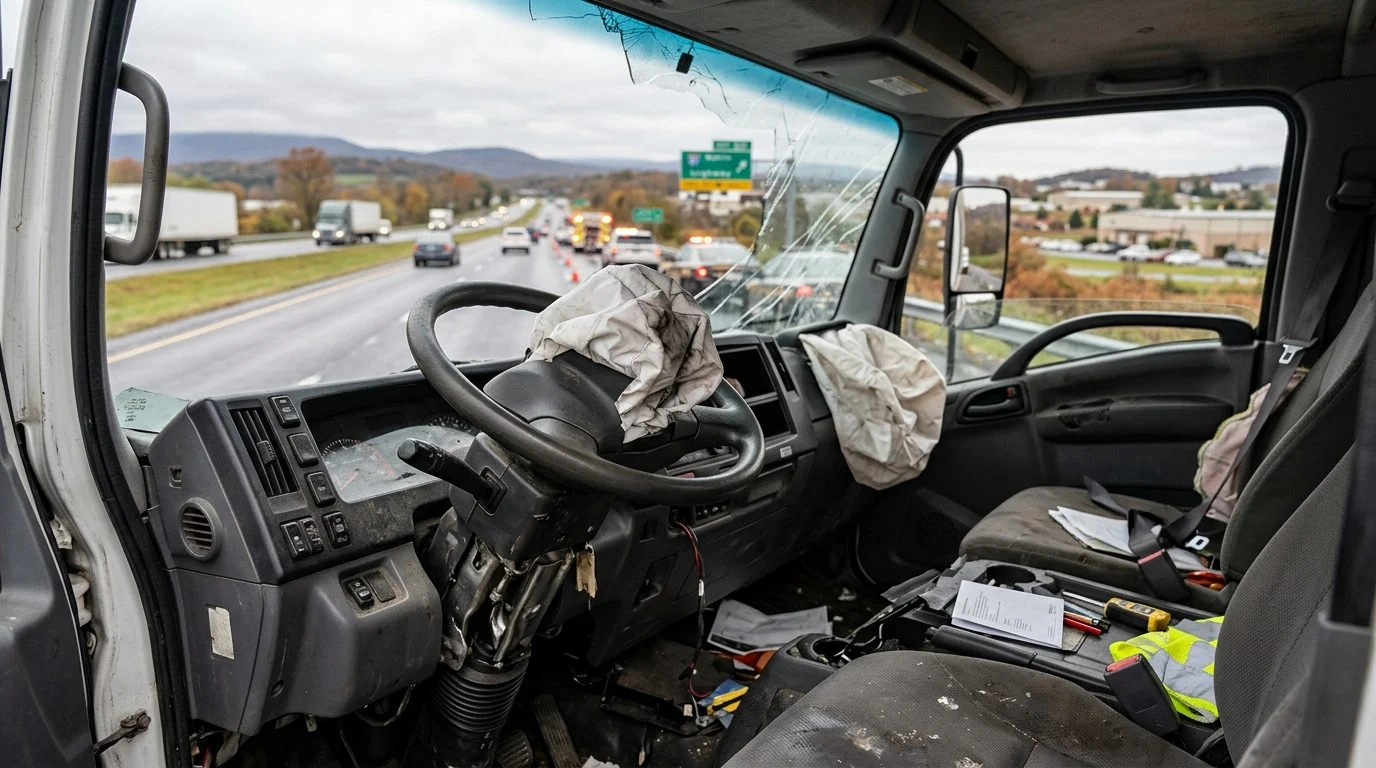
Many vehicles also carry an onboard event data recorder. It may store information for a short time around a crash. Pulling data or resetting the module should be done by a qualified person following a documented process, because a careless step can change what is stored.
Electronic logging devices fall under federal rules. A motor carrier must not alter or erase, or permit or require alteration or erasure of, the original information about a driver’s hours, the source data streams, or ELD information that uses them (49 C.F.R. § 395.30).
Fleet software and the vehicle’s onboard module are often held by different parties. Ask for both, because one copy does not replace the other.
Which dashcam footage, photos, and scene records should be saved?
Dashcam footage and photos can show the vehicle’s path, signals, following distance and the scene. Both are easy to lose.
Many dashcam systems record over themselves in a loop. Some units face forward and others face the driver. Each view can matter, so ask that every camera and memory card be kept, not only the clip that seems important.
Your own evidence is just as useful. Take photos of the scene, the vehicles, the damage, the road, signs and any visible injuries as soon as it is safe. Write down witness names and phone numbers while people are still nearby.
Keep any messages or social media posts made at the time of the crash. Do not delete them, even if they feel private.
If a family member has died in a crash, the same kinds of records matter. Keep the person’s phone, messages and online accounts as they were. Do not log in and delete or edit content, since changes can be hard to undo.
Which driver logs, dispatch records, and trip documents matter most?
Driver logs and trip records show when the driver was on duty, driving or resting before the crash. They are often among the most useful records after a commercial truck crash.
A record of duty status tracks each 24-hour period. Under federal rules, no driver or motor carrier may make a false report in connection with a duty status (49 C.F.R. § 395.8). Drivers must review and certify their electronic records, and a motor carrier may not coerce a false certification (49 C.F.R. § 395.30). Those rules make the original entries worth preserving.
Other trip records help fill in the timeline. These include dispatch messages, load paperwork, fuel and toll receipts, and route records. Together they can show timing and location.
Carriers also keep driver qualification files. Federal rules require them to be kept while the driver works for the carrier and for three years afterward, except as provided in paragraph (d) of this section (certain records may be removed three years after execution) (49 C.F.R. § 391.51).
A written request asking the company to keep these records is a common first step.
What maintenance records and the vehicle itself should be kept?
Maintenance and inspection records show the vehicle’s condition before the crash. The vehicle and its parts are physical proof that can be examined.
Periodic inspection reports matter. Federal rules require the motor carrier, intermodal equipment provider, or other entity responsible for the inspection to keep the original or a copy for fourteen months from the date of the inspection report. The report must be kept where the vehicle is housed or maintained (49 C.F.R. § 396.21). Repair orders for brakes, tires, steering, lights and other work also help show condition.
Physical items include brake parts, tires, lights, mirrors, cargo securement gear and any damaged component. Do not discard, repair or sell them without a written inventory and photographs made early. That record shows each part’s condition and where it was kept.
Vehicles often move to a tow yard, and ownership can change hands. More than one company may be tied to a single vehicle. Ask who owns, leases and maintains it, and who holds the repair vendor’s records. Those answers show where each record sits.
Not sure what your next step is?
Talk it through with Correll Law Firm — we can walk you through how a situation like yours is usually handled and what your options are.

What records can the injured person and family keep on their own?
The injured person and family can keep the police crash report, medical records, a daily journal, work records and insurance letters. These often matter as much as the company’s files.
Virginia requires a driver involved in a crash with injury or death to stop and report it to police immediately (Va. Code §§ 46.2-371, 46.2-894). Keep the officer’s name, the report number and any citation.
Keep medical records and bills, discharge papers, and the names of providers. Write a short daily journal of pain, sleep, limits on work and daily tasks, and appointments. Keep wage records, work schedules and any letters from employers.
Save every letter and email from insurers, in original form. Keep the clothing, helmet or personal items worn or carried at the time of the crash. Store them unwashed and unaltered where possible, in a dry, sealed bag.
Taken together, the company’s records and your own paperwork give the clearest picture of what happened.