
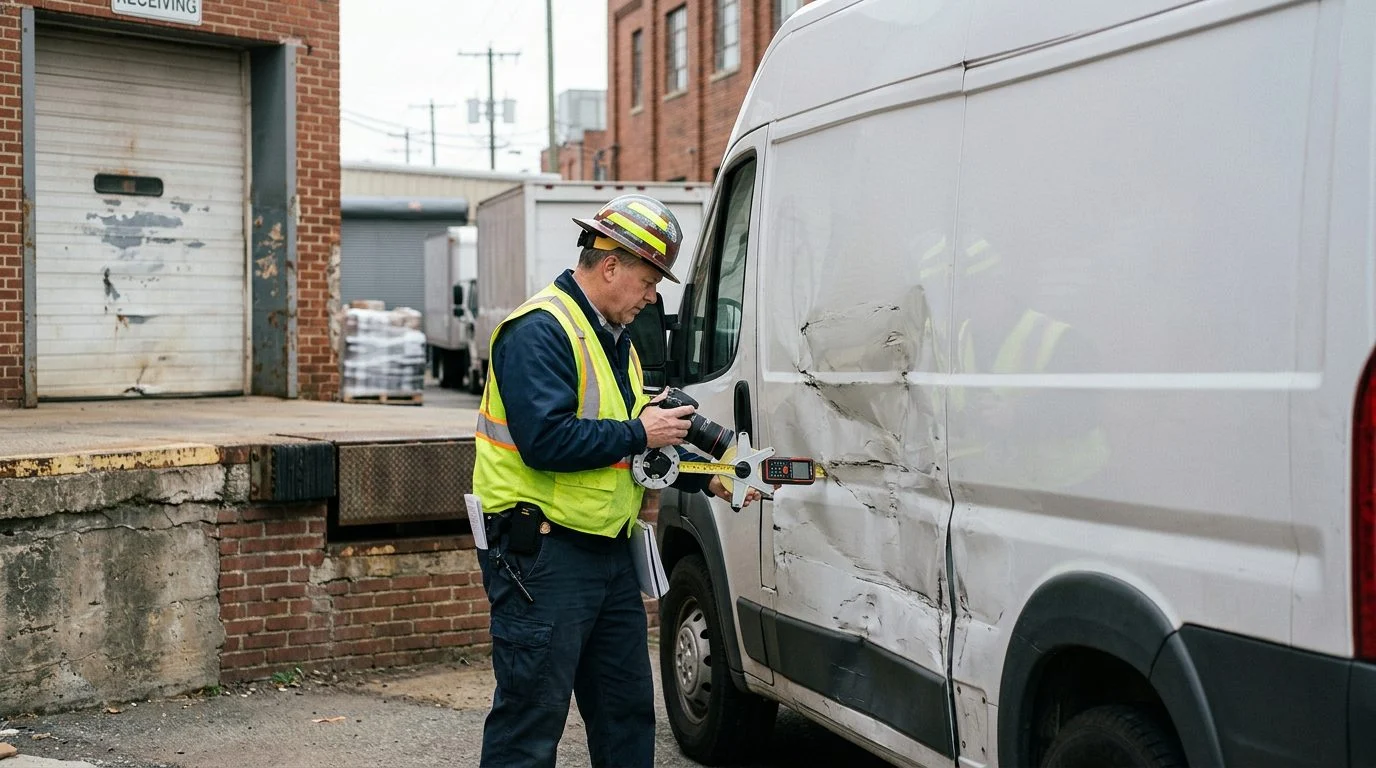
Commercial Vehicle Crashes | Virginia
A Truck Crash Can Make the Claim Look Very Different
How commercial vehicle cases compare with everyday car accident claims, and why the details matter early on.
Published November 15, 2026
Being hurt in a crash with a delivery van or tractor-trailer can leave you with many questions. You may wonder whether the claim works differently from one that involves only passenger cars. In short, a commercial vehicle crash often adds more parties and more records to a claim in Virginia.
This page compares a commercial vehicle crash claim with a car accident claim in Virginia. It covers who may be involved, what evidence is gathered, the rules that apply to both, and which situations point toward which kind of claim. Every crash has its own facts, and those facts shape how a claim develops.
Why the Type of Vehicle Changes the Claim
A commercial vehicle crash usually adds more people and more paperwork to a claim than a crash between two passenger cars does.
Most car crashes involve two drivers, their passengers and their insurance companies. A crash with a commercial vehicle may also involve the company that sent the trip, the owner of the truck, or a business that leased it. Each of those people or companies can change who is reviewed and which records matter.
Commercial vehicles are also covered by federal safety rules. Those rules create records that a passenger car usually does not generate. The evidence section below explains which records those are and why they can be time-sensitive.
If a commercial truck or van crash left you hurt, you may have a claim, and you do not have to sort through the records alone. Talk it through with Correll Law Firm — we can walk you through how a situation like yours is usually handled and what your options are.
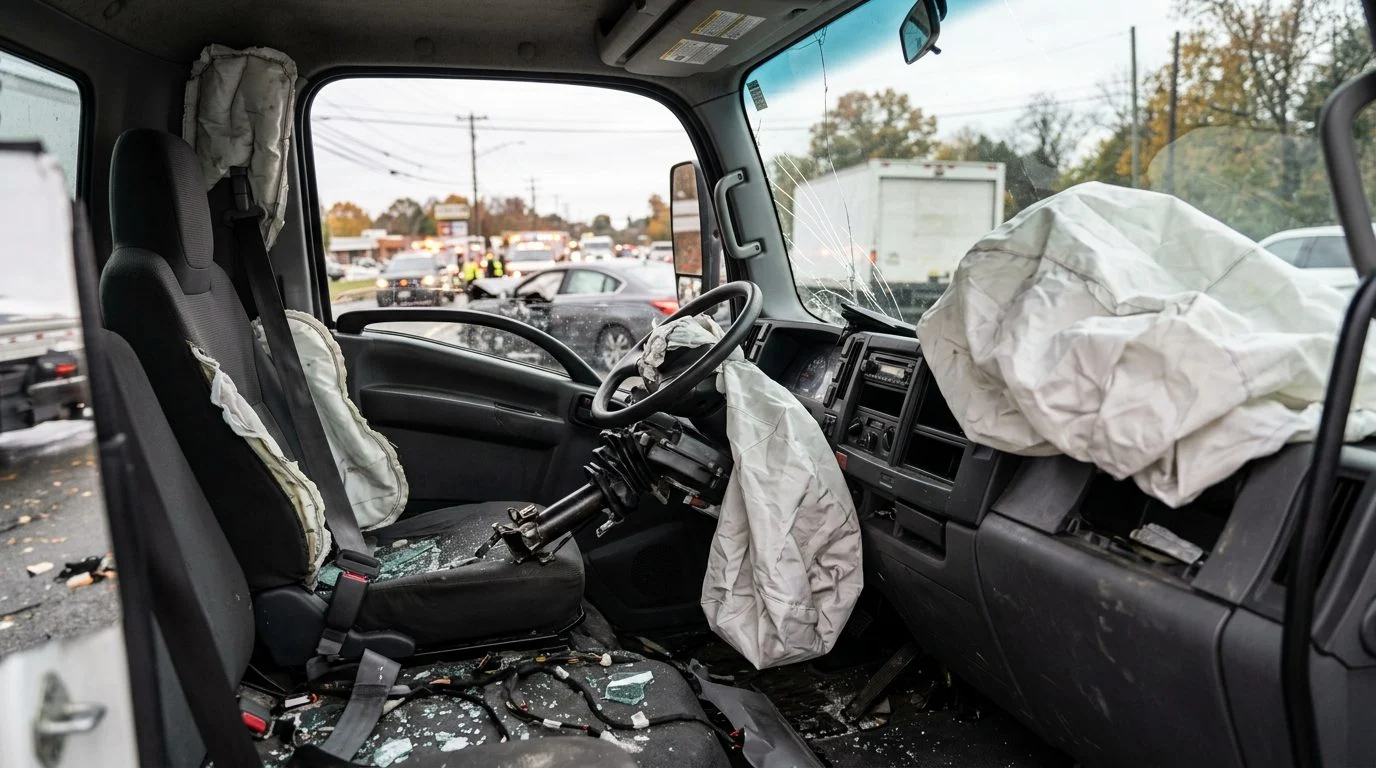
Who May Be Involved: Passenger Cars vs Commercial Vehicles
A car accident claim usually involves the drivers and their insurers, while a commercial vehicle claim can reach a wider group.
| Factor | Car accident | Commercial vehicle crash |
|---|---|---|
| Parties | Drivers, passengers, vehicle owners | Driver, motor carrier, vehicle owner, leasing company, cargo loader or maintenance contractor, depending on the facts |
| Insurance sources | Policies held by each driver or owner | Policies held by the driver, the vehicle owner or the business, depending on the facts |
| Likely records | Police report, photos, repair estimates | Duty-status logs, driver qualification file, maintenance and inspection records |
Who may be responsible depends on the facts. A driver working for a business may have been on the job during the crash. That can bring the business into the review. The review looks at each party’s role before deciding how a claim should be built.
Evidence Gathered in Each Type of Crash
Car crash evidence centers on the scene and the vehicles, while commercial crash evidence also includes company records.
In a car crash, the file often includes the police report, photos of the scene, witness statements, vehicle damage and medical records.
A commercial crash can add records kept by the motor carrier. Federal rules require a motor carrier covered by these rules, other than a private nonbusiness passenger carrier, to have each driver record duty status for each 24-hour period. No driver or carrier may make a false report about duty status (49 C.F.R. § 395.8). Each motor carrier must also keep a driver qualification file for every driver it employs (49 C.F.R. § 391.51).
Some of these records are kept for a limited time. A carrier must keep duty-status records and supporting documents for not less than 6 months from the date of receipt (49 C.F.R. § 395.8). Driver qualification files are kept while the driver is employed and for three years after, except that certain records may be removed three years after the date of execution (49 C.F.R. § 391.51). Under 49 C.F.R. § 379.3, companies subject to that part must keep records for the minimum periods in its appendix A. Once those periods end, records may be destroyed at the discretion of each company’s management, but the rule does not excuse longer retention periods set by other rules. That is why asking early that records be kept can matter.
Reporting Duties That Apply After Either Crash
Virginia requires a driver involved in a crash with injury or death to stop and report it to police immediately (Va. Code §§ 46.2-371, 46.2-894).
If injuries keep the driver from reporting right away, the driver must report as soon as reasonably possible (Va. Code § 46.2-894).
The two-year period discussed below is the deadline to file a lawsuit (Va. Code § 8.01-243). It is not the deadline to report a crash.
Fault, Defenses and How Liability Is Examined
Fault in either kind of crash is decided on the facts, and a commercial vehicle review often looks past the driver.
In a car crash, the review usually centers on what each driver did.
Virginia follows contributory negligence: if you are found even partly at fault, you may be barred from recovering, with limited exceptions. Talk to a lawyer about your facts.
Filing Deadlines in Virginia Injury Claims
Both claim types start from the same point for the filing deadline.
Virginia generally allows two years from the date of injury to file a personal injury lawsuit (Va. Code § 8.01-243(A)); the clock runs from the date of injury, not the date of discovery, with narrow exceptions.
Some claims carry notice requirements that run out sooner, so the two-year period may not apply to every claim.
A commercial crash can have more parties to identify and more records to gather. That can make the investigation longer, even though the starting point is the same.
Not sure what your next step is?
Talk it through with Correll Law Firm — we can walk you through how a situation like yours is usually handled and what your options are.
Damages and Punitive Damages in Each Type of Claim
Lost income follows a specific rule. In personal injury or death suits, provable damages for lost income are not reduced because of reimbursement from another source, and that reimbursement is not admitted into evidence (Va. Code § 8.01-35).
A brain injury from a crash needs a medical diagnosis. Motor vehicle crashes can cause traumatic brain injury.
Punitive damages are a separate question. Under Va. Code § 8.01-38.1, the total punitive damages awarded against all defendants found liable are determined by the trier of fact, and the jury is not told of the statutory limit. Virginia allows punitive damages for actual malice, or for willful or wanton conduct or recklessness showing a conscious disregard for the safety of others, capped at $350,000 (Va. Code § 8.01-38.1).
Which Situations Point Toward Which Claim
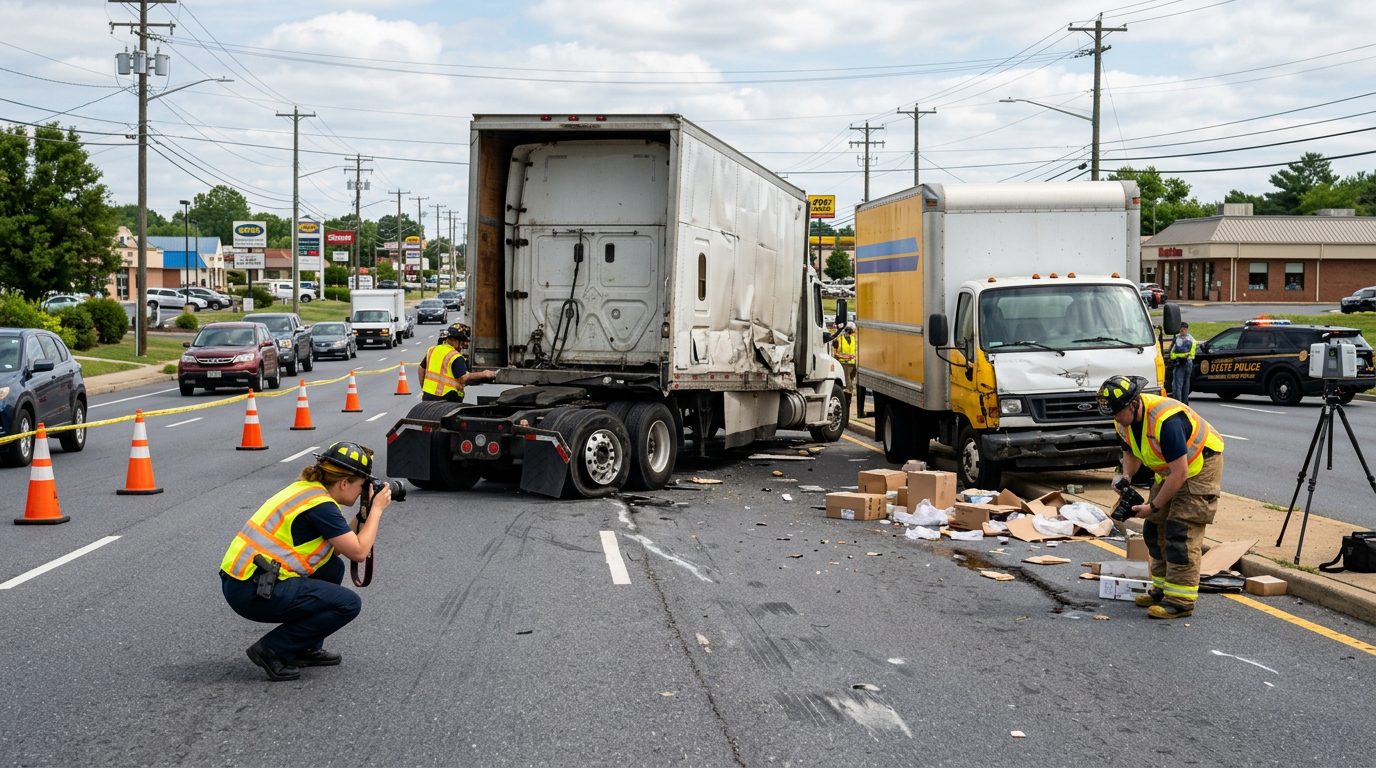
A crash between two passenger cars usually points toward a car accident claim. A crash involving a work vehicle often points toward a commercial vehicle claim.
The examples below are hypothetical. They show how the questions change.
In the first example, two passenger cars collide on a residential street. The parties are the two drivers and their insurers. The records are the police report, photos and witness statements. The reporting duty applies to both drivers.
In the second example, a delivery truck and a sedan collide on a highway. The company that operates the truck, the driver’s duty-status logs and the maintenance file may all become part of the review, along with the usual scene evidence. Early preservation of those records matters here.
| Situation | Likely parties | Records to preserve |
|---|---|---|
| Two passenger cars on a residential street | Two drivers and their insurers | Police report, photos, witness statements, vehicle damage |
| Delivery truck and sedan on a highway | Driver, motor carrier, vehicle owner, insurers | Duty-status logs, driver qualification file, maintenance and inspection records |
Frequently asked questions
Is a truck accident claim different from a car accident claim in Virginia?
The core Virginia rules are the same. A truck crash often involves more parties and company records.
Can punitive damages apply in a truck crash?
They can apply when the conduct meets the standard described above. The cap on the total amount still applies.