
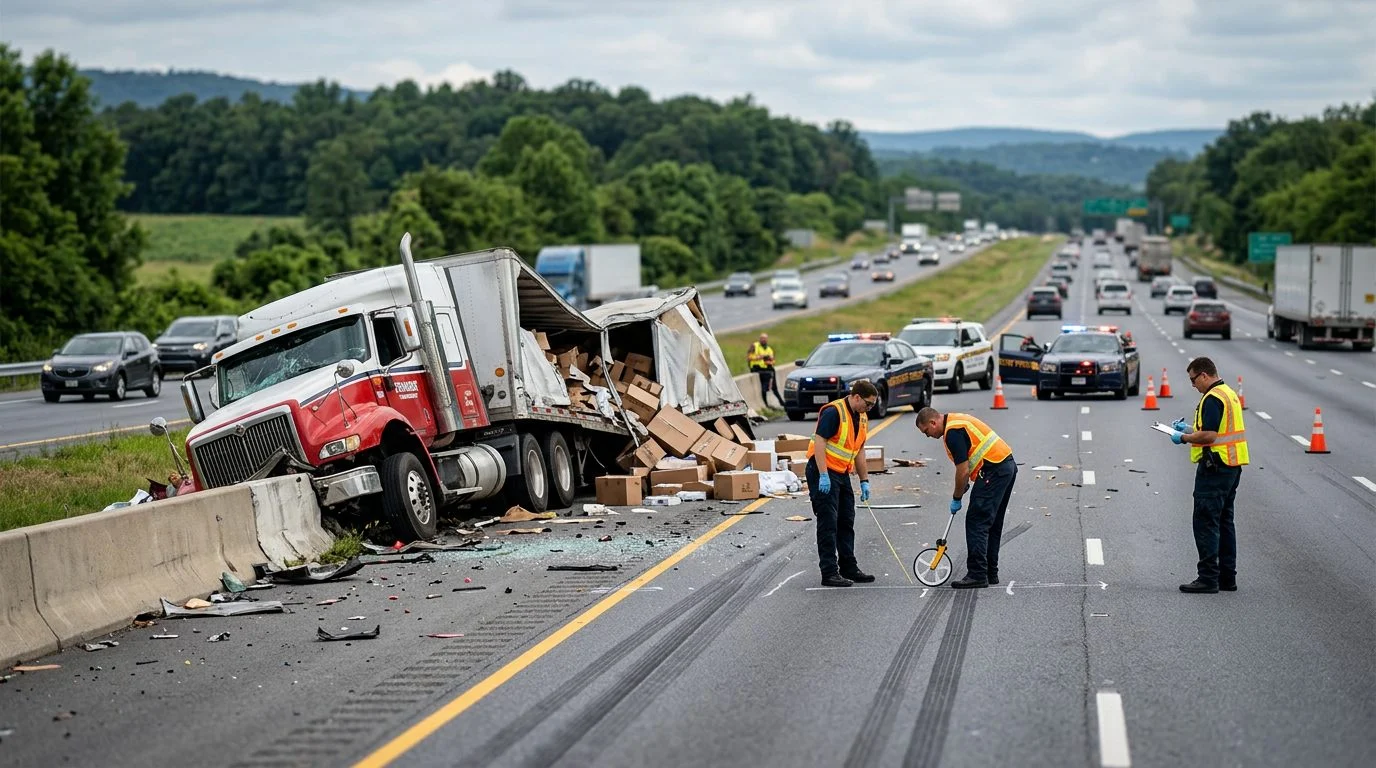
Construction Truck Accidents | Virginia
Hurt Near a Construction Truck? Start With the Facts That Matter
Work zones, heavy equipment and multiple companies can make a crash harder to sort out. Here is how the firm approaches these claims for people across the Shenandoah Valley, Richmond and Henrico County.
Published November 13, 2026
Being hit by a construction truck, or hurt near one in a road work zone, is frightening and confusing. In Virginia, a crash between a construction vehicle and a member of the public is generally a commercial vehicle accident. This page explains what to record, how Virginia’s reporting and filing rules work, and who may be responsible for a construction truck accident injury. The facts of each crash shape how these rules apply.
Why a Construction Truck Crash in a Work Zone Is a Commercial Vehicle Crash
A crash between a construction vehicle and a member of the public is usually treated as a commercial vehicle accident. Construction vehicles include dump trucks, concrete mixers, and flatbed or equipment haulers that travel public roads. Their weight and size mean an impact can be severe.
Work zones add risk. Drivers, pedestrians and cyclists often sit close to heavy vehicles. Lanes may shift or narrow, and traffic patterns can change within a short distance. Interstate 81 in the Shenandoah Valley is one busy route where work zones can change from one mile to the next. Trucks entering or leaving a work area can block a driver’s view. A driver following a flagger or a lane shift may have little time to react.
This page covers people hurt while not working on the project. Injuries to workers on the job fall outside its scope. The firm’s commercial vehicle accidents page covers related questions. The firm is based in Winchester and has an office in Harrisonburg.
Not sure what your next step is?
Talk it through with Correll Law Firm — we can walk you through how a situation like yours is usually handled and what your options are.

Questions to Answer Early After a Work Zone Crash
The first answers to record are where the crash happened, what vehicle was involved, who operated it, and what traffic controls were in place. Write these down, or photograph them, as soon as you can.
- Location. Note the road, direction of travel, the nearest mile marker or landmark, and whether lanes were closed, shifted or narrowed.
- Vehicle type. Note the kind of truck or equipment, its approximate size, and whether it was hauling materials or towing equipment.
- Company name. Note the name on the doors or cab, the truck or unit number, and any decals or placards that identify the owner or operator. These details help show who may be responsible.
- Traffic control. Note the signs, barrels, flaggers, and speed-limit changes in place when the crash happened. Note the time of day, weather and lighting too.
Memory fades quickly after a crash. A photo of the truck’s markings and the work zone setup is a useful backup. If you can’t write anything down, ask a passenger or a nearby witness to help.
Reporting the Crash and Preserving Evidence
Virginia requires a driver involved in a crash with injury or death to stop and report it to police immediately (Va. Code §§ 46.2-371, 46.2-894). The two-year period discussed below is the deadline to file a lawsuit, not a deadline to report a crash.
Keep notes of the scene, the parties and the damage in any crash, even when no one is seriously hurt. Ask for the officer’s report number or any citation information before you leave.
Useful evidence includes photos and video of the scene, vehicles and road signs. It also includes names and contact details for witnesses, medical records and bills, repair estimates, and any police report. The Virginia DMV crash records page explains how to obtain crash information.
Early preservation matters because work zone layouts, signs and vehicle data can change once the project moves on. A common mistake is repairing or scrapping a damaged vehicle before photos and damage notes are made. Keep your own copies of everything you gather.
Injuries Common in Construction Truck Crashes
Construction truck crashes can cause broken bones, internal injuries and soft-tissue harm, and some cause catastrophic injuries. A catastrophic injury is one with lasting effects on work, daily life and family. Traumatic brain injury and spinal cord injury are two examples. Both can change how a person thinks, moves and works. The firm’s pages on catastrophic injuries, traumatic brain injury and spinal cord injury describe these conditions in more detail.
Get medical attention promptly, even when symptoms seem mild. Some injuries, including concussions, may not show symptoms right away. Tell your doctor exactly how the crash happened, including whether you hit your head. Keep a symptom journal and every appointment record.
Effects can appear days or weeks later. Early records help show how the injury connects to the crash.
Common mistakes include waiting to get checked, skipping follow-up care, and downplaying symptoms to others before the full injury is known.
Who May Be Liable in a Construction Truck Crash
More than one party may be responsible: the driver, the company that operates or owns the truck, and the contractor for the work zone. Sometimes a hauling firm and a separate equipment owner are both involved, so both should be identified early.
Federal rules also place a duty on motor carriers. A motor carrier must require drivers to observe the duties and prohibitions in part 325 of subchapter A or in this subchapter that apply to them (49 C.F.R. § 390.11).
Who set up and controlled the lane closures and signs also matters. Under Va. Code § 8.01-39, finishing the work or having it accepted is not a defense for an independent contractor sued for negligence. Government road-design or traffic-control claims can carry separate notice rules, covered in the timeline section below.
Understanding the Legal Timeline in Virginia
Virginia generally allows two years from the date of injury to file a personal injury lawsuit (Va. Code § 8.01-243(A)); the clock runs from the date of injury, not the date of discovery, with narrow exceptions.
Some claims carry notice requirements that run out sooner.
A Virginia wrongful death action is filed by the decedent’s personal representative within two years of the death (Va. Code §§ 8.01-50(C), 8.01-244(B)), on behalf of the family members the statute protects.
Virginia follows contributory negligence: if you are found even partly at fault, you may be barred from recovering, with limited exceptions. Talk to a lawyer about your facts.
Not sure what your next step is?
Talk it through with Correll Law Firm — we can walk you through how a situation like yours is usually handled and what your options are.
Types of Damages in a Construction Truck Accident Claim
Damages can include medical bills, lost income and other losses that come from the injury. Losses such as pain and limits on daily life can also matter. Future medical care may also be part of a claim when the facts support it.
Under Va. Code § 8.01-35, in any suit brought for personal injury or death, provable lost income is not reduced because of reimbursement from another source.
Virginia wrongful death damages cover the family’s sorrow, mental anguish and loss of the decedent’s companionship, guidance and care; lost income and services; medical expenses from the injury; funeral expenses; and, for willful or wanton conduct, punitive damages (Va. Code § 8.01-52).
Communicating With Insurance Companies Early
Be careful with early statements, because an insurance adjuster works for the insurance company, not for you. A simple answer like “I’m fine,” given on a recorded line, can be quoted later, even if symptoms appear days afterward.
Before you give a recorded statement or sign a release, make sure you understand your injuries and the facts of the crash. Early statements can leave out details that matter later. Read any release carefully before you sign it.
Keep copies of all letters, repair estimates and claim numbers. Write down the date and content of every call with an adjuster. Note what records the insurer requests before you agree to provide them.
These steps help keep the facts that later questions about liability and damages depend on.