

Delivery Van Fatal Crash: Questions a Virginia Family Asks
Published November 17, 2026
When a delivery van crash in Virginia takes a family member’s life, the questions come fast and the days are hard. This page answers the questions families tend to ask first, in the order they usually come up. The short answers: the driver must report the crash to police right away, and a wrongful death claim must be brought within two years of the death. The sections below explain what that means in practice.
What Should a Family Do First After a Fatal Delivery Van Crash?
The first step is the crash report, and the duty to make it falls on the driver. Virginia requires a driver involved in a crash with injury or death to stop and report it to police immediately (Va. Code §§ 46.2-371, 46.2-894).
The crash report is the police record of the basic facts of the crash. Families can ask the investigating agency how to get a copy.
It can help to write down the date of the crash and the dates of your medical visits in one place. When a crash results in injury to or death of any person, the driver’s duty to give notice to a law-enforcement officer is immediate. The two-year period discussed below is the general deadline to file a personal injury or fraud lawsuit, unless another statute provides otherwise, not the deadline to report a crash (Va. Code § 8.01-243). Writing down witness names and the time of the crash while memories are fresh can also help later.
Not sure what your next step is?
Talk it through with Correll Law Firm — we can walk you through how a situation like yours is usually handled and what your options are.
Who May Bring a Delivery Van Wrongful Death Claim in Virginia?
The claim starts with one person: the decedent’s personal representative. A Virginia wrongful death action is filed by the decedent’s personal representative within two years of the death (Va. Code §§ 8.01-50(C), 8.01-244(B)), on behalf of the family members the statute protects.
Family members do not file the action themselves. They share in any recovery. A personal representative is the person a court appoints to manage the deceased person’s estate.
Who receives any money from the claim is set by the distribution statute, not by this section, which requires the personal representative to bring the action. The statute names the surviving spouse and children first, and it sets conditions for parents, brothers, sisters and other relatives (Va. Code § 8.01-53). The group of recipients is fixed when the verdict is entered if the jury specifies the distribution, or when the judgment is rendered if the court specifies it.
How Long Does a Family Have to File?
A wrongful death claim must be brought within two years after the death of the injured person. The period counts from the death, as the statute states (Va. Code § 8.01-244).
If a relative was hurt in the same crash but survived, a different clock applies. Virginia generally allows two years from the date of injury to file a personal injury lawsuit (Va. Code § 8.01-243(A)); the clock runs from the date of injury, not the date of discovery, with narrow exceptions.
Some claims carry shorter notice rules. Families should not assume the full two years applies to every claim.
What Damages Can a Family Recover in Virginia?
Virginia wrongful death damages cover the family’s sorrow, mental anguish and loss of the decedent’s companionship, guidance and care; lost income and services; medical expenses from the injury; funeral expenses; and, for willful or wanton conduct, punitive damages (Va. Code § 8.01-52). The statute also requires that certain categories be stated separately by the jury or the court (Va. Code § 8.01-52).
Virginia allows punitive damages for actual malice, or for willful or wanton conduct or recklessness showing a conscious disregard for the safety of others, capped at $350,000 (Va. Code § 8.01-38.1). The cap is set in Va. Code § 8.01-38.1.
How Is a Commercial Delivery Van Crash Investigated?
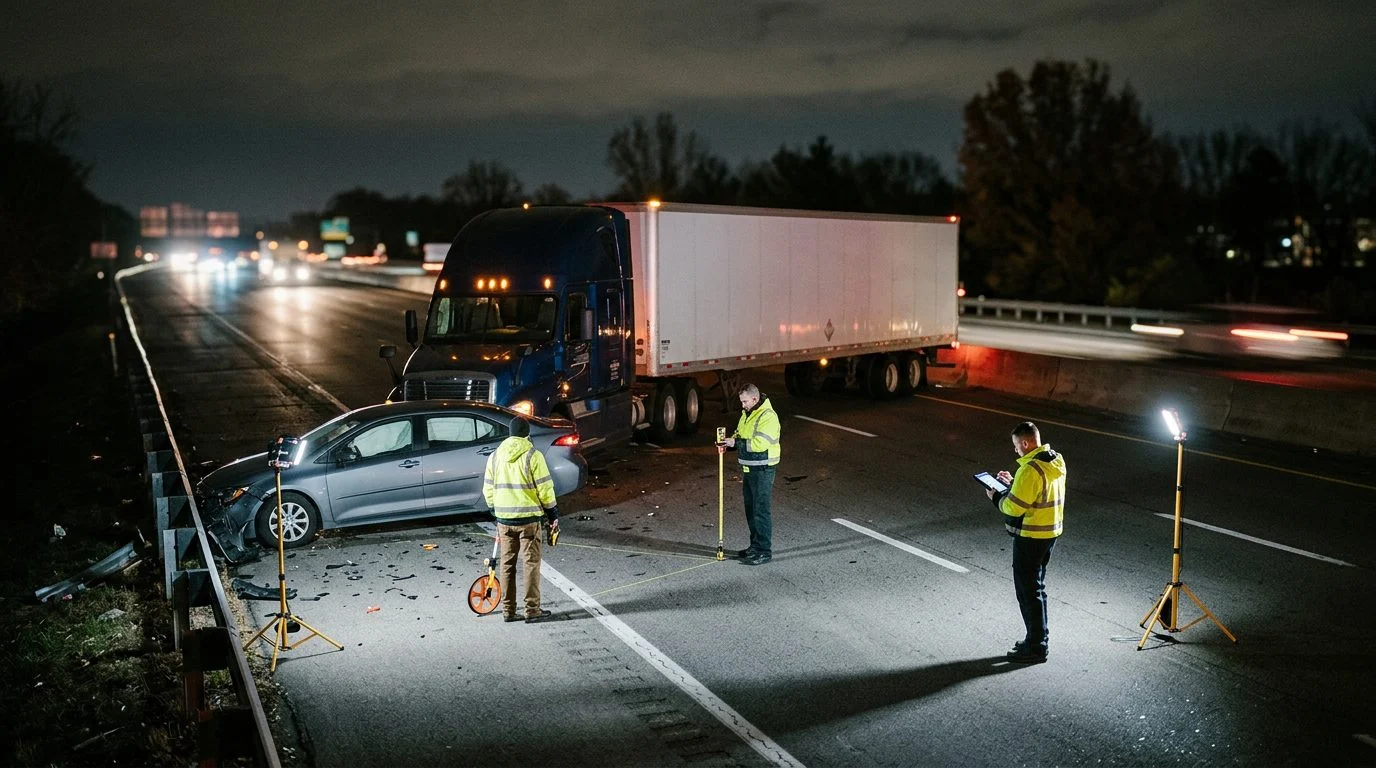
Investigations typically begin with the police report, photographs, witness statements and damage to both vehicles. In a commercial crash, the company’s own records can matter too. These may include delivery schedules, dispatch logs, driver hours and vehicle maintenance files.
Records can be lost or changed over time. Families may wish to ask early that important records be preserved. Federal rules require companies subject to them to keep certain records for minimum periods. After those minimum periods, a company subject to these rules may destroy the records at its management’s discretion, but this does not excuse compliance with any other governmental body’s longer retention requirements (49 C.F.R. § 379.3). Records may be kept electronically if they stay accurate and can be reproduced later (49 C.F.R. § 379.7).
Medical records and the medical examiner’s findings can show how the crash caused the death. Each investigation turns on its own evidence.
What If the Injured Person Was Partly at Fault?
Families often ask whether a relative’s own driving could affect a claim. Virginia follows contributory negligence: if you are found even partly at fault, you may be barred from recovering, with limited exceptions. Talk to a lawyer about your facts.
Who did what in the crash shapes how these rules apply. Facts such as road conditions, speed, signals and what each driver could see often matter.
Fault can also rest with more than one party.
Not sure what your next step is?
Talk it through with Correll Law Firm — we can walk you through how a situation like yours is usually handled and what your options are.

What Usually Happens After a Claim Is Filed?
Most claims move through a set of stages: investigation, filing, exchange of evidence, negotiation and, if needed, trial. During discovery, each side gets information from the other. This stage takes time because records, medical files and witness accounts must be gathered.
Many claims do not go to trial. Timing depends on the facts, the evidence and the court’s schedule. The case timeline in Virginia covers this in more detail.
Families should expect questions about the decedent’s work, household role and family relationships. These answers help show the family’s losses.