
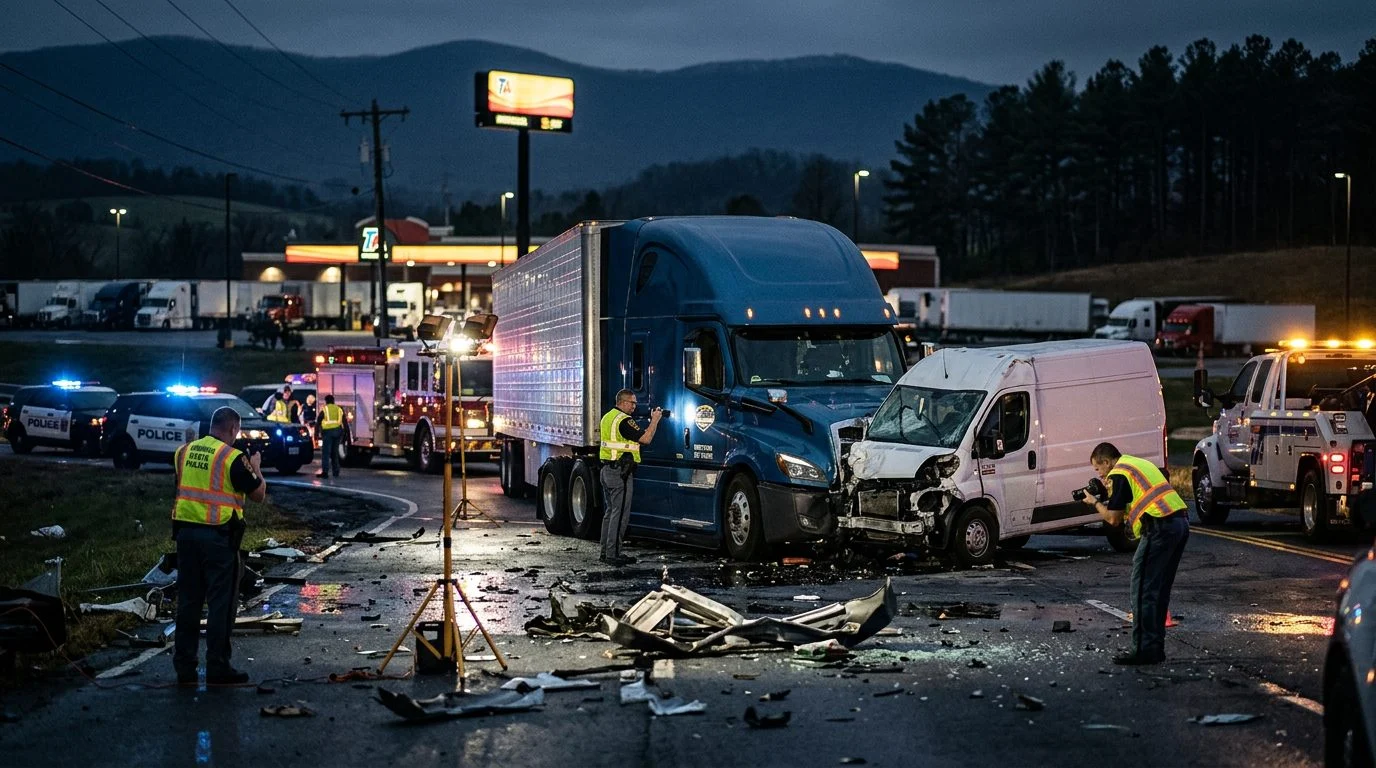
Truck Crashes | Virginia
Reading a Truck's DOT Number After a Crash in Virginia
A short guide to where the number is printed, what it identifies and what it leaves out, from the Shenandoah Valley to Richmond.
Published November 14, 2026
A truck crash can leave you or a family member dealing with injuries, insurance calls, and a pile of paperwork. One detail that often comes up is the DOT number on the truck. This guide explains how to read a DOT number on a truck after a crash in Virginia, and what it can and cannot tell you.
In short, the DOT number identifies the motor carrier that operates the truck. Find the letters “USDOT” followed by a number, record it exactly as shown, and then check it against the police report.
Why the DOT Number Matters After a Truck Crash
A DOT number identifies the motor carrier that operates the truck. It helps show which company may hold records about that vehicle.
The FMCSA explains who must get a USDOT number. The Virginia DMV motor carrier page covers federal motor carrier safety and registration requirements for Virginia.
Because the number is usually painted on the truck, you can record it at the scene or from photos. Writing it down early gives you a fixed starting point.
Keep your expectations realistic. The number is one piece of the evidence picture. By itself, it does not show who caused the crash.
Correll Law Firm handles truck and commercial vehicle crash cases from Winchester and Harrisonburg. For a broader overview, see commercial vehicle accidents in Virginia.
Not sure what your next step is?
Talk it through with Correll Law Firm — we can walk you through how a situation like yours is usually handled and what your options are.
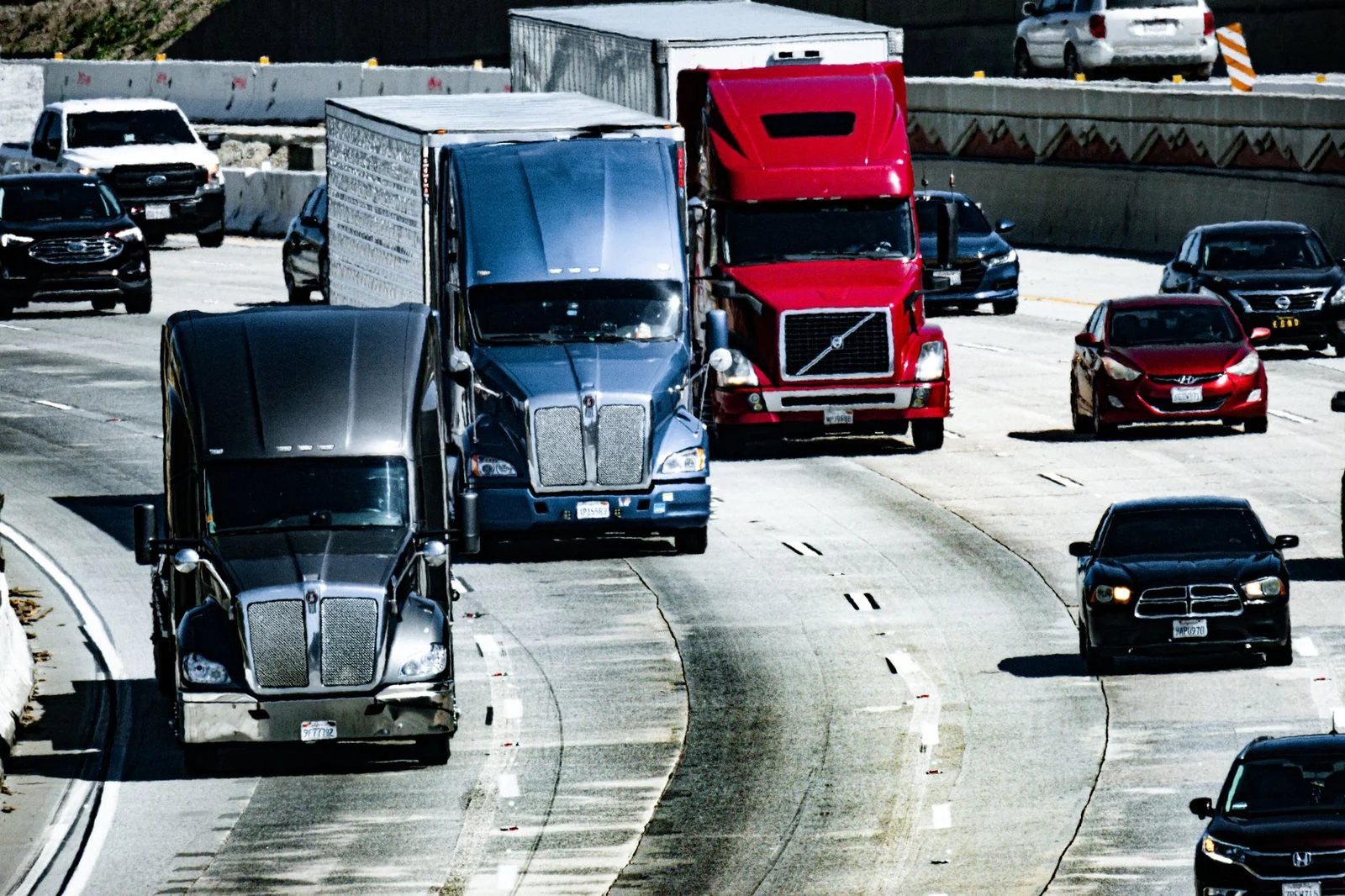
Where to Find the DOT Number on a Commercial Truck
Look for the number on the outside of the cab, and on the sides or rear of any trailer or box truck. It usually appears with the letters “USDOT” in front of it.
Federal rules require self-propelled commercial vehicles to carry specified markings. Other identifying information may also appear if it does not conflict with the required marking, under 49 C.F.R. § 390.21T. So a company name or another number may sit near the DOT number.
Read these markings together. A brand on the door may not match the motor carrier’s legal name.
Photograph each marking. Take a wide shot of the whole vehicle and a close-up of each marking. Include any damaged or dirty areas that cover the lettering. Crashes can smear mud, paint, or road grime over the numbers. Write down what you can read and what you cannot. A partial number with a note is more useful than a guess.
What the Number Identifies and What It Does Not
The DOT number identifies the carrier. The carrier may be different from the truck’s owner, the leasing company, or the driver.
Federal rules recognize that a carrier may run a truck it does not own. For such a vehicle, the carrier’s records must name the person who furnished it, under 49 C.F.R. § 396.3. Under 49 C.F.R. § 390.11, the motor carrier must also require drivers to observe the duties and prohibitions that part 325 of subchapter A or this subchapter places on them.
The number does not show who was driving. Driver duty records are separate. The number leads you to the carrier, and the carrier’s records answer the rest.
Compare the carrier name on the truck with the name on the police report and any driver paperwork you see. If the names match, you have confirmed the parties. If they do not, write down the difference. Treat the DOT number as a starting point for better questions, not as an answer.
What to Record at the Scene
Write down the DOT number and other vehicle details as soon as it is safe to do so. Virginia requires a driver involved in a crash with injury or death to stop and report it to police immediately (Va. Code §§ 46.2-371, 46.2-894). The full text is at Va. Code § 46.2-371 and Va. Code § 46.2-894.
Once you are safe, record these details:
- The DOT number, carrier name, and any other markings
- Truck and trailer license plate numbers
- The driver’s name, license number, and insurance details exchanged
- The time, exact location, and direction of travel
- Names and addresses of witnesses
- The investigating officer’s name, badge number, and report number
Section 46.2-894 requires a driver in an accident that kills or injures a person or damages an attended vehicle or attended property to report name, address, license number, and vehicle registration number to police, the injured person, the other vehicle’s driver or occupant, or the property custodian. Your notes can mirror those items.
Keep photos and notes together in one place. Stick to facts you saw and heard. Avoid debating fault at the roadside.
Connecting the DOT Number to the Police Report
Compare the truck’s DOT number and carrier name with the police crash report. Start with the vehicle section. Then read the narrative and citations, and compare each detail with your scene notes.
Report codes and abbreviations vary. Look for a key or legend with the report. If an entry is unclear, ask the reporting agency what it means.
Initial reports can contain mistakes. If the carrier name or number does not match your notes or photos, write down the difference and the date you noticed it.
Reading a report is not the same as deciding who was at fault. Virginia follows contributory negligence: if you are found even partly at fault, you may be barred from recovering, with limited exceptions. Talk to a lawyer about your facts.
How the Carrier Number Connects to Other Crash Evidence
The carrier’s identity can lead to questions about driver hours, maintenance, and inspections. Those records often matter in truck crash cases.
Under 49 C.F.R. § 395.8, motor carriers subject to the rule must require each driver to record duty status for each 24-hour period, except private motor carriers of passengers (nonbusiness). The record shows the truck’s identification and the carrier’s name. A paper grid is permitted only in the limited cases the regulation lists, such as a vehicle manufactured before model year 2000.
Maintenance is also covered. Under 49 C.F.R. § 396.3, a motor carrier must systematically inspect, repair, and maintain the vehicles it controls. Those records must be kept for set periods. Under the same rule, they are retained for 1 year where the vehicle is housed or maintained, and for 6 months after the vehicle leaves the carrier’s control. Because those periods run, early identification of the carrier helps focus requests.
For how driver hours bear on a crash, see truck driver logbook crash evidence in Virginia. For an example of how maintenance questions arise, see truck brake failure crashes in Virginia.
Records existing does not mean a violation happened. The facts of each crash decide which evidence matters.
Not sure what your next step is?
Talk it through with Correll Law Firm — we can walk you through how a situation like yours is usually handled and what your options are.

Timing and Special Situations to Keep in Mind
Timing is one of the first things to check after a crash. Virginia generally allows two years from the date of injury to file a personal injury lawsuit (Va. Code § 8.01-243(A)); the clock runs from the date of injury, not the date of discovery, with narrow exceptions. The statute is at Va. Code § 8.01-243.
Some claims carry notice requirements that run out sooner. If a claim for negligence is brought against a county, city, or town, Va. Code § 15.2-209 requires a written statement of the claim, including the time and place of the injury, within six months after the claim accrued, or the claim is forever barred, with narrow exceptions. Va. Code § 15.2-209 reads: “Failure to provide such statement shall not bar a claim against any county, city, or town, provided that the attorney, chief executive, or mayor of such locality, or any insurer or entity providing coverage or indemnification of the claim, had actual knowledge of the claim, which includes the nature of the claim and the time and place at which the injury is alleged to have occurred, within six months after such cause of action accrued.” The statement is filed with the county, city, or town attorney, or with its chief executive or mayor.
The same recording steps apply to crashes with delivery vans, pedestrians, or bicyclists. For pedestrian-specific context, see pedestrian and delivery van crashes in Virginia.
Frequently asked questions
Where is the DOT number on a truck?
Look on the outside of the cab and on the sides or rear of any trailer or box. It usually appears after the letters “USDOT.”
Does the DOT number show who was driving?
No. It identifies the carrier. Driver duty status records are separate.
Does the DOT number prove who caused the crash?
No. It identifies the carrier and leads to records that may help answer questions about the crash.