
Truck Accidents | Henrico County, Virginia
Hurt in a Dump Truck Crash in Henrico County? Start With the Right Next Steps
Heavy dump trucks share Henrico's roads with everyday drivers. This plain-language guide covers the first steps after a crash and the questions families ask most.
Published November 18, 2026
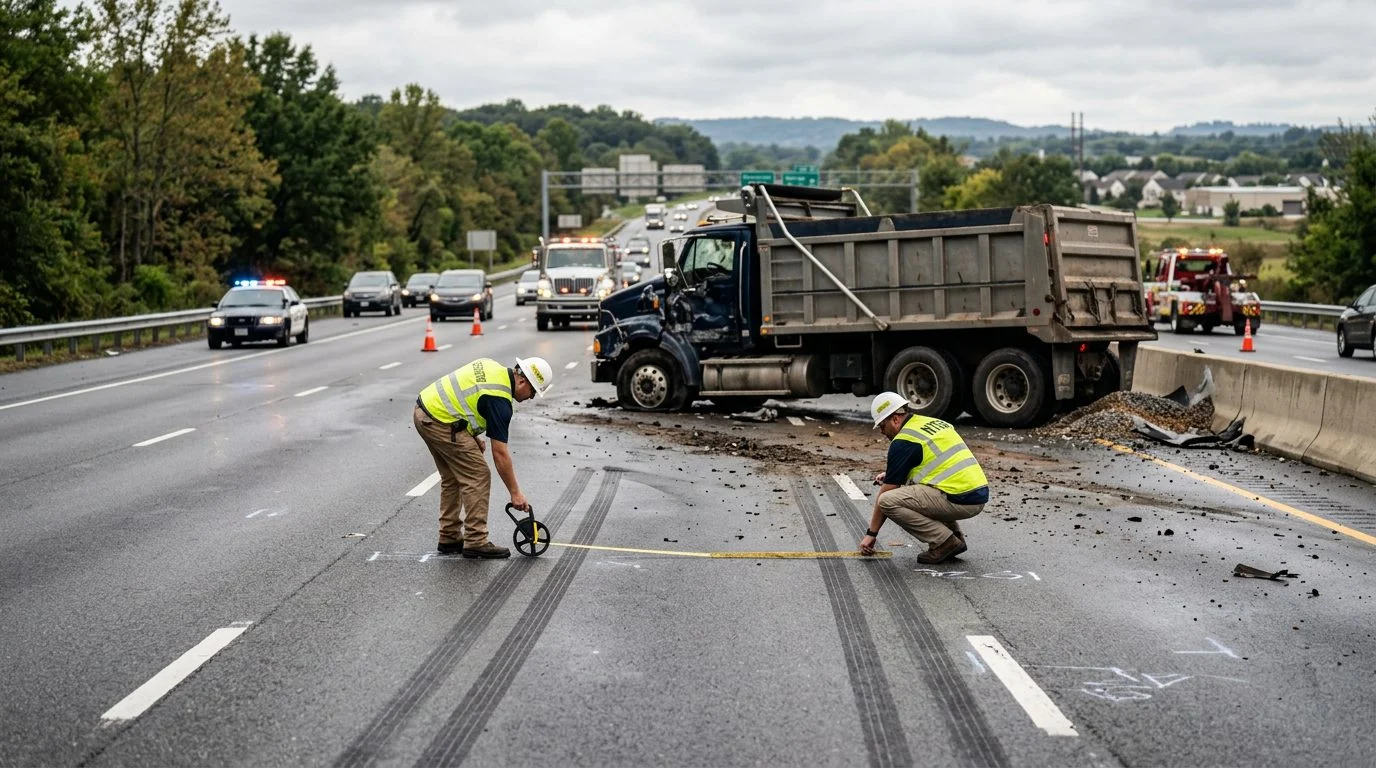
A dump truck crash can turn a normal day into a medical and financial crisis in seconds. If you were hurt by one in Henrico County, you may be asking who is responsible and what to do first. A dump truck accident claim can involve the driver, the hauling company, the truck’s owner, or a contractor on the job, and Virginia sets firm time limits for acting.
What a Dump Truck Accident Claim Involves
A dump truck accident claim seeks compensation for a person hurt by a heavy hauling truck, or for the family of someone killed in one. These crashes often look different from a typical car wreck.
Common dump truck crashes include:
- A truck that tips or loses its load onto the road
- A collision with a passenger car, motorcycle or pickup
- A strike involving a pedestrian or cyclist near a job site
- A crash caused by a shifted or overloaded load
Dump trucks usually belong to a company, a contractor or a government fleet. The driver may work for one party, the truck may be owned by another, and the job may be run by a third. That mix means more than one party may share responsibility. Commercial crashes also tend to involve large insurance policies, company records and fast-moving evidence. For a broader overview, read the commercial vehicle accidents guide.
If you were hurt by one in Henrico County, you may be asking who is responsible and what to do first. Talk it through with Correll Law Firm — we can walk you through how a situation like yours is usually handled and what your options are.
What the Firm’s Dump Truck Accident Help Covers
The firm’s help covers finding every party who may be responsible, gathering crash evidence, and handling contact with insurance companies. The firm focuses on car and truck crashes, commercial vehicle accidents, catastrophic injuries, traumatic brain injury, spinal cord injury and wrongful death.
In a dump truck matter, that work often includes:
- Identifying the driver, the hauling or trucking company, the vehicle owner and any contractor on the job
- Reviewing the crash scene, photos, vehicle damage and crash reports
- Organizing medical records that connect treatment to the crash
- Explaining recorded statements and written requests from adjusters before anyone responds
Serious injuries, such as traumatic brain injury and spinal cord injury, may need ongoing care. The firm’s work on those claims focuses on tying the medical picture to the crash. For how claims against a driver and company are built, see the driver and trucking company claim guide.
How the Claim Process Typically Works
Most dump truck claims move through five stages: medical care, evidence, investigation, a written demand, and a lawsuit if needed. Each stage builds on the one before it.
- Medical care and records. Keep every appointment and keep copies of all treatment records. Those records connect injuries to the crash.
- Evidence preservation. Crash reports, photos, dash camera footage, driver logs, maintenance records, load records and witness names can be lost or overwritten. Requests made early help protect them.
- Demand and negotiation. Many claims start with a written demand to the insurer. Negotiation can take a while, and the injured person decides how to respond to any offer.
- Lawsuit when needed. Some claims settle without a lawsuit. Others need one. The timeline depends on the facts of each crash.
Insurers often contact injured people within days of a crash. The adjuster guide explains common questions to expect from those calls.
Reporting the Crash and Virginia Deadlines
Virginia requires a driver in a crash with injury or death to stop and report it right away. The rule is stated this way: Virginia requires a driver involved in a crash with injury or death to stop and report it to police immediately (Va. Code §§ 46.2-371, 46.2-894).
The two-year period is a different rule. It is the deadline to file a lawsuit, not the deadline to report a crash. The lawsuit rule is stated this way: Virginia generally allows two years from the date of injury to file a personal injury lawsuit (Va. Code § 8.01-243(A)); the clock runs from the date of injury, not the date of discovery, with narrow exceptions.
Some claims carry shorter notice rules. Early review matters for that reason.
Fault, Insurance Issues, and Punitive Damages
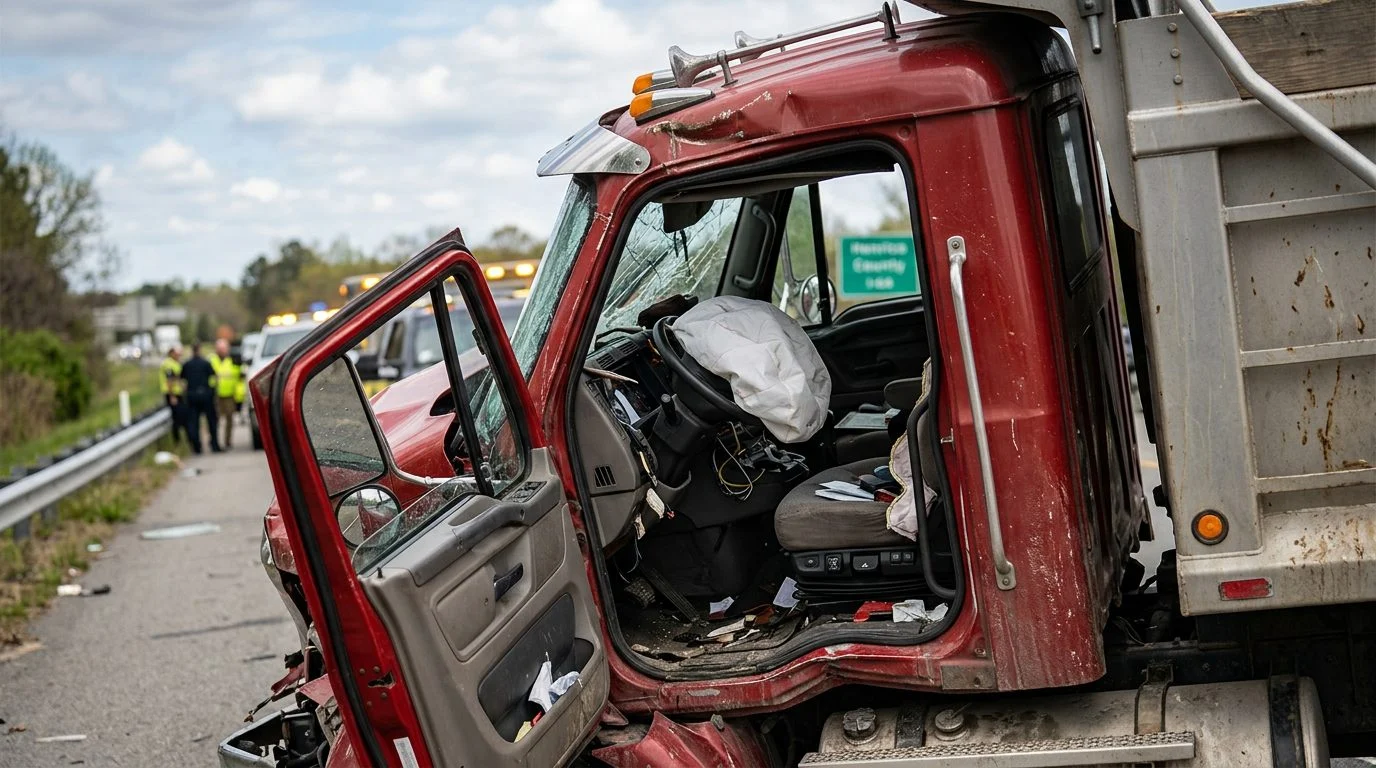
Fault is often disputed after a dump truck crash, and that dispute can decide a claim. Virginia’s partial-fault rule states: Virginia follows contributory negligence: if you are found even partly at fault, you may be barred from recovering, with limited exceptions (Williams v. Harrison, 255 Va. 272 (1998)). Talk to a lawyer about your facts.
Punitive damages are a separate question. Under Va. Code § 8.01-38.1, for actions accruing on or after July 1, 1988, the total punitive damages awarded against all defendants found to be liable are determined by the trier of fact; in no event may that total exceed $350,000; the jury is not advised of this limit; and if a jury returns a verdict above the maximum, the judge reduces the award to the maximum amount provided by the section (Va. Code § 8.01-38.1). Virginia allows punitive damages for actual malice, or for willful or wanton conduct or recklessness showing a conscious disregard for the safety of others, capped at $350,000 (Va. Code § 8.01-38.1).
Wrongful Death After a Dump Truck Crash
When a dump truck crash causes a death, the family does not file the lawsuit themselves. The filing rule is stated this way: A Virginia wrongful death action is filed by the decedent’s personal representative within two years of the death (Va. Code §§ 8.01-50(C), 8.01-244(B)), on behalf of the family members the statute protects.
Virginia determines who shares under Va. Code § 8.01-53, which lists beneficiaries in priority classes such as a surviving spouse, children and, in certain cases, parents.
The damages rule is stated this way: Virginia wrongful death damages cover the family’s sorrow, mental anguish and loss of the decedent’s companionship, guidance and care; lost income and services; medical expenses from the injury; funeral expenses; and, for willful or wanton conduct, punitive damages (Va. Code § 8.01-52).
Not sure what your next step is?
Talk it through with Correll Law Firm — we can walk you through how a situation like yours is usually handled and what your options are.
Why Henrico County Families Work With the Firm
The firm has offices in Winchester and Harrisonburg. It serves clients in Richmond and Henrico County from those offices, and it represents people across the Shenandoah Valley.
Families often come to the firm after a crash has already upended their work and routines. The firm explains each step of the process in plain language. It also reviews how each party’s role may affect the claim. For readers comparing regional crash types, the tanker truck crash guide covers another common commercial risk.
You can review the county’s civil case filing guidance for how that process works.
Frequently Asked Questions About Dump Truck Crashes
What should I do right after a dump truck crash in Henrico County?
Get medical care first. Report the crash to police as Virginia requires, and write down what you remember while it is fresh.
Can the trucking company’s insurer contact me directly?
Yes, an insurer may contact you. You may wish to speak with a lawyer before giving a recorded statement.
What might I weigh before responding to an insurer’s early offer?
Does the firm handle wrongful death claims from dump truck crashes?
Yes, the firm handles wrongful death matters. The filing rule is covered above.
Can the firm help if the crash happened outside Henrico County?
The firm represents people across the Shenandoah Valley and the Richmond area. Next steps depend on the facts of each crash.