
Truck Accidents | Virginia
Reading the Number on a Truck After a Crash
For drivers and families across the Shenandoah Valley, Richmond and Henrico County, a few markings on a commercial vehicle can tell a lot about who operates it.
Published November 16, 2026
If a commercial truck was part of your crash, or the crash of someone you love, the number on the truck can be a confusing clue. The DOT number on a truck is its USDOT number, an identifier the Federal Motor Carrier Safety Administration (FMCSA) assigns to a motor carrier.
That number links a truck to a registered company and to that company’s safety records. It is one useful piece of a Virginia truck crash record, but it does not tell the whole story. Here is what it shows, where to look for it, and why it matters later.
What a USDOT Number Is
The USDOT number is a federal identifier that FMCSA gives to a motor carrier. FMCSA’s USDOT guidance explains when a company needs one. Under the federal rule, FMCSA issues the number after it receives and processes the carrier’s identification form, but certain applicants, including some Mexico-domiciled and non-North America-domiciled carriers, must additionally pass a pre-authorization safety audit before being issued a number (49 C.F.R. § 390.19T).
The USDOT number is not the only number a carrier may hold. The federal registration rule lists it alongside MC, MX and freight forwarder numbers as separate identifiers (federal registration rule, 49 C.F.R. § 390.200T). Read the label before you assume which number you are looking at.
Not sure what your next step is?
Talk it through with Correll Law Firm — we can walk you through how a situation like yours is usually handled and what your options are.
Who Needs One, and Can a Truck Run Without One?
Whether a truck needed a USDOT number depends on what the carrier does with it. A new applicant private or exempt for-hire carrier must file Form MCSA-1 with FMCSA to identify its operations (49 C.F.R. § 390.200T).
A missing or unclear number is a fact a crash investigation may note. What that fact means depends on the facts of the crash, including what the truck was doing and who ran it.
Insurance is a separate requirement, but it sits in the same paperwork. Federal rules bar a motor carrier from operating a motor vehicle until it has the minimum financial responsibility in effect (49 C.F.R. § 387.7). Proof of that coverage must be kept at the carrier’s principal place of business.
Where the Number Appears on the Truck
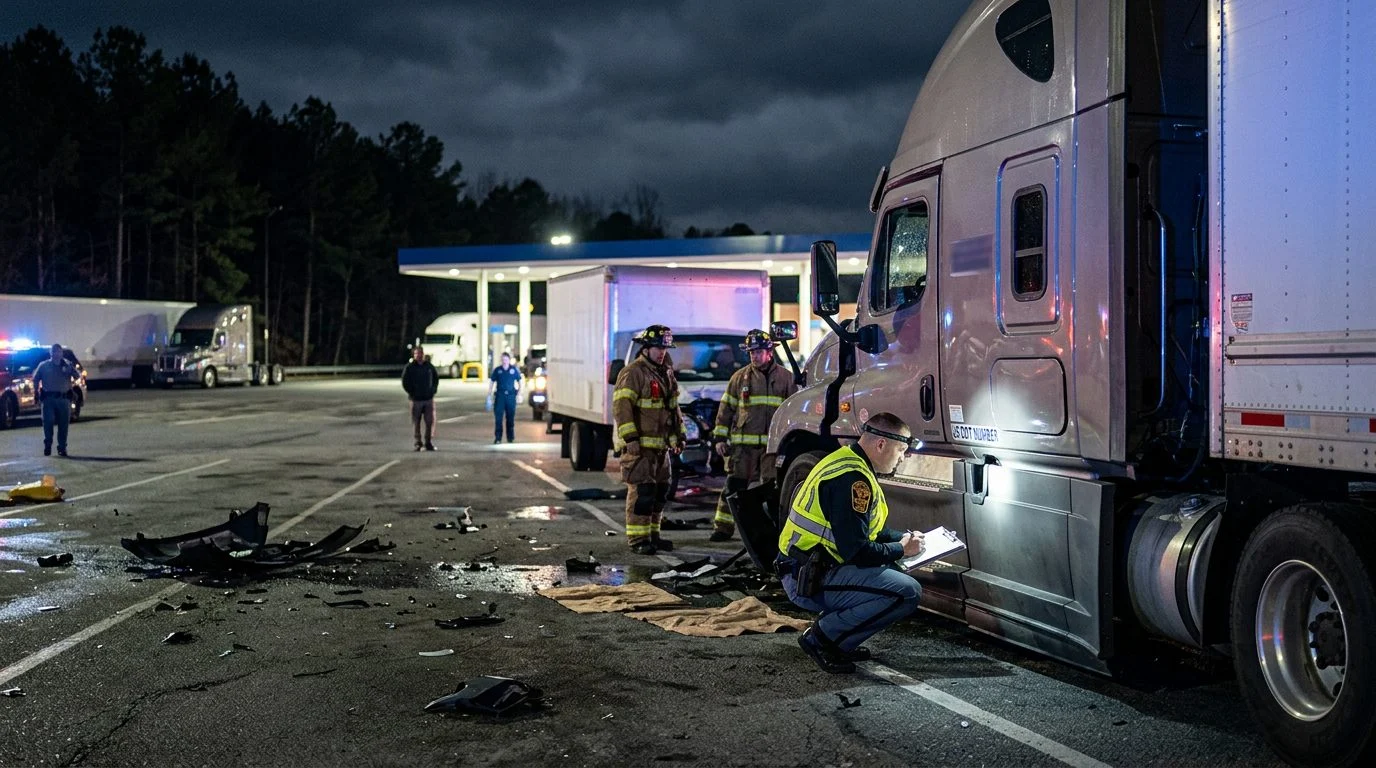
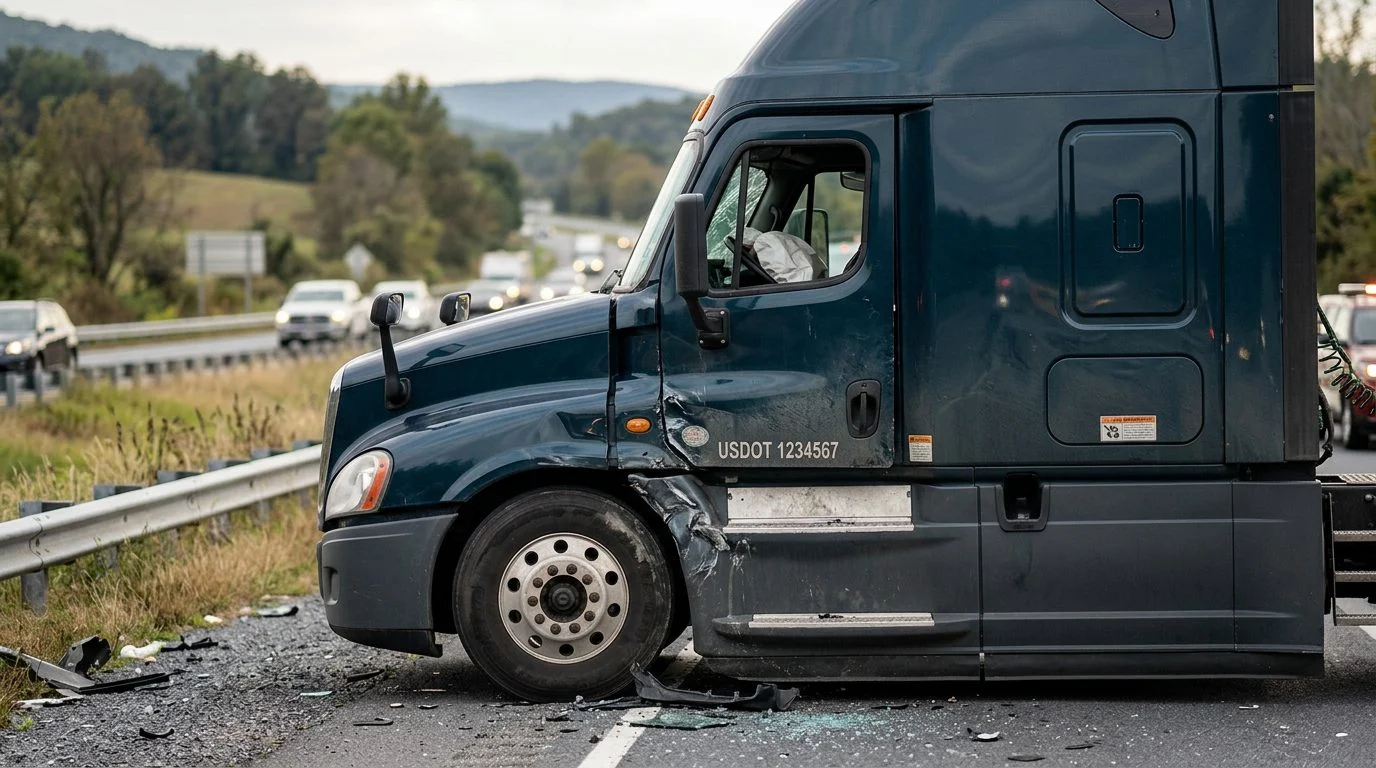
The federal marking rule puts the number on the truck itself. Each self-propelled commercial motor vehicle must display the USDOT number along with the other required information, unless the carrier registers its vehicles in a PRISM-participating State and files all required information with the appropriate State office (49 C.F.R. § 390.19T).
The marking must show the letters “USDOT” in front of the number (49 C.F.R. § 390.21T). Two details matter after a crash. If another person’s name appears on the truck, the operating carrier’s name must be followed by its USDOT details and preceded by the words “operated by.” So “operated by” can signal that a second company ran the truck.
When it is safe, write down the number and the carrier’s name, or take a photo of the door and any paperwork. Keep every document you receive after the crash.
Reading the Carrier Information in Context
The company named by the number may not be the only business tied to the truck. A carrier can lease equipment, and another company can operate a truck, which the “operated by” marking may show. Who owned, leased or ran a truck has to be established from the paperwork, not from the number alone.
FMCSA publishes carrier information through its Safety Measurement System carrier overview. That linked page is one carrier’s overview, and it shows how a registered carrier is listed, including its address and fleet information.
Federal rules also require carriers to make accident records available to FMCSA and authorized investigators (49 C.F.R. § 390.15). A carrier’s FMCSA record is one piece of information. It shows the registration and the carrier’s crash involvement, not who caused a particular crash.
Reporting the Crash and the Virginia Crash Form
Virginia requires a driver involved in a crash with injury or death to stop and report it to police immediately (Va. Code §§ 46.2-371, 46.2-894).
The driver must also help an injured person get medical care when treatment is apparent or requested (Va. Code § 46.2-894). A driver convicted of failing to stop when someone is injured or killed faces a Class 5 felony under that section.
Why the Number Matters for Evidence and Records
The carrier’s identity tells you whose records to ask about. Federal rules require a motor carrier to keep an accident register for three years after each accident (49 C.F.R. § 390.15). The register must contain at least two things. The second is copies of all accident reports required by State or other governmental entities or insurers. It also includes copies of accident reports that state agencies or insurers require.
Duty-status logs must record the city, town or village, with State abbreviation, for each change of duty status; if the change occurs at a location other than a city, town, or village, show the highway number and nearest milepost, the highway number and service plaza, or the highway numbers of the nearest two intersecting roadways, followed by the nearest city, town or village and State abbreviation (49 C.F.R. § 395.8). Federal rules also bar a carrier from making a fraudulent or intentionally false entry in a required record (49 C.F.R. § 390.35).
Because the register has a set keeping period, the timing of a records request can matter.
Virginia generally allows two years from the date of injury to file a personal injury lawsuit (Va. Code § 8.01-243(A)); the clock runs from the date of injury, not the date of discovery, with narrow exceptions. Some claims carry notice requirements that run out sooner.
Not sure what your next step is?
Talk it through with Correll Law Firm — we can walk you through how a situation like yours is usually handled and what your options are.
Partial Fault and What the Crash Record Can Show
A crash report can show how a crash happened, but it does not decide fault on its own. Fault questions often look at the crash report, driver statements and carrier records together.
Virginia follows contributory negligence: if you are found even partly at fault, you may be barred from recovering, with limited exceptions. Talk to a lawyer about your facts.
Key Takeaways
The USDOT number is a federal identifier that ties a truck to a motor carrier and its safety records. Look for it on the truck, check any “operated by” wording, and keep the paperwork you receive. The reporting duty and the two-year lawsuit deadline are separate rules with separate timing. The number is one piece of the crash record, not the whole of it.
Frequently Asked Questions
What is a USDOT number on a truck?
It is a federal identifier that FMCSA issues to a motor carrier. The marking must show the letters “USDOT” in front of the number.
Can you drive a truck without a DOT number?
FMCSA lists when a company needs a USDOT number, and the answer turns on the carrier’s operations. A missing number can be noted in a crash investigation.