
Truck Accidents | Winchester, Harrisonburg and the Shenandoah Valley
Who Can You Hold Responsible After a Truck Crash?
Answers for injured people and families across the Shenandoah Valley, Richmond and Henrico County.
Published November 18, 2026
A truck crash can leave you hurt, worried about bills, and unsure who is responsible. Many people ask one question first: who can you sue?
After a crash involving a commercial truck, the people who can be named in a claim include the person who was behind the wheel, the company that operates the truck, or both. Which of them applies turns on who was driving and who runs the truck. This page explains the role of each party, the deadlines that matter, and the Virginia rules that shape the choice.
The Short Answer: Who Can Be Named After a Truck Crash
A truck crash claim may name the driver, the trucking company, or both in the same lawsuit.
Those facts include who employed or contracted with the driver, who owned and operated the truck, and what each party did before and during the trip. Neither party is named automatically. Each party’s role is looked at on its own facts.
Many people assume the company is the only target, or that the driver is always the one to blame. Neither assumption holds across every crash. A driver can act badly on the road while a company’s decisions also play a part, and both can be named together.
For the broader claim process, read the commercial vehicle accidents guide on this site. This page covers who can be named and the rules that affect that choice. It does not predict how any claim will turn out.
Not sure what your next step is?
Talk it through with Correll Law Firm — we can walk you through how a situation like yours is usually handled and what your options are.
Suing the Truck Driver
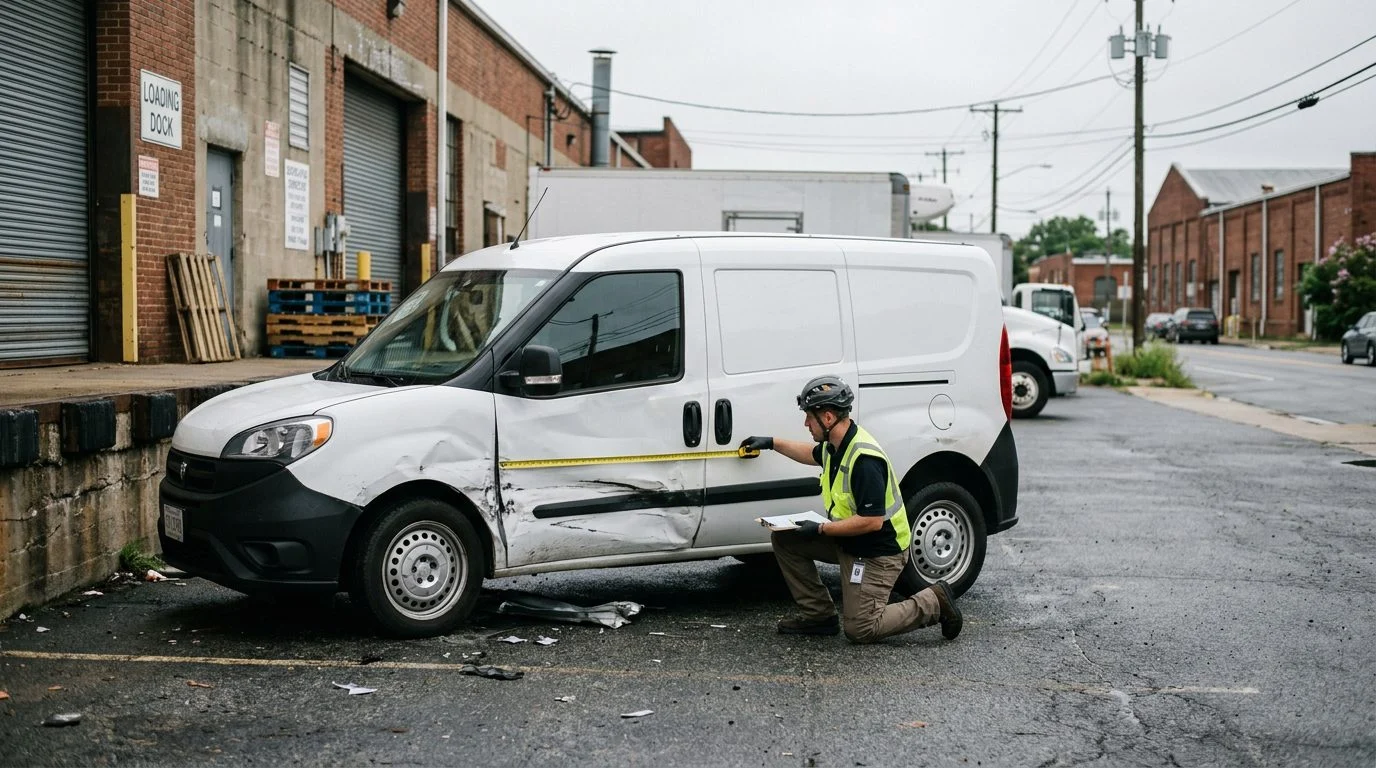
The truck driver can be named when the driver’s own actions caused or added to the crash. The driver is the person behind the wheel, so the driver’s choices are at the center of any claim against that person.
Questions about the driver often include speed for the road conditions, following distance, lane changes, attention, and whether the driver obeyed traffic signals and signs. Each one can be a fact that a crash investigation examines.
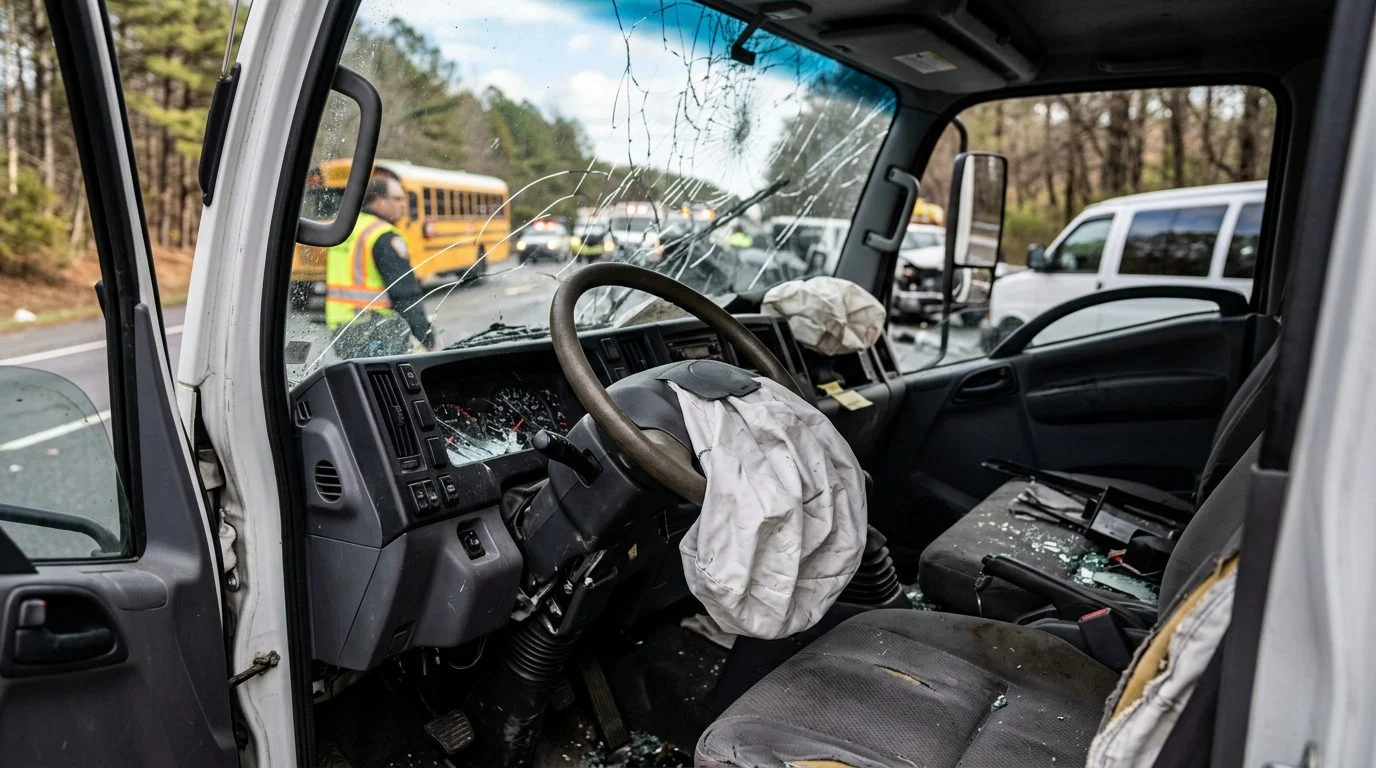
Useful records often include the police crash report, statements from witnesses, and any dash camera footage or vehicle data from the truck. These sources can show what the driver did in the moments before impact.
A claim against the driver can go forward alongside a claim against the company. The two claims can rest on different facts, so each one needs its own evidence.
Suing the Trucking Company
A trucking company may be named when its role in the crash is part of the claim. That role can involve the driver, the truck, or the company’s own decisions.
Federal rules place duties on the motor carrier. One rule says it is the motor carrier’s duty to require drivers to observe the duties and prohibitions that apply to them (49 C.F.R. § 390.11). Other federal rules limit driving hours, and the FMCSA hours of service rules cover them. Drivers must also keep a record of duty status, and false reports are prohibited (49 C.F.R. § 395.8).
Finding the right company can take work. The name on the trailer, the carrier number on the cab, and the driver’s employer may all differ. Sorting that out is an early task.
Company records can matter too. These include driver logs, maintenance files, and dispatch messages. Asking for records early is a practical step to consider.
Naming Both the Driver and the Company in One Claim
Yes, one lawsuit can name both the driver and the company as defendants.
Evidence about the driver’s conduct and about the company’s decisions may point in different directions. A question about driving and a question about maintenance may need different records. This section covers only how a joint claim is structured. It does not assign fault or suggest any amount.
How Long You Have to Act After a Virginia Truck Crash
Reporting a crash and filing a lawsuit are two separate steps with different timing. Virginia requires a driver involved in a crash with injury or death to stop and report it to police immediately (Va. Code §§ 46.2-371, 46.2-894).
The two-year period is the deadline to file a lawsuit, not to report a crash (Va. Code § 8.01-243). Virginia generally allows two years from the date of injury to file a personal injury lawsuit (Va. Code § 8.01-243(A)); the clock runs from the date of injury, not the date of discovery, with narrow exceptions.
Some claims carry notice requirements that run out sooner, so timing should be checked early. For the early steps after a fatal truck crash, read the first weeks guide on this site.
When a Truck Crash Causes a Death: Wrongful Death Claims
When a truck crash causes a death, the case is handled differently. The family does not file it in their own names.
A Virginia wrongful death action is filed by the decedent’s personal representative within two years of the death (Va. Code §§ 8.01-50(C), 8.01-244(B)), on behalf of the family members the statute protects.
Virginia wrongful death damages cover the family’s sorrow, mental anguish and loss of the decedent’s companionship, guidance and care; lost income and services; medical expenses from the injury; funeral expenses; and, for willful or wanton conduct, punitive damages (Va. Code § 8.01-52).
The statute lists these categories, but an award is not limited to them, and the jury or the court may award such damages as seem fair and just (Va. Code § 8.01-52).
Not sure what your next step is?
Talk it through with Correll Law Firm — we can walk you through how a situation like yours is usually handled and what your options are.
Reckless Driving, Willful Conduct and Punitive Damages
Punitive damages are available only when the conduct meets a specific legal standard.
Virginia allows punitive damages for actual malice, or for willful or wanton conduct or recklessness showing a conscious disregard for the safety of others, capped at $350,000 (Va. Code § 8.01-38.1).
Facts such as excessive speed in poor conditions or ignoring a known hazard may bear on whether this standard is met.
If You May Be Partly at Fault
Partial fault can affect recovery in Virginia. Virginia follows contributory negligence: if you are found even partly at fault, you may be barred from recovering, with limited exceptions. Talk to a lawyer about your facts.
Crash reports, witness statements and physical evidence are where fault questions are usually examined.
Talking to the Trucking Company’s Insurance Adjuster
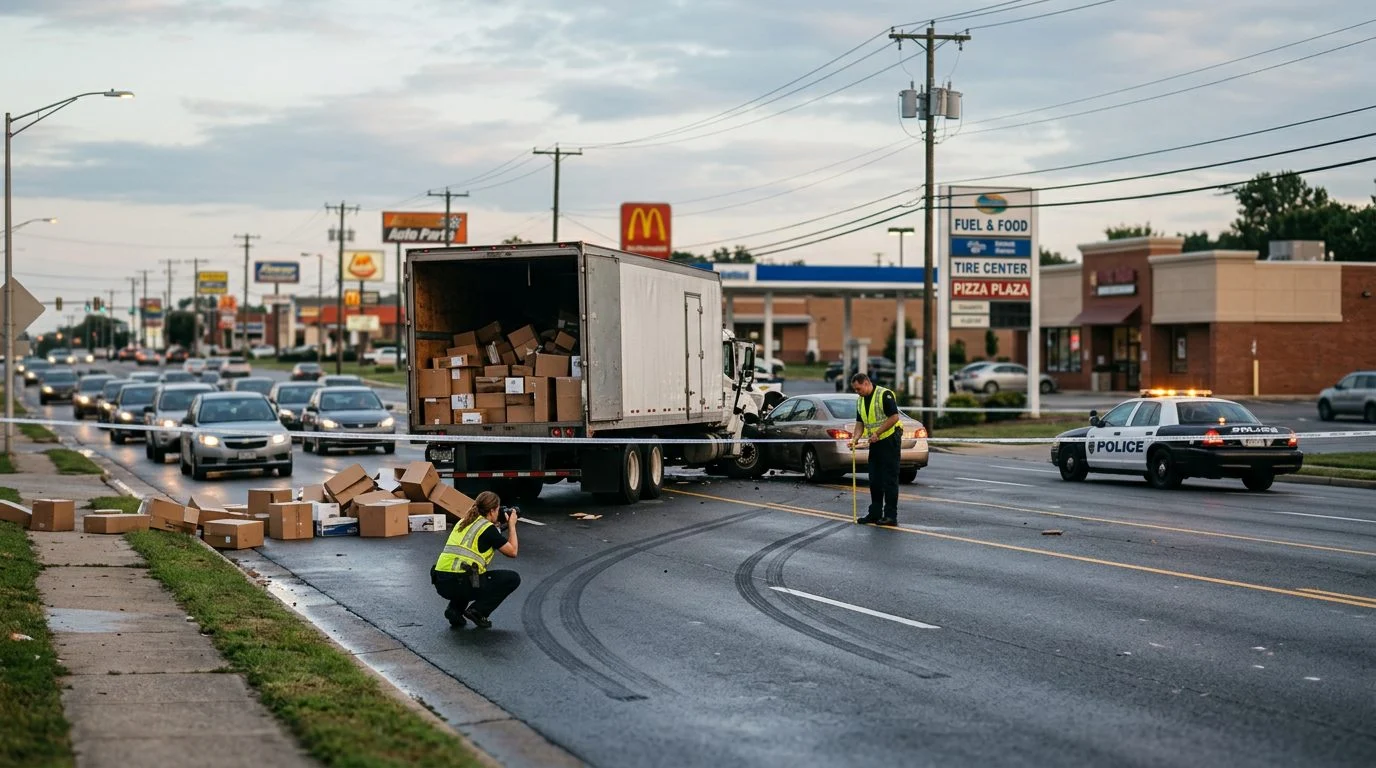
The trucking company’s insurer may contact the injured person or family early, sometimes before the full extent of injuries is known. A claim with an insurer is a separate step from a lawsuit.
Adjusters may ask for recorded statements. Ask what is being recorded before you agree. Stick to facts you know firsthand, and avoid guessing about speed, fault or medical outcomes. Read any written statement closely before you sign it.
Keep medical records, receipts, photos, and a written log of symptoms and missed work. Those records help show what the crash has cost you and your family.
For a fuller look at what adjusters ask and why, read the trucking insurance adjuster page on this site.