
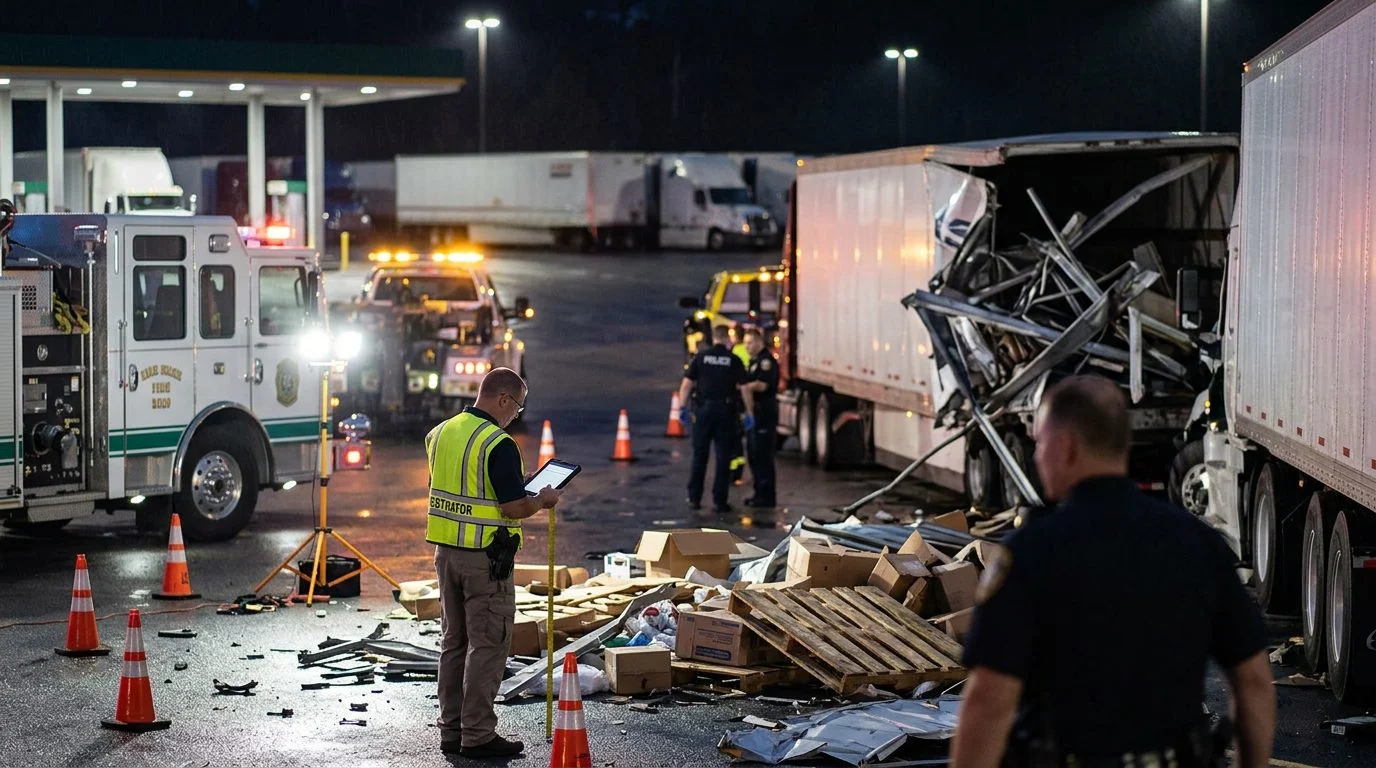
Wrongful Death | Commercial Vehicle Crashes | Winchester, Harrisonburg and the Shenandoah Valley
After a Fatal Truck Crash, Your Family Deserves Clear Answers
A loss on a commercial road brings grief, paperwork and hard decisions at the same time. Here is a calmer way to see what comes next.
Published November 20, 2026
After a fatal truck crash, a family may face a stack of papers, requests and deadlines while still grieving. The short answer is to keep the police and crash records, scene and witness details, medical examiner and hospital records, funeral receipts, and a dated log of every request. This guide explains each item and why it helps to gather it early.
What This Guide Covers and Why Records Matter Early
The first weeks after a fatal crash bring calls from police, medical examiners, funeral homes and insurers, often all at once. Records are harder to recover later, so writing down what exists now helps. Federal rules let trucking companies destroy certain records after minimum retention periods, so early written requests matter (49 C.F.R. § 379.3).
This page is general education. It does not summarize any one crash, and each claim depends on its own facts. For the wider picture, read the firm’s commercial vehicle accidents guide for Virginia.
The firm handles truck and commercial vehicle accident claims in Virginia. Its offices are in Winchester and Harrisonburg. The sections below cover the police report, scene and witness details, medical and death records, funeral and expense records, and the legal items a family may need to understand.
If your family is facing these papers and deadlines after a loss, you do not have to sort through them alone. The firm is available to talk about your situation. Talk it through with Correll Law Firm — we can walk you through how a situation like yours is usually handled and what your options are.

Was the Crash Reported to Police?
The first record to confirm is whether police were called to the scene. Virginia law places a clear duty on the driver.
Virginia requires a driver involved in a crash with injury or death to stop and report it to police immediately (Va. Code §§ 46.2-371, 46.2-894).
The responding agency may be the State Police or a local police or sheriff’s office. Write down the agency name, the officer’s name, and the badge or report number. Note the date and time of every call or visit.
A reporting duty is not the same as a lawsuit deadline. The two-year period discussed later applies to filing a lawsuit, not to reporting a crash. If you cannot find out which agency responded, write down that question and the date you asked it.
Keeping the Official Crash Report and Police Records
A family can ask the responding agency for a copy of the crash report. Making the request in writing creates a clear record of when it was asked for.
A crash report usually lists the date, the location, the vehicles, the drivers and the officer’s notes. It may also include diagrams. What a report shows depends on what the officer recorded, so compare each version when it arrives.
Keep every version you receive. If the agency sends an updated report, keep the earlier copy too. Store citations, tickets, letters and emails about the crash in the same place.
Ask the agency whether photographs or diagrams are part of its file, and how those items can be requested. Start a dated log. Record each request, the date it was sent, the person you spoke with, and what that person told you. A simple log makes follow-up easier.
Who Can Act for the Family After a Death
In Virginia, a wrongful death case is brought by one person, not by each relative. The personal representative brings the action.
A Virginia wrongful death action is filed by the decedent’s personal representative within two years of the death (Va. Code §§ 8.01-50(C), 8.01-244(B)), on behalf of the family members the statute protects.
Virginia law also sets which family members share in any recovery, and in what order (Va. Code § 8.01-53). Relationship records therefore matter.
Keep the death certificate and any paper showing who has been appointed as personal representative. Write a list of surviving relatives and how each is related to the person who died. If no appointment has been made yet, note that and the date.
Scene, Vehicle and Witness Information to Keep
Scene details and witness contact information are hard to recover later. Write them down while memories are fresh.
Keep photos and video of the scene, the roadway and both vehicles, with the date each was taken. Save any texts, emails or social media posts about the crash in the same folder. Ask people who saw the crash for their names and contact details, and note where each one was standing.
Ask the carrier and the driver for identifying information in writing. For a commercial truck, that usually includes the company name and, if it is shown on the vehicle, the USDOT number. Keep any insurance information the other side provides, and note the date you received it.
Ask the responding agency and any towing or storage company where the vehicles went. Keep a written record of each answer. You can also ask in writing that the vehicles and their parts be kept intact.
Medical Examiner, Coroner, Hospital and Funeral Records
Medical and death records document the injuries and the cause of death. They belong near the top of the folder.
Keep the death certificate and any medical examiner or coroner report the family receives. Keep hospital and emergency records from the time of injury until death, along with ambulance or air transport records. Keep discharge papers and any summary the family was given.
Funeral and burial records matter too. Keep itemized invoices from the funeral home, receipts for burial and memorial services, and a copy of any signed agreement. Each receipt should show a date and the provider’s name.
Put one binder or digital folder together with a copy of every record. Note where each original is kept. Federal rules for trucking company records allow copies that are legible and accurately reflect the information required in the record or document to be used in place of originals (49 C.F.R. § 390.31), so clear, accurate copies in the family’s own file are worth making.
Not sure what your next step is?
Talk it through with Correll Law Firm — we can walk you through how a situation like yours is usually handled and what your options are.
Time Limits and Notice Issues to Understand Early
The lawsuit deadline is one of the dates a family most needs to track. Write it down early.
Virginia generally allows two years from the date of injury to file a personal injury lawsuit (Va. Code § 8.01-243(A)); the clock runs from the date of injury, not the date of discovery, with narrow exceptions.
The injury and the death can fall on different dates, so track both separately.
Some claims carry notice requirements that run out sooner. Keep the date of every notice and proof of delivery.
What Wrongful Death Damages May Cover and When Punitive Damages Apply
Virginia law lists the categories a wrongful death award may include. Virginia wrongful death damages cover the family’s sorrow, mental anguish and loss of the decedent’s companionship, guidance and care; lost income and services; medical expenses from the injury; funeral expenses; and, for willful or wanton conduct, punitive damages (Va. Code § 8.01-52).
Losses the injured person could have pursued before dying fall under a separate survival claim (Va. Code § 8.01-25).
For lost income and services, keep pay records, tax returns, and a written list of household services the person provided, such as driving family members or handling repairs.
Punitive damages depend on the defendant’s conduct, not only on the crash. Virginia allows punitive damages for actual malice, or for willful or wanton conduct or recklessness showing a conscious disregard for the safety of others, capped at $350,000 (Va. Code § 8.01-38.1). Before any such award, the jury must find that the conduct showed actual malice, or was willful or wanton or reckless in a way that showed a conscious disregard for the safety of others. Under Va. Code § 8.01-38.1, the trier of fact determines the total amount awarded for punitive damages.
Fault is also part of the picture. Virginia follows contributory negligence: if you are found even partly at fault, you may be barred from recovering, with limited exceptions. Talk to a lawyer about your facts.
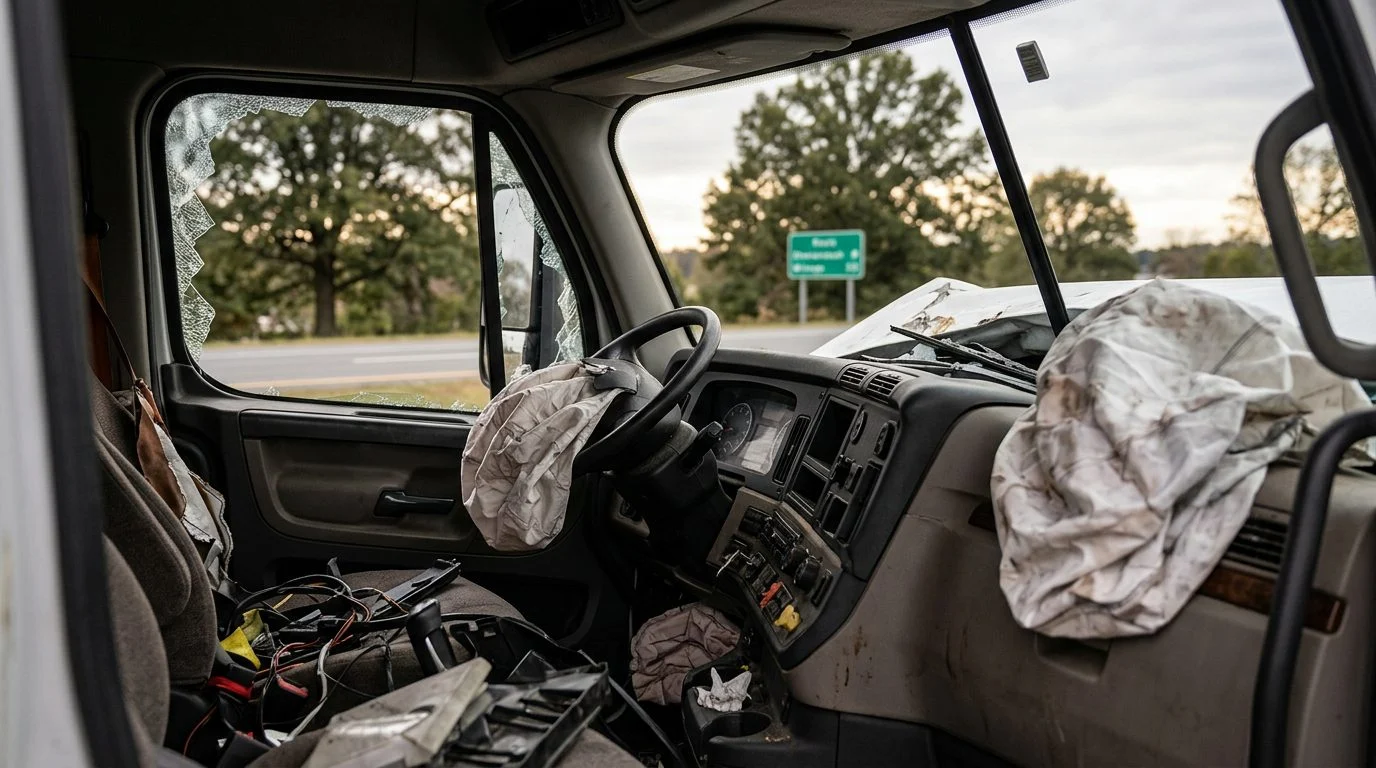
Keeping the File Organized in the Months Ahead
One organized folder makes every record easier to find when the family needs it. Use separate sections for police records, scene and witness information, medical and coroner records, funeral and expense receipts, and correspondence with insurers or agencies.
Save a digital copy of every document. Record the date each item was received, and keep it next to the original.
Keep the deadlines written at the front of the file. Review the file as new records arrive, and check each new item against the dates you have noted.
Which record should a family get first?
Start with the crash report and the death certificate. They anchor the rest of the file.
Should a family keep digital copies of records?
Yes. Keep a scan of every paper with the date it arrived, stored alongside the originals.