
Wrongful Death | Truck Accidents | Virginia
Questions Your Family May Be Asking After a Fatal Truck Crash
Grief, paperwork and hard decisions often arrive at the same time. Here is a clear guide to the questions Virginia families raise most, and where the answers usually begin.
Published November 11, 2026
Losing a loved one in a crash with a commercial truck leaves a family with paperwork, phone calls and hard questions all at once. The questions that matter most after a fatal truck crash in Virginia fall into four groups: medical care, the medical examiner, the police investigation and the truck company’s records.
This page takes those questions in order. It is general information, and the facts of each crash decide which answers matter most for a particular family.
Why the First Questions Matter After a Fatal Truck Crash
Families often receive many documents and conflicting details in the first weeks. A short, written list of questions keeps the picture clear and shows gaps early.
Each office holds different pieces. The hospital keeps medical notes. The police keep the crash report. The medical examiner keeps the findings on cause and manner of death. The truck company keeps its own driving, maintenance and employment files. No single office holds the whole story, so the family has to ask each one.
A common mistake is to assume one office has everything. Another is to wait. Early requests help keep records from getting lost, and they give the family time to read each document before the next step.
Keep the questions in one place. Update them as answers come in, and note which answers are still missing. For the wider picture of how these cases are handled, see commercial vehicle accidents.
Talk with us about your family's questions whenever you're ready, and you do not have to face them alone. Talk it through with Correll Law Firm — we can walk you through how a situation like yours is usually handled and what your options are.

Questions About the Medical Care Your Loved One Received
Start by asking who treated your loved one at each stage of care, in order. Ask about the scene, the ambulance, the emergency department and any later hospital or unit.
Ask for the name of the treating team at each stop, if it is known. Many families find those names are hard to recover later, so write them down as they come up.
Ask which records exist and which facility holds each one. Useful records include emergency medical service run reports, emergency department notes, imaging results, operative reports and intensive care notes. Request each one in writing, and ask how long the facility keeps copies.
Ask whether the care team talked about prognosis, life support decisions or specialist visits. Then ask where those conversations appear in the chart. A family member’s memory is a useful clue, but the written note is what the record shows.
Keep a running timeline of dates, facility names and the clinicians your family spoke with. Put events in the order they happened. A timeline like this helps anyone reviewing the case understand the medical course quickly.
Questions About Injuries and Treatment If Your Loved One Lived for a While
If your loved one lived for days or weeks after the crash, ask what injuries the team found and how they were treated. A longer hospital stay means more records, so ask each facility what it holds.
Ask about brain and spinal injuries directly. Ask what the imaging showed, whether a neurologist or neurosurgeon evaluated the injury and what the team said about function and recovery. The answers can be hard to hear, but they give the family a clear, written account of the injury.
Families often find that spinal injuries are described in detail in the chart. For background on how these injuries are described, see spinal cord injuries.
Ask for discharge summaries and any rehabilitation or palliative care notes. These documents often describe the condition in plain terms. They are usually shorter and easier to read than the full chart, so they are a good place to start.
Questions for the Medical Examiner About Cause of Death
Ask the medical examiner’s office what it has determined about the cause and manner of death. Then ask when a final report is expected.
First ask whether the office has taken jurisdiction of the death. That answer tells the family which office holds the findings and where to look next.
Ask whether an autopsy was performed. Ask whether any toxicology or other lab results are still pending, and when they are expected. Ask how the family can receive a copy of the final report.
Ask the office to explain in plain language what each finding means. Medical terms can be confusing, so a plain-language explanation helps the family follow the report.
Write down the case reference number and the name of the person you spoke with. Keep every written communication from the office in your folder. Ask for important information in writing rather than relying on a phone summary.
Questions About the Police Crash Investigation
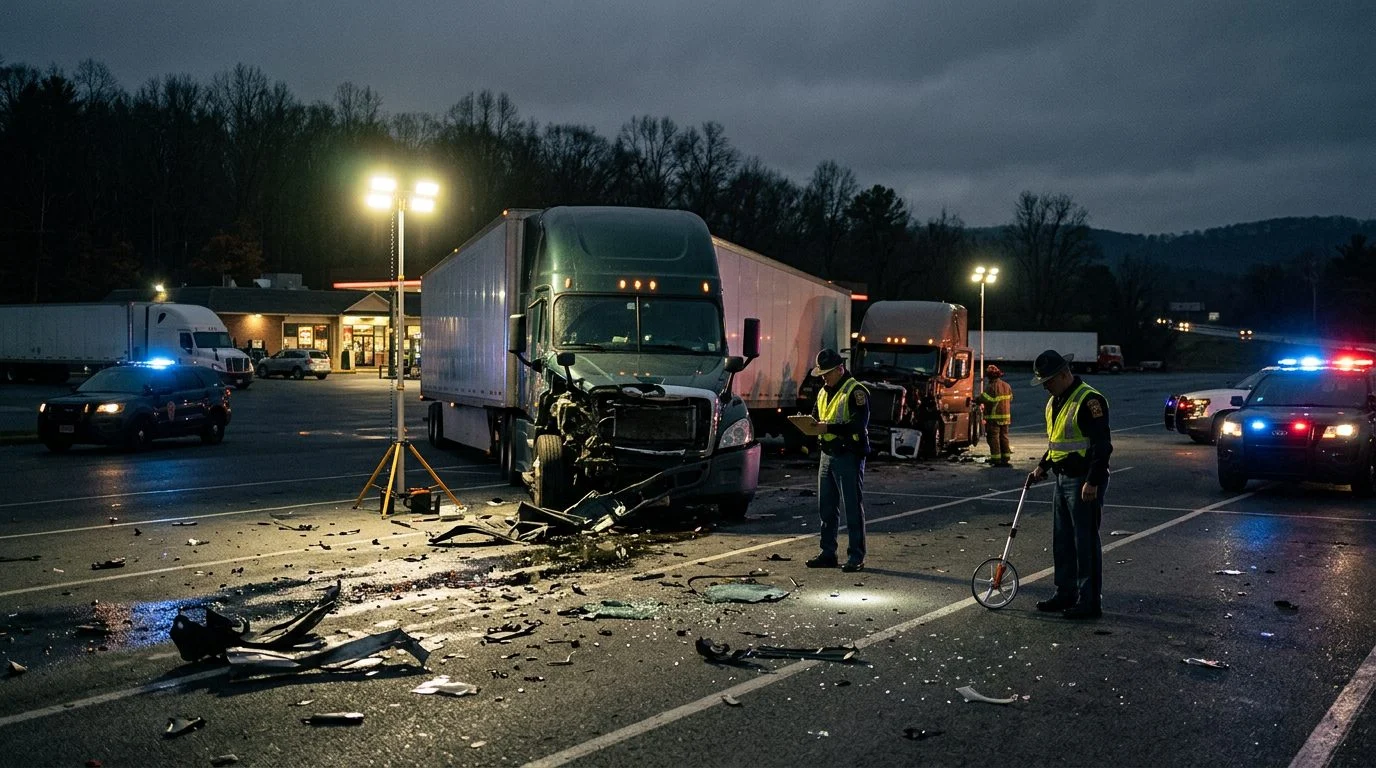
Ask the investigating agency for the case number and the date the crash report will be available. Ask which agency investigated, since the State Police or a local law-enforcement agency may have handled the scene.
Virginia requires a driver involved in a crash with injury or death to stop and report it to police immediately (Va. Code §§ 46.2-371, 46.2-894). The statute text is at Va. Code § 46.2-894.
Ask whether the officer identified witnesses, took photographs, and recorded skid marks, vehicle positions and debris. These details can matter later when the crash is reviewed, so it helps to know what was documented.
Ask whether any citations were issued and whether charges are pending. Ask whether dash camera or traffic camera footage was preserved, since video can be overwritten over time.
The two-year period discussed in a later section is the deadline for a wrongful death action, which the decedent’s personal representative files within two years of the death (Va. Code §§ 8.01-50(C), 8.01-244(B)). It is not a deadline to report a crash, and reporting does not wait for a lawsuit.
Questions About the Commercial Vehicle, the Driver and the Company
Ask who owned the truck, who leased it and who employed the driver. These can be three different companies, and each may hold different records.
Ask what happened to the vehicle after the crash and where it is stored. Ask whether its recording equipment and electronic data have been kept intact.
Ask what records the investigating agency has requested from the driver and the company. These may include trip records, maintenance files, inspection reports and employment files.
Federal rules set some record duties for commercial carriers. After a crash involving loss of human life, the employer must test each surviving driver who performed safety-sensitive functions for alcohol as soon as practicable (49 C.F.R. § 382.303). If an alcohol test is not given within two hours, the employer must keep a record of the reasons. After eight hours, the employer must stop trying.
Carriers must also keep driver records of duty status and supporting documents for not less than six months from receipt (49 C.F.R. § 395.8). Because that period is limited, ask early whether a written request to preserve records has been sent, and by whom.
The Federal Motor Carrier Safety Administration publishes crash facts for large trucks and buses. Ask the company for the paperwork that shows how the truck was leased and maintained, since a written lease must state each party’s responsibilities for items such as fuel, tolls and permits (49 C.F.R. § 376.12).
Not sure what your next step is?
Talk it through with Correll Law Firm — we can walk you through how a situation like yours is usually handled and what your options are.
Understanding Who May Bring a Claim and What Virginia Law Covers
A Virginia wrongful death action is filed by the decedent’s personal representative within two years of the death (Va. Code §§ 8.01-50(C), 8.01-244(B)), on behalf of the family members the statute protects. The statutes are at Va. Code § 8.01-50 and Va. Code § 8.01-244.
Virginia wrongful death damages cover the family’s sorrow, mental anguish and loss of the decedent’s companionship, guidance and care; lost income and services; medical expenses from the injury; funeral expenses; and, for willful or wanton conduct, punitive damages (Va. Code § 8.01-52). The damages statute is at Va. Code § 8.01-52.
Damages are then distributed to a defined class of beneficiaries, beginning with the surviving spouse and the decedent’s children (Va. Code § 8.01-53).
Virginia allows punitive damages for actual malice, or for willful or wanton conduct or recklessness showing a conscious disregard for the safety of others, capped at $350,000 (Va. Code § 8.01-38.1). The cap appears at Va. Code § 8.01-38.1, and the jury is not told about it.
Early answers to the questions above help keep the records that these rules depend on.

Keeping Organized Records for the Weeks Ahead
Keep one folder, paper or digital, for every medical record, bill, police report, medical examiner letter and insurer or company letter. Keep originals in a safe place and work from copies.
Keep a simple log. Record the date, the person or agency contacted, the case or reference number and the answer given. This makes gaps easy to see over time.
Choose one family member as the main contact for each agency. This prevents the same question from being asked twice and keeps answers from getting lost between relatives.
Common Questions
Which records should I ask for first?
Start with the hospital records and the crash report. Then ask the medical examiner for the final report and the company for its trip and maintenance records.
Does a longer hospital stay change the questions?
Yes. A longer stay means more records, including imaging and discharge notes, to request from each facility.
Should I wait to ask for records?
No. Asking early helps, because records can be lost or overwritten over time.