
Commercial Vehicle Accidents | Virginia
Were You Partly at Fault in a Truck Crash? Start With the Facts
A plain-language look at how your own driving can affect a claim after a semi-truck or commercial vehicle crash, and how the firm helps families sort out who did what.
Published November 27, 2026
If you were hurt in a crash with a semi-truck or other commercial vehicle, you may be asking whether your own driving could sink your claim. An injured person whose own negligence (carelessness) helped cause the crash may be unable to recover, even when another driver was more to blame.
This guide explains how partial fault works in a Virginia commercial vehicle accident, why fault gets argued, and what evidence usually shows who did what.
What Partial Fault Means Under Virginia Law
Virginia’s rule is stricter than the split of blame many people expect. Virginia follows contributory negligence: if you are found even partly at fault, you may be barred from recovering, with limited exceptions. Talk to a lawyer about your facts.
Being barred means the claim fails. It doesn’t shrink to a smaller amount. That’s the main point many people miss.
The rule applies to the facts of each crash.
If you were hurt in a commercial vehicle crash and worry that you may share some blame, you don't have to sort it out alone. Talk it through with Correll Law Firm — we can walk you through how a situation like yours is usually handled and what your options are.

Why Fault Gets Disputed in Truck and Commercial Vehicle Crashes
Fault can be disputed in these cases because more parties may be involved than in a typical car crash. The truck driver, the motor carrier that employs the driver, another driver, and sometimes a party responsible for loading or maintenance may each play a part. Each one may point at the others.
Common disputes involve lane changes, following distance, merging, backing, and work zone conditions. Each one turns on what the drivers saw and did in the seconds before impact. Work zone crashes can turn on lane closures, signs and cones, which makes scene details especially important. Arguments about who had the last chance to avoid the crash often come up too.
Insurers may raise shared fault early, before the full picture is clear. That early argument can affect how a claim is valued and whether it moves forward. Early arguments are positions, not findings, and the evidence will test them. Each argument leads back to the same question: what did each driver do, and could the crash have been avoided?
How Fault Is Usually Shown: Evidence That Matters
Fault is usually shown through physical evidence, witness accounts, and records from the vehicles. Start with the duty to report. Virginia requires a driver involved in a crash with injury or death to stop and report it to police immediately (Va. Code §§ 46.2-371, 46.2-894). Under Va. Code § 46.2-371, the driver of any vehicle involved in any accident resulting in injury to or death of any person, or some person acting for him, shall immediately give notice of the accident to a law-enforcement officer, and a willful failure to make the report required in this section is a Class 4 misdemeanor.
The two-year period discussed below is the deadline to file a lawsuit, not the deadline to report a crash (Va. Code § 8.01-243).
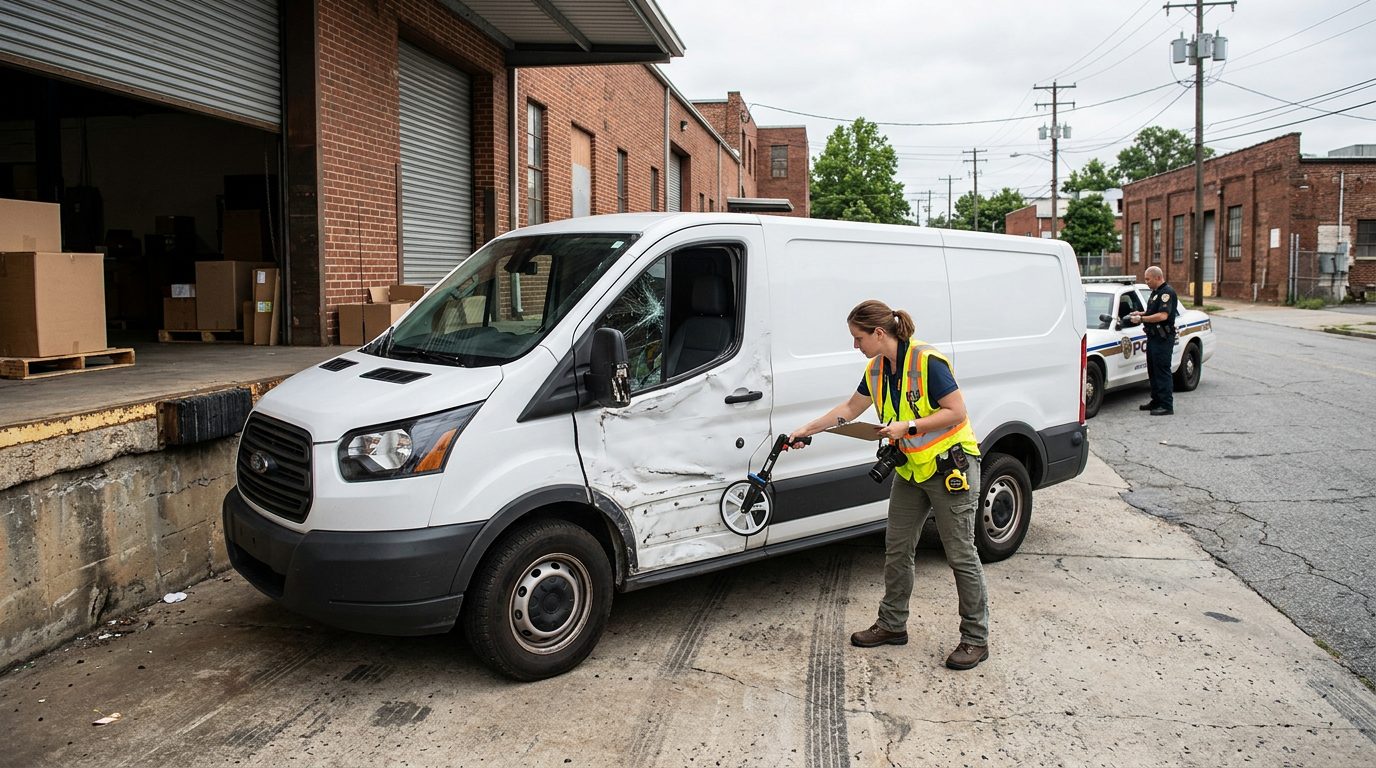
Useful evidence often includes the police report, photographs of both vehicles and the roadway, damage patterns, witness names, and any dashcam or traffic camera footage that exists. Photos taken soon after the crash show positions that memory may not. Medical records also help, because they show when symptoms were first reported.
Commercial vehicles create records that passenger cars usually do not, such as driver duty status logs, inspection reports, and dispatch records. Some are kept only for set periods. Early requests for these records can matter for that reason.
Statements to Insurers and Trucking Companies
An injured person may hear from the at-fault driver’s insurer or the trucking company soon after a crash. Those conversations can be recorded or written down, and the words used can matter later.
A statement may be compared with the police report, photographs, and other evidence. If the description differs from those records, the difference can become part of a shared-fault argument. That can happen even when the difference was an honest mistake, such as a wrong time or the order of two events.
A personal timeline helps. Write down the time, weather, road conditions, where each vehicle was, what you saw and heard, and who was present. Do it while details are fresh, and stick to what you actually know.
Keep any letters, emails, or texts from insurers. Note the date and time of each phone call and who was on the line.
Injuries That Need Careful Documentation
How an injury is documented can matter when fault or cause is disputed. Prompt medical evaluation creates an early record of symptoms and timing, even when injuries feel minor at first.
Describe every symptom to the provider, including ones that seem unrelated, such as dizziness or numbness. Some symptoms appear later, so mention the crash at every visit. Medical providers may ask how the crash happened, so answer accurately and consistently. Keep appointment notes and discharge papers.
For head injuries, see Concussion After a Semi-Truck Crash: What to Do. For joint and soft-tissue injuries, see Ligament Tears After a Semi-Truck Crash. Catastrophic injuries are discussed in the commercial truck catastrophic injury guide.
Time Limits That Still Apply
Virginia generally allows two years from the date of injury to file a personal injury lawsuit (Va. Code § 8.01-243(A)); the clock runs from the date of injury, not the date of discovery, with narrow exceptions. Under Va. Code § 8.01-243, unless that section or another statute provides otherwise, every action for personal injuries, whatever the theory of recovery, shall be brought within two years after the cause of action accrues.
Some claims carry notice requirements that run out sooner. For example, a claim against a county, city, or town for negligence requires a written statement of the claim, including the time and place of injury, filed with the locality’s attorney or with its chief executive or mayor within six months after it accrued, or the claim may be barred unless the locality’s attorney, chief executive, or mayor, or any insurer or entity providing coverage or indemnification of the claim, had actual knowledge of the claim within that period; however, if the claimant was under a disability when the cause of action accrued, the tolling provisions of § 8.01-229 apply (Va. Code § 15.2-209).
Waiting to gather evidence does not stop the clock. Because each claim has its own facts, the time limit for a particular claim should be reviewed against those facts.
Not sure what your next step is?
Talk it through with Correll Law Firm — we can walk you through how a situation like yours is usually handled and what your options are.
Questions to Weigh About Your Own Crash
A short set of questions can help you organize what you know about the crash. Where was each vehicle, and in which lane? What was each driver doing in the seconds before impact? Does the police report match what you remember? Were there witnesses, video, or signs of a sudden stop or lane change?
The facts that show your share of fault are often the same facts that show what the other driver did. The full sequence of events matters more than any single moment. How partial fault applies depends on the facts of each crash.