
Truck & Commercial Vehicle Crashes | Winchester, Harrisonburg and Virginia
Partly at Fault in a Truck Crash? Learn Where You Stand
Fault questions after a commercial vehicle crash can feel overwhelming. Here is how Virginia's rules work and what shapes the answer in your case.
Published November 26, 2026
If you were partly at fault in a truck accident in Virginia, you may worry that some of the blame could fall on you. That worry is common, and it deserves a straight answer. Virginia’s shared-fault rule is strict, so even a small share of blame can affect a claim. Whether it does depends on the facts of your crash, and the sections below explain what shapes those facts.
What Partial Fault Means After a Truck or Commercial Vehicle Crash in Virginia
Virginia follows contributory negligence: if you are found even partly at fault, you may be barred from recovering, with limited exceptions. Talk to a lawyer about your facts.
Contributory negligence is the legal term for shared fault (Williams v. Harrison, 255 Va. 272 (1998)). In plain terms, a court asks whether your own conduct directly helped bring about the crash, or only played a distant part.
Truck crashes add layers. The driver, the company that operates the truck, and sometimes others may each play a role. Each role is examined on its own facts, so a claim can involve several parties, and the answer can differ for each one. For an overview of these claims in Virginia, read the commercial vehicle crash guide. Drivers in Winchester, Harrisonburg and across the Shenandoah Valley share roads like Interstate 81 with large trucks.
Not sure what your next step is?
Talk it through with Correll Law Firm — we can walk you through how a situation like yours is usually handled and what your options are.

How Fault Is Shown in a Commercial Vehicle Crash
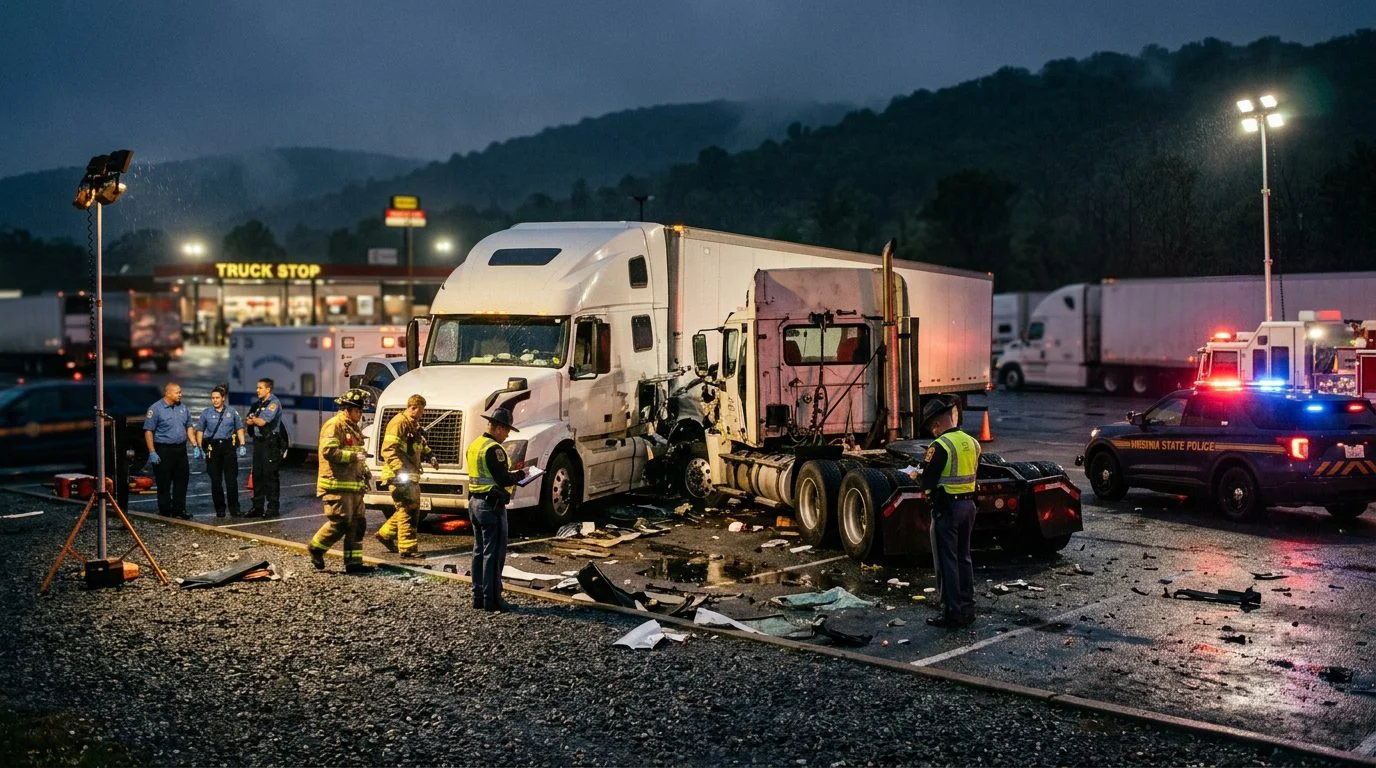
Fault is shown through evidence about what each driver did before and during the crash. Useful evidence includes the crash scene, vehicle damage, witness accounts, traffic signals, and roadway conditions. Photos taken soon after a crash can capture skid marks, debris, and where vehicles came to rest. Those details fade quickly.
Official investigations do not settle the question either. The NTSB accident report summary says its investigations are fact-finding and do not determine fault or liability.
Records Specific to Commercial Trucks That Can Show What Happened
Federal rules require many motor carriers to keep records that show what a truck driver was doing before a crash. The main example is the driver’s record of duty status. Under 49 C.F.R. § 395.8, the carrier must require each driver to record duty status for each 24-hour period. That record is kept on an ELD; a carrier may require a manual grid instead only if the driver is operating a commercial motor vehicle under the conditions the rule lists.
Other records can exist too. Under [49 C.F.R. § 395.8], a driver operating a commercial motor vehicle must record duty status; the written driver vehicle inspection report rule is in 49 C.F.R. § 396.11.
Maintenance records, electronic data from the truck, and dashcam video may also matter. Timing is important. Under 49 C.F.R. § 379.3, companies subject to that part must keep records for set minimum periods and may then destroy them at management’s discretion, unless another governmental body lawfully requires longer retention. Early action can help keep important records from being lost. Which records exist varies from crash to crash.
Reporting the Crash to Police
Virginia requires a driver involved in a crash with injury or death to stop and report it to police immediately (Va. Code §§ 46.2-371, 46.2-894).
A police report records the scene and the basic facts officers collected. Its contents can matter when fault is discussed. When you receive your copy, read it closely. If something is wrong or missing, write that down soon and keep the note with your other papers.
The two-year period discussed below is the deadline to file a lawsuit, not the deadline to report a crash (Va. Code § 8.01-243). Those are different duties with different timing.
Statements to the Insurance Company and Other Parties
Statements made after a crash can be used to discuss fault, so think before you describe what happened. Stick to facts you are sure of. Say what you saw and did. Avoid guessing about speed, distance, or who had the right of way.
Keep your own records. Write down what you remember soon after the crash, while details are fresh. Save medical bills, repair estimates, and letters from insurers. Note the dates, names, and addresses of any witnesses. If you’re unsure what a question means, say so rather than guess.
Deadlines for a Virginia Injury Lawsuit
Virginia generally allows two years from the date of injury to file a personal injury lawsuit (Va. Code § 8.01-243(A)); the clock runs from the date of injury, not the date of discovery, with narrow exceptions. That general rule is set out in Va. Code § 8.01-243.
Some claims run on shorter timelines. Do not assume the two-year period fits every claim.
Criminal cases can pause the civil clock. Deadlines are easy to lose track of after a complicated crash, so it helps to note key dates from day one. For broader context, see the commercial vehicle crash guide.
Not sure what your next step is?
Talk it through with Correll Law Firm — we can walk you through how a situation like yours is usually handled and what your options are.
Serious Injuries and Partial Fault in a Truck Crash
Serious injuries and partial-fault questions are separate issues, and both affect how a claim is reviewed. Brain and spinal cord injuries often need detailed medical records. Symptoms can appear days after a crash, and some injuries take time to diagnose. Read about how brain injuries are diagnosed after a truck crash and symptoms that appear days after a semi-truck crash.
Keep a dated list of symptoms. Keep every follow-up visit and discharge paper. The long-term effects of spinal cord injury after a truck crash page explains how recovery can look over time.
Medical records show how an injury affected you. They do not decide who was at fault. That question turns on crash evidence, such as the records and reports described above. Early medical care matters for your health, and it also creates a clear record of what happened.

When a Truck Company’s Conduct May Be Willful or Wanton
Virginia allows punitive damages for actual malice, or for willful or wanton conduct or recklessness showing a conscious disregard for the safety of others, capped at $350,000 (Va. Code § 8.01-38.1).
The cap is set in Va. Code § 8.01-38.1. The jury is not told about the cap.
Federal rules bar a driver from operating a commercial motor vehicle, and bar motor carriers from requiring or permitting it, when the driver’s ability or alertness is so impaired, or so likely to become impaired, through fatigue, illness, or any other cause, as to make it unsafe (49 C.F.R. § 392.3). A narrow grave-emergency exception allows continued driving, where the hazard to occupants of the commercial motor vehicle or other users of the highway would be increased by compliance with this section, to the nearest place at which that hazard is removed. Evidence of that kind would be weighed on the facts of each crash. Nothing here predicts how any crash would be decided.