
Wrongful Death and Car Accidents in Virginia
When a Delivery Van Takes a Life: What Virginia Families Should Do Next
Practical steps for the days and weeks after a pedestrian is killed, from the Shenandoah Valley to Richmond and Henrico County.
Published November 14, 2026
Losing someone in a crash is sudden, and the questions arrive all at once. If a pedestrian was killed by a delivery van in Virginia, the first steps are reporting the crash, keeping records, and learning who may bring a claim and by when.
Virginia has clear rules for each of these steps. This guide covers them in the order families usually need them.
What the Family Should Know in the First Hours
The first priority is that the crash is reported and that help reaches the people involved. Families often learn the facts second-hand, from a hospital, a police officer, or a medical examiner’s office. That is common, so careful notes matter from the start.
Virginia requires a driver involved in a crash with injury or death to stop and report it to police immediately (Va. Code §§ 46.2-371, 46.2-894). The driver must also stop as close to the scene as possible and help an injured person, as § 46.2-894 describes. A willful failure to report is a Class 4 misdemeanor under § 46.2-371.
Reporting the crash is a separate duty from the deadline to file a lawsuit. That deadline comes later in this guide.
Keep one notebook. Write down officer names, badge and report numbers, the hospital, and the medical examiner’s office contact. Date each entry.
Not sure what your next step is?
Talk it through with Correll Law Firm — we can walk you through how a situation like yours is usually handled and what your options are.
Obtaining the Police Report and Preserving Evidence
Families can ask the investigating agency for the crash report. It may take time to be finalized. Ask which agency handled the scene, because a county, city, or state agency may hold different parts of the file.
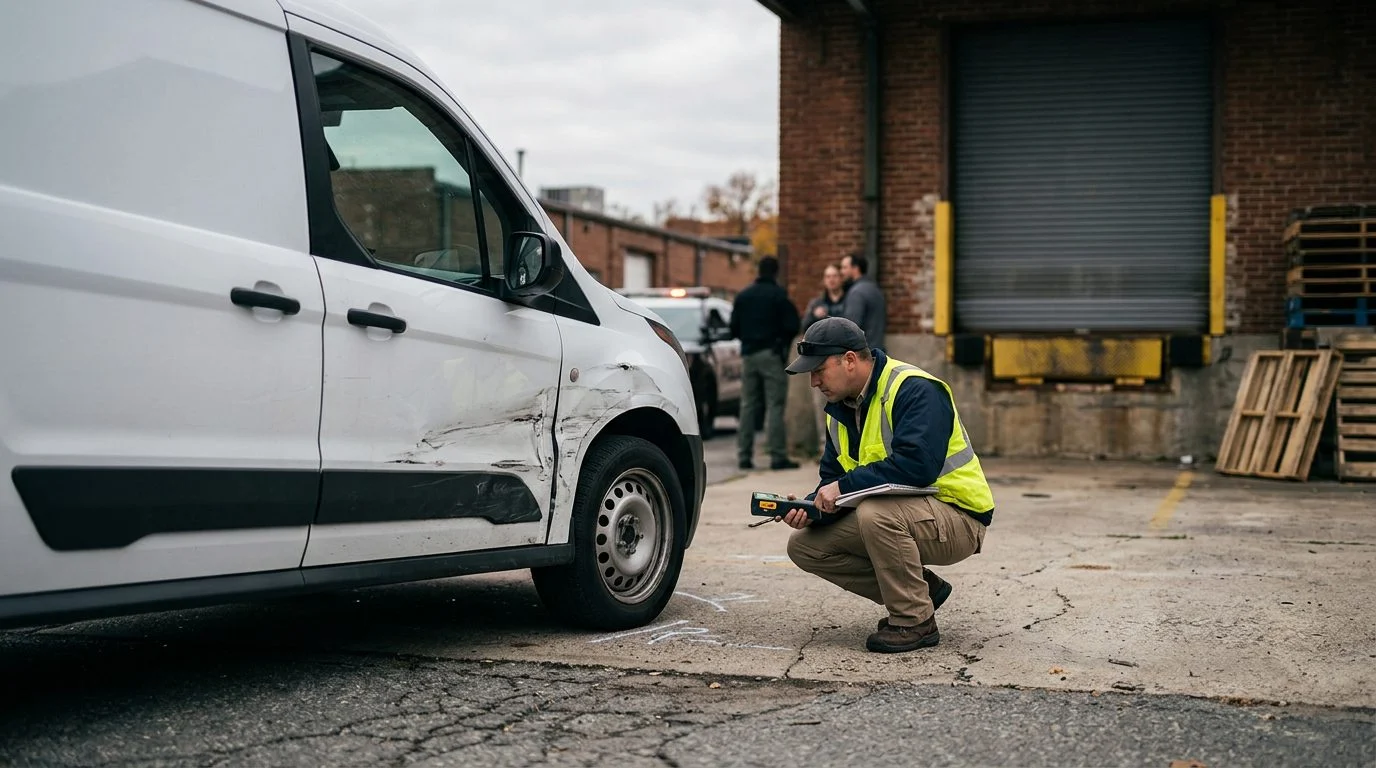
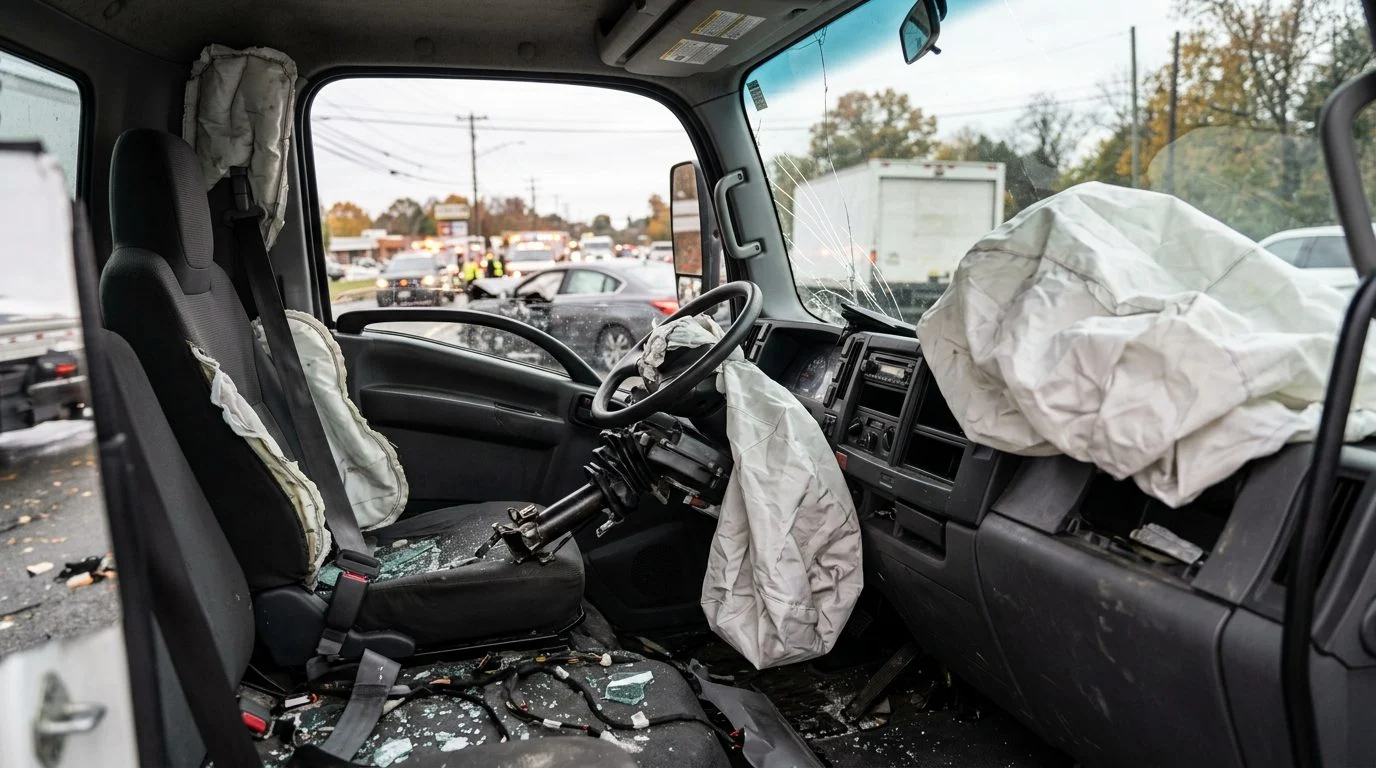
Evidence in a delivery van crash often includes the van’s damage, where the body and debris were found, photographs, and nearby video from doorbells, stores, or traffic cameras. Dash-camera footage from the van or another vehicle can matter too.
Video is often overwritten quickly. Ask in writing that footage, phone records, and vehicle data be preserved. A letter or email gives you a dated record of the request.
Write down the vehicle details that help identify who may be responsible. These include the company name and logo, the unit or route number, the license plate, and the time of the crash. Many delivery vehicles fall under federal commercial rules. The FMCSR general regulations page explains which vehicles are covered and the duty to keep an accident register. For more on the first records to gather, see the firm’s fatal car accident guide.
Identifying Who May Be Responsible
More than one person or company may be responsible. The answer depends on who drove, who owned the van, and who set the route. Families should not assume the answer before the records are reviewed.
A delivery van may be driven by an employee of a retailer, a delivery contractor, a courier company, or a postal contractor. The company that owns the vehicle can differ from the driver’s employer.
Under § 8.01-50(A), a person or company whose wrongful act, neglect, or default causes a death can be liable in an action for damages if that act is such as would, had death not ensued, have entitled the injured person to maintain an action. Whether that applies depends on the facts of each crash.
Ownership and employment details usually appear in vehicle registration, dispatch records, and company paperwork. Useful questions include whether the driver was on a scheduled route and whether the vehicle had been inspected and maintained.
Mechanical problems, such as brake failure, are one factor investigators examine. Records about the vehicle’s condition can answer that question.
Who Brings a Wrongful Death Claim in Virginia
A Virginia wrongful death action is filed by the decedent’s personal representative within two years of the death (Va. Code §§ 8.01-50(C), 8.01-244(B)), on behalf of the family members the statute protects.
Family members do not file the case themselves, except that an action for fetal death under § 8.01-50(B) is brought by the natural mother, or if she dies or is under a disability, by the administrator of her estate, her guardian, or her personal representative qualified to bring such action.
Any award is distributed under § 8.01-53. That statute lists the surviving spouse and children first. Families should not assume every relative falls within it without reviewing the facts.
The family may want to decide early who will serve as personal representative. The filing depends on that role.
What Virginia Wrongful Death Damages Can Cover
Virginia wrongful death damages cover the family’s losses listed in the statute, and punitive damages apply only in certain kinds of conduct. Virginia wrongful death damages cover the family’s sorrow, mental anguish and loss of the decedent’s companionship, guidance and care; lost income and services; medical expenses from the injury; funeral expenses; and, for willful or wanton conduct, punitive damages (Va. Code § 8.01-52).
The statute is at § 8.01-52.
Virginia allows punitive damages for actual malice, or for willful or wanton conduct or recklessness showing a conscious disregard for the safety of others, capped at $350,000 (Va. Code § 8.01-38.1). The jury is not told about the cap, under § 8.01-38.1.
Pain the injured person felt before death is a different kind of claim. Under Va. Code § 8.01-25, a cause of action generally survives the death of the person who was injured, and punitive damages shall not be awarded after the death of the party liable for the injury.
Filing Deadlines and the Two-Year Rule
A wrongful death action generally must be filed within two years of the death. The timing rule for these claims is in § 8.01-244(B), which runs from the death.
Families should not cite the personal injury statute for a death claim. The general personal injury rule is below, for context.
Virginia generally allows two years from the date of injury to file a personal injury lawsuit (Va. Code § 8.01-243(A)); the clock runs from the date of injury, not the date of discovery, with narrow exceptions. The statute is at § 8.01-243.
Some claims carry notice requirements that run out sooner. When a county, city, or town is involved, a negligence claim is barred unless the claimant or a representative files a written statement of the nature of the claim, including the time and place of the injury, within six months after the cause of action accrued. Failure to file that statement does not bar the claim if the locality’s attorney, chief executive, or mayor, or an insurer or entity covering the claim, had actual knowledge of it within those six months. That rule is in § 15.2-209. Ask early which deadlines may apply.
Reporting a crash is due right away.
Not sure what your next step is?
Talk it through with Correll Law Firm — we can walk you through how a situation like yours is usually handled and what your options are.

Partial Fault, Insurance Calls, and Keeping Records
Virginia follows contributory negligence: if you are found even partly at fault, you may be barred from recovering, with limited exceptions. Talk to a lawyer about your facts.
Insurers may ask family members for recorded statements early. The family may wish to speak with a lawyer before giving one.
Keep these records: the death certificate or medical examiner’s report, hospital and emergency records, funeral bills, the decedent’s pay records, and a written timeline of every contact with insurers and agencies.
How these rules apply depends on the facts. Those facts include the driver’s conduct, the van’s condition, and the family’s relationship to the person who died.
Common Questions
Can the family get the police report?
Families can ask the investigating agency for the crash report. It may take time to be finalized.