
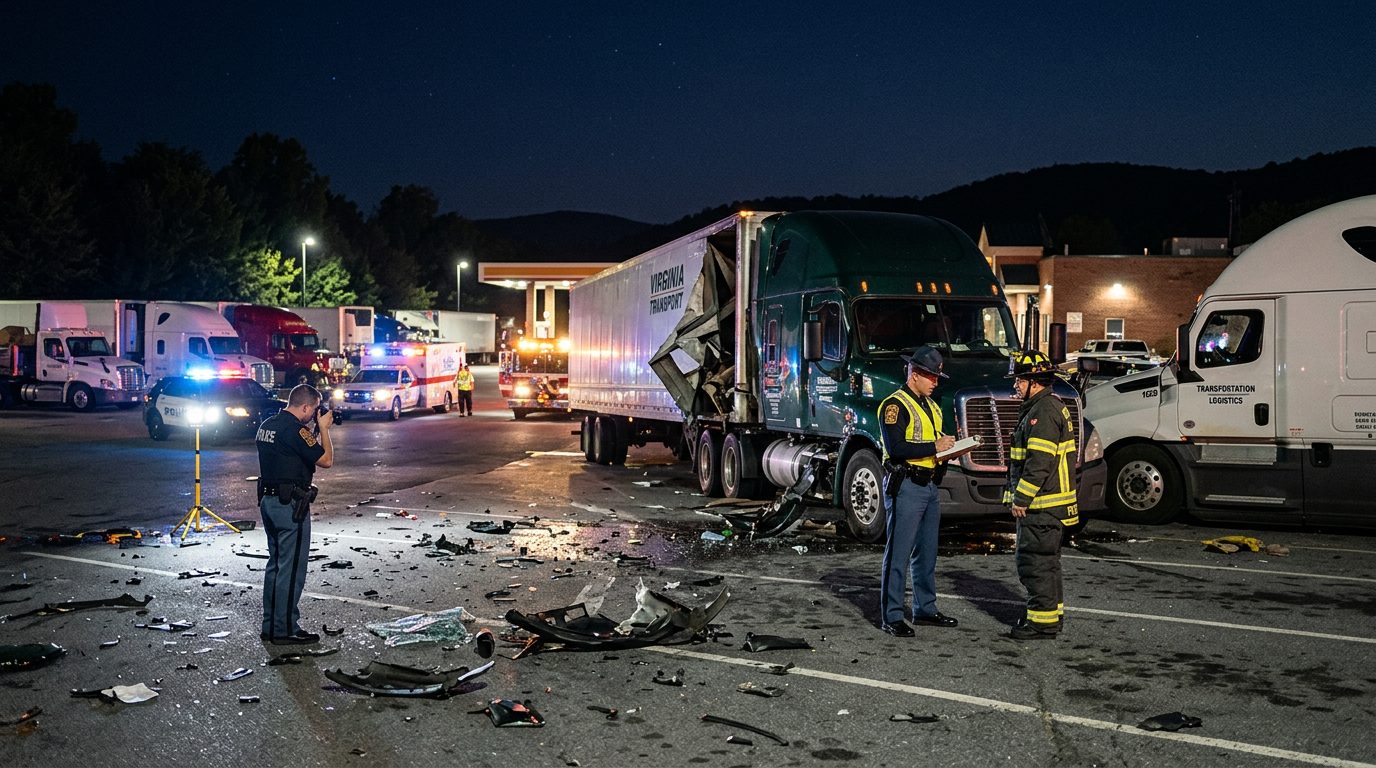
Truck Accidents | Virginia
After a Truck Crash, Was the Driver Tested for Drugs or Alcohol?
A plain-language guide to when federal rules call for post-crash testing of commercial drivers, what those tests check, and why the records can matter.
Published November 22, 2026
A crash with a large truck can leave you or someone you love badly hurt, and the questions come fast. One common question is what a truck driver drug test after a crash means. Federal rules often require these tests after certain serious crashes, though not after every one. The sections below explain when testing applies, what the tests are, and how results can matter later.
Do Truck Drivers Get Drug Tested After an Accident?
Often, yes, but only after certain kinds of crashes. Federal rules require many commercial drivers to be tested after qualifying crashes on public roads. A federal post-crash test is not the same as the roadside check an officer runs during a traffic stop. It is set by federal rules and carried out through the driver’s employer.
Whether a test is required depends on the crash facts, such as whether someone died or was taken away for medical treatment. A common mistake is assuming every truck crash triggers a test. The rules turn on specific conditions, so the details of the crash matter. FMCSA’s guidance on post-accident testing lays out the timing by type of accident.
Not sure what your next step is?
Talk it through with Correll Law Firm — we can walk you through how a situation like yours is usually handled and what your options are.
When Federal Rules Require a Post-Crash Test
Federal rules require testing after a commercial vehicle crash that involves a death, or a crash with a traffic citation plus certain injuries or tow-away damage. Under 49 CFR 382.303, the employer must test each surviving driver for alcohol if the crash caused a death and the driver was doing safety-sensitive work. Under federal rules, an employer must test a surviving driver for alcohol if the driver receives a citation within 8 hours of the occurrence for a moving traffic violation arising from the accident, and the accident involved bodily injury to a person who immediately receives medical treatment away from the scene, or one or more vehicles with disabling damage that requires tow-away.
Timing is strict. An alcohol test should happen as soon as practicable. If it is not given within two hours, the employer must keep a written record of why. After eight hours, the employer must stop trying to give the alcohol test and keep that record. For a drug test, the employer must stop trying after 32 hours.
Drivers have duties too. A driver who is subject to post-accident testing must remain readily available for such testing, or the employer may treat the driver as having refused. Nothing in the rule requires delaying necessary medical attention for injured people. A driver required to take a post-accident alcohol test may not use alcohol for eight hours following the accident, or until tested, whichever occurs first (49 CFR 382.209).
What Kind of Test Is Given After a CDL Crash
The FMCSA’s list of tested substances shows which substances are covered by DOT testing. Part 40 sets the testing procedures.
Refusing a required test is not a workaround. A driver may not refuse a post-accident alcohol or controlled substance test (49 CFR 382.211). An employer may not let a driver who refused keep doing safety-sensitive work. The rules treat refusal as a violation, not as a neutral choice.
What decides whether a test is required is the set of conditions in the rule, not how the crash looked at the scene.
What a Positive Result or Refusal Means for the Driver
A positive drug test or a refusal generally takes the driver out of safety-sensitive work, including driving a commercial truck. A driver who tests positive for a controlled substance may not report for duty, stay on duty, or perform safety-sensitive functions. An employer that knows a driver has tested positive may not allow it (49 CFR 382.215). Under 49 CFR 382.501, except as provided in subpart F of this part, a driver who has engaged in prohibited conduct may not drive a commercial vehicle.
Returning to the job is not automatic. Under 49 CFR 382.503, a driver who has engaged in conduct prohibited by subpart B of this part must meet the requirements of 49 CFR Part 40, subpart O, before performing safety-sensitive work again. If the commercial driving privilege was removed, the state licensing agency must reinstate it before the driver may drive a commercial motor vehicle.
A test result is one record, not the whole story. A common mistake is treating a positive result as proof of fault on its own. A positive result does not, by itself, show how the crash happened.
Reporting the Crash and Why Timing Matters
Virginia requires a driver involved in a crash with injury or death to stop and report it to police immediately (Va. Code §§ 46.2-371, 46.2-894).
The duty goes beyond a phone call. The driver must also give required information to police and to the people involved (Va. Code § 46.2-894). The driver must render reasonable assistance to anyone hurt, including taking that person to a doctor or hospital when treatment is apparent or requested.
The police report and the federal test records are separate documents. Keep two deadlines apart. The two-year period is the deadline to file a lawsuit, not to report a crash (Va. Code § 8.01-243). Virginia generally allows two years from the date of injury to file a personal injury lawsuit (Va. Code § 8.01-243(A)); the clock runs from the date of injury, not the date of discovery, with narrow exceptions. Some claims carry notice requirements that run out sooner.
How Test Results Fit Into an Injury or Wrongful Death Claim
Other records, such as the crash report and medical records, also bear on the question. Which evidence matters most depends on the facts.
When a crash is fatal, the family’s claim follows a set path. A Virginia wrongful death action is filed by the decedent’s personal representative within two years of the death (Va. Code §§ 8.01-50(C), 8.01-244(B)), on behalf of the family members the statute protects. Family members do not file; they share in the recovery.
Virginia wrongful death damages cover the family’s sorrow, mental anguish and loss of the decedent’s companionship, guidance and care; lost income and services; medical expenses from the injury; funeral expenses; and, for willful or wanton conduct, punitive damages (Va. Code § 8.01-52).
Not sure what your next step is?
Talk it through with Correll Law Firm — we can walk you through how a situation like yours is usually handled and what your options are.

Records Worth Gathering After a Commercial Vehicle Crash
Useful records include the police crash report, medical records from the crash, and any post-crash testing records. Federal rules require the employer to keep a record of why a required test was late or not given. Under 49 CFR 382.303, those records must be submitted to the FMCSA upon request.
Put the crash timeline next to the testing timeline. Note the time of the crash, when the driver was taken for treatment, and when any test was given. Comparing those times helps show whether the federal windows were met.
The firm handles truck accidents and wrongful death cases. The firm’s Winchester and Harrisonburg offices serve people across the Shenandoah Valley and in Richmond and Henrico County.
Related practice areas
- Commercial Vehicle Accidents in Virginia
- Burn Injuries After a Truck Crash Fire: What to Document