
Virginia Commercial Vehicle Crashes
Being Blamed for Part of a Truck Crash?
How shared-fault questions come up after a commercial vehicle collision, and how the firm looks at the facts behind them.
Published November 25, 2026
Being hurt in a truck crash can raise a hard question. Could the other side blame you for part of what happened?
Partial fault means a share of the blame falls on the injured person. In Virginia, the details of how a crash happened matter a great deal. This page explains the rule, the evidence usually reviewed, and the deadlines that apply.
What Partial Fault Means After a Commercial Vehicle Crash
Partial fault means the injured person may be found to share some responsibility for the crash.
Virginia follows contributory negligence: if you are found even partly at fault, you may be barred from recovering, with limited exceptions. Talk to a lawyer about your facts.
Commercial vehicle cases raise this question often. Drivers may tell different stories, and a trucking company may dispute how the crash happened.
The exact sequence of events often becomes central to how a crash claim is evaluated.
Not sure what your next step is?
Talk it through with Correll Law Firm — we can walk you through how a situation like yours is usually handled and what your options are.

How Fault Is Examined in Tractor-Trailer and Trailer Crashes
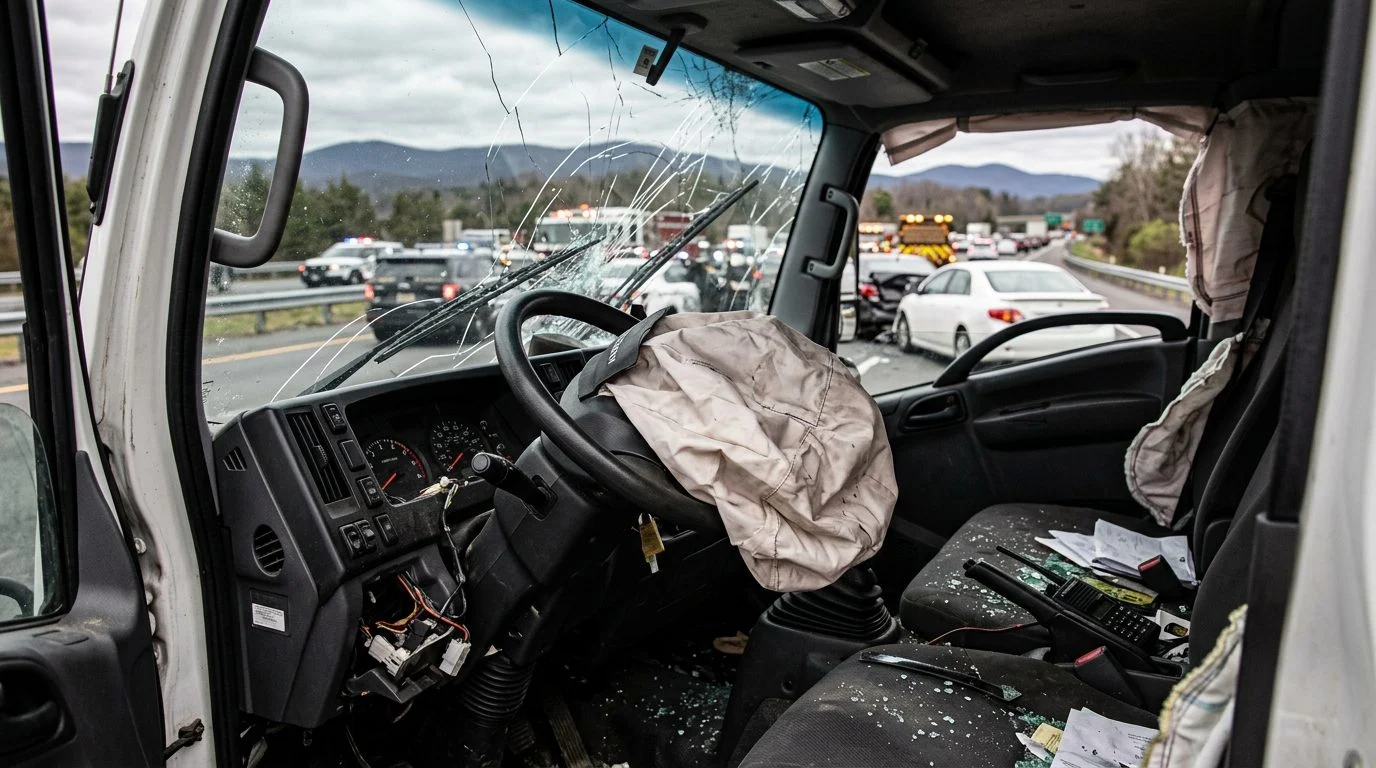
Fault is usually examined by piecing together what happened before, during and after the impact. The first evidence is often the police crash report, photos of the scene and vehicles, the pattern of damage, witness statements, and roadway conditions such as weather and lighting.
Commercial vehicles also create records. Maintenance logs, driver logs and inspection history may show how the truck was kept and operated. Federal rules require a motor carrier, except a private motor carrier of passengers (nonbusiness), to keep maintenance records for each vehicle it controls, for one year where the vehicle is housed or maintained, and for six months after it leaves the carrier’s control (49 C.F.R. § 396.3).
Trailer crashes raise different questions. A jackknife, where the trailer swings out behind the cab, or a lane-change collision can involve the truck driver’s actions, the vehicle’s condition, the load, and the other driver’s choices. Which questions matter depends on the facts. Each one points to different records and witnesses.
When Another Vehicle Shares the Blame
Yes, more than one driver can share responsibility for the same crash. A common example is a passenger car that cuts in front of a tractor-trailer and brakes hard, forcing the truck to swerve or stop.
Each vehicle’s insurer may take a different view of fault.
Reporting the Crash to Police
Virginia requires a driver involved in a crash with injury or death to stop and report it to police immediately (Va. Code §§ 46.2-371, 46.2-894). The driver must also give reasonable help to anyone hurt, under Va. Code § 46.2-894.
This duty is about reporting the crash. The two-year period discussed below is the deadline to file a lawsuit, not the deadline to report a crash (Va. Code § 8.01-243).
A prompt report also helps fix the time and place of the crash, details that later claims often rely on.
A police report records the scene, the parties and what officers observed. It is one piece of evidence, not a final decision on fault. Other reports have limits too. The National Transportation Safety Board says its investigations are fact-finding and do not determine fault or liability.
The Time Limit for Filing a Lawsuit
Virginia generally allows two years from the date of injury to file a personal injury lawsuit (Va. Code § 8.01-243(A)); the clock runs from the date of injury, not the date of discovery, with narrow exceptions. Under Va. Code § 8.01-243, unless otherwise provided in that section or by other statute, every action for personal injuries, whatever the theory of recovery, shall be brought within two years after the cause of action accrues.
Some claims carry notice requirements that run out sooner. For a negligence claim against a county, city or town, a written statement of the claim, including the time and place of the injury, must be filed within six months after it accrued, or the claim is forever barred (Va. Code § 15.2-209); failure to file does not bar the claim if the locality’s attorney, chief executive or mayor, or any insurer or entity providing coverage or indemnification of the claim, had actual knowledge of it, including its nature and the time and place of the injury, within that six months, and if the claimant was under a disability when the claim accrued, the tolling provisions of § 8.01-229 apply.
Under Va. Code § 8.01-229, in a personal action for damages or action for death by wrongful act, time spent on a criminal prosecution arising from the same facts does not count toward the civil filing period.
Waiting to see how an insurance claim turns out can use up time that is hard to get back.

Preserving Evidence and Understanding the Next Steps
Keep evidence early, because it can disappear. Useful items include the police report number, photos from the scene and later, medical records, names of witnesses, and every letter from an insurer.
Commercial records run on their own clocks, and federal rules set different periods for different records. A motor carrier must keep a driver vehicle inspection report for three months from the date the written report was prepared, except that these rules do not apply to a private motor carrier of passengers (nonbusiness), a driveaway-towaway operation, or a motor carrier operating only one commercial motor vehicle (49 C.F.R. § 396.11). Those periods are short, so questions about records are worth raising early.
Keep copies of everything. Write down what you remember about the crash while it is fresh.
Partial fault is one part of a larger commercial vehicle claim, including who may be responsible and what evidence exists. The Virginia commercial vehicle accident guide covers those wider questions.