

Truck Accidents | Virginia
Fatigue Behind the Wheel: Warning Signs Before a Virginia Truck Crash
Driver logs, trip timing and vehicle data can show whether a driver was too tired to drive safely. Here is what to look for and why the details matter.
Published November 16, 2026
Crash victims often ask whether the truck driver was too tired to drive safely. Signs a truck driver was fatigued before a crash usually appear as a pattern, not a single clue. Some show up on the road, some at the scene, and most are confirmed in the driver’s hours, logs and vehicle data.
This guide explains those signs, the federal hours-of-service limits behind them, and the Virginia deadlines that apply after a crash. Each sign can also have other causes, so treat each one as a clue to weigh, not as proof on its own.
Warning Signs Other Drivers Can See Before a Crash
Other drivers often notice fatigue through how a truck moves on the road.
A tired driver may drift within a lane or across lane lines. The truck may jerk back onto the road after drifting onto the shoulder or a rumble strip. It may follow other vehicles too closely or brake late. Some drivers miss an exit, drive past a planned stop, or appear to nod off at the wheel.
Each of these behaviors has other possible causes. A driver may be distracted by a phone, a shifting load, bad weather, a mechanical problem or medication. Investigators weigh these signs together, not one at a time.
Federal rules speak to this directly. A driver may not operate a commercial motor vehicle when fatigue or another cause makes it unsafe, and a carrier may not require or permit that (49 CFR 392.3).
If you saw a truck behave this way, write down the time, the place and what you saw while your memory is fresh. Those notes can help later.
Not sure what your next step is?
Talk it through with Correll Law Firm — we can walk you through how a situation like yours is usually handled and what your options are.
Clues at the Crash Scene That Point to Fatigue
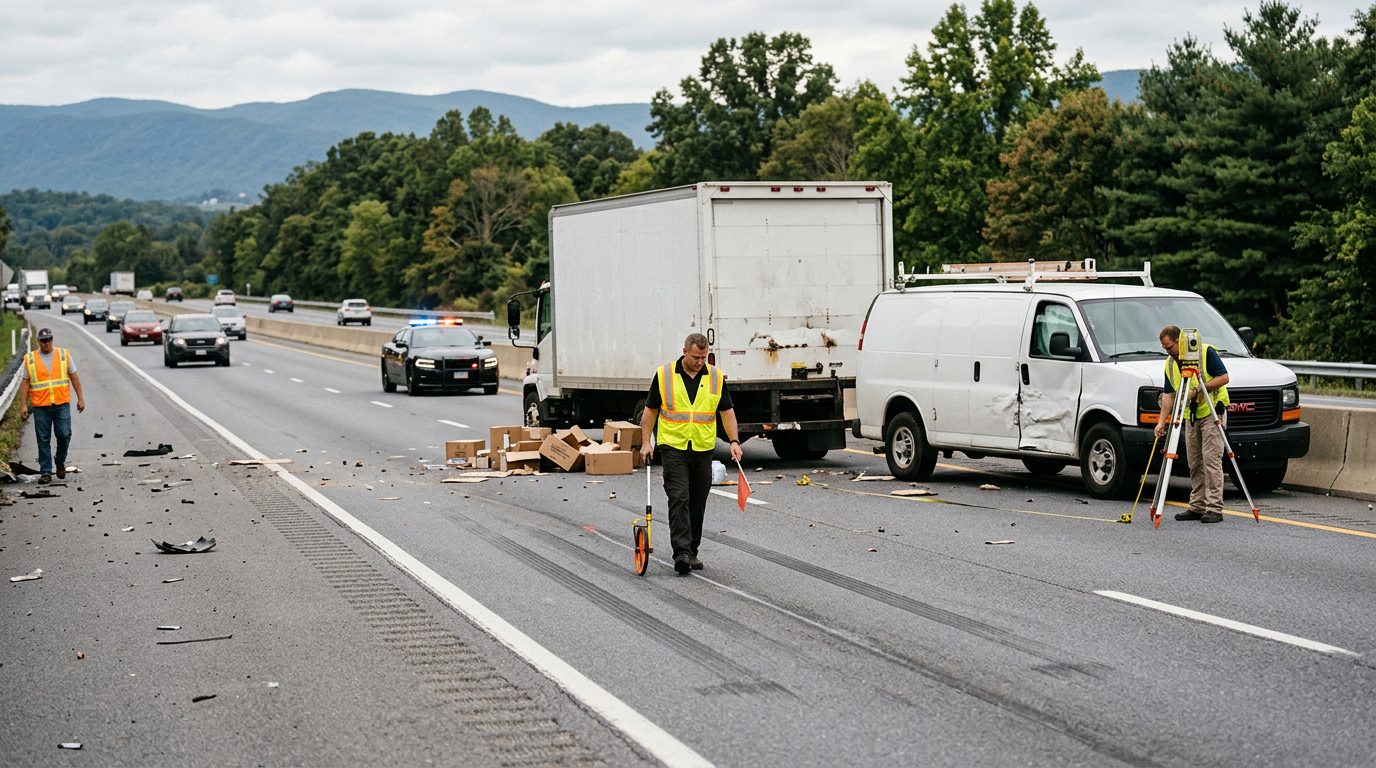
Some crash scenes show patterns that investigators often examine when fatigue is in question, though the scene alone rarely settles it.
A run-off-road crash, where the truck leaves the lane and strikes a ditch, guardrail or embankment, can suggest the driver lost focus. A sideswipe during a lane change can look similar. A rear-end impact with no braking marks may suggest the driver never reacted to slowing traffic.
Timing matters too. A crash in the early morning or late at night may point to a long stretch on duty, especially when the driver started work many hours earlier. Trip timing is a clue to check against the logs, not a conclusion.
The scene also shows where to look next. Investigators compare the crash with the truck’s path, the road layout and the weather, then check the driver’s records.
Photographs help. If it is safe, take pictures of the road, the truck’s final position and any skid or tire marks. Note the time, the weather and the road type. These details can disappear quickly as roads reopen and trucks are moved.
Federal Hours-of-Service Limits and Why They Matter
Federal hours-of-service rules limit how long a property-carrying driver may drive and how long the driver may stay on duty before rest.
Under 49 CFR 395.3, a driver must take 10 consecutive hours off duty before driving. A driver may not drive after 14 consecutive hours on duty that follow that break. Within that 14-hour period, driving time is capped at 11 hours.
The rules also require breaks during driving. Once more than 8 hours of driving time have passed, the driver needs at least a consecutive 30-minute interruption. Some short-haul drivers qualify for exceptions.
Longer cycles have limits too. A driver may not drive after 60 hours on duty in 7 consecutive days, or after 70 hours in 8 consecutive days, depending on whether the carrier runs trucks every day of the week. An off-duty period of 34 or more consecutive hours can restart those counts.
A driver who exceeds these limits may have been operating while fatigued. A violation is a fact that has to be proven, though. It is not an automatic finding of fault. The rules also turn on the trip, the cargo and the vehicle.
Electronic Logging Devices and Paper Logs
An electronic logging device (ELD) records much of a truck’s driving time on its own, which makes its data a key place to check hours.
An ELD automatically records the date, time, commercial motor vehicle geographic location, engine hours, vehicle miles, driver or authenticated user identification, vehicle identification, and motor carrier identification data, as set out in 49 CFR 395.26. When the driver has indicated authorized personal use of a commercial motor vehicle, the ELD logs location at reduced resolution (approximately within a 10-mile radius), and an intermediate recording made during that period leaves engine hours and vehicle miles blank. While a truck is moving with no status change for an hour, the device records an intermediate entry.
Paper logs work differently. The driver writes duty status by hand. Hand-written entries can be harder to verify, so investigators often compare them with other records.
Fuel receipts, toll and scale records, dispatch messages and GPS locations can confirm or contradict where and when a truck was.
Engine Control Module and Vehicle Data
Many commercial trucks store engine control module data that can show how the truck was driven just before a crash.
The engine control module (ECM) can record items such as speed, throttle position, braking and cruise control use. Those readings can show whether the truck was slowing, speeding up or holding steady in the seconds before impact.
The data shows what the truck did. It does not show what the driver was thinking. A driver holding a steady speed may still have been fatigued. A driver who braked late may have been distracted for other reasons. The readings must be read in context.
Qualified technicians read and interpret this data. A conclusion about attention should come from that analysis, not from a quick look at a printout.
Timing is the practical problem. Data can be overwritten, lost or cleared when a truck is repaired or returned to service. Asking early for the truck and its data to be kept intact protects that evidence.
Dispatch, Fleet, and Trip Records
Dispatch and trip records show what a driver was scheduled to do, which can reveal time pressure on a run.
Dispatch messages, pickup and delivery appointment times, and route plans can show whether a driver had room for required rest. A tight schedule that leaves no time for a 10-hour break is worth checking. It does not prove fatigue on its own.
Fleet management systems and telematics may also track speed, idle time, hard braking and driver activity. Carriers usually hold these reports on their own systems.
Retention is the main concern. Federal rules allow companies to destroy records after the required retention periods, at management’s discretion, but this does not excuse compliance with other governmental bodies’ longer retention requirements (49 CFR 379.3).
These records show what was planned and recorded. Whether they show fatigue depends on the facts of the trip.
Not sure what your next step is?
Talk it through with Correll Law Firm — we can walk you through how a situation like yours is usually handled and what your options are.
Driver Health and Qualification Records
Under 49 CFR 391.43, except as provided by paragraph (b) of this section, the exam must be performed by a medical examiner listed on the National Registry of Certified Medical Examiners. 49 CFR 391.51 requires the carrier to keep a qualification file for each driver. Under 49 CFR 391.51, except as provided in paragraph (d) of this section (certain records may be removed three years after the date of execution), the carrier keeps that file while the driver works there and for three years after.
Some health conditions can affect alertness. Untreated sleep disorders and certain medications are examples. A medical history alone does not prove fatigue on a given day, so these records are read alongside the logs and vehicle data.
Prior hours-of-service violations or roadside out-of-service orders, if they appear in the records, can add context about how a carrier tracked fatigue. They carry the most weight when compared with the facts of the crash day.
Preserving Evidence and Proving Fatigue Caused a Crash
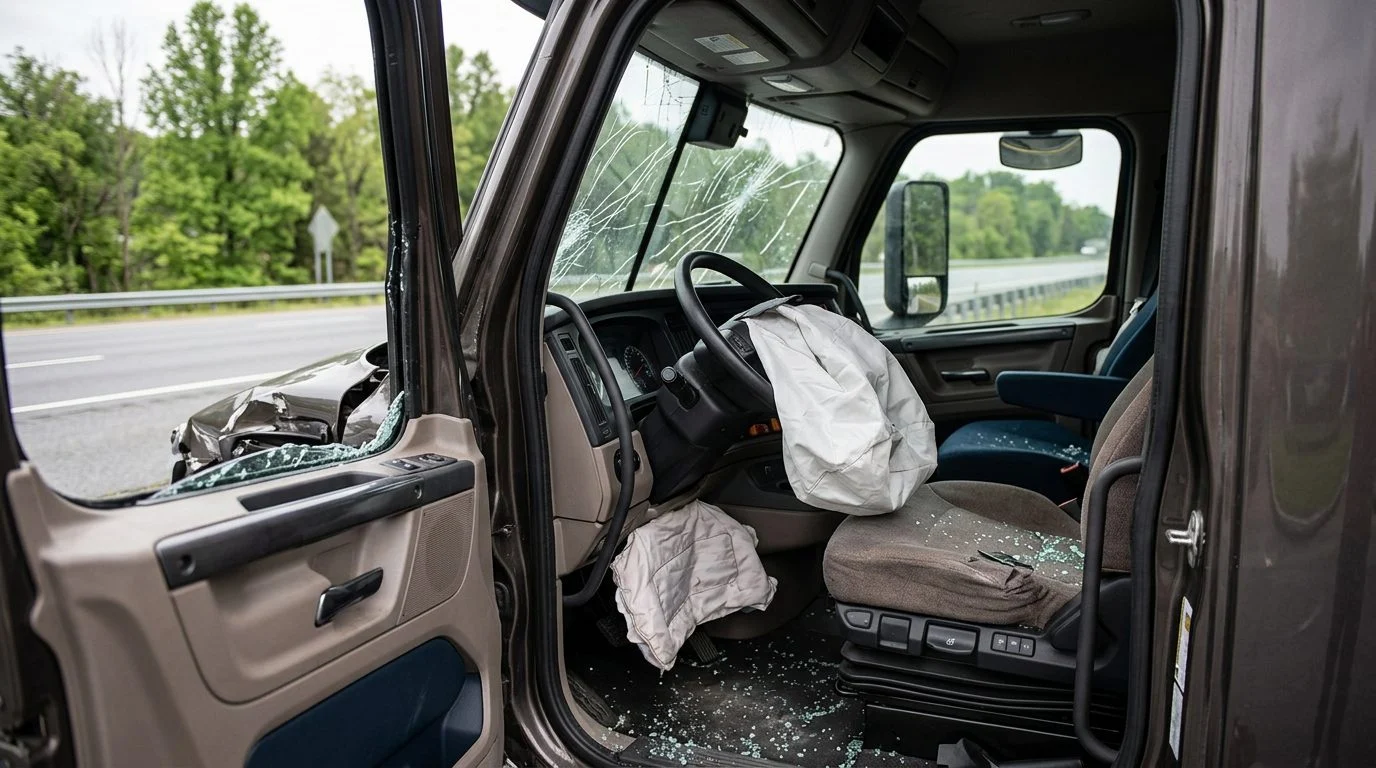
Proving fatigue caused a crash usually means linking several records to the crash itself, and that work starts with deadlines.
Virginia requires a driver involved in a crash with injury or death to stop and report it to police immediately (Va. Code §§ 46.2-371, 46.2-894). The two-year period is the deadline to file a lawsuit, not to report a crash (Va. Code § 8.01-243).
Virginia generally allows two years from the date of injury to file a personal injury lawsuit (Va. Code § 8.01-243(A)); the clock runs from the date of injury, not the date of discovery, with narrow exceptions.
Fatigue on its own is not the same as a crash caused by fatigue.
For more on truck crash claims in Virginia, read the truck accident claims in Virginia overview.
Is one warning sign enough to prove fatigue?
No. A single sign can have other causes, so patterns across the road, scene, records and vehicle data carry more weight.
Can a truck driver’s logs be checked against other records?
Yes. Fuel receipts, toll records, dispatch messages and GPS data can be compared with the logs.