

Truck Accidents | Spinal Cord Injury | Virginia
Keeping Track of Spinal Cord Injury Records After a Truck Crash
A spinal cord injury creates a long paper trail, from emergency room charts to therapy notes and carrier files. Here is how to start organizing it early and calmly.
Published November 15, 2026
If a truck crash left you or a loved one with a spinal cord injury, the paperwork can feel overwhelming. The medical records that matter most are the emergency chart, imaging reports and images, surgical and rehabilitation notes, the police crash report, and work records showing lost income. Keeping them in order from the start makes the file easier to follow later. Each record fills in a different part of the story. This guide explains what each record shows and how to ask for it.
How Truck Crashes Can Cause Spinal Cord Injuries
A truck crash can injure the spinal cord when large forces reach the spine. Trucks weigh far more than passenger vehicles, so impacts, jackknifing, rollovers and underride crashes can transfer high forces to the body.
The spinal cord is the bundle of nerves that runs through the spine. Bones and discs surround it for protection. A crash can break or shift bone, damage a disc, or injure the cord itself. Injuries range widely in severity, and two people hurt in the same crash can have very different injuries.
Symptoms do not always show up right away. Numbness, tingling, weakness, or changes in bladder or bowel control can appear at the scene or develop over hours and days. Early notes capture what a person reported before treatment changed things, which is why early records matter. Records made close to the crash carry more weight than memories pieced together later.
For a closer look at spinal injuries from car crashes in Virginia, read the firm’s spinal cord injury car accident article. Correll Law Firm serves people from its Winchester and Harrisonburg locations across the Shenandoah Valley, Richmond and Henrico County.
If a truck crash left you or someone you love with a spinal cord injury, you do not have to sort through the paperwork alone. Talk it through with Correll Law Firm — we can walk you through how a situation like yours is usually handled and what your options are.
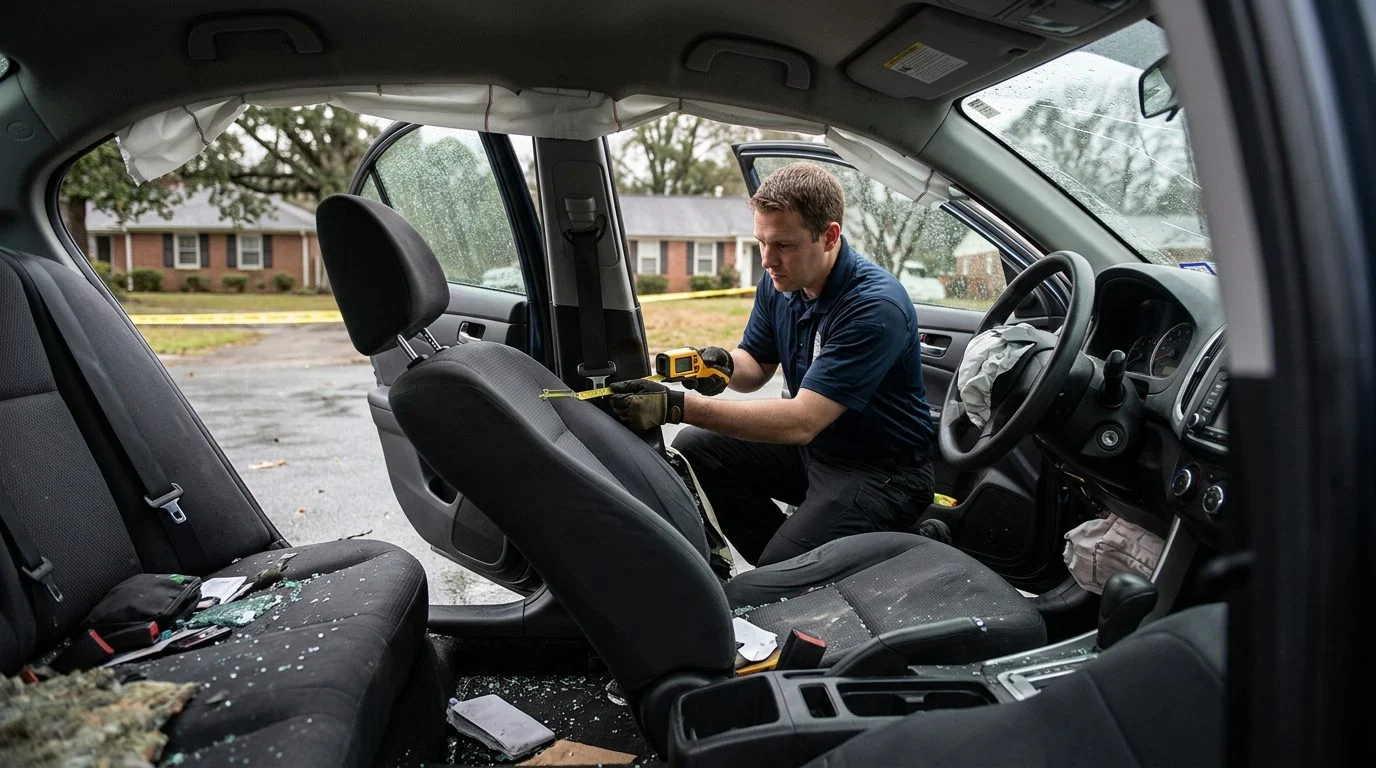
Emergency and EMS Records to Request First
The ambulance run report and the emergency department chart are usually the first written record of a spinal injury. Ask for both early.
- EMS run report: the crew’s notes on how the person was found, whether the neck or back was immobilized, and symptoms reported at the scene.
- Emergency department chart: triage notes, neurological checks, and the time of arrival.
The first written description carries weight because it comes before later treatment changes the picture. A common mistake is requesting only the discharge paperwork. Nursing notes often hold early detail that a summary leaves out.
To ask for the chart, write to the hospital’s medical records department and request the complete emergency visit record. If the person was taken to a different facility later, request its chart too, since transfers create separate records.
Imaging Reports and the Images Themselves
Keep both the written imaging reports and the image files, because they are separate documents.
An X-ray, CT scan or MRI produces a written report from a radiologist. The report describes findings such as fractures, disc damage, spinal cord compression or swelling. It is one doctor’s reading of the images. Radiology reports often use technical terms, so ask the provider to explain any finding you don’t understand.
The image files are the underlying data. Ask the facility for copies on disc, since other physicians may want to review the images themselves. Both belong in the file.
Keep every follow-up scan too. Comparing scans taken weeks or months apart can show changes over time. Dates on each study help show the order of events. If a scan was done at an outside facility, ask for that facility’s copy as well.
Surgical, Hospital and Clinic Records
Surgical and clinic records show what was diagnosed, what was done and what the treating team found.
- Admission and discharge summaries list diagnoses, procedures and discharge instructions.
- Operative and anesthesia records cover any spinal surgery.
- Neurosurgery, orthopedic, neurology or spine clinic notes include referral letters and consultation notes.
- Intensive care and nursing notes record movement, sensation, and bladder or bowel function.
Ask each provider for its own records. A discharge summary from one hospital rarely includes everything a surgeon wrote in a separate operative report. Keep referral letters with the clinic notes they led to, so the sequence of care is clear.
Rehabilitation, Ongoing Treatment and Symptom Journals
Rehabilitation and ongoing care records show how the injury affects daily life over time.
Ask for inpatient or outpatient rehabilitation records, including physical and occupational therapy progress notes and functional assessments. Primary care notes, pain management records, medication lists and pharmacy printouts show ongoing treatment. Prescriptions and receipts for braces, wheelchairs, bathroom equipment and home changes document equipment needs.
A daily journal is a useful companion. Each day, note pain, mobility, sleep and tasks that became difficult, with the date. Symptoms that change over time can be important, so note changes as they happen. The journal does not replace the medical file, but it helps explain what the medical notes describe. Keep entries short and plain, so they are easy to match against the medical file.
Crash-Side Records: Police Reports, Photos and Witnesses
The crash side of the file starts with the police report and the scene evidence.
Virginia requires a driver involved in a crash with injury or death to stop and report it to police immediately (Va. Code §§ 46.2-371, 46.2-894). Keep the police crash report and its case number. The Virginia DMV crash records page explains how crash records are requested.
Photos and video of the vehicles, the roadway and visible injuries, taken soon after the crash, preserve details that fade. Write down the names and contact details of witnesses and responding officers while memories are fresh.
Trucking records matter too. Federal rules require a carrier to keep a driver qualification file for as long as the driver works there and three years after, though some records in it, such as annual driving record checks and medical certificates, may be removed three years after they were made (49 C.F.R. § 391.51). Carriers subject to this part, other than private nonbusiness passenger carriers, must require drivers to record duty status, and no driver or carrier may make a false report about it (49 C.F.R. § 395.8). Periodic inspection reports must be kept for fourteen months (49 C.F.R. § 396.21).
Not sure what your next step is?
Talk it through with Correll Law Firm — we can walk you through how a situation like yours is usually handled and what your options are.
Bills, Work Records and Lost Income Documentation
Bills and work records show the medical charges and how the injury changed the person’s income.
- Itemized medical bills and explanation-of-benefits statements from every provider, kept in one folder.
- Pay stubs, tax returns, employer letters and job descriptions from before the crash.
- Records of missed work, reduced hours or changed job duties after the injury.
Work records also show how the injury changed what the person can do on the job, over time. Keep a simple list of dates missed and the reason for each absence. Keep a copy of each bill, even if it was paid.
Virginia law provides that provable loss of income from a personal injury is not reduced because of reimbursement from another source, and that the reimbursement is not admitted into evidence (Va. Code § 8.01-35). Keep income records even when another source covers part of the loss.

Deadlines and Fault Questions to Raise Early
Virginia generally allows two years from the date of injury to file a personal injury lawsuit (Va. Code § 8.01-243(A)); the clock runs from the date of injury, not the date of discovery, with narrow exceptions. Some claims carry notice requirements that run out sooner.
Virginia follows contributory negligence: if you are found even partly at fault, you may be barred from recovering, with limited exceptions. Talk to a lawyer about your facts.
A truck crash can involve more than one negligent party, such as a driver and a trucking company.
Records gathered early help answer both questions. The timeline from the EMS run to surgery and rehabilitation shows when symptoms began and how they changed. For the wider picture of commercial vehicle claims, see the commercial vehicle accidents overview.
Start with the EMS and emergency records, then imaging, surgical, rehabilitation, crash-side and work records.
What if a symptom shows up weeks later?
Tell your doctor about it and ask that it be written in the chart. Later notes become part of the medical record and should be kept with the rest.
Who can keep the file?
A family member can keep the folder and the daily journal. Medical and trucking records should be requested directly from each provider or the carrier.