
Truck Accidents | Virginia
Semi Truck Black Box Data: What It Can Show After a Crash
Trucks record information that can be overwritten or lost. Here is how that data is used and why it matters to people hurt on Virginia roads.
Where Correll Law Firm Works
Virginia
Serving the Shenandoah Valley, Richmond and Henrico County
Published November 15, 2026
After a crash with a semi truck, many people wonder whether the truck kept records of what happened. Often it did. Those records can be strong evidence, but they can be lost if no one asks for them early.
A semi truck’s “black box” is usually a crash data recorder built into its electronics. Electronic logs, GPS trip records and camera video may hold useful information too. This guide explains what semi truck black box data can show after a crash, what it cannot show alone, and why timing matters in Virginia.
What Is a Truck Black Box?
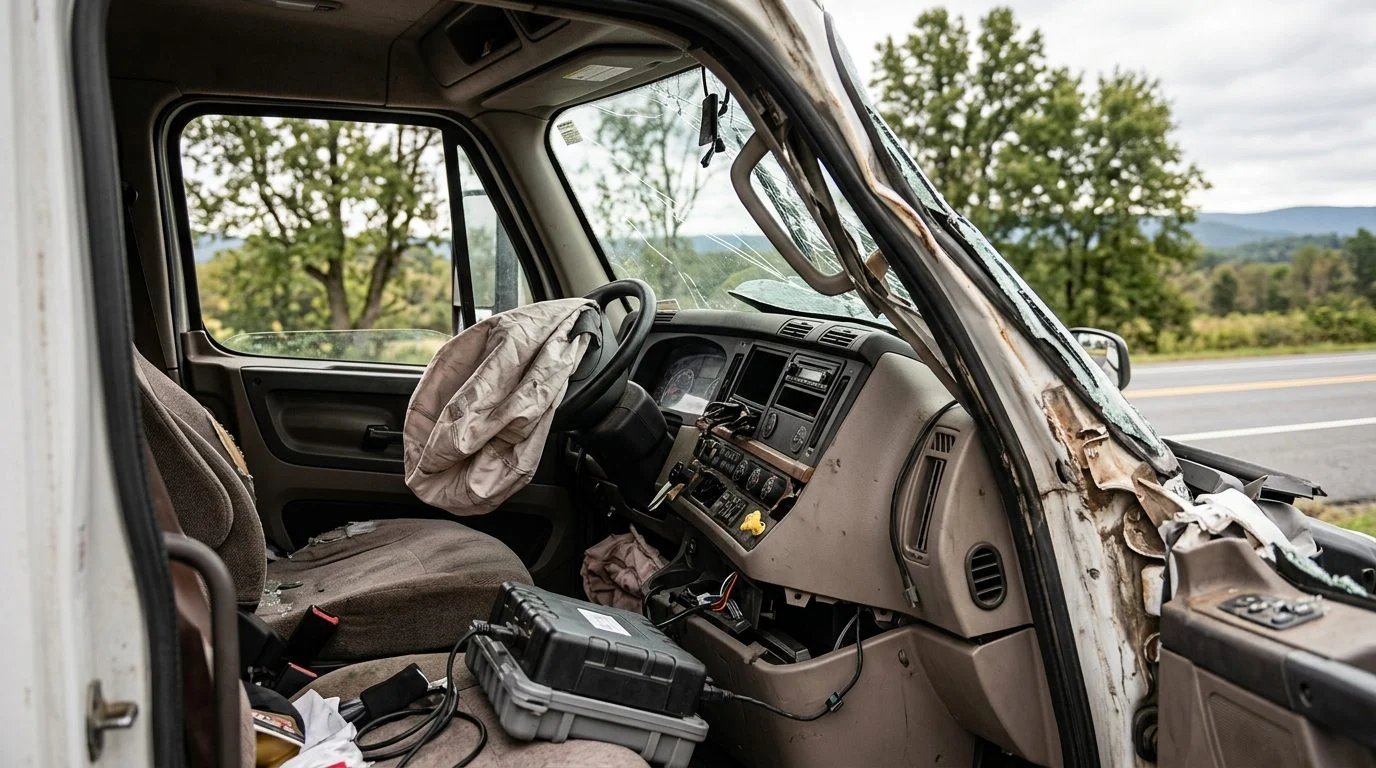
A truck black box is a crash data recorder built into the truck’s electronics. It is not a separate device hidden in the cab. The recorder is often part of the airbag control module, the computer that decides when airbags deploy.
The name is used loosely. Official materials often call the same kind of recorder an event data recorder (EDR). You may hear several names for the same kinds of electronic evidence, so it helps to ask which system someone means.
When sensors detect a crash or a hard event, the recorder saves a short window of data. That window can show how the truck was moving just before impact.
Stored data can be lost. If the module is damaged in the crash or replaced during repairs, the information may be gone. The module itself can matter as much as the data inside it.
If a semi truck crash has left you or someone you love hurt, you may have a claim, and the firm offers a free case evaluation to talk through what happened. Talk it through with Correll Law Firm — we can walk you through how a situation like yours is usually handled and what your options are.
Does a Commercial Truck Have a Black Box?
Most commercial trucks have electronic units that store some operating data. The type and amount depends on the truck. Make, model, year and equipment all affect what gets stored.
Engine control modules run the engine and may keep records of how it operated. Other units may store braking or stability events. Because these systems vary, whether a particular truck recorded anything can only be confirmed by checking that truck’s systems.
A crash that does not trigger the crash recorder may still leave other electronic records, such as engine data or logging device entries. Early on, the useful question is which systems the truck has and where their records are kept.
What Data Can Crash Recorders Capture?
Crash recorders and engine modules can capture speed, braking, throttle and engine information. What gets captured depends on the system.
Speed is the item most people ask about. Recorded speed can show how fast the truck was moving before and during the event. Investigators can compare that speed with the other evidence about the crash.
Brake and accelerator data can show whether either was in use shortly before impact. That can help show what the driver was doing. It may support one account of events and contradict another.
Engine data may also show engine speed and other operating conditions. Not every module records every item, so each truck’s list has to be read, not assumed. The Virginia DMV offers a course on interpreting crash data recorder data, including how federal rules affect what crash data may be available: Virginia DMV crash data recorder course.
Electronic Logs, Telematics and Video
Electronic logs, trip records, telematics and video are separate from the crash recorder. Each one records something different.
An electronic logging device (ELD) records driving time and hours-of-service information. Under 49 C.F.R. § 395.26, an electronic logging device (ELD) automatically records the date, time, commercial motor vehicle geographic location, engine hours, vehicle miles, and driver or authenticated user identification data, though during authorized personal use of a commercial motor vehicle, engine hours and vehicle miles are left blank and location is recorded at a single decimal point resolution (approximately within a 10-mile radius). When the truck is moving and nothing has been recorded for an hour, it records an intermediate entry.
A carrier may also keep trip logs and GPS tracking. These show where a truck traveled and when. Investigators can compare them with the time and place of the crash.
Some trucks have forward-facing or other cameras, and video telematics systems may record the road and the cab. Whether a truck has cameras, and how long footage is kept, depends on the equipment and the carrier’s settings.
These records often sit with the trucking company or a vendor, not inside the truck. That means a request for evidence may need to reach the carrier, not only the truck.
Why Early Preservation of Truck Data Matters
Early preservation matters because truck data can change, be overwritten or be lost on a timeline someone else controls. A truck may be repaired, sold or returned to service. A vendor’s storage period may end.
Federal rules limit changes to ELD records. A driver who edits a record must annotate each change. A motor carrier must not alter or erase, or permit or require alteration or erasure of, the original hours-of-service information (49 C.F.R. § 395.30).
Asking early that the truck and its records be kept intact is a common step in crash cases. It is a matter of timing, not a promise about what the records will show. Evidence lost after a party knows a claim is coming can create problems for that party in court. How a court responds depends on the facts.
The same data can help the injured person, the family, the carrier and the insurer. That is why it often sits at the center of early disputes.
Will Black Box Data Help or Hurt a Case?
Black box data can help or hurt a case, depending on what it shows. The records may back up a driver’s account. They may contradict it. They may also show something neither side expected.
Virginia follows contributory negligence: if you are found even partly at fault, you may be barred from recovering, with limited exceptions. Talk to a lawyer about your facts.
Electronic data is one category of evidence. It sits alongside the police report, witness statements, scene evidence and medical records. Electronic data alone does not decide who was at fault.
Not sure what your next step is?
Talk it through with Correll Law Firm — we can walk you through how a situation like yours is usually handled and what your options are.
When a Truck Has No Recorder or the Data Is Missing
A missing recorder does not end the inquiry. Other evidence can still show how the crash happened.
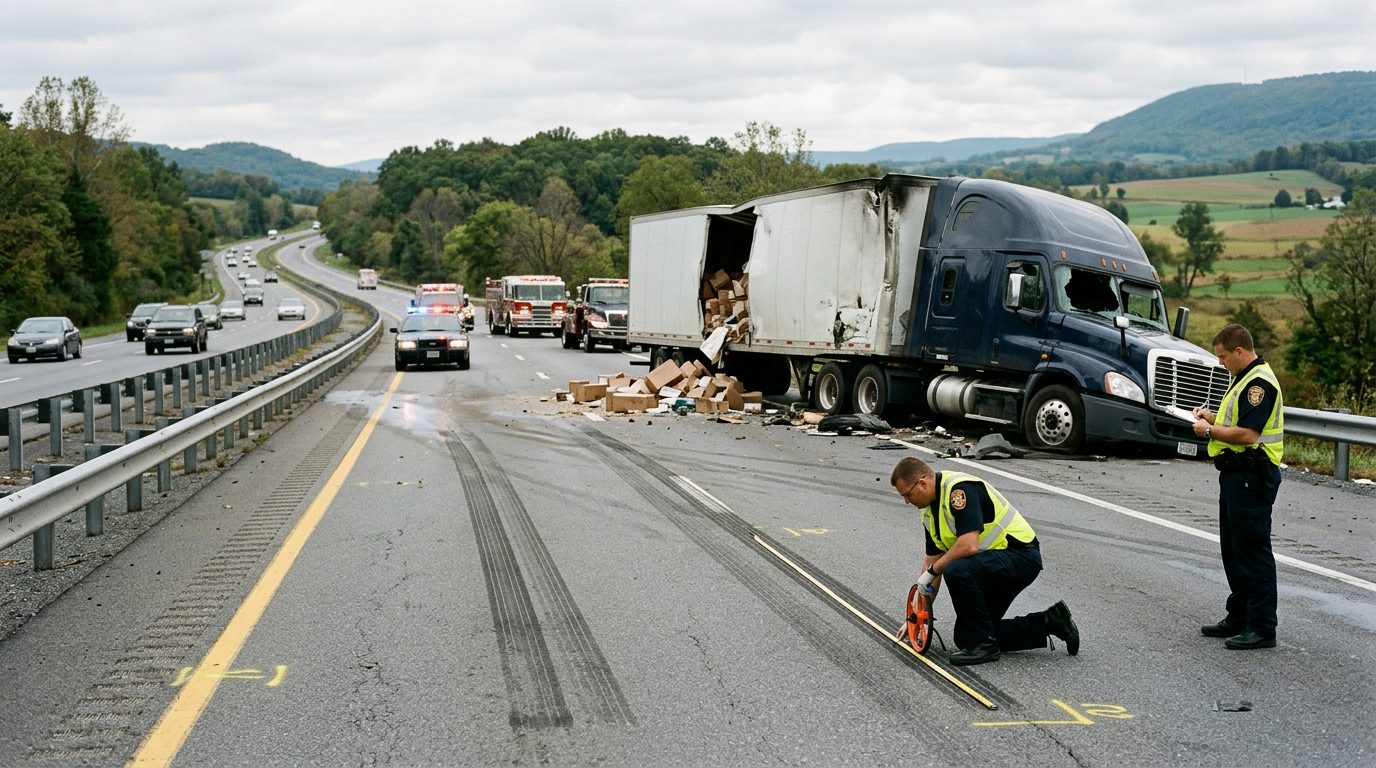
The crash report, photographs of the scene and vehicles, skid marks, witness accounts, dashcam footage from other vehicles and medical records can all help rebuild events. Vehicle damage and where the vehicles came to rest can also help show direction and speed.
Virginia requires a driver involved in a crash with injury or death to stop and report it to police immediately (Va. Code §§ 46.2-371, 46.2-894). The statutes are at Va. Code § 46.2-371 and Va. Code § 46.2-894.
It is separate from the deadline to file a lawsuit.
Filing Deadlines and Crash Data in Virginia
Deadlines are the part of a truck case that cannot wait. Virginia generally allows two years from the date of injury to file a personal injury lawsuit (Va. Code § 8.01-243(A)); the clock runs from the date of injury, not the date of discovery, with narrow exceptions. The statute is at Va. Code § 8.01-243.
Because of that, the early weeks after a crash are the time to ask that truck records be kept.
For a fatal crash, the rules differ. A Virginia wrongful death action is filed by the decedent’s personal representative within two years of the death (Va. Code §§ 8.01-50(C), 8.01-244(B)), on behalf of the family members the statute protects.
Family members generally do not file the action; the personal representative brings it, except that an action for fetal death is brought by and in the name of the natural mother, or, if she dies or is under a disability as defined in § 8.01-2, by the administrator of her estate, her guardian, or her personal representative qualified to bring such action.
Related Guides for Commercial Vehicle Crashes in Virginia
The guides below cover the wider picture for these cases and the next steps for families.
- The pillar guide on commercial vehicle accidents in Virginia, which covers the broader framework.
- The fatal commercial truck crash checklist for families.
- The wrongful death timeline for Virginia.
- The checklist for a semi-truck crash involving an adult child, for parents.
Does a semi truck have a black box?
Most trucks have electronic units that may store crash or operating data. What gets stored depends on the truck’s make, model, year and equipment.
Can a trucking company change ELD records?
Federal rules require a driver or support personnel to annotate each change or addition to a record. A motor carrier may not alter or erase, or permit or require alteration or erasure of, the original hours-of-service information.
Does black box data help or hurt a truck crash claim?
It can support, contradict or add to other evidence. The records have to be read alongside the crash report, witness accounts and medical records.