
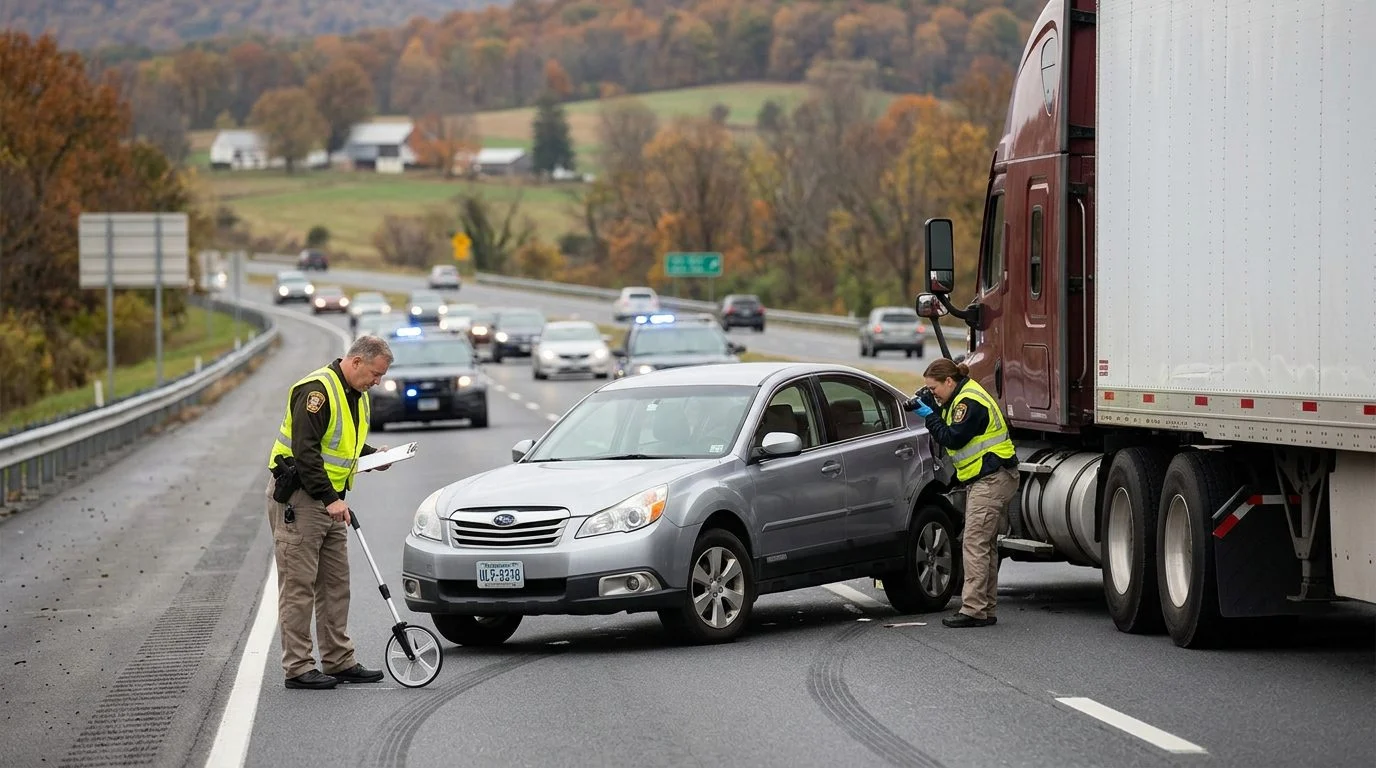
Truck Accidents | Virginia
Back or Neck Pain Days After a Truck Crash? Why Spinal Injuries Can Take Time to Show
A plain-language guide to delayed spinal symptoms, what to watch for in the days after a crash, and how to keep a useful record.
Published November 17, 2026
Yes, a truck crash can cause a spinal or nerve injury whose symptoms show up days later. A stiff neck, tingling in a hand or a weak leg after a crash can seem like a small problem that will fade. Sometimes it does. Sometimes it is the first sign of an injury that needs a medical look.
This page explains why symptoms can wait, which signs deserve a doctor’s attention, and how Virginia’s filing deadline works.
Can a Truck Crash Cause a Spinal Injury That Shows Up Days Later?
Large commercial vehicles are much heavier than passenger cars, so the forces in a crash can be greater. An injury can happen at the moment of impact, even when the person feels only mild soreness. Symptoms may first appear days later, as normal activity resumes.
A person’s first instinct is often to keep working through the soreness. That instinct is understandable, but it can hide the timeline a doctor needs. The mistakes people make are usually simple. They wait a week to see a doctor, or they describe the pain as “just sore” without saying when it started.
For a broader view of crashes involving commercial vehicles in Virginia, read the firm’s commercial vehicle accident guide.
Not sure what your next step is?
Talk it through with Correll Law Firm — we can walk you through how a situation like yours is usually handled and what your options are.
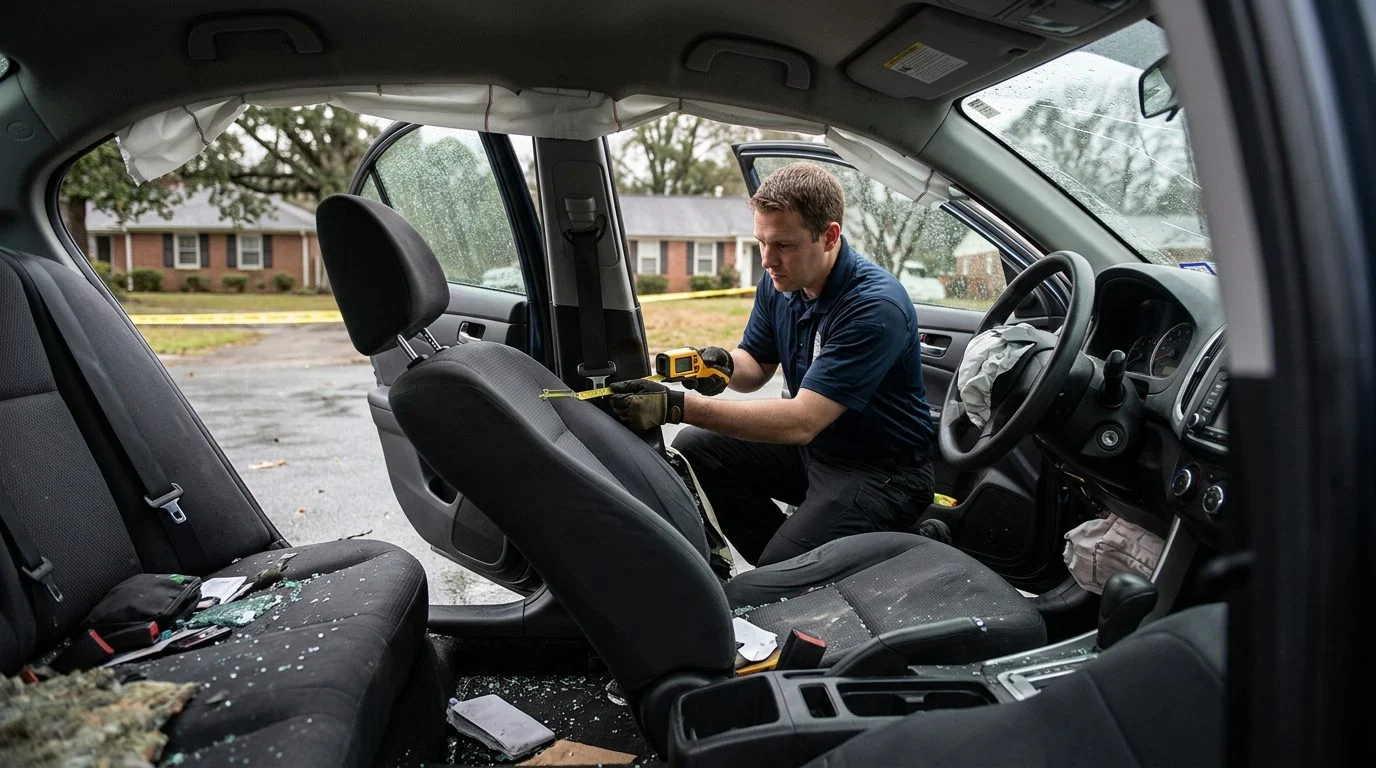
Why Spinal Symptoms Can Take Days to Appear
A quiet first day does not rule out an injury. After a crash, many people focus on the vehicles, the tow, the insurance calls and the bills. Neck and back pain can wait while those tasks take over.
There is a practical cost to waiting. If the first visit happens weeks later, the doctor has to rely on memory for what happened on the day of the crash.
Research gives useful context. A peer-reviewed study on disc injury in frontal impacts describes acute disc injuries as uncommon in low-to-moderate-severity frontal crashes. It also notes that attributing an isolated disc herniation, bulge or extrusion to such a crash is difficult.
That study covers lower-severity impacts, so it does not answer what happens in every truck crash. Whether a delayed symptom is linked to a crash depends on the facts, and a medical exam is the place to start. Some people describe a feeling that something is wrong long before they can name it. Naming it in plain words, such as “my left hand feels asleep,” helps the doctor understand it.
Delayed Signs of a Spinal or Nerve Injury to Report to a Doctor
Report any new numbness, tingling, burning pain, weakness or trouble walking to a doctor promptly, even if it seems mild. Pain that spreads, or any change in feeling in the arms or legs, is worth raising at the next visit, and sooner if it gets worse.
Virginia EMS guidance on delayed symptoms and medical care after crashes discusses the clinical factors used to decide whether neck imaging is needed after a motor-vehicle crash. Those factors include whether the patient can give reliable information. That is one reason clear, dated descriptions matter.
Write down when each symptom started, where it sits, what it feels like and what makes it better or worse. Bring that list to every appointment.
A doctor makes the diagnosis. This list is for information only and does not replace an exam.
Spinal Cord Compression and Incomplete Spinal Cord Injuries
Terms such as spinal cord compression and incomplete spinal cord injury are diagnoses. A doctor makes them after an exam and testing, not a reader at home. People often hear these terms for the first time after a crash, and they can be frightening.
Early signs may be subtle, so a symptom that starts days after a crash deserves a medical look instead of a wait-and-see approach. A doctor weighs the exam, the patient’s history and any testing together. Clear dates for each symptom give the doctor a timeline to work with.
Family members may notice changes the patient has stopped noticing. Share those observations with the doctor and note the date you first saw them.
Why a Medical Evaluation After Any Truck Crash Matters
A medical evaluation after a truck crash creates a dated record of symptoms, exam findings and treatment. That record helps the health care team follow the injury, and it may matter later if a claim is made.
Virginia requires a driver involved in a crash with injury or death to stop and report it to police immediately (Va. Code §§ 46.2-371, 46.2-894). The two-year period is the deadline to file a lawsuit, not to report a crash (Va. Code § 8.01-243).
Va. Code § 46.2-894 also requires a driver to render reasonable assistance to an injured person. That includes taking the person to a physician, surgeon or hospital when medical treatment is apparent or requested.
Keep a simple log of symptom dates, appointments, the names of providers and any time missed from work. Keep the log in one place and bring it to every visit.
How Spinal Cord Injury and Truck Crash Claims Connect in Virginia
Virginia generally allows two years from the date of injury to file a personal injury lawsuit (Va. Code § 8.01-243(A)); the clock runs from the date of injury, not the date of discovery, with narrow exceptions.
Under Va. Code § 8.01-230, the period begins when the injury is sustained, not when the resulting damage is discovered, so symptoms that appear days later do not restart it, except where the relief sought is solely equitable or where otherwise provided by statute. Some claims carry notice requirements that run out sooner, so timing deserves early attention.
The firm is a Virginia personal injury firm with offices in Winchester and Harrisonburg. It handles car and truck crashes, commercial vehicle accidents, catastrophic injuries and spinal cord injury claims for people from the Shenandoah Valley to Richmond and Henrico County. The firm focuses on these matters, and no result can be promised, since each claim turns on its own facts.
Crashes involving commercial vehicles can involve more than one party. Medical records are often central when a claim is evaluated, because they link the injury to the crash and show how symptoms changed over time.
The firm’s guide to work-zone truck crashes on Virginia interstates covers crashes in highway work zones, which can raise their own questions.
Not sure what your next step is?
Talk it through with Correll Law Firm — we can walk you through how a situation like yours is usually handled and what your options are.

Personality Changes and Daily Life After a Spinal Cord Injury
Families often play a large role in tracking how daily life changes after a serious injury.
What personality changes are common after a spinal cord injury?
Changes in mood or behavior are a question for the treating doctor, so share what you notice with that doctor.
How to help someone with a spinal cord injury?
Help by going to appointments when you can, keeping the symptom log, and making sure the doctor hears about every change in strength, feeling or daily function. Ask the doctor to explain each test in plain words and write the answers down.
Share the symptom timeline and medical records with the people helping you. Clear notes from the start make follow-up care easier and make later discussions about the crash more accurate.